
For years, co-founders Paul Sieradzki and Petra Wood ran a 3D printing service bureau in New York. As they worked day to day with the printers, they experienced firsthand the challenges of scaling the business. Desktop machines needed constant attention and repair, while industrial systems were expensive and often locked users into proprietary materials, software, and service contracts. Neither offered what his business really needed. So instead of accepting those limitations, he decided to build something different.
That decision eventually became R3 Printing, a company that spent nearly eight years developing its own industrial fused filament fabrication (FFF) platform. It was the printer he wished had existed while running the service bureau. Together, they launched their first commercial FFF system earlier this year.
Now based in Los Angeles, the startup is entering a more competitive industrial polymer market with a unique message to its competitors. The duo claims their new printers are designed, assembled, and tested in the United States. They also support open materials and aim to make high-performance polymer printing more accessible without giving up industrial capabilities.
And lucky for them, the timing may be working in the company’s favor. The company’s launch comes at a time when American manufacturing is getting more attention. As more customers look at where their equipment is made, Wood said the “Made in the USA” message has become more important than the company originally thought.
“With domestic production, this interest in American-made industrial equipment has grown. But that wasn’t always expected to be a major selling point,” Wood tells 3DPrint.com. “At first we thought it would be a bonus. But now, there’s a big push to seek out American-specific companies. It depends on the customer. For government customers, obviously that’s important. For others it’s more of a bonus, but with aerospace and similar industries they definitely need American systems.”

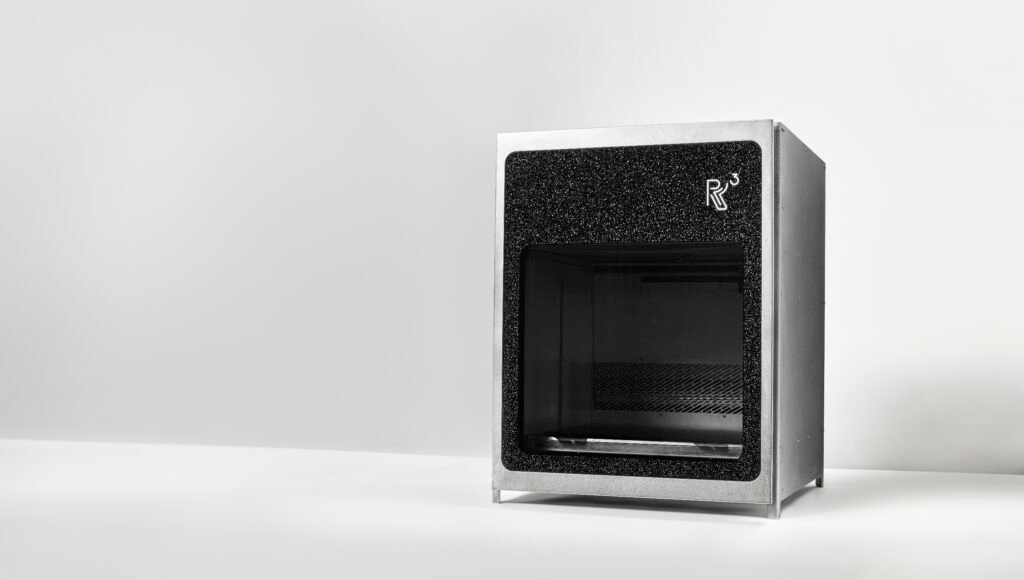
R3 printer. Image courtesy of R3.
The company estimates that roughly 80% of its printers are sourced domestically, with final assembly, research and development, and manufacturing all taking place in California. Some components still come from Europe, but Sieradzki explained that the decision to manufacture in the U.S. was intentional despite the higher costs.
“There’s no doubt that making things in the U.S. is more expensive,” he said. “But it can be done because we did it. You just have to be smart about it. And that philosophy extends beyond manufacturing. Instead of just assembling existing technologies, R3 questioned nearly every aspect of industrial FFF design.”
For Sieradzki, the journey to make his own machine began when he realized desktop machines required constant monitoring, while enterprise systems were expensive and restricted.
“There was this huge gap in the market,” Wood noted. “Because Paul had been running a service bureau, he had experienced those challenges himself. Every design decision came back to one question: ‘What would actually benefit the customer?’”
Instead of relying on venture capital, R3 took an unconventional route. The company raised more than $5 million through multiple equity crowdfunding campaigns, combined with New York State funding and an early Air Force grant. That money allowed the team to hire engineers and continue developing the platform without rushing it to market.
“We didn’t get any VC money,” Wood said. “We did it almost entirely through equity crowdfunding, which is very unusual for a startup. And truly, that slower approach also shaped how the printers were developed. While many hardware startups face pressure to release products quickly, we at R3 kept beta systems running in customer environments for nearly two years before launching commercially. We could have launched with our beta units, but they just weren’t quite ready, and we decided to hold off until they were.”
Sieradzki added that “These are people’s livelihoods. In the case of medical, these are sometimes people’s lives. There’s an ethos now where the customer becomes the beta tester. We say no. The beta tester is the beta tester, and the customer is the customer.”
Today, R3 offers two systems. The R3 Printer, released earlier this year, targets engineering-grade materials such as nylon, carbon fiber composites, and PPS. A second system, the R3 Ultra, is scheduled to begin shipping at the end of August and expands into ultra-high-performance polymers, including PEEK, PEKK, and ULTEM, via a 150°C-heated chamber and a higher-temperature build platform.
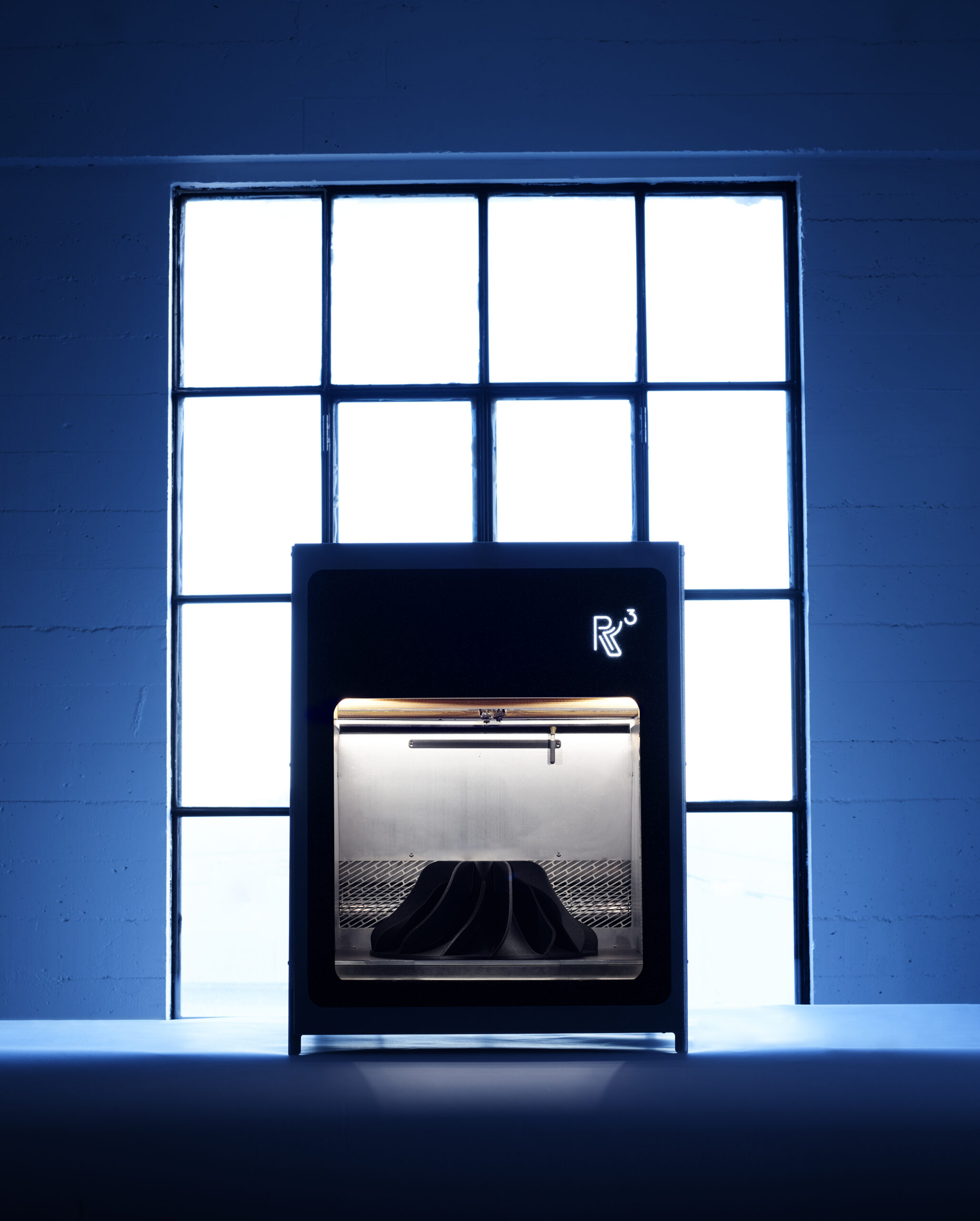
R3 Ultra printer. Image courtesy of R3.
The company has also focused heavily on reducing the barriers traditionally associated with industrial equipment. One example of this is the machine’s footprint. Drawing on lessons from operating a service bureau in Manhattan, where every square foot mattered, the team designed a printer capable of producing parts larger than those from some much larger industrial systems while maintaining a rather space-saving design.
The duo also looked at power requirements. Many industrial high-temperature printers require an industrial three-phase power connection, but R3 designed its system to run on a standard outlet while still reaching industrial temperatures.
“We kept asking ourselves, ‘Can you achieve these temperatures with a standard 120-volt outlet?’” Sieradzki said. “It turns out you can. You have to innovate, integrate the system very tightly and have good controls, but it’s possible.”
That whole “customer-first philosophy” also shaped R3’s software and materials strategy. Instead of having users buy only proprietary materials and software, R3 allows customers to choose from a wider range of engineering polymers and open-source slicing platforms.
Wood said many industrial systems are still designed around the manufacturer’s needs rather than the customer’s: “They lock customers into the materials, the software and service plans. We wanted customers to choose the materials they want and the software they want while still getting an industrial machine. And that flexibility is becoming increasingly important as new engineering polymers continue to enter the market.”
Sieradzki believes materials innovation will be one of the biggest drivers of industrial additive manufacturing over the next several years.
“I think we’re going to see a lot of very interesting polymers come out,” he said. “That’s where having a printer with open materials becomes really important. The moment you lock something down, and a new material comes out, you can’t participate in that innovation.”
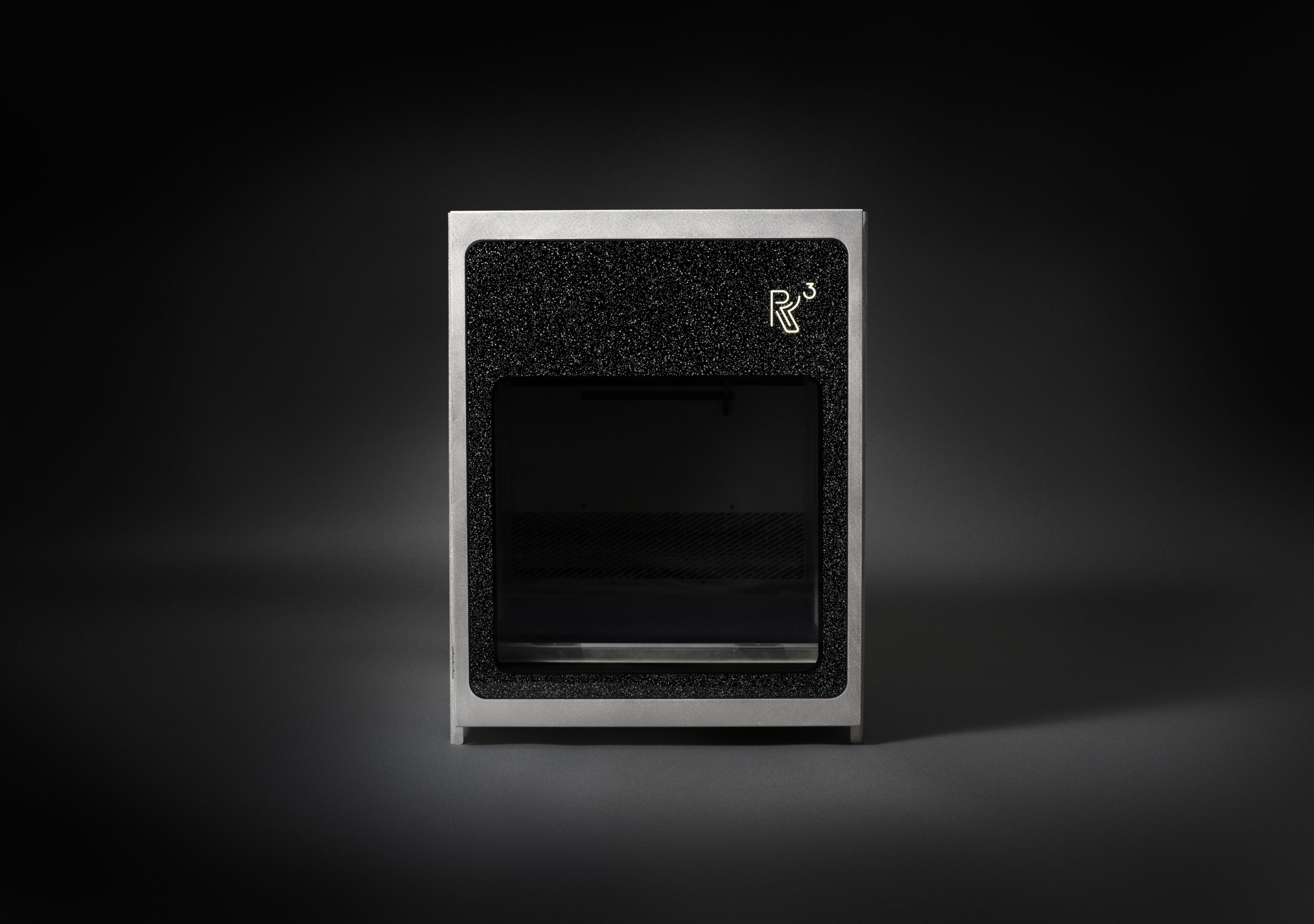
R3 Ultra printer. Image courtesy of R3.
While aerospace and defense are major markets for R3, the company sees demand growing across many industries. Robotics, medical devices, prosthetics, automotive, and product development are just some of the areas where industrial polymer 3D printing is finding new uses. At the same time, both founders say prototyping remains just as important as end-use production.
“I think prototyping is a little underrated,” Wood said. “People love hearing about end-use parts, and those are very important. But prototyping is still incredibly important. Try prototyping something using only CNC machining.”
R3 already has its sights set on what’s next. The company’s ambitions extend beyond individual printers. Wood said R3’s long-term goal is to automate the entire 3D printing process, adding new products over time while continuing to improve its existing printers. For now, however, the company’s focus is on establishing itself in the market.
After nearly eight years of development and an unconventional fundraising journey, R3 has gone from building prototypes to delivering commercial printers. With growing interest in American-made manufacturing and high-performance polymers, the company believes the timing couldn’t be better.