
After years in which the additive manufacturing (AM) industry gained a reputation for its hype outpacing its performance, an interesting development has emerged recently. In certain market segments, at least, the reality has started to reflect the forecasts. While there’s much we can learn, for instance, from how AM adoption has proceeded in the defense sector throughout this decade, it is nonetheless the way that the product has finally begun to fit the market which is perhaps the most instructive takeaway.
Of course, it’s unfortunate that this lesson’s demonstration comes alongside multiple active military conflicts, but this is entirely in-line with how industry has transformed throughout the long, combined histories of technology and war. A nation’s defense industrial base rarely embarks upon massive changes unless it is forced to do so by external events.
Moreover, regarding the US, the defense industrial base started to adjust its posture to some significant extent in advance of a major crisis emerging. Now, with the Iran War occurring against a backdrop of multiple other related conflicts, US manufacturers are in a far more workable position than they would have been in lieu of the gradual buildup of AM capabilities that has taken place over the last several years.
There are many examples that I could point to, including drones, rocket motors, and critical minerals supply chains. One can also view this through the lens of individual companies, which is why I thought it was a good time to talk again to Hamid Zarringhalam, the CEO of Nikon Advanced Manufacturing.
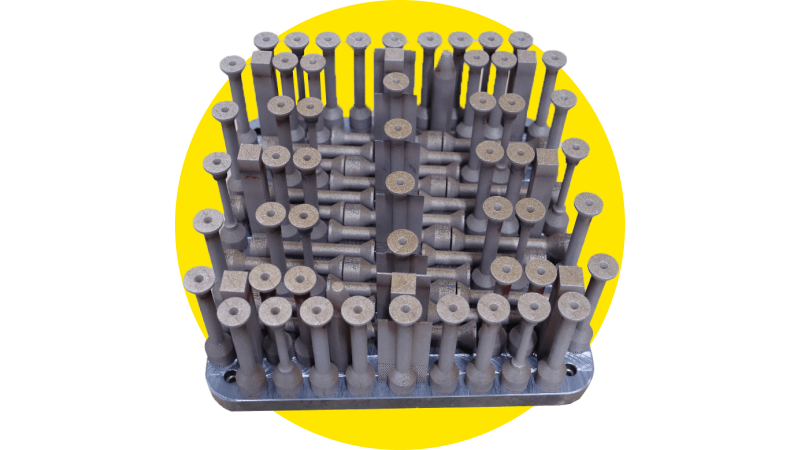
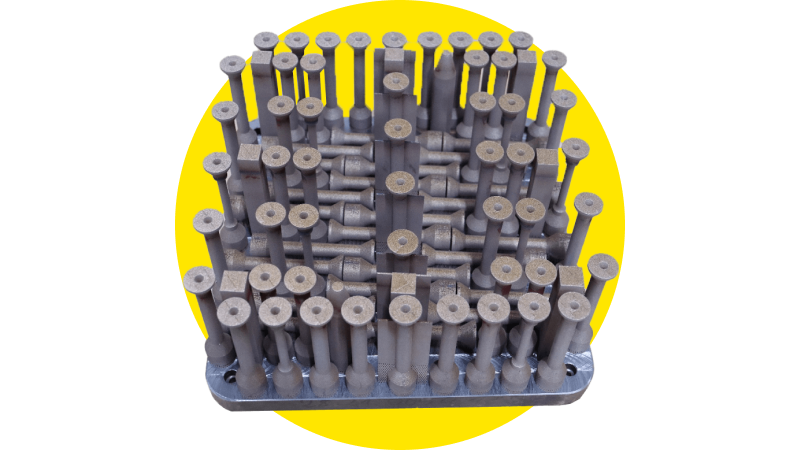
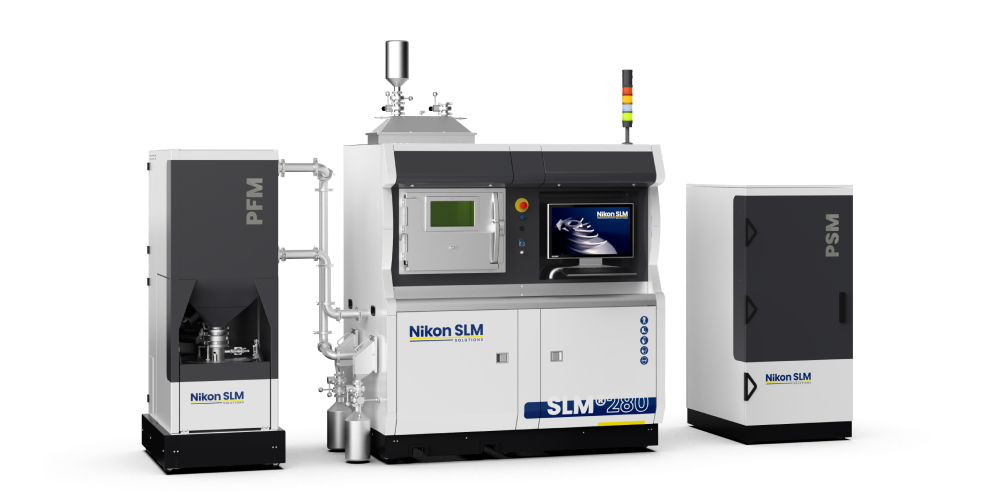
GRCop-42 components printed on the SLM®280 2.0 Twin 700W (pictured below), in parameter development for space applications.
For one thing, Nikon Advanced Manufacturing is among a handful of companies making the specialized, ultra-large-format metal 3D printers compliant with the US defense industrial base’s requirements. For another, I’ve also interviewed Zarringhalam at various stages in the company’s defense-oriented scale-up strategy, in 2024 and 2025. The 2024 interview was where Zarringhalam shared the blueprint of the vision, and in the 2025 interview, he confirmed how the blueprint’s foundation was being implemented. In our latest conversation, Zarringhalam explained how in 2026, the market is catching up to what Nikon Advanced Manufacturing is offering:
“Our strategy for defense started before any of these recent conflicts arose,” Zarringhalam began. “We knew there were severe challenges in the defense industrial bases in nations including the US, and we approached that with a roadmap centered around large-format, high-productivity machines, coupled with an ultra-secure engineering and services facility in Long Beach catered to defense applications.
“These needs already existed, but when existing conflicts intensified and new conflicts broke out, the need to scale the capabilities we offer became elevated.”
Since the Iran War began, sources like the Center for Strategic and International Studies (CSIS) have documented how inventories of US munitions stocks, most notably a variety of missile classes, including so-called ‘exquisite weapons‘ like Tomahawks and Patriots, will now require years of manufacturing activity to be replenished:
“From information we’ve seen, Tomahawk production capacity in 2025 was enough to build around 100 missiles, while CSIS says the US had already used over 1000 in Iran by the end of May. The request in the 2027 budget is for almost 800 Tomahawks, and you just can’t scale to that level with precision casting alone. You need large-format metal AM to be able to do that,” Zarringhalam explained.
“Meanwhile, both Iran and Ukraine have shown that, long-term, it’s unsustainable to keep relying exclusively on multi-million-dollar interceptors to shoot down $35,000 drones. The demand signals tell us that the US military and its allies need to prioritize low-cost cruise missiles for suitable operations, as well, which is another challenge that metal AM can help address.”
Despite the challenges, Zarringhalam pointed out that, in addition to the preparatory work that contractors have been doing in terms of adoption and qualification, the government has made meaningful steps towards acquisition reform that should ease the path for further adoption in the future. The Pentagon has also been steadily increasing its funding of AM activity, a trend which is likely to continue in years ahead.
Relatedly, US allies, including the EU and Japan, have also pledged to ramp up their defense budgets, and the potential for tech transfer from the US to its partners in Europe and Asia could realistically accelerate AM adoption in those regions, too.
“In the first half of 2025, the EU adopted a new defense doctrine that recognized that European nations need to re-prioritize investment in military readiness, beyond relying exclusively on NATO,” Zarringhalam told me. “The amount of money earmarked for defense in EU countries is rather astonishing in historical terms. They’re planning to grow their defense budgets from around two percent of GDP to around three-point-five percent, and at the 2025 NATO Summit in The Hague, Allies committed to investing five percent of GDP annually on defense by 2035.
“The same kind of thing is happening in Japan: while they’re starting from a lower percentage of their overall GDP, they’re planning on similar levels of growth, about twofold. Now, the AM adoption curve in these regions might currently be slower than it is in the US. However, the advantage of AM is that there is the potential for American allies to benefit from the progress the US has already made. If the US can start to co-produce weapons systems with international partners, that could speed up the process.”
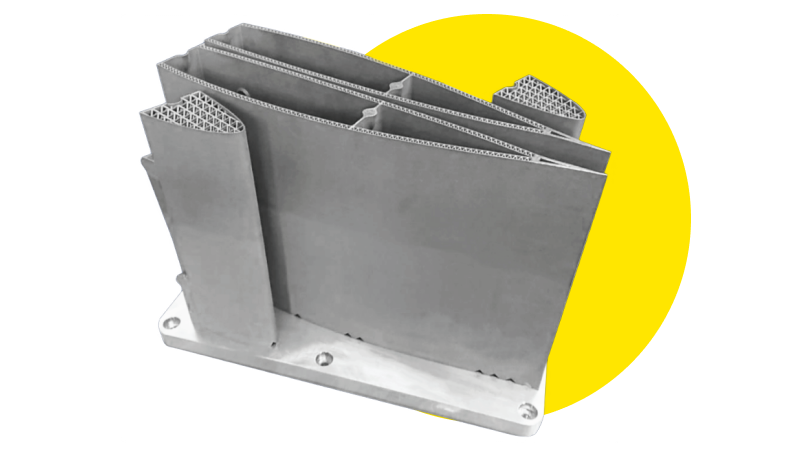
Lightweighted wing segment printed in collaboration with RWTH Aachen’s Institute of Structural Mechanics and Lightweight Design.
In that context, the US’s recent announcement that it will license Ukraine to produce Patriot missiles provides a potential real-world catalyst for how a joint effort might accelerate progress for everyone involved. Analysts have noted that even if the licenses are granted, it could take years for the results to come to fruition. But Ukraine’s progress in building up its own defense manufacturing capacity since 2022 suggests that, in cooperation with the EU and even Japan, the US and Ukraine could very well exceed expectations.
And, the flexibility and responsiveness enabled by AM means there’s always the possibility that collaborative efforts on an international scale could lead to technological breakthroughs in the form of novel weapons systems, created with AM from the beginning:
“I think when a component is designed with AM from its inception, you’re not going to go backwards, at some point, and start producing that component with casting and molding,” said Zarringhalam. “Let’s say you design an engine for a new drone system that you’re planning on using for years, and the engine is 3D printed. You’re not going to change that engine design every year.
“When we start to see more and more of those kinds of parts, which were only ever produced with AM, I think that’s what will be the big breakthrough for the industry.”
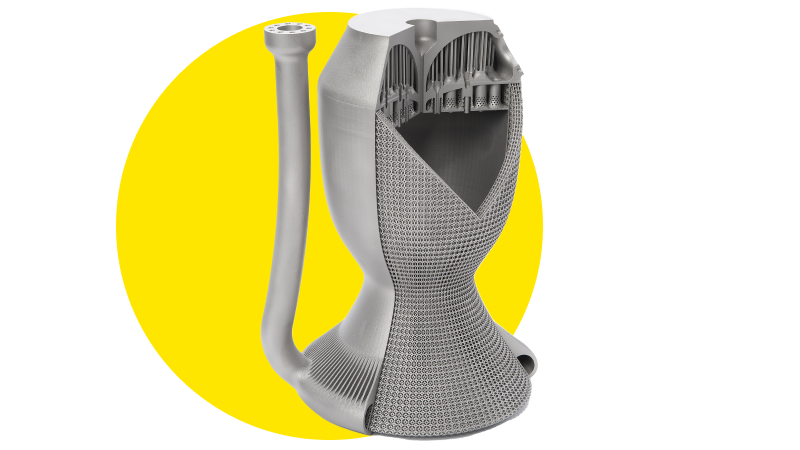
Rocket engine printed in Inconel 718
Notably, that’s not a breakthrough that we should expect to be limited exclusively to defense:
“Right now we have this unfortunate situation with numerous international conflicts, which means there are all of these weapons systems that need to be replaced, as well as new systems that need to be created. Let’s say AM helps get us caught up, though, and the conflicts end, yet we still have these AM production systems in place.
“At that point, the demand catalysts for AM will start to move more towards other sectors, like energy, semiconductor equipment, and even automotive. There’s likely to be skepticism about that, but keep in mind that even just three years ago, there was substantial skepticism about using AM for defense. Today, we’ve demonstrated what’s possible in that market and demonstrated that the technology can succeed at scale. In the face of that skepticism, Nikon Advanced Manufacturing built up our ability to provide customers in defense, space, and aviation with the right parts that could be produced in the right markets for the US and its allies.
“Now, we’ve proven we have the right strategy, from a business perspective but also from a national security perspective. If we look forward a few years from now, I think the same thing can happen with other verticals.”
Images courtesy of Nikon SLM Solutions and Nikon Advanced Manufacturing