
Applications are where it’s at in the additive manufacturing (AM) industry. At the recent RAPID+TCT in Boston, I met with a few companies to learn about some of their very specific industrial applications.
CERATIZIT
In the AeroDef Showcase section of RAPID, I spoke with Steve Kuhnle, Global Business Development Specialist / Cutting Tools, CERATIZIT USA, which is part of the award-winning, global CERATIZIT Group that specializes in hard materials.
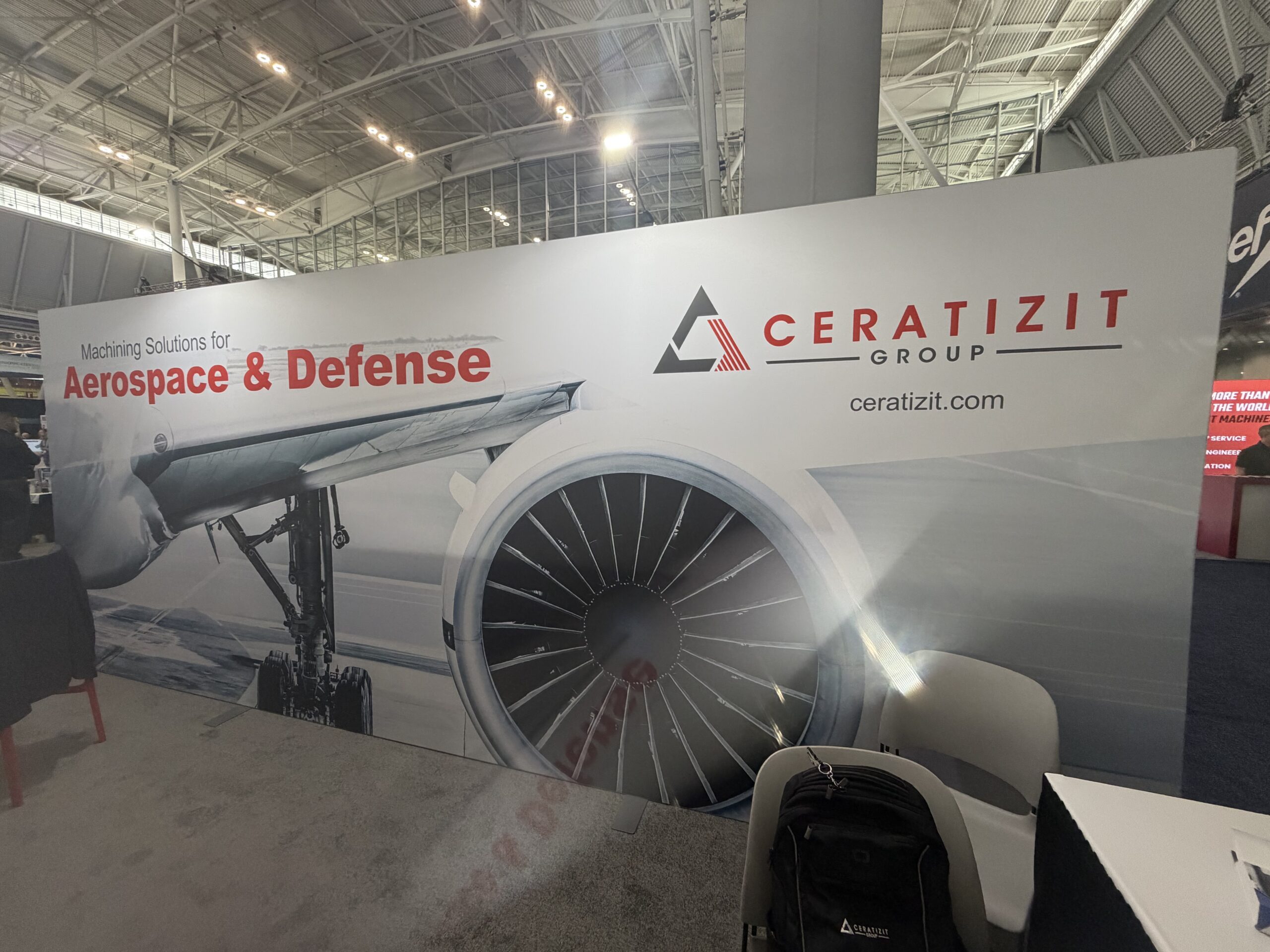
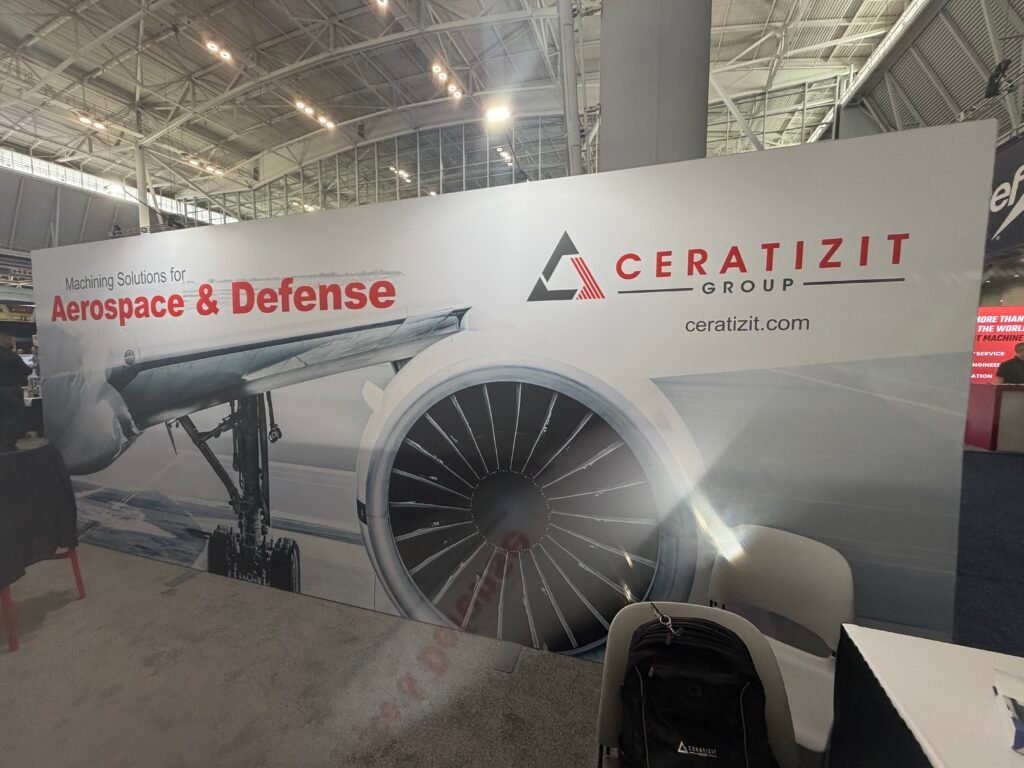
CERATIZIT booth at RAPID+TCT 2026.
The company has locations all over the world, including Austria, China, Bulgaria, Germany, Japan, Malaysia, and many more. CERATIZIT USA is based in Charlotte, North Carolina, and produces cutting tools and carbide, going, as Kuhnle told me, “from the mine to the finished product, which very few people do.” They’re also a powder supplier, even for their competitors sometimes.
“We [CERATIZIT] are the largest producer of tungsten in the western world,” he said.
At its GTP plant in Pennsylvania, the company recycles carbide, which is then made into powder.
“We also work with the finished product,” Kuhnle said.
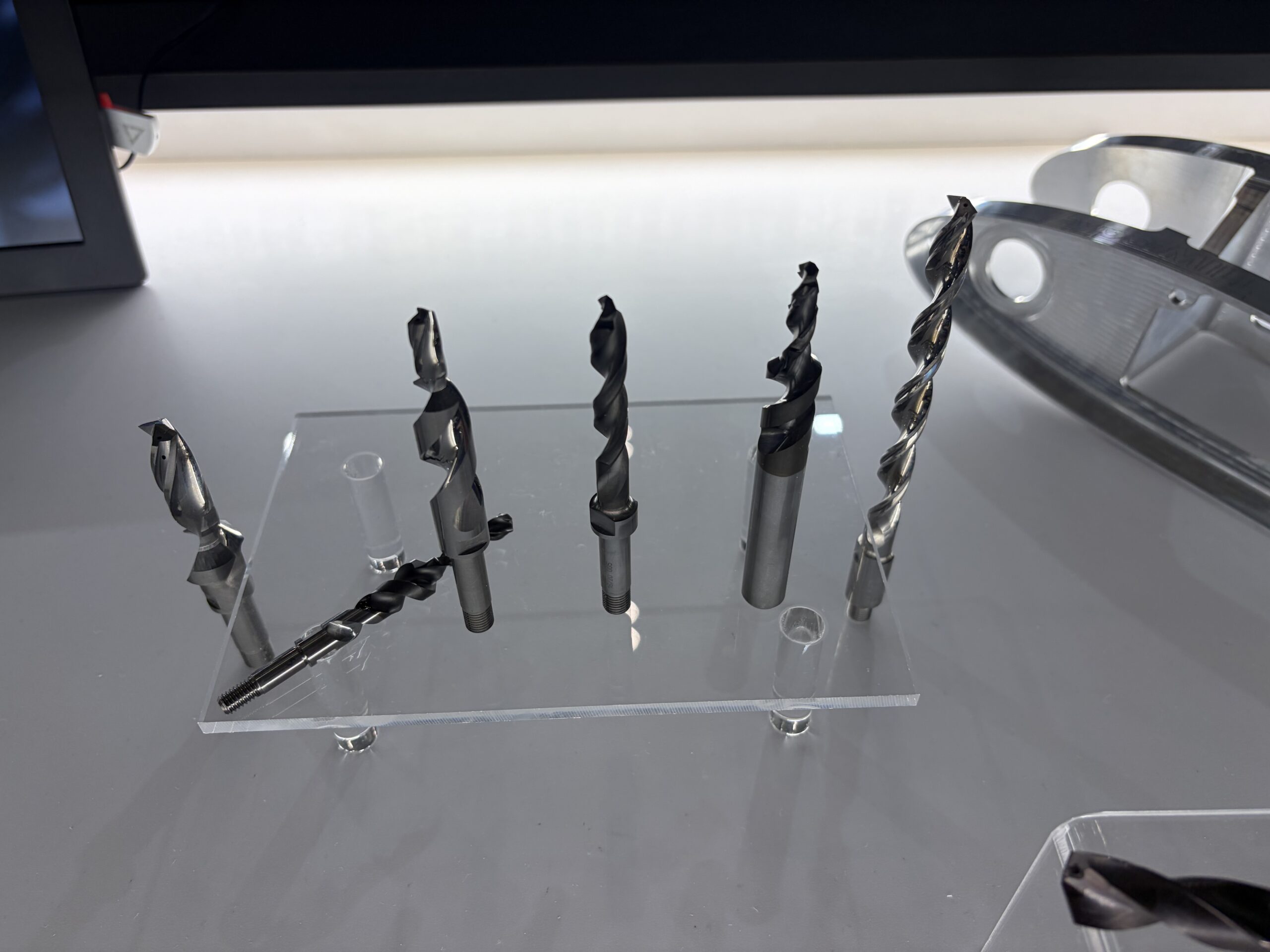
3D printed drill bits at CERATIZIT’s RAPID+TCT 2026 booth.
CERATIZIT works with the aerospace and defense, automotive, and medical industries, 3D printing steel tools for them. As Kuhnle explained, 3D printing the tools “allows for better coolant flow to the cutting edge.”
“You can’t machine the coolant channels,” he said. “So we 3D print them and that allows us, especially in aerospace where you have coolant getting to the cutting edge, this way you don’t get redeposit metal, unlike your Inconels and heat resistant alloy materials.”
CERATIZIT booth at RAPID+TCT 2026.
Kuhnle said that CERATIZIT makes aircraft assembly tools, like the drills used to make rivet holes on aircraft, as well as grooving, tools, machining, and milling tools. The company also does a lot of “process improvements.”
“Customers will give us parts or drawings, and ask us how to improve making it, what kind of time can we take out?” he explained. “And sometimes it’s not so much time, sometimes it’s part quality. We had a customer who had a problem with redeposit metal, and we developed 3D printed tools to actually solve that problem.”
Even though the company produces tungsten, they also machine it; this is used a lot in the defense industry, so that’s another reason CERATIZIT was aptly located in the Aerodef Showcase at RAPID.
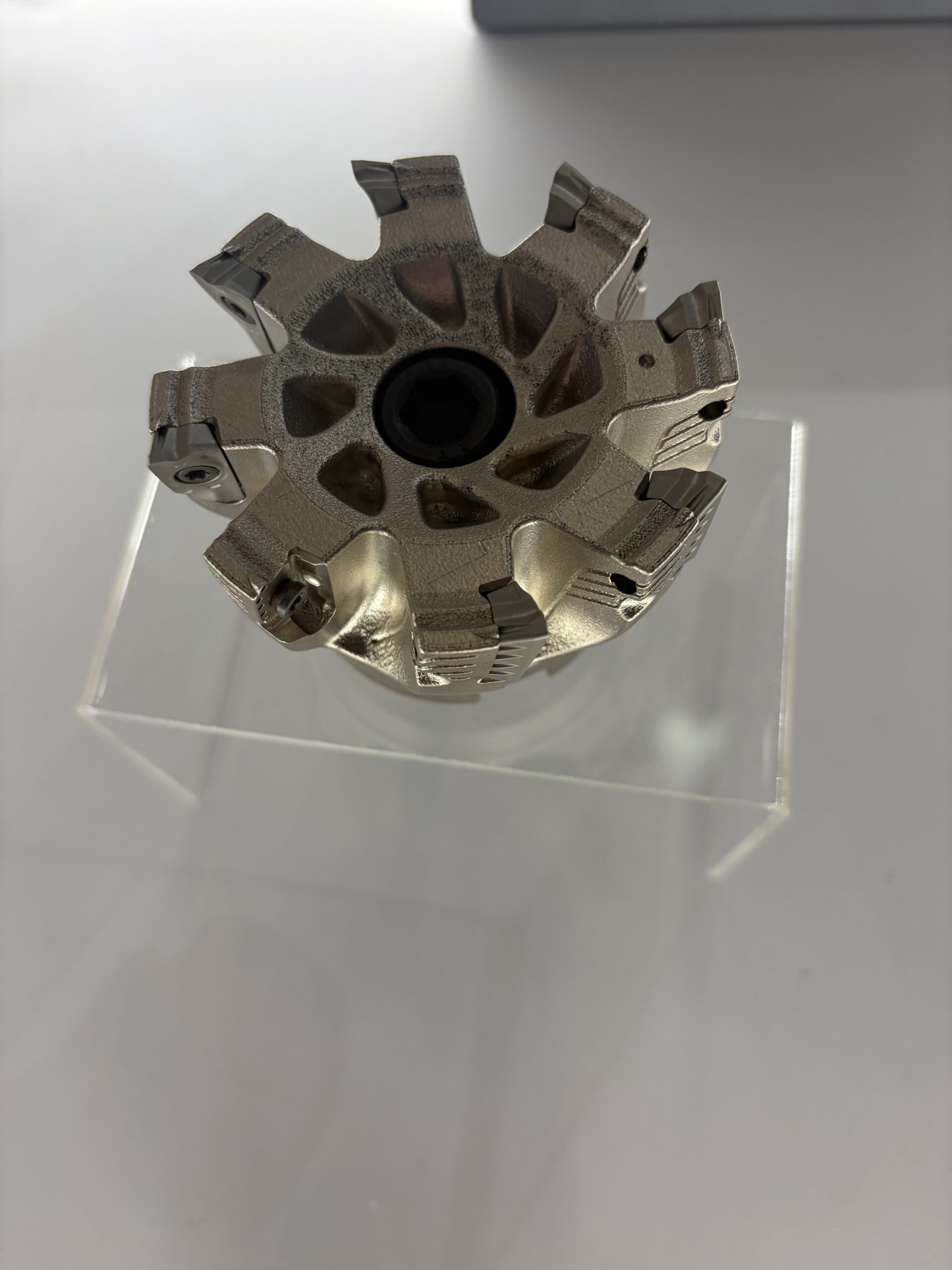
3D printed milling tool at CERATIZIT’s RAPID+TCT 2026 booth.
CERATIZIT has also come out with some great aerospace grades and heat-resistant alloy grades, like CTCS245 for milling heat-resistant nickel-based alloys.
“It’s got ruthenium in it, which is used for reducing heat,” Kuhnle said. “It takes a lot of heat, so you get less insert failure.”
As I was unfamiliar with ruthenium (Ru), I looked it up later, and it’s apparently one of the most rare metals in the world. Located in the platinum group of the periodic table, it has a high melting point, high corrosion resistance, and high durability.

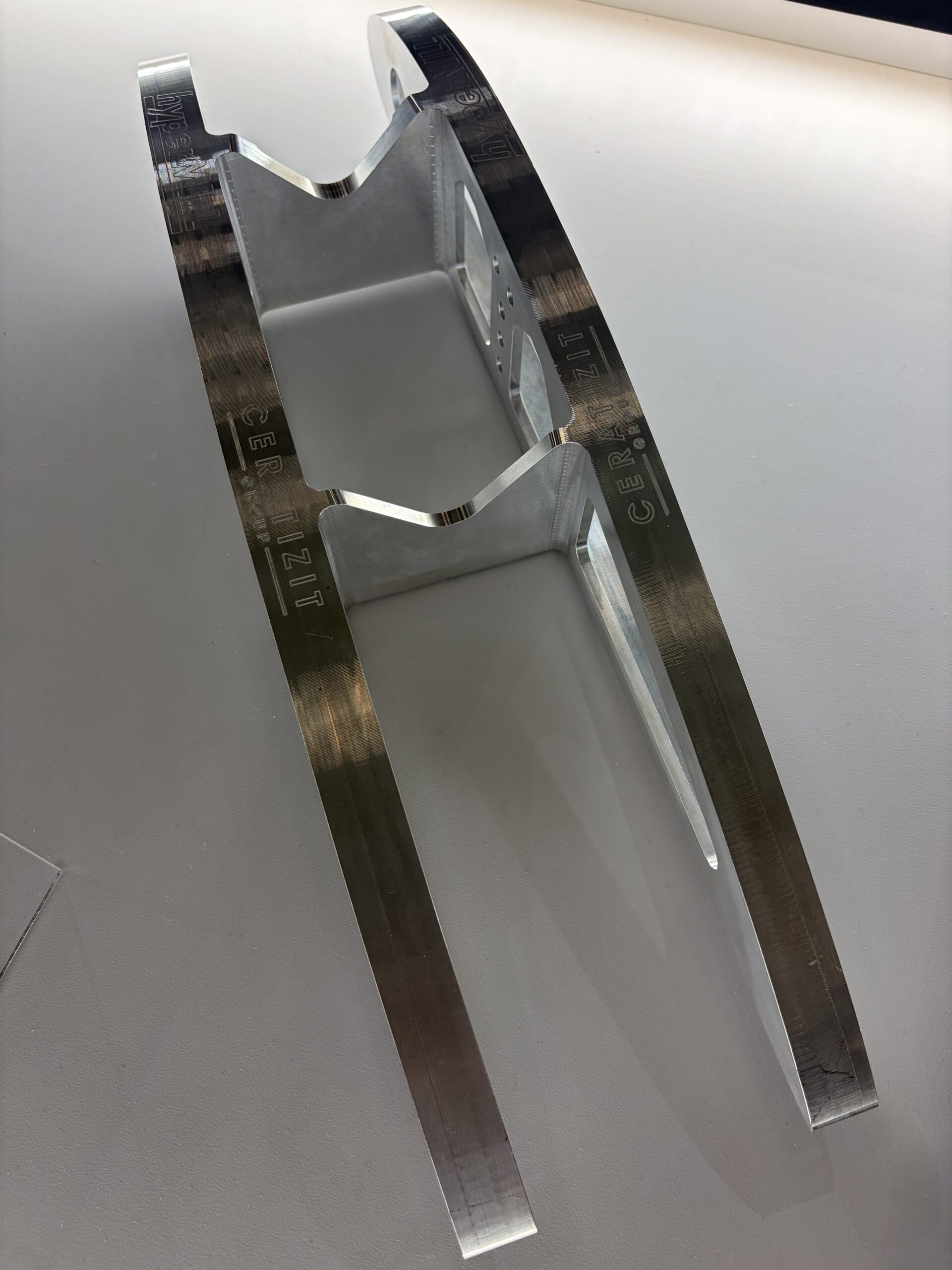
Metal 3D printed part next to the plastic prototype at CERATIZIT’s RAPID+TCT 2026 booth.
The company has some exciting things coming up, such as building out its tech center in Charlotte, slated to be done next spring. They’ll offer training there, as well as part processing for customers. CERATIZIT will also have some new developments to share at IMTS this fall, including new solid carbide drilling products.
“We’re always in development of cutting tools, always pushing the boundary of state-of-the-art for machining of jet engine parts and material. We’ve made some really big strides in that area,” Kuhnle told me.
“We’re really product technology-driven, more component-driven, and segments. That’s why we’re going after the aerospace and defense segments. We made a commitment.”
3D Systems
I also stopped by the 3D Systems booth to speak with Patrick Dunne, Vice President of Advanced Application Development.
Before we got to applications, he shared a little bit about the company’s new SLA 825 Dual 3D printer, which was launched at Formnext 2025 but introduced to the U.S. market at RAPID 2026.
“The previous version, the SLA 750, was the state of the art. The way I’m looking at it, the best just got better,” Dunne said.
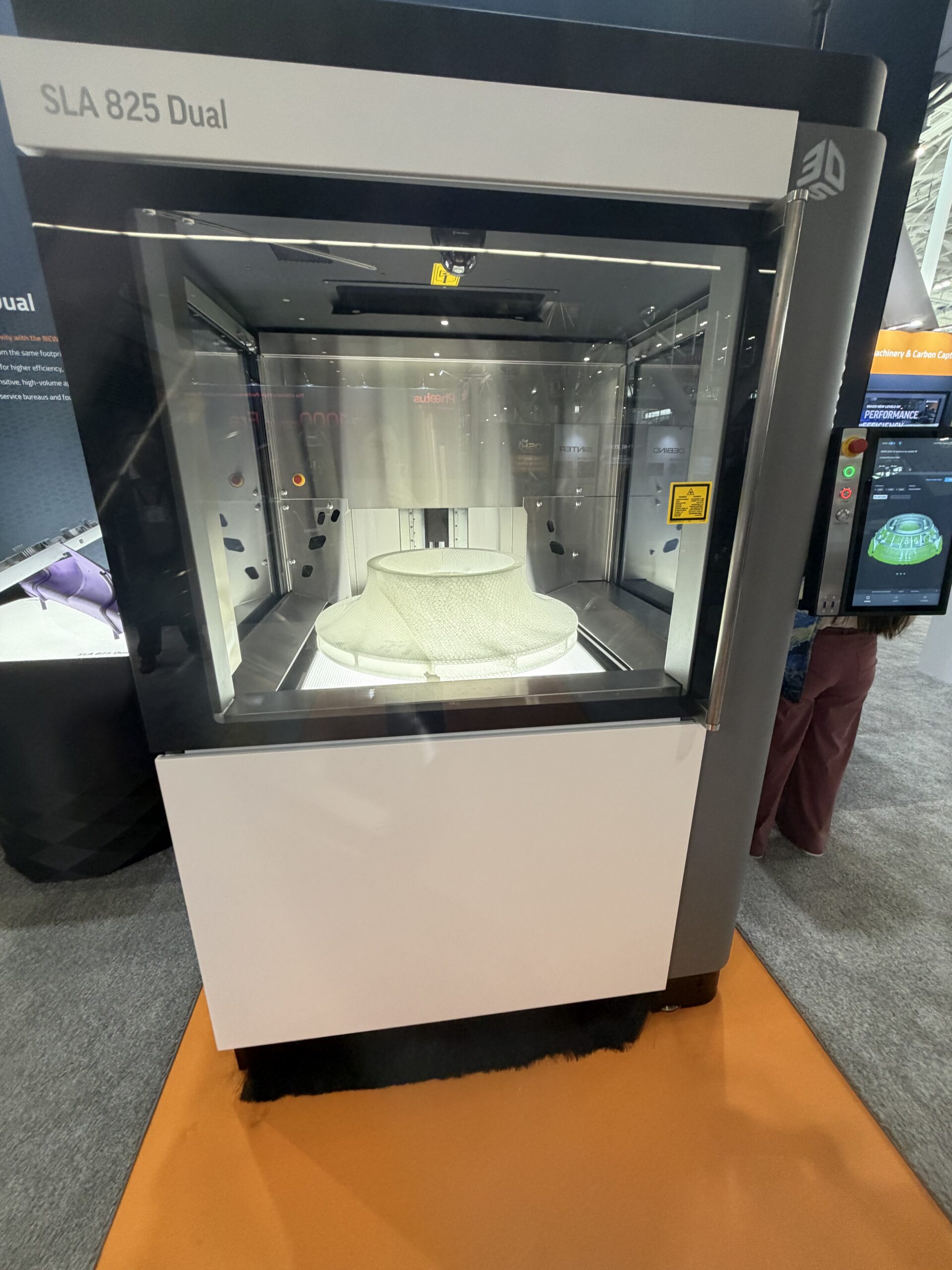
SLA 825 Dual at 3D Systems’ RAPID+TCT 2026 booth.
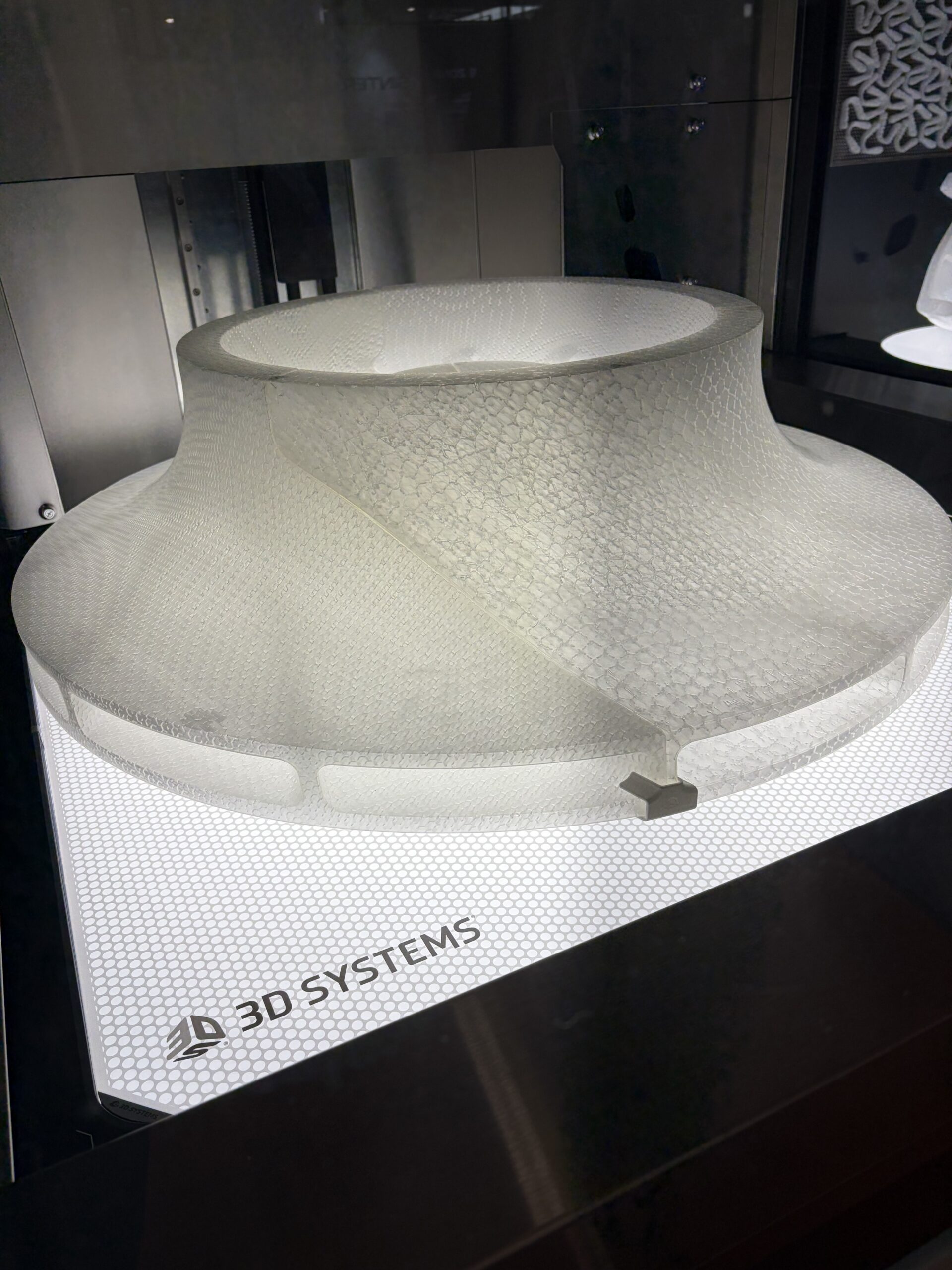
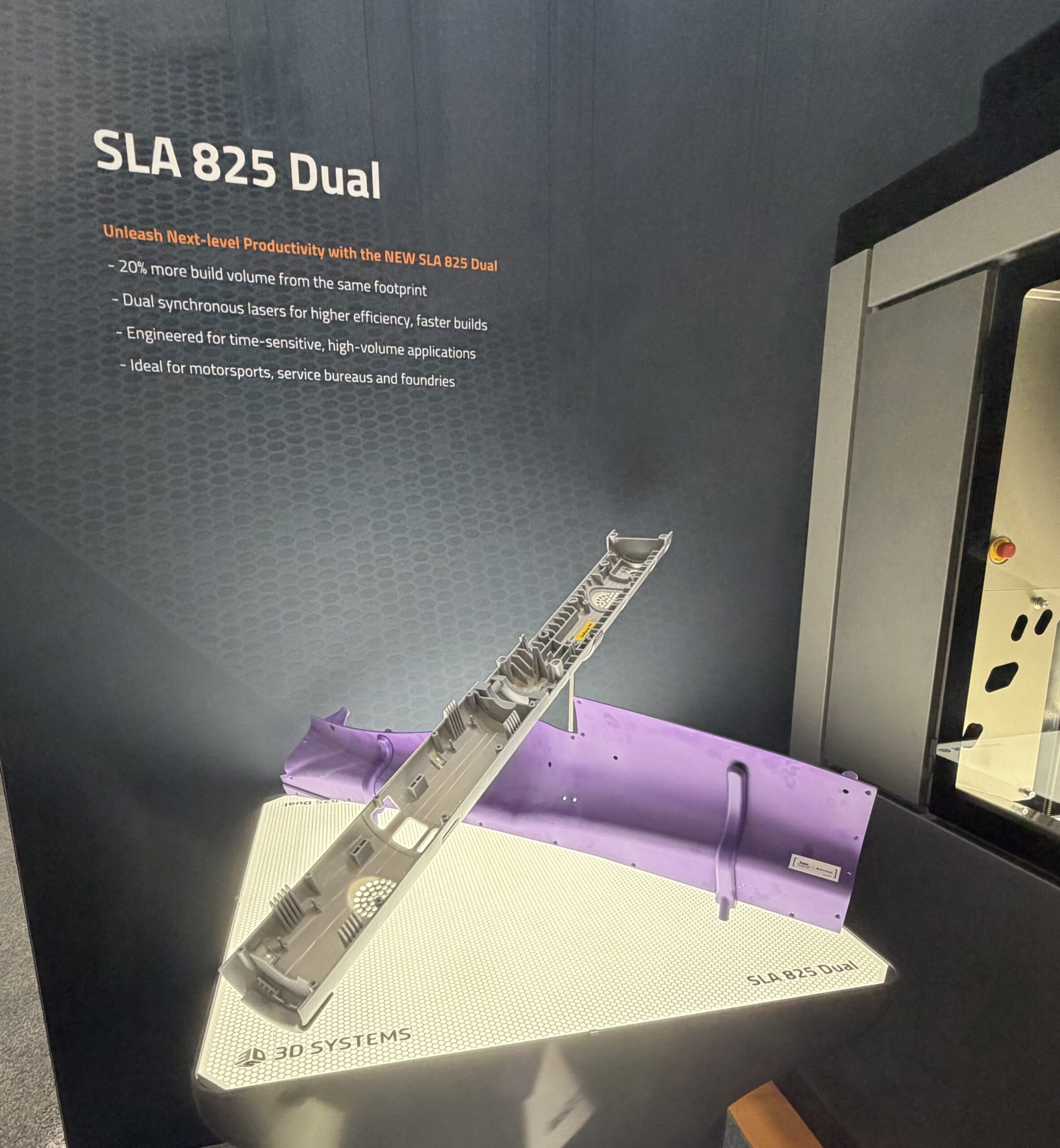
The new SLA 825 Dual has an expanded build envelope, and two high-powered lasers with multi-spot capability. It’s great for printing much larger parts, or large batches of detailed parts, like for the dental industry or investment casting patterns.
“We had some customers that were chomping at the bit to build parts up to 80 centimeters in diameter, specifically very large-format monolithic investment casting patterns for space propulsion,” Dunne explained. “So getting that extra two to three inches on your build makes all the difference.”

We also discussed the company’s on-demand part production, and how it’s saving customers time and money for specific applications. One focus of our conversation was Norway-based Eureka Pumps. Part of the Techouse Group, Eureka is a provider of high-quality pumping and power solutions for the oil and gas industry.
“What’s interesting about the oil and gas industry is that a failed part or a broken component within their hydrocarbon extraction process costs, in some cases, like an offshore oil rig, a million dollars a day,” Dunne said. “So it becomes absolutely critical to get a spare part as fast as possible.”
If a hydrocarbon processing or oil pumping process is offline because you’re waiting for “an analog supply chain” to deliver a spare part, and that takes two weeks and millions of dollars a day, that’s a big problem.
“3D printing as a tool can be incredibly useful at addressing that urgency by being able to supply a replacement spare part on-demand from a digital inventory,” Dunne explained. “So instead of having a physical warehouse full of tooling, you can have an entire warehouse of spare parts on a USB key, and you can on-demand print the spare component and get your production capability back up and running as fast as possible.”
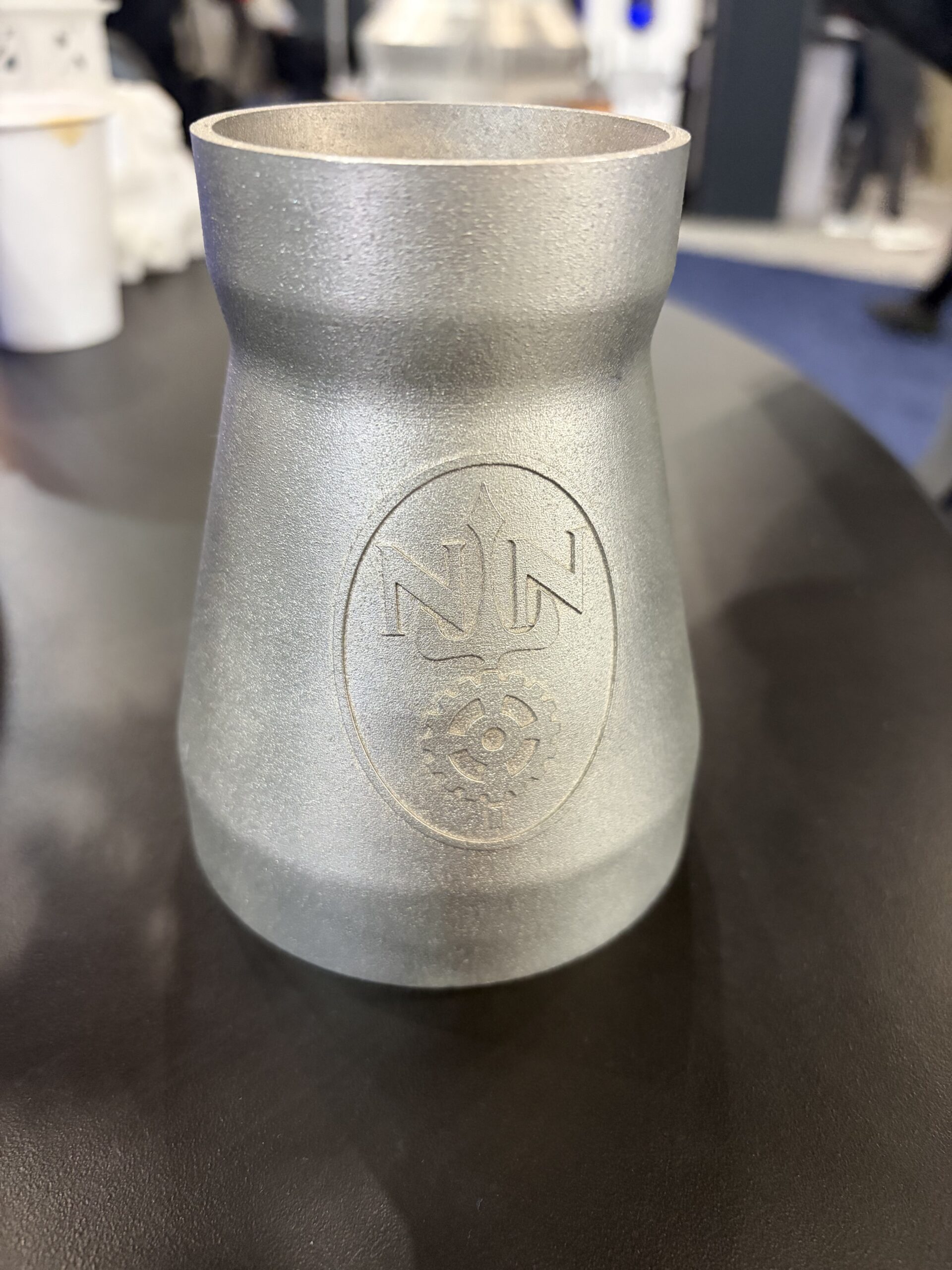
3D Systems booth at RAPID+TCT 2026.
The bottleneck here is with the tooling requirements of the traditional manufacturing process. You need storage and inventory management for tooling, especially for legacy components. Additionally, if these components break, you may not be able to get your hands on a spare, because the company that originally manufactured the part might not even be in business anymore. And if you try to recreate the product, depending on how long ago it was developed, there may not be a digital file—just blueprints stuffed in the back of a drawer somewhere.
“So being able to scan a component and create a replica or a clone of that particular component in an alloy like Inconel that meets the technical requirements of oil and gas extraction means that they can bring their system back online very, very rapidly.”
These same problems plague the aerospace and maritime industries as well. Noting that some of the original tooling for the C17 aircraft was developed in the 1950s and made of wood, Dunne explained that, “even with absolute focus and attention,” it can take months to try and recreate that part from 2D blueprints.
“When you have a very expensive platform like an aircraft sitting in a hangar waiting for a single spare part, every day that asset is basically costing you money,” he explained. “And I’ve heard crazy numbers thrown around, that at any given moment in time, there are hundreds of billions of dollars of systems and platforms, in aircraft and Navy battleships and nuclear submarines, either sitting in warehouses or sitting in harbors.”
AM can be used to support getting planes and ships and subs operational again “very, very rapidly, and address some of those long lead time items that historically have represented the weakest link in the supply chain.”
I asked what kind of spare parts 3D Systems prints for these types of applications. For aerospace, Dunne said it’s a lot of instrumentation knobs and dials that can be printed out of flame-retardant, aerospace-grade plastic. With nuclear submarines, it’s mainly plumbing components, which are considered mission-critical; you can’t go out to sea if the toilet isn’t working, after all!
“There’s a lot of special alloys that go into the sewage plumbing systems for nuclear submarines. They have to be resistant to salt water corrosion. They have to be resistant to high pressure,” Dunne explained. “Historically, the lead time with traditional manufacturing methods, using sand casting or investment casting, can be one to one and a half years. Using a 3D printer, if you add it all up, like the printing and the machining and the inspection, you can compress that down to less than a month.”
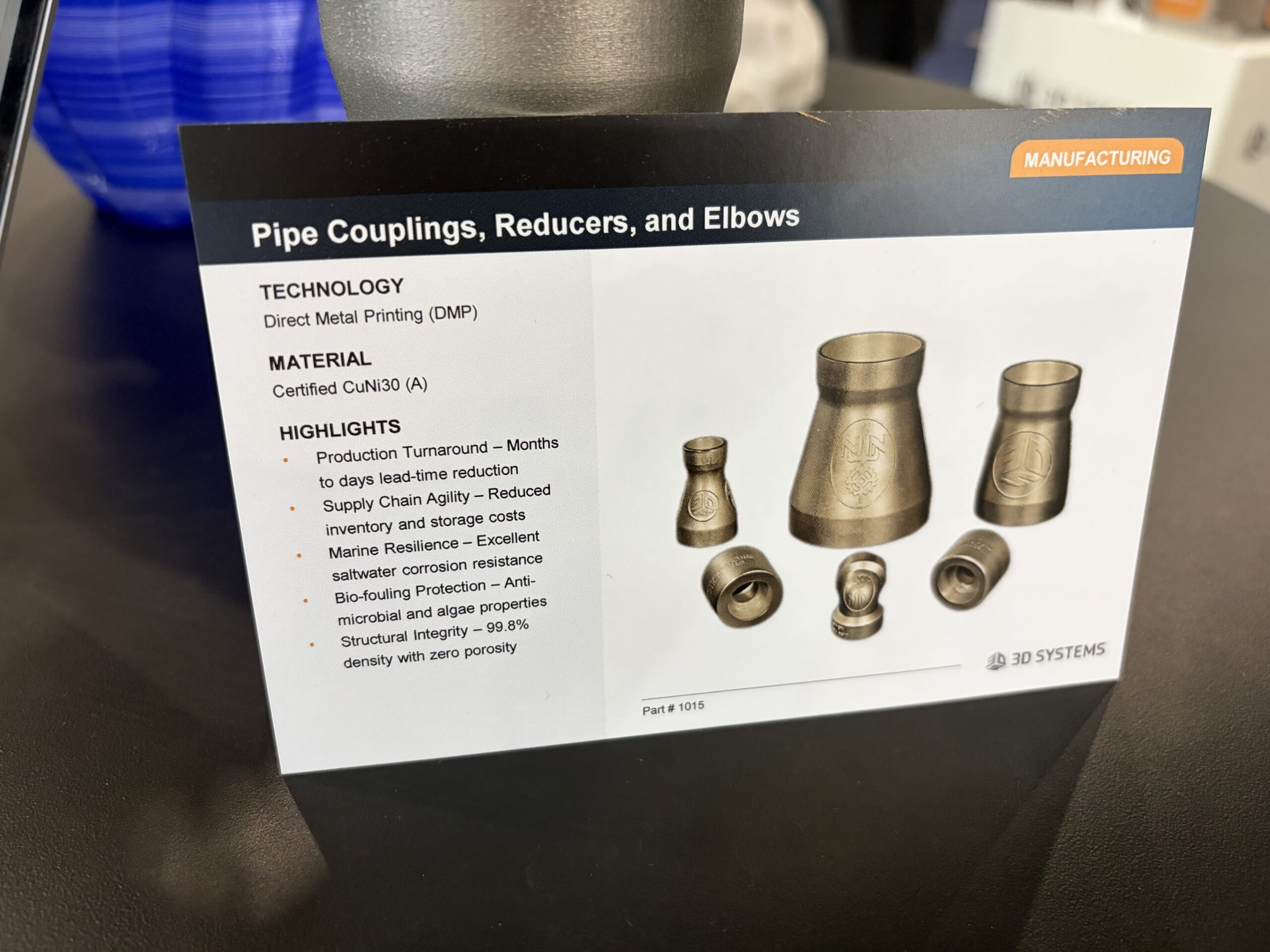
3D Systems booth at RAPID+TCT 2026.
According to the “AM Applications Analysis: Parts Produced 2025–2034” report by AM Research, the value of parts produced using AM could reach $110 billion by the year 2034. This suggests that many industries are expanding their use of the technology, and that AM continues to move beyond prototyping into real production. The report also states that aerospace applications make up nearly 22% of the total value of metal parts produced with AM globally. So both CERATIZIT and 3D Systems are definitely on the right track.
Images courtesy of Sarah Saunders for 3DPrint.com