
I’d like to share my disappointment. When Formlabs teased that something big was coming, I really hoped the firm would finally get around to making CNC machines, as it always should have. I would have been happy with a lathe, frankly, or a simple desktop mill. Sadly, it’s just another 3D printer.
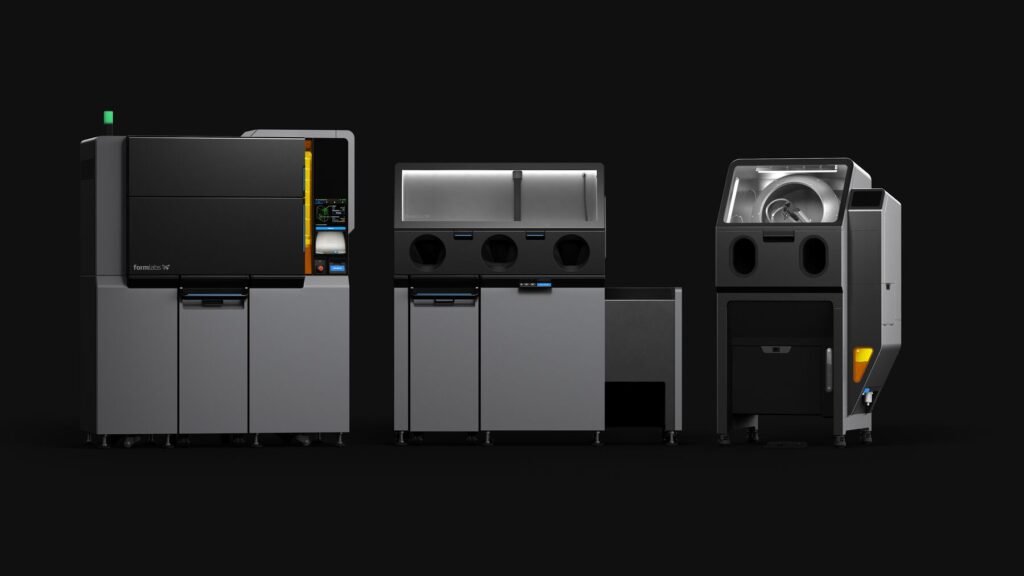
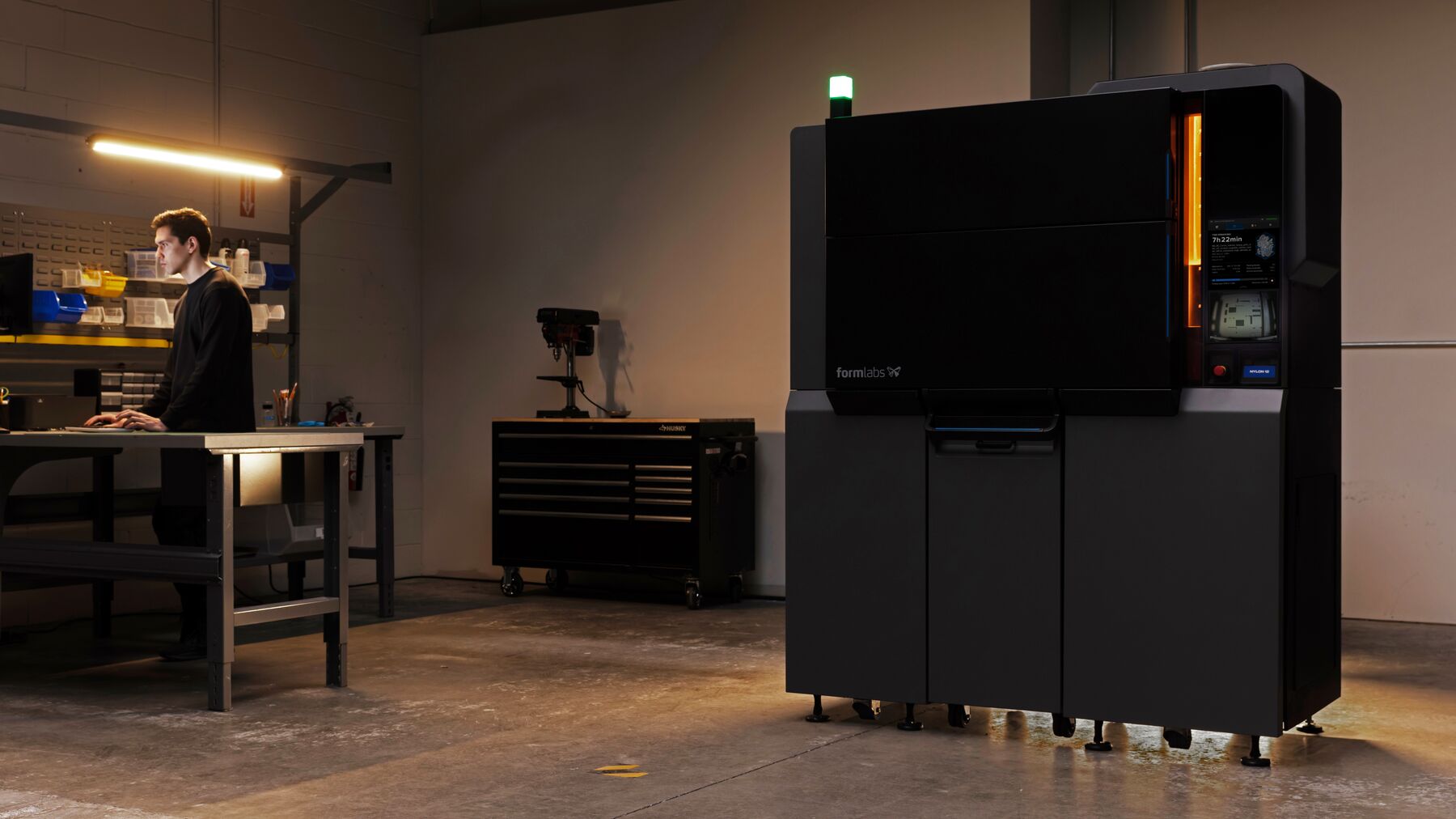
Formlabs has now launched the X1. This is a larger SLS system, available for $84,999, that can be bought towards the end of this year. The Fuse X1 is 330 × 330 × 565 mm, and the company says that the part cost will be half that of other powder bed fusion systems.
Positioning
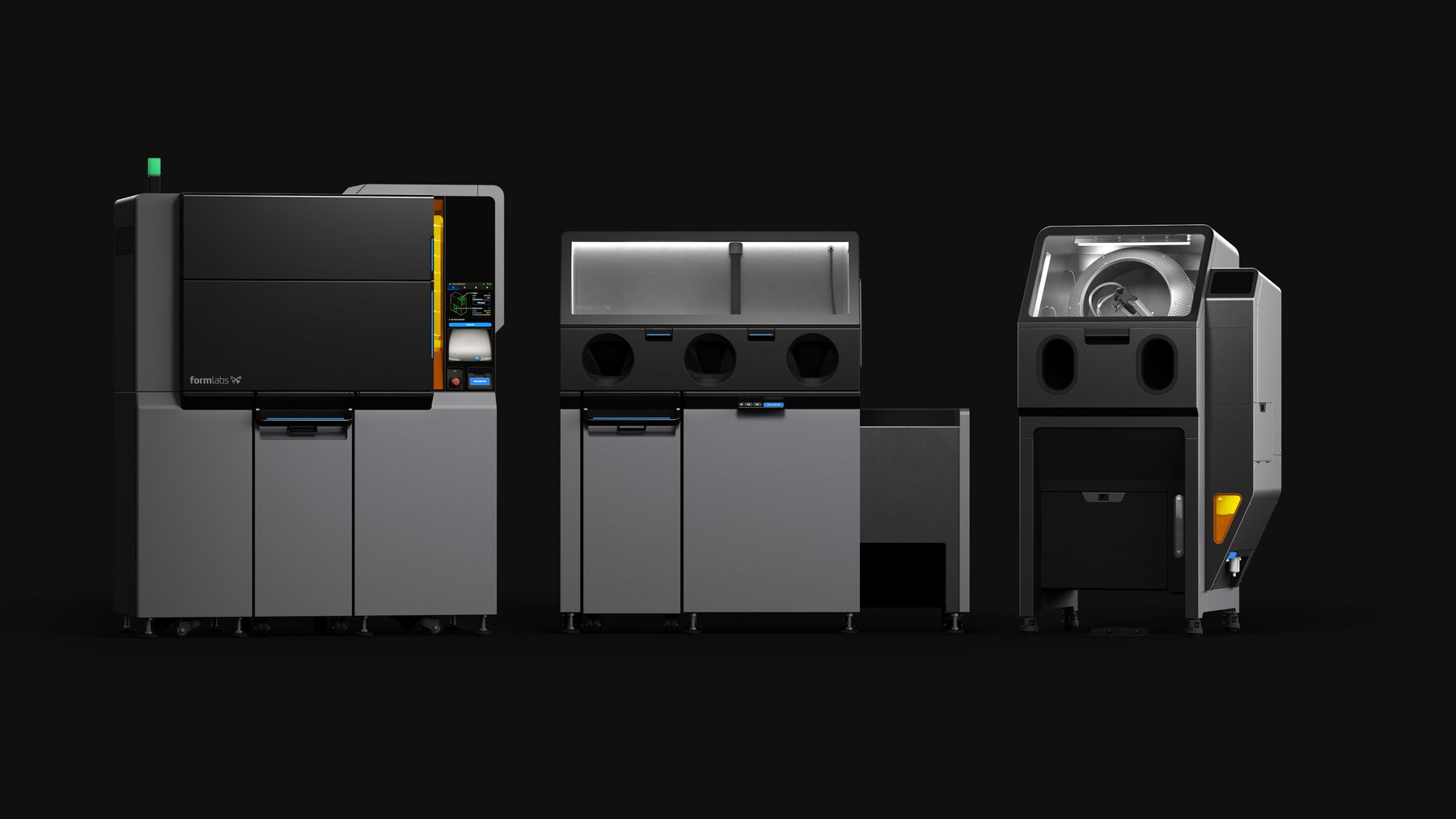
Formlabs printers.
Whereas recently HP made a lower-cost machine and depowdering kit available for $60,000, that low-cost system was already aggressively reducing part costs and making powder bed fusion very accessible. Now Formlabs has placed its new X1 above the HP 1200, and its build volume is bigger than the 200 x 250 x 330 mm offered by the EOS P110. It’s also much bigger than the Sinterit Bianco2 system (130 x 180 x 330mm) and the Lisa X. The Formlabs system also undercuts systems from Farsoon as well as other Chinese vendors. The X1 is half or a third as expensive as the most common Farsoon units. This is amazing news and really heats competition in polymer Vat Polymerization. This should really grow that market.
Features
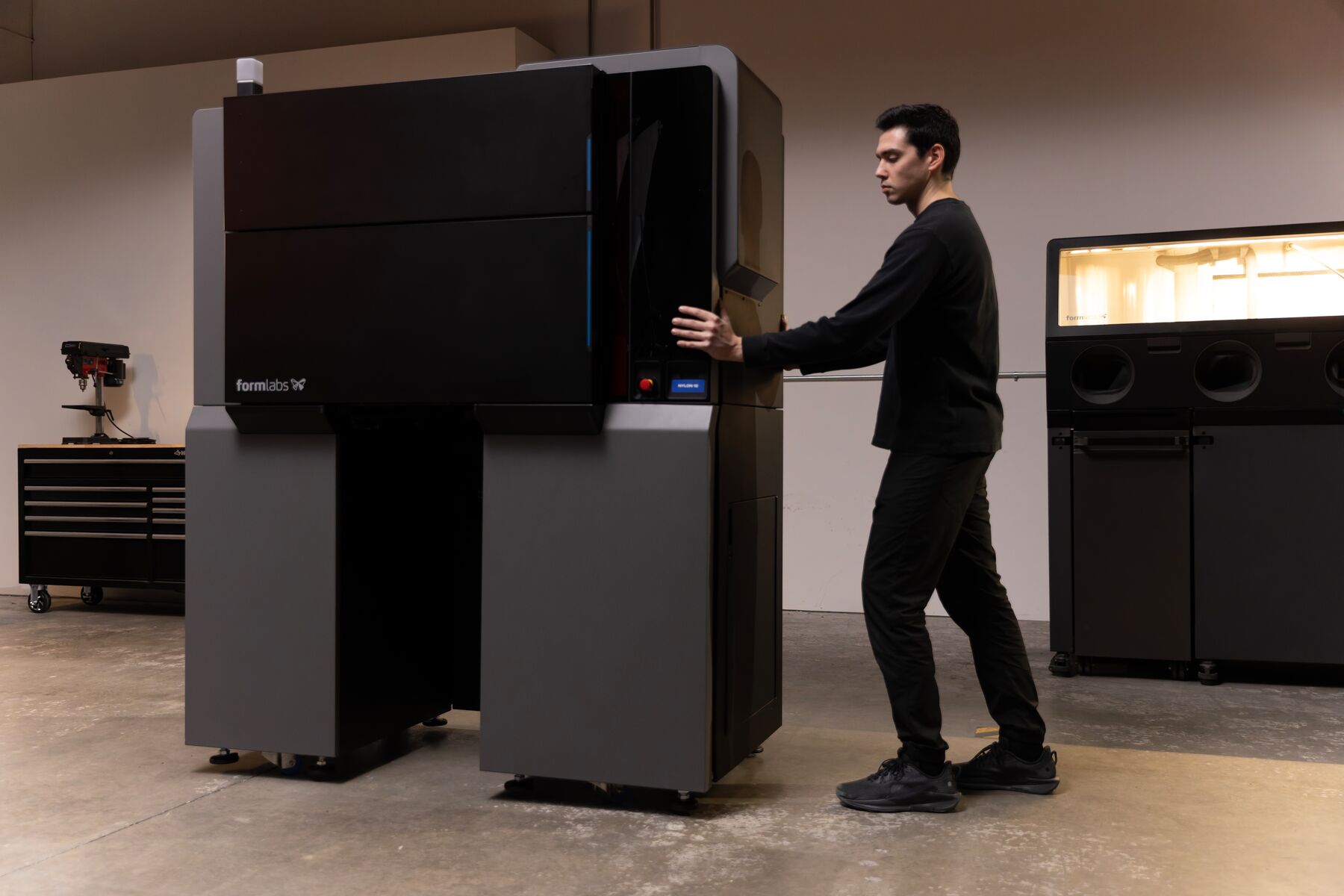
The X1 is squarely aimed at manufacturing in services, in-house production, prototyping labs in companies, and engineers. The company sees it as a manufacturing unit and says that it has three times the throughput of other units. Powder handling is mostly automated; the workflows are said to be intuitive, and the system is small enough to be loaded onto pallets and fit through doors, enabling it to be deployed widely.
They also say that you can install it in less than an hour, it only needs single-phase power, and no additional HVAC is needed. The system is half the size of comparable competitive units, which will make a lot of sense in high-end factories with high floor costs, cleanroom-type environments, or smaller offices. One very important thing is that the company says that builds can be changed over in five minutes. This will have a significant impact on costs and would be a major driver for people to explore getting this system.
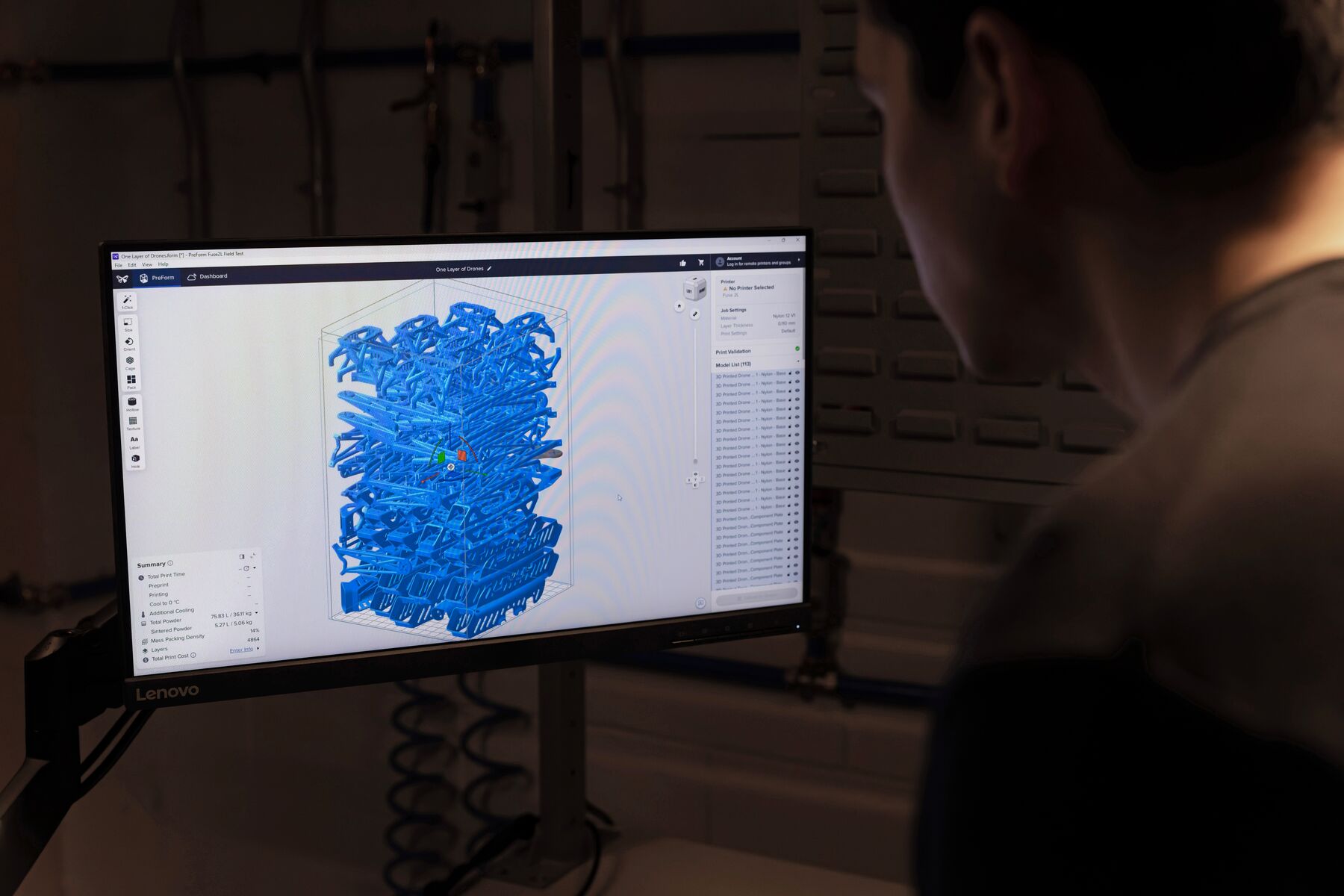
One feature is Adaptive Thermal Control, where care has been taken for temperatures to be stable across the build. Sensors and software collect data, which is used to heat 13 different thermal zones across the build chamber. This could improve reliability and surface quality. At the same time, it could improve part quality overall, since temperature differences between the center and the edges of the build can change part sizes, surfaces, and performance significantly. There is also real-time layer monitoring, which includes an AI feature that automatically removes a failed part from the rest of the build as it is being built. a nifty feature!
There’s a Fuse Sift X1 powder module, a Fuse X1 Vacuum Conveyor f for powder, and a Fuse Blast. The system is modular with a modular build unit. Whereas the HP 1200 is $60,000 for the printer plus depowdering and conveyancing, here the $85,000 covers just the unit itself.
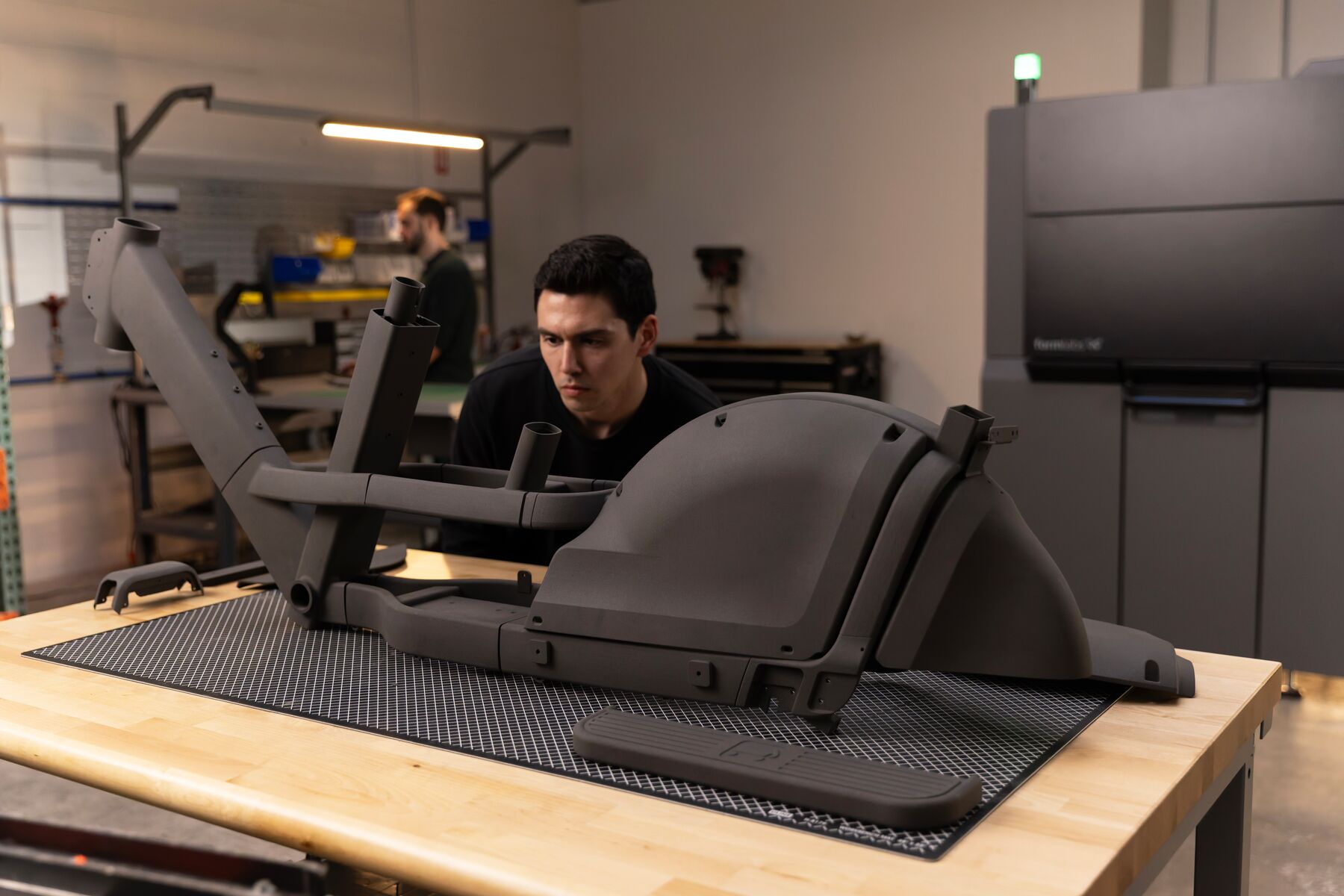
Formlabs CEO Max Lobovsky said,
“Since the beginning, Formlabs has worked to build the tools that make it possible for anyone to bring their ideas to life. With Fuse X1, we’re bringing industrial-scale SLS printing to a much broader market, making it competitive with traditional mass manufacturing. Customers no longer need to spend half a million dollars or dedicate an entire facility to manufacturing production-grade parts quickly and reliably.”
A customer, Autotiv, has tested the system for its print service, and its CEO, Evan LaBelle, says,
“Thanks to about half the upfront cost and about double the throughput, you can get a return on investment extremely quickly.”
A Formlabs 3D Printing Service?
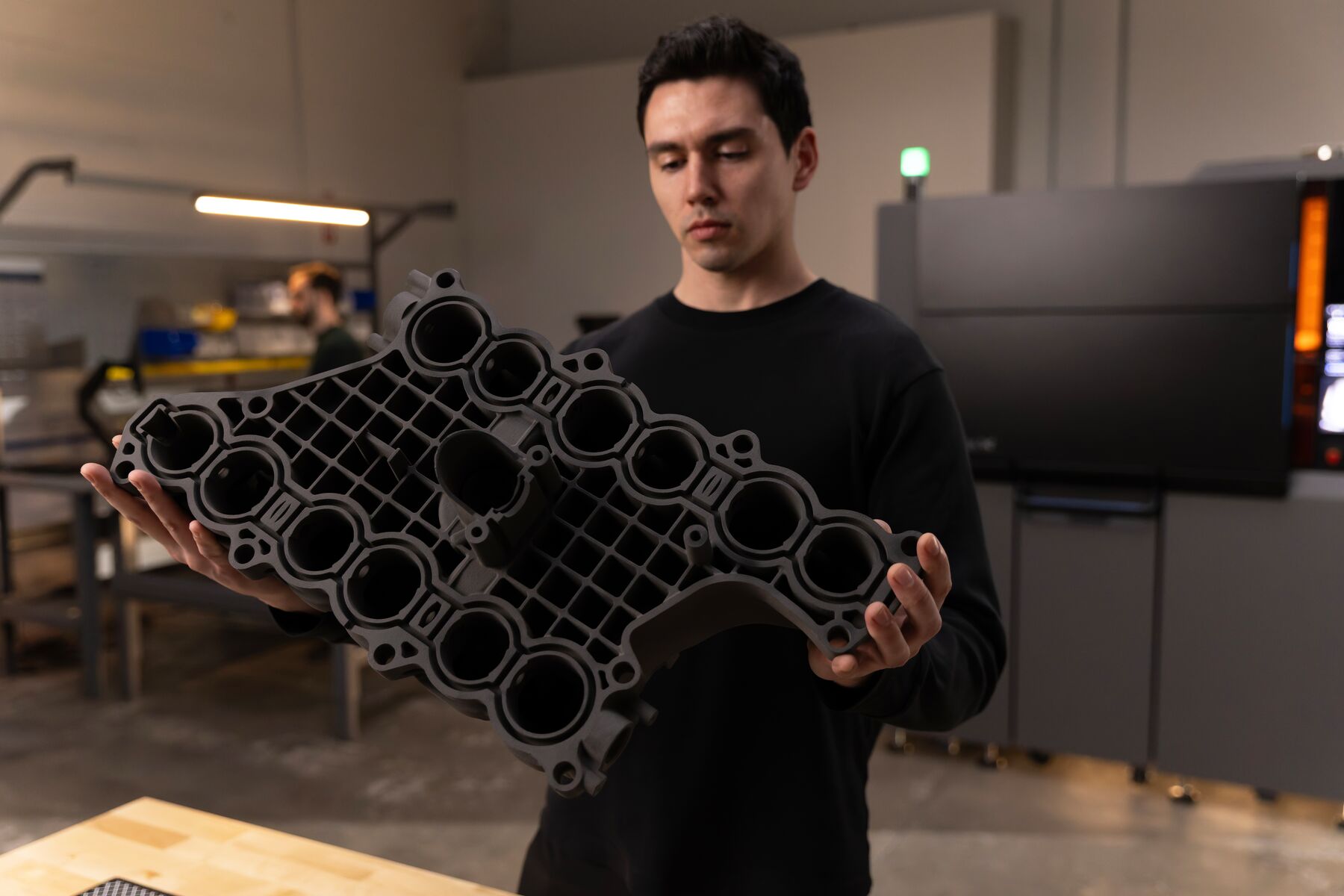
In one rather surprising announcement, Formlabs has launched its own 3D printing service, Form Now. This is great in that it lets you innovate and invent without an up-front investment. Then, once you’re up and running, you can buy Fuse systems. Or you could run your most popular part yourself and run a rare for your color or material via the service. Or you could start with the service, buy a machine, and then use the service for production at peak times. It’s a great way to grow a service business and a great way to let people test out parts. It may cause some service bureaus to be wary of Formlabs since the firm competes with them. Perhaps Formlabs can partner with all of the services that run its machines to offer the service? That would help them fill machines while letting customers use them with flexibility. So there is a bit of a risk there. Overall, however, I would recommend that everyone offer a service that lets people quickly try before they buy while making it easier to scale.
IPO?
Formlabs is clearly making itself up for a sale or IPO. This is a great move that could see the firm have a lot of potential growth. This is clearly marketed by the firm in telling us such gems as “Annual revenue surpassing $250 million in 2025″ and “Greater than 10% free cash flow margin while maintaining profitability for over 2 years.” This is the kind of investor/banker-speak that makes it 100% certain to me that the company will go public.
To me, the question is not if Formlabs will go public, but if it will do so in the United States or China. With Creality’s successful IPO, the groundwork has been laid for a Chinese IPO. Formlabs makes its systems in China and could opt for the significantly higher valuation it would get there, wedging its future to China. Formlabs was founded in 2011, and its VCs and other investors must be among the most patient in the world. With Creality doing well and the appetite of Chinese investors seeming healthy, it could opt to go public through an IPO in China. However, a lot of Chinese investors’ appetite is shored up by the belief that Chinese firms should dominate 3D printing and that 3D printing is important for China’s future. So Formlabs may not be Chinese enough to whet the appetites of as many investors as swarmed the 3,200-times-oversubscribed Creality offering.
The Journey So Far
In 2017, I wrote about Low Cost Selective Laser Sintering, saying,
“Formlabs’ own ecosystem approach differs from most FDM 3D printer startups who focus just on the machine and leave the software and materials to others. Less open, this more controlled approach does give reliable results. The company now is undertaking a huge challenge and this is to take their engineering prowess and deploy it to enable desktop laser sintering. Their $13,000 Fuse 1 3D printer could really define desktop SLS just like their SLA machines have made desktop SLA. SLS is much harder than SLA to implement, however, so the team could still have a tough time making it happen.”
There were indeed significant teething problems for Formlabs, but I think that we can see that the firm has indeed defined desktop SLS. Also, most of the other firms mentioned in the article have gone bankrupt. At the time, the desktop segment did not seem a direct threat to established players. Now it is. When the Fuse was finally released in 2021, we were as excited about the machine as we were by its subsequent improvements.
Existential Threat
Now, Formlabs will pose an existential threat to Sinterit, Farsoon’s polymer business, EOS’s polymer business, and HP’s polymer business. With Formlabs looming, companies could simply invest more in the metal segments they already have, eventually becoming metal-only 3D printing companies. Metals look so good now, and growth looks so extensive and defensible that firms could opt to become metal-only. They would simply let their polymer SLS businesses atrophy.
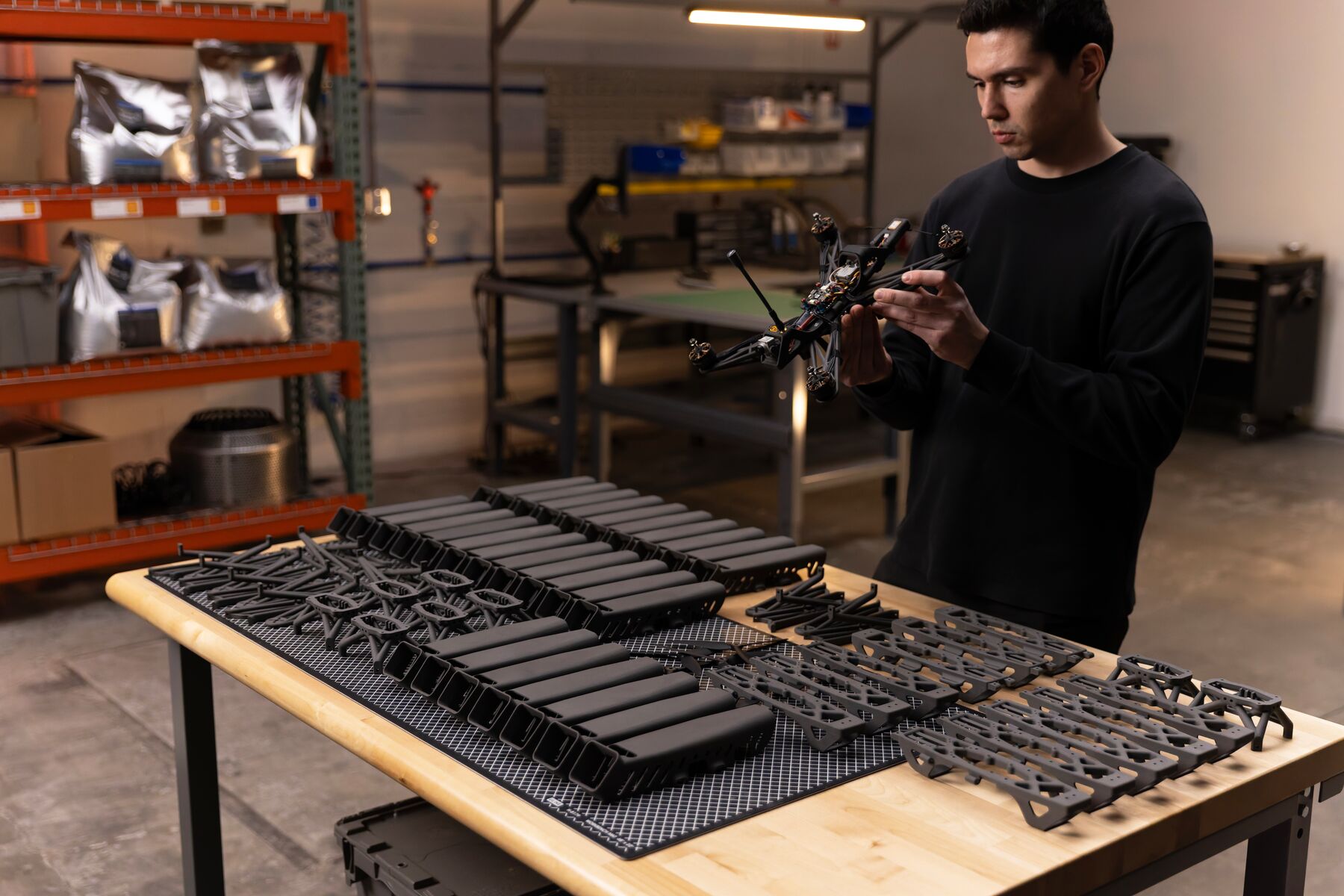
There is a moment now when EOS will have to consider whether it can enable large-scale manufacturing of polymer parts for tens of millions of units. Does the firm want to invest in this and offer, with partners, custom factories for drones, consumer electronics, and defense articles? Will it do so with its P1 or P3 platform, with something new, or by dropping a printer? For HP, it will be a question of defining how it views its current business, whether it is important to HP overall, and whether it is willing to shore it up, grow it with additional funds, or seek an exit. Other players in entry-level SLS and in entry-level industrial SLS will probably not survive this.
Openness Is the Key to Victory
Now, this all depends on one decision: will the new Formlabs system be open materials, and can people tweak parameters on it? If the system is open materials, then Formlabs will win. Coupled with its innovation and relentless focus, the firm will eke out a win in the end. If it keeps the ecosystem closed, then it will not win. If it waits too long to open it, it will get nice, high-margin powder sales but ultimately open the door to further competition from HP. Worse still, it will cause new Chinese entrants to compete with it. If parameters can’t be tweaked and external software can’t be used, it will limit the cutting-edge work that can be done.
In highly regulated areas such as aerospace and medical, Formlabs will find the going tough initially. Yes, it has a lot of dental materials and machines. But, for surgical guides and hospital 3D printers, it will need to learn new skills and new standards. It may find this slower than it thinks. But, if it also conquers in hospital 3D printing and surgical guides, it will be tough for others to survive. In defense, Formlabs’ machines can’t be used, and in some prototyping and production applications, people will not want to use their cloud infrastructure. This leaves some breathing room, but not much.
A Scalable Manufacturing As a Service
The total polymer AM market is worth around $9.79 billion at the moment. In this space, there is room for several billion-dollar revenue businesses. But, not many billion-dollar revenue businesses. If Formlabs were to take the battle to existing services, it would make it difficult for the existing players. But its biggest potential may lie in helping to start a new generation of low-cost polymer services worldwide. If it then also helps entrepreneurs and inventors scale with its solutions and work with Formlabs without having to know 3D printing, it will also grow the market.
So there is a scenario here where Formlabs extracts the long-term growth it needs to grow its market, makes its IPO work well, and does well as a public firm, while it leaves entrenched players be. This may seem complacent. But I think that, with its closed-ecosystem approach, a “manufacturing as a service” model where consulting, partners, and software help anyone print one part or a million will be the way to go. We’ve spent far too long watching each other and tweaking slightly different offerings. Instead, if Formlabs looked at what it would take for a single inventor to launch, prototype, produce, and scale up a DJI-like business that met her needs, it would find a future more profitable than the firm could ever have imagined.
Images courtesy of Formlabs