
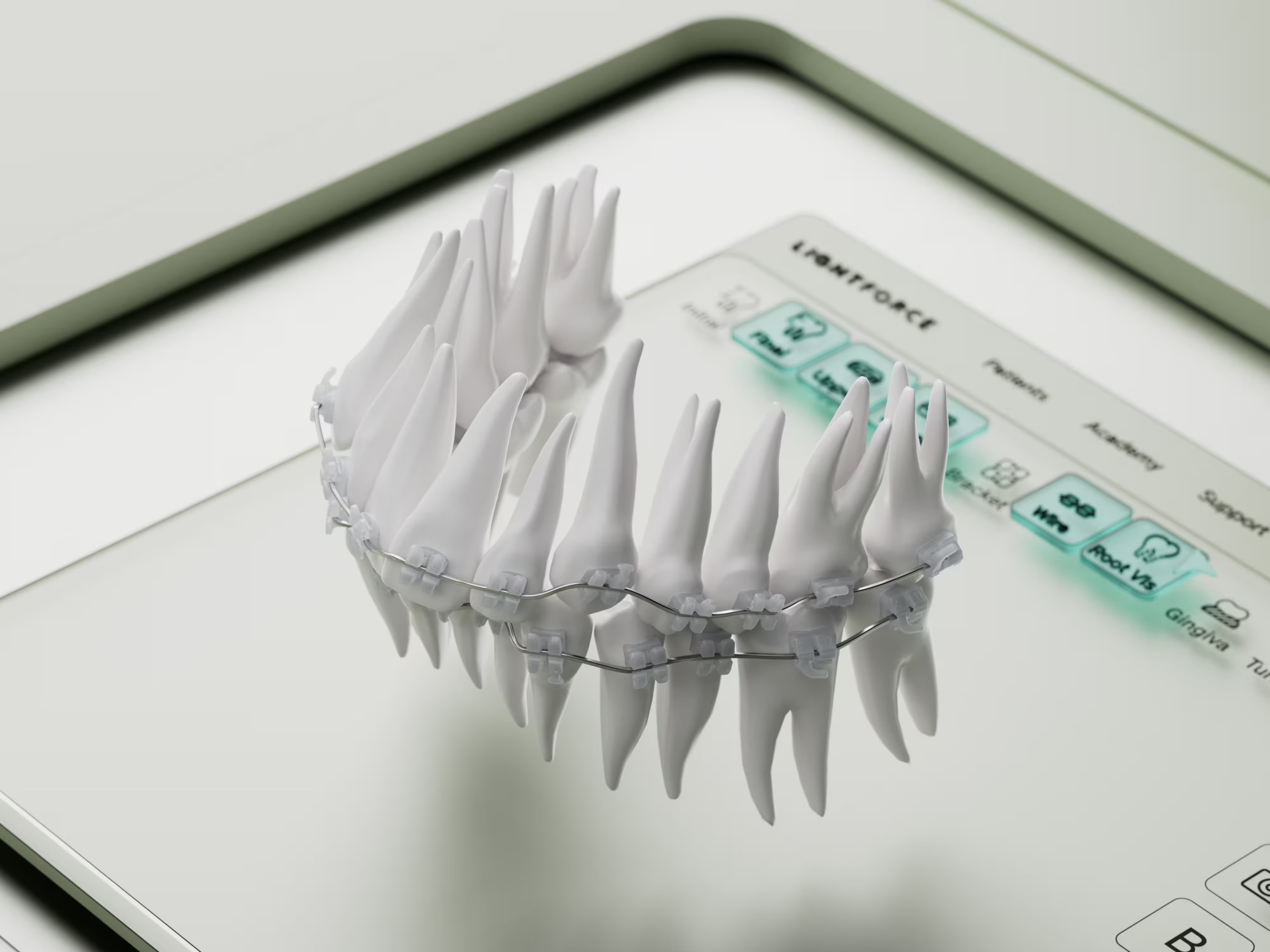
This is Part II of our LightForce interview series. While Part I focused on the technology behind the company’s customized 3D printed brackets, Part II looks at what that technology meant for the first patient to receive them.
When Katie Doran was a teenager, she spent years in braces, wore headgear, and went through a series of retainers. Like many patients, she thought her orthodontic treatment was behind her. It wasn’t. Years later, her teeth had shifted again. She tried clear aligners during the COVID-19 pandemic, but they didn’t work. When she eventually saw an orthodontist, she was told she would likely need surgery before starting another round of braces, followed by about 18 months of treatment.
“I kind of retired the idea of getting braces,” Doran, Vice President of Physical Operations at LightForce, told 3DPrint.com. “I thought my smile was just what it was.”
Instead, she became the first patient to receive LightForce’s new fully customized 3D printed metal brackets. Seven and a half months later, her treatment was finished, just in time for her wedding.
For Doran, the experience was different in more ways than one. As an executive at LightForce, she already understood the engineering behind the company’s customized brackets. But becoming the first patient to wear them gave her a completely different perspective. Designed from a digital treatment plan and 3D printed specifically for each patient, the brackets are the latest addition to LightForce’s personalized orthodontic platform.
Just six visits
The treatment begins with a digital scan at the orthodontist’s office. LightForce then creates a digital treatment plan showing how each tooth should move. Based on that plan, the company designs and 3D prints a unique bracket for each tooth. The metal brackets are manufactured in-house at LightForce’s facility in Wilmington, Massachusetts. Unlike some dental manufacturing processes that rely on printed molds or casting patterns, LightForce prints the metal brackets directly, with every patient receiving a completely customized set.
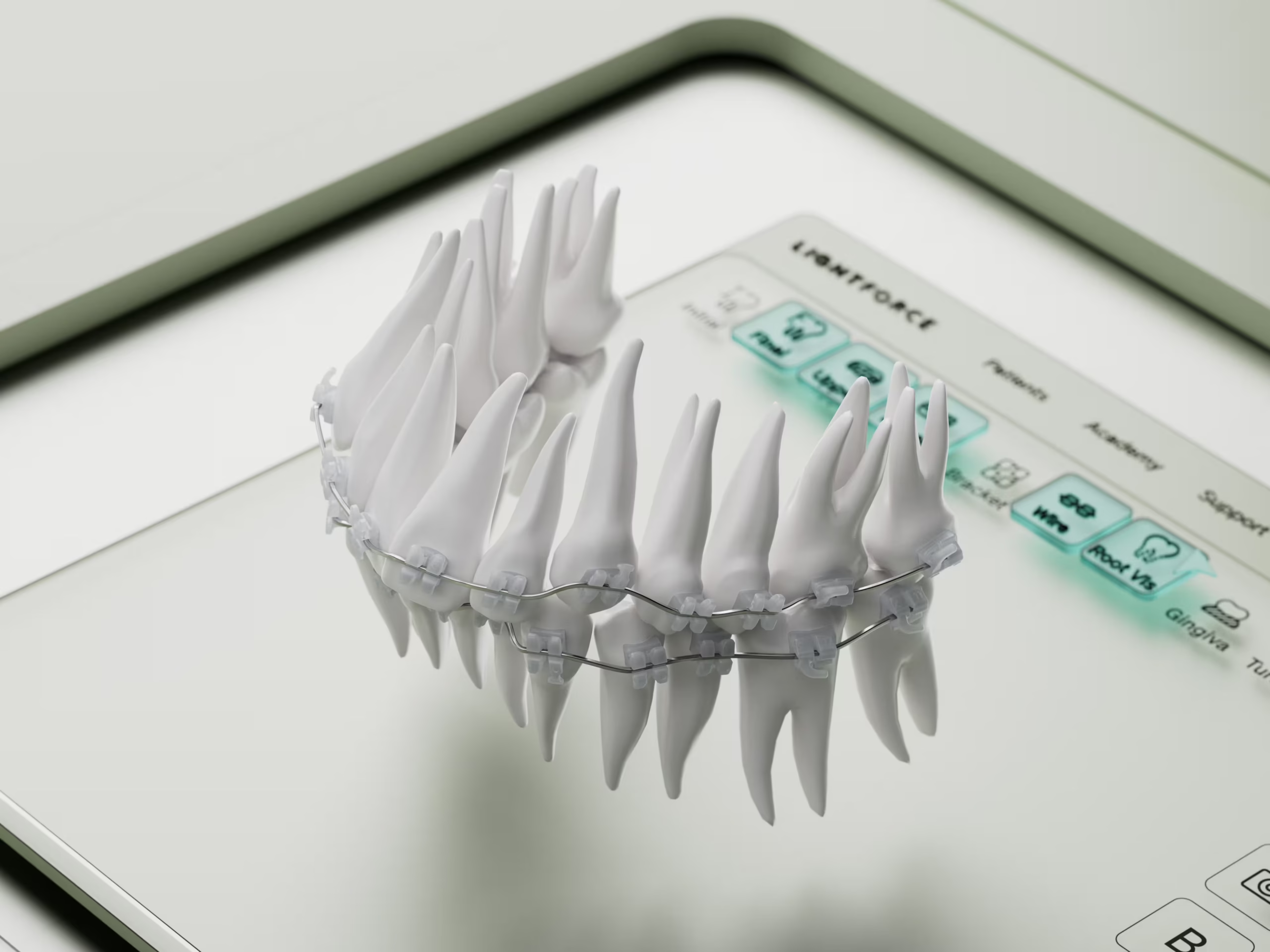
LightForce’s customized 3D printed orthodontic brackets are designed for each patient’s teeth using a digital treatment plan. Image courtesy of LightForce.
For Doran, that manufacturing process translated into a very different treatment experience. She remembers spending years in braces as a teenager. This time, the experience was completely different. Her entire treatment took seven and a half months and required only six appointments, including having the brackets placed and removed. Each follow-up visit lasted about 10 to 15 minutes.
“We would pull up my digital treatment plan, swap the arch wire, take a progress photo, and I’d leave,” she said. “As a working professional, spending less time in the orthodontist’s chair was one of the biggest advantages. My treatment also corrected a Class III bite without surgery, something I hadn’t expected.”
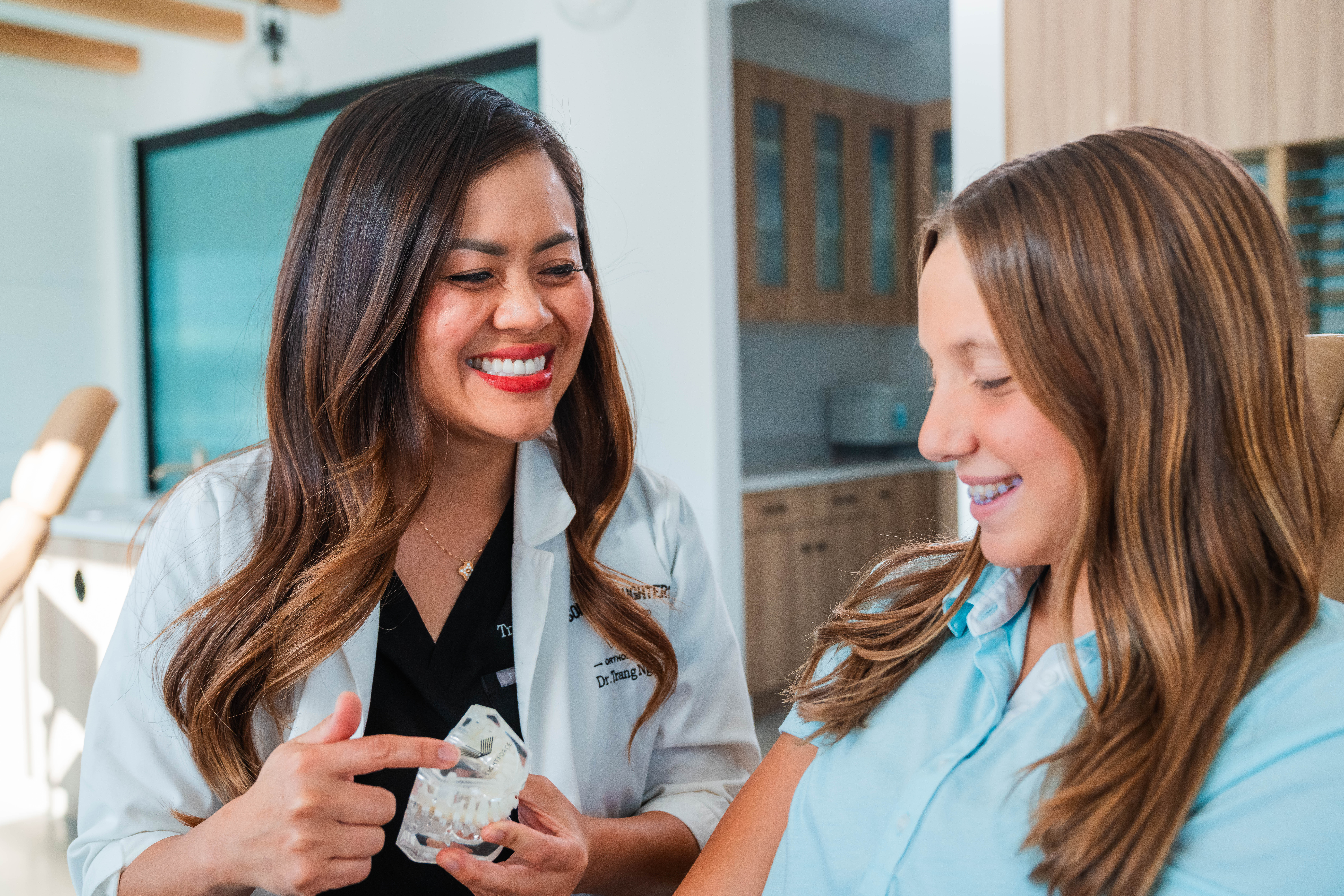
LightForce Orthodontics releases LightBracket Metal. Image courtesy of LightForce Orthodontics.
Dr. Bryan Lockhart, an orthodontist in private practice who has worked with LightForce since the company’s early days, says the answer starts long before the patient sits in the chair. With traditional braces, every patient receives the same brackets. Orthodontists then spend months making adjustments by repositioning brackets and bending wires to fine-tune the result.
Customized brackets change that process. Instead of starting with a standard bracket, orthodontists begin with a digital treatment plan designed for each patient. Each bracket is then manufactured specifically for the tooth on which it will be placed.
While clear aligners have become increasingly popular, especially among adults looking for a less noticeable option, braces continue to play an important role in orthodontics. Unlike aligners, which patients can remove and need to wear for most of the day, braces stay in place throughout treatment and give orthodontists more control over how teeth move, especially in more complex cases.
Today, orthodontic patients have more treatment options than ever before. Some choose clear aligners, while others prefer braces. Even within braces, patients can now choose between traditional and customized options, ceramic or metal, depending on their clinical needs and personal preferences.
Braces have also become more popular again, especially among younger patients. Social media and changing trends have made metal braces more accepted than they were a few years ago. In the case of LightForce, the company combines the control of traditional braces with brackets that are customized and 3D printed for each patient.
“The details have already been built into the treatment plan,” Lockhart said. “As treatment progresses, there is less need for many of the adjustments that have traditionally happened near the end of a case.”
Faster Appointments
The brackets themselves can also be placed more quickly. Instead of bonding each bracket one at a time, orthodontists use a custom tray to position all the brackets at once. According to Lockhart, that cuts down on the time patients spend in the chair during the first appointment.
For Doran, another benefit was comfort. Because the customized brackets could be placed lower on her teeth, she avoided using bite turbos, small pieces of material sometimes added to keep patients from biting directly onto their brackets.
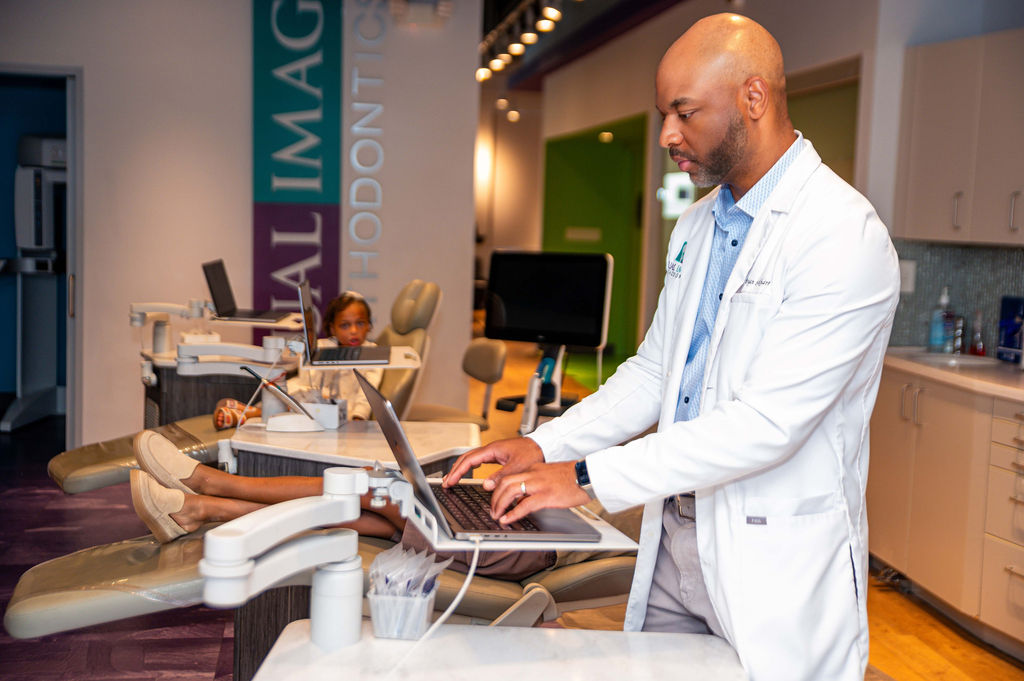
Dr. Bryan Lockhart. Image courtesy of LightForce.
As Vice President of Physical Operations, Doran spends her days overseeing LightForce’s manufacturing of customized brackets. But going through treatment herself changed how she viewed the technology.
“I cared far more about how it felt to have this product in my body than about the manufacturing process,” she said. “Most patients feel the same way. The technology matters because it leads to a better experience, not because patients want to know how the brackets are made. The manufacturing process is incredibly cool. But the benefit is that it allows us to do something you simply couldn’t achieve with traditional manufacturing.”
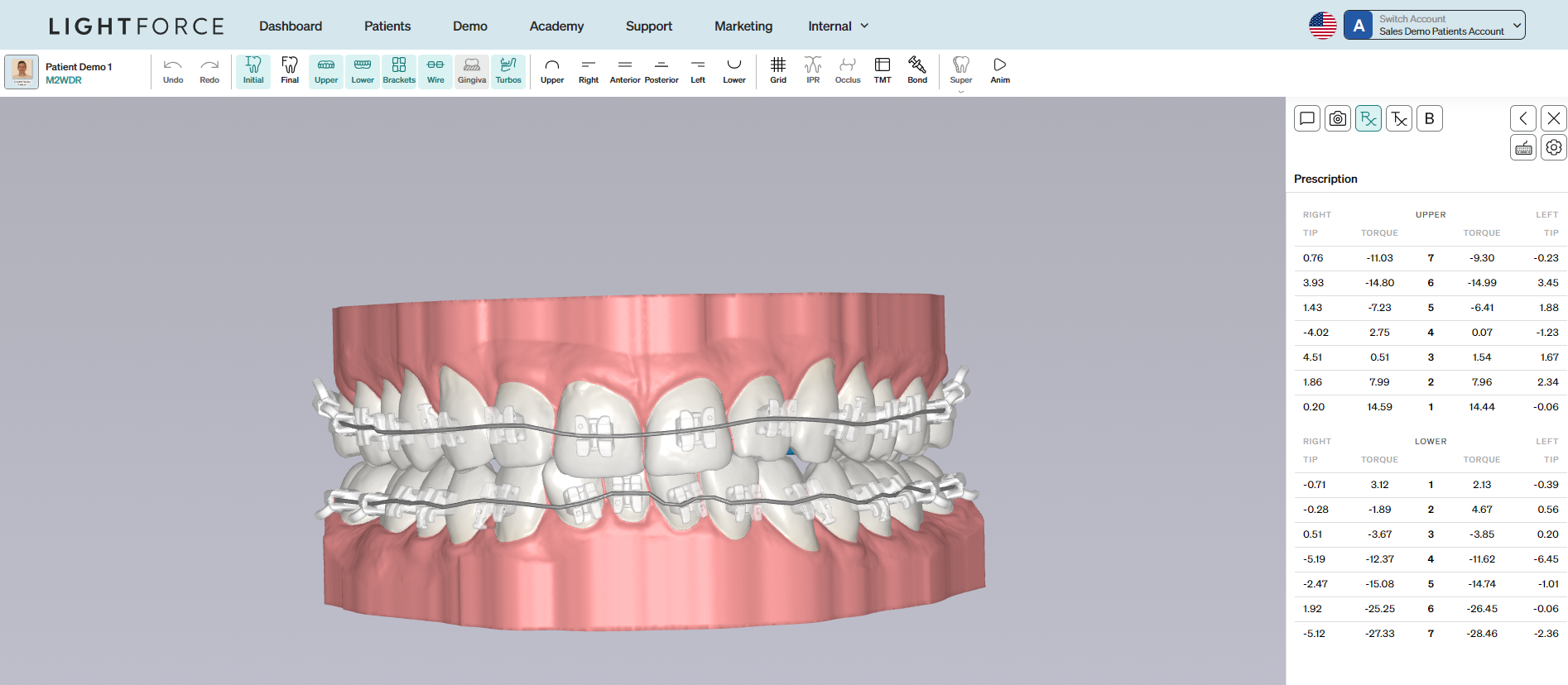
Software for 3D printed braces. Image courtesy of LightForce Orthodontics
Lockhart believes customized braces are the next step in the evolution of orthodontics. Years ago, orthodontists bent nearly every wire by hand. Later, brackets with built-in prescriptions simplified treatment. Personalized brackets, he says, are simply the next stage.
Doran tells me orthodontics has changed very little over the past century, apart from the introduction of clear aligners, leaving plenty of room for innovation. For patients, however, those changes may be measured in much simpler ways, with fewer appointments, less time in the chair. And in Doran’s case, getting her braces off in time for her wedding.