
Despite the very loud, indignant claims from American defense officials that the US hasn’t depleted a significant portion of its munitions stockpiles, the US has depleted a significant portion of its munitions stockpiles. Resultantly, President Trump has used the Defense Production Act (DPA) to stimulate accelerated production by US defense contractors.
This appears to have already filtered into the additive manufacturing (AM) industry, based on recent announcements like Beehive Industries’ $50 million order with EOS. Now, Continuous Composites also looks to be a beneficiary of the broader push to ramp up weapons production: the Idaho-based original equipment manufacturer (OEM) of robotic arm extrusion 3D printers just landed a US Army Manufacturing Technology (ManTech) contract to use its carbon fiber technology for missile components.
The multi-year contract for Continuous Composites is administered through America Makes, the Manufacturing USA institute dedicated to accelerating the US defense industrial base’s AM adoption. Continuous Composites has amassed an array of DoD contracts in the last couple of years, pulling in funding for work on applications like US Navy UAVs, light-weighting for Air Force airframes, and simulation software specifically designed for 3D printed composites.
The diversity of defense applications for which Continuous Composites has validated its process would suggest that the company has an outsized role to play in a production environment where agility has moved to the top of the prioritization agenda. This takes on extra relevance when you consider that DoD is currently trying to strike a balance between replenishing legacy weapons systems and getting the ball rolling on new spending programs.
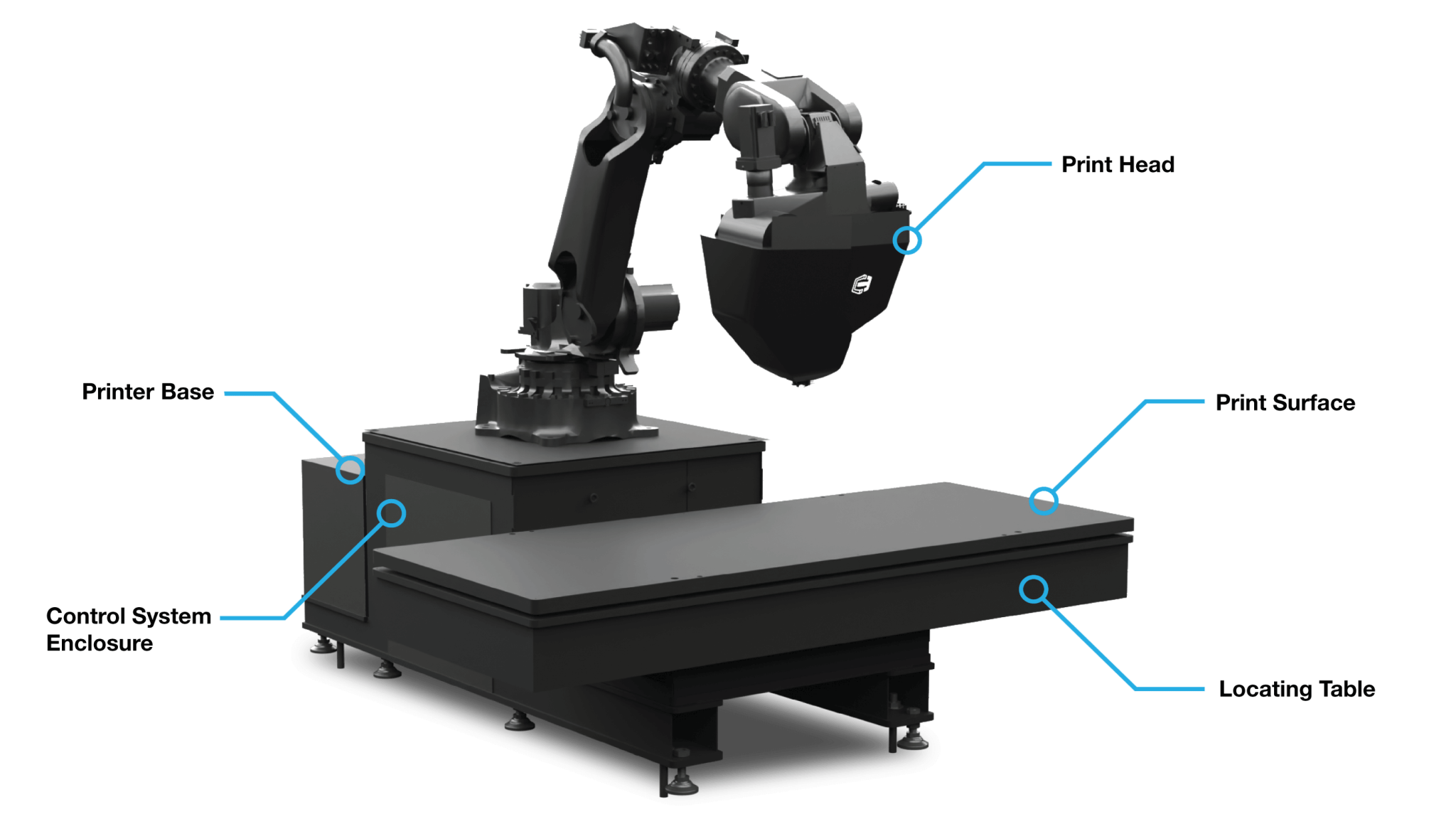
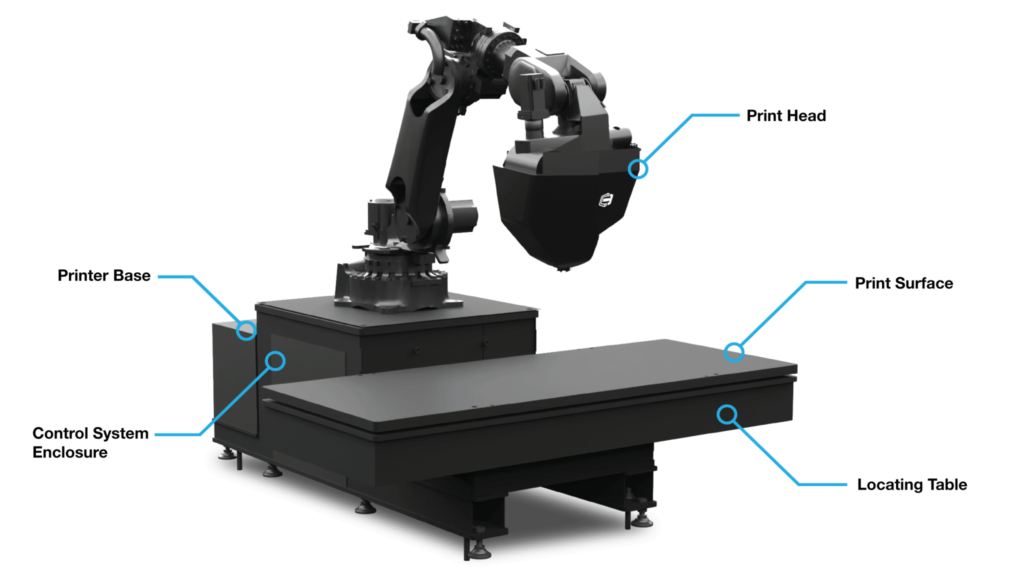
The CF3D Enterprise®, an integrated system for structural composite manufacturing—built to print complex geometries with precision and speed.
In a press release about US Army ManTech’s award of a multiyear contract to Continuous Composites for 3D printed missile components, the company’s CEO, Steve Starner, said, “We believe our technology provides game-changing capabilities to the U.S. industrial base, and we are focused on solving some of the toughest challenges related to high-performance and high-temperature materials. Our goal is to lower program risk, improve system capability, and position our customers for confident, scalable production in the future in alignment with Department of Defense priorities.”
It’s unusual to find a company of Continuous Composites’ size that has worked on so many different applications within the defense sphere, especially considering that all of those applications are currently in urgent demand by military customers. While Continuous Composites’ work with DoD has thus far primarily involved early-stage R&D, that’s arguably precisely the spot a company wants to be when serving a market on the verge of making major shifts in terms of the product mixes it’s targeting.
Additionally, the fact that an enterprise like ADDMAN Group is a Continuous Composite user provides a readymade pathway for the results of Continuous Composites’ work to move to commercialization. In that sense, too, Continuous Composites’ contract should benefit users like ADDMAN down the road, as well.
And, along those same lines, Stratasys should be another winner, considering that it just acquired Markforged, which has the rights to use Continuous Composites’ technology following a 2024 $25 million patent infringement settlement. Interestingly, the differences in how the two companies deploy the same core technology make it feasible that what’s good for one will also be good for the other: while Continuous Composites is appropriate for large-format parts, the relative portability of Markforged machines means that the parts printed with Continuous Composites’ systems can be repaired in the field by Markforged printers.
I expect to see that sort of redundancy/versatility get embedded into the foundation of the Pentagon’s new spending programs in the years ahead. AM industry stakeholders should pay equal attention to how quickly that same mindset makes its way into the overall manufacturing sector.
Images courtesy of Continuous Composites