
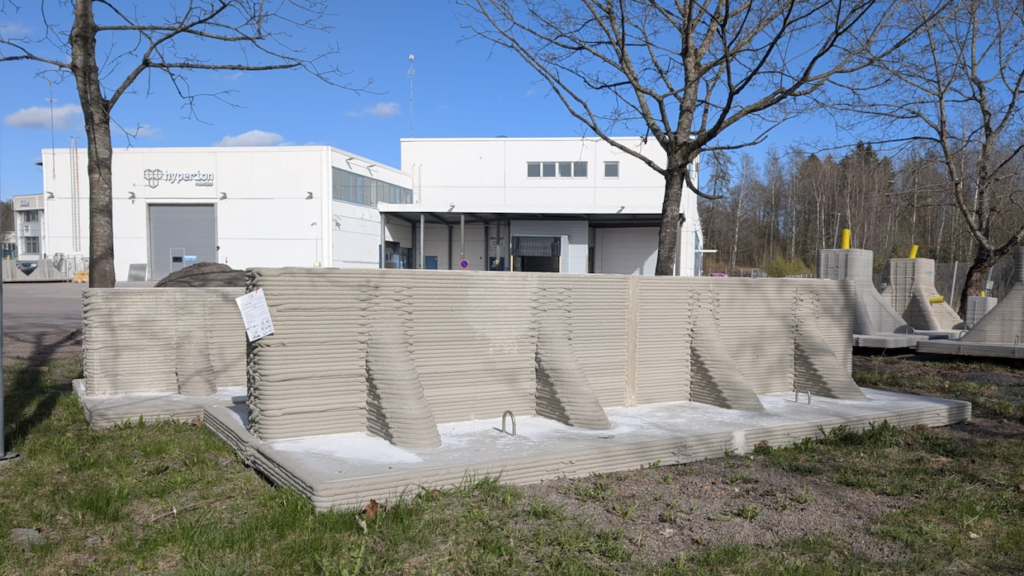
A new factory in North Lincolnshire will use robots to 3D print concrete parts for construction when it opens next June. The facility will focus on producing components like foundations and infrastructure elements at scale, using low-carbon materials and robotic systems rather than traditional molds. The project is being developed by Hyperion Robotics in partnership with Swedish company LKAB Minerals, and is already tied to a real project with its first known client, Costain, a UK infrastructure contractor working on major energy and transport projects.
Costain has already lined up 3D printed concrete foundations for a carbon capture project on Teesside, part of the East Coast Cluster. Costain and A E Yates will work with Hyperion to produce approximately 90 high-strength concrete pipe support bases, or sleepers, along 1.3km of onshore CO2 pipelines across Teesside using its advanced robotic manufacturing and digital technology.
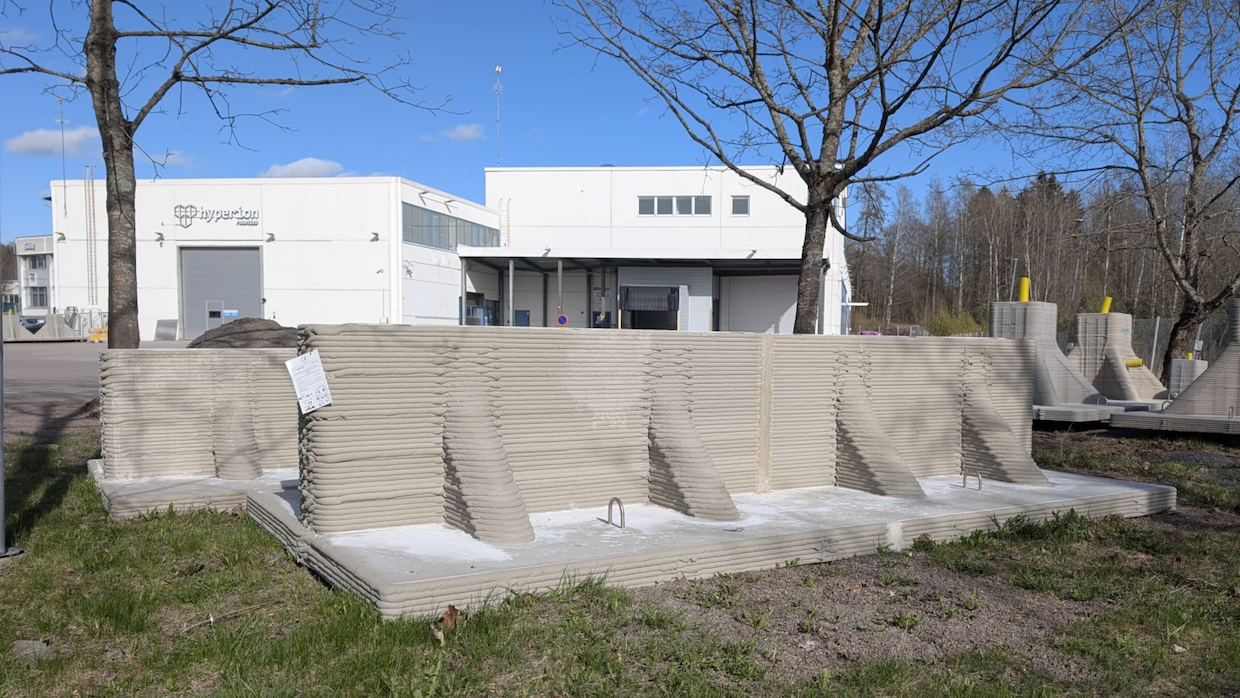
3D printed concrete sleepers for Costain’s landmark East Coast Cluster project. Image courtesy of Hyperion Robotics.
Named Forge I, the factory is scheduled to open before summer 2026. In fact, the company is already preparing to open the site to industry partners, with an event set for June 23, where attendees will be able to tour the facility and watch a full foundation unit being printed live.
The site will produce pre-cast concrete foundation units using robotic and automated manufacturing systems, with LKAB supplying the mineral inputs and the physical site, while Hyperion develops and operates the facility.
The biggest shift for the facility is how these parts are actually made. Instead of pouring concrete into molds, waiting for it to harden, and then pulling the parts out, the factory will use robots to print the pieces. That makes it easier to tweak designs, use less material, and move faster when changes are needed. And the main idea behind Forge I is to turn all of that into something repeatable.
The companies say the facility will use low-carbon concrete materials, aligning with broader efforts to reduce emissions in the construction sector. Concrete production is a major source of global CO₂ emissions, and there is growing pressure to find more efficient and sustainable alternatives.
“By supplying climate-efficient mineral inputs directly into Hyperion’s computational design and robotic production platform, we are helping to establish a new automated raw-materials-to-infrastructure value chain in the UK. It demonstrates how materials innovation and industrial digitalization can work together to accelerate the transition to lower-carbon, high-performance construction,” noted Steve Handscomb, Managing Director Cementitious, LKAB Minerals UK.
Forge I is designed to produce more than 50 concrete foundation units per week, each measuring up to 3 meters by 3 meters and 2.5 meters in height. These parts are being built for sectors like energy, water, utilities, and data centers, where foundations are a repeat, high-cost part of every project. All units will meet Eurocode standards and carry CE marking, positioning them for real infrastructure use from the start.
The bigger shift is how these foundations are made and delivered. Instead of building them on-site, Hyperion is moving production into a controlled factory environment where parts can be printed, tested, and shipped ready for installation. That cuts down on labor, reduces heavy equipment on-site, and helps avoid delays caused by weather or site conditions. Early trials with partners like National Grid and the University of Sheffield showed promising results, including up to 70% less concrete use and lower carbon output. If scaled, the approach could also bring significant cost savings while turning foundations into a more standardized, repeatable product.
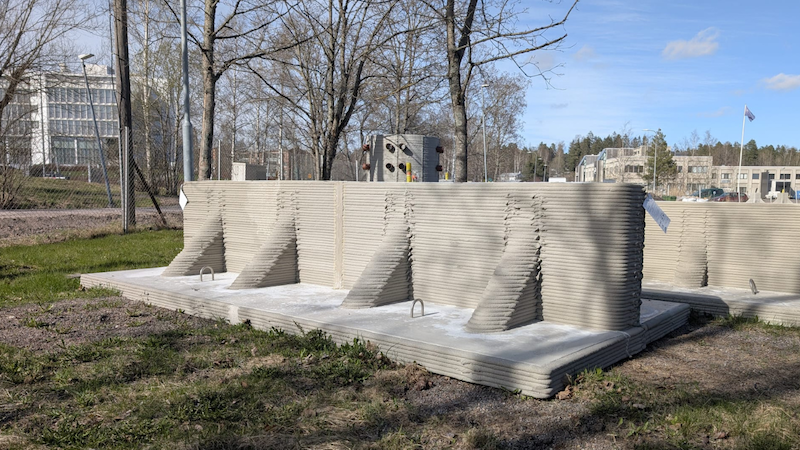
3D printed concrete sleepers for Costain’s landmark East Coast Cluster project. Image courtesy of Hyperion Robotics.
3D printing in construction has been around for a while, but mostly in small projects or one-off builds. But this is different. It’s less about printing a single house and more about making the same parts over and over, the kind of thing that can actually scale.
The North Lincolnshire site is meant to work like a production hub, turning out printed concrete parts for infrastructure and other construction projects. If it works, it could help move 3D printing out of the testing phase and into more regular use on real jobs.
For the 3D printing industry, it’s another sign that construction might be one of the areas where the technology actually sticks, not just as a demo, but as part of everyday production.
As additive construction expert Stephan Mansour previously told 3DPrint.com, the challenge has never just been the technology itself, but how it fits into real construction workflows. Last year, he also pointed out that the industry keeps coming back to concrete because it’s familiar and already widely understood. As he told 3DPrint.com, “everyone in construction understands concrete… and there are already standards in place.”
That’s part of what makes projects like this more realistic. Instead of trying to reinvent construction from scratch, they’re building on materials and processes the industry already knows, just with a different way of making them.
What makes this development stand out is not just the use of 3D printing, but the decision to center an entire factory around it. Many construction 3D printing efforts to date have focused on individual projects, like printing a single building or testing a new material. Here, the goal is to run a steady production setup that can turn out the same types of components again and again.
Construction hasn’t changed much in decades, still relying on manual labor and old processes, which is why this shift stands out. Moving production into a factory gives companies more control, more consistency, and a way to scale when needed, while also avoiding common site issues like weather delays and uneven quality. It can also help deal with labor shortages by moving some of the work from job sites to machines. On top of that, the focus on low-carbon materials taps into growing pressure to cut emissions in a sector where concrete has a big footprint.