
In my most recent post about RIMPAC, I noted that US military joint exercises appear to be the latest function of the US government to be leveraged by the Trump administration as a bargaining chip, in connection with the administration’s cutting short a joint exercise between US and South Korean armed forces. I pointed out that the timing of the White House’s move came right after news broke that China and South Korea are considering holding a joint leaders’ summit on the sidelines of the Asia-Pacific Economic Cooperation summit.
I also suggested that, considering how central advanced manufacturing technologies have become to the US’s joint military exercises, those technologies collectively may very well be one of the key capabilities that the US sees as a pressure point. The other piece to that, which I didn’t mention, but which is what made the possibility occur to me in light of the South Korea development, is that South Korea appears to be signaling that it’s ready to ramp up its national AM landscape.
For instance, there was a recent story about the Hyundai-Kia center for AM R&D, and not long before that, classification society Korean Register (KR) announced that it had issued its first-ever certification of an AM process, awarded to a company based in Daejeon that specializes in maritime applications. Now, Lincsolution, a unique enterprise that operates both as an OEM of its own polymer printers and as a reseller of other OEM machines, while also providing AM services, is announcing that it will establish an AM hub for aerospace and defense located in Daejeon.
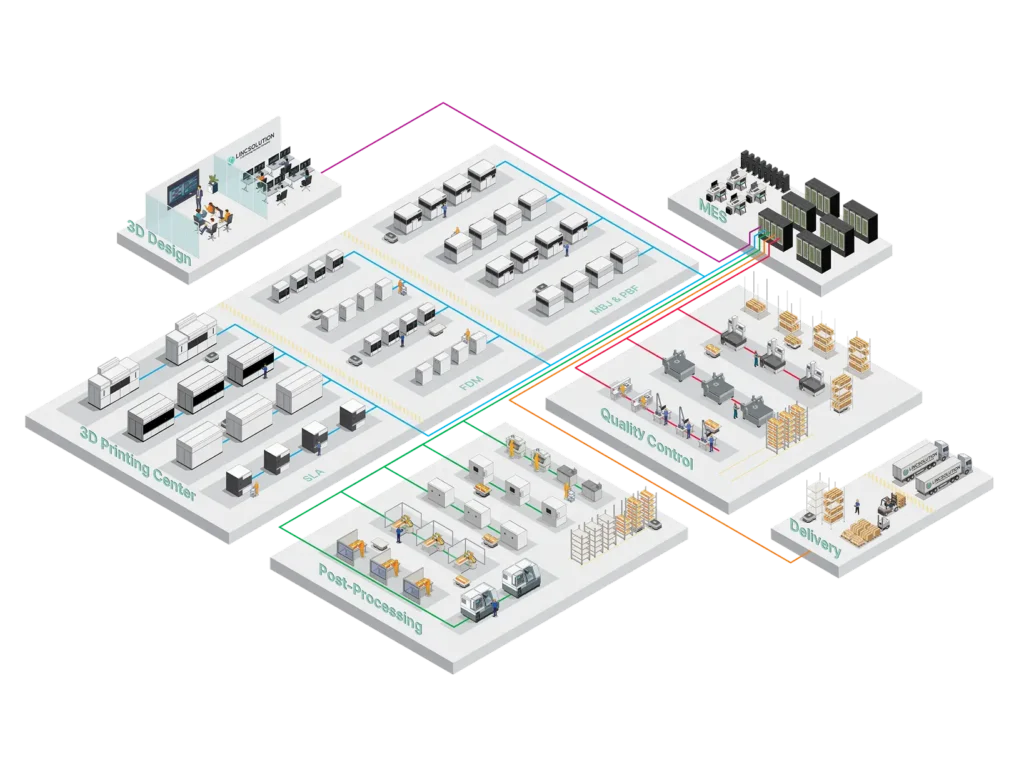
Located in the center of South Korea, Daejeon is the nation’s fifth-largest city and is touted as the country’s Silicon Valley. Lincsolution has already announced that it is building in Daejeon what it calls the largest AM facility in South Korea, to be completed by December: a 200,000+ square foot site that the defense hub will be connected to. The aerospace and defense operations will use servers dedicated solely to those applications, and remain isolated from all external networks.
Additionally, Lincsolution is working towards compliance with the Pentagon’s Cybersecurity Maturity Model Certification (CMMC), a regulation that is currently in limbo as it moves to Phase 2, although the less-stringent Phase 1 guidelines remain in place. Along with a variety of aircraft and launch vehicle components, Lincsolution is also targeting parts for satellites and guided weapons, as well as the low-volume parts for mature weapons systems that cause so many lead-time issues in defense supply chains.
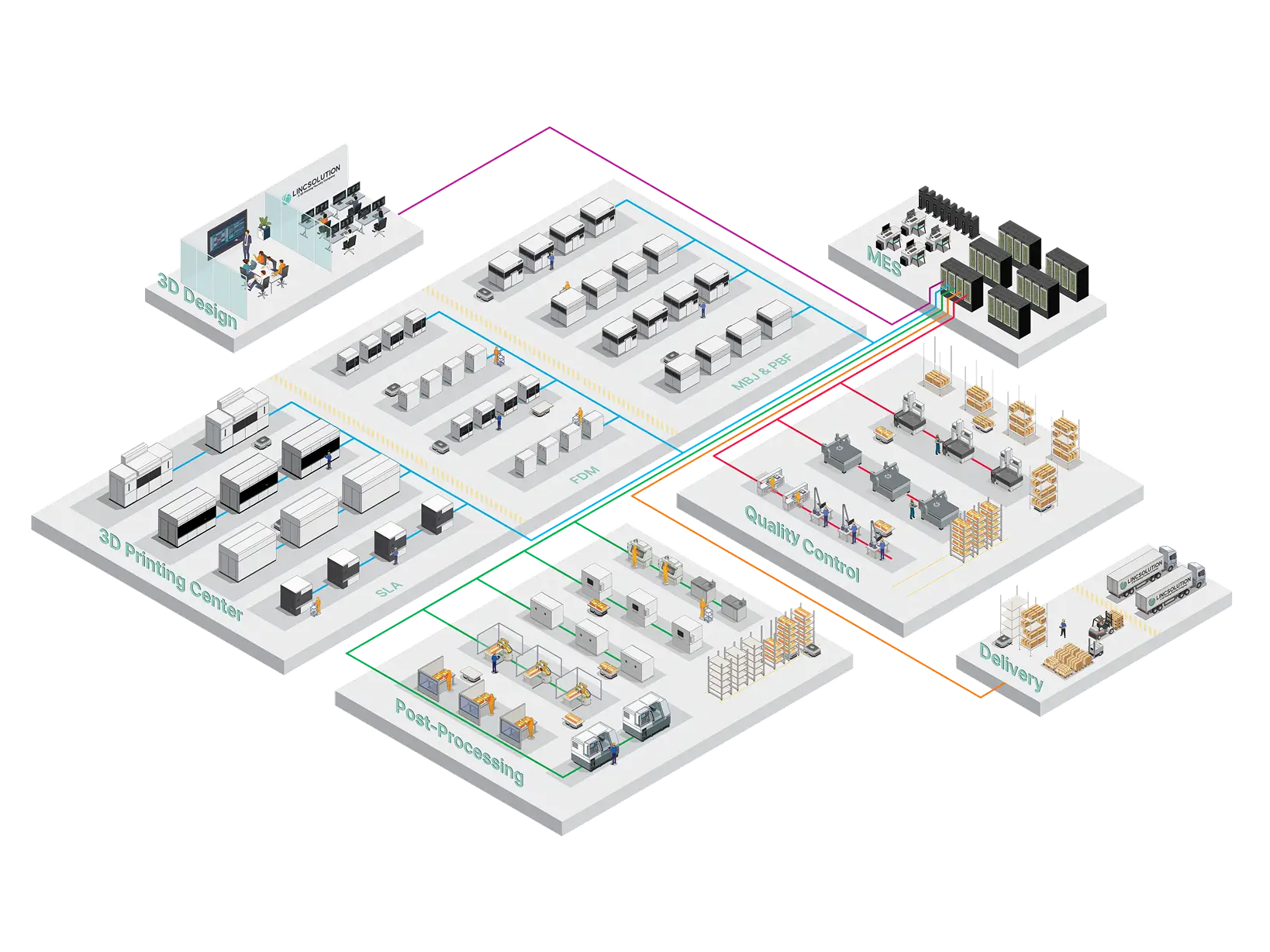
Lincsolution’s in-house 3D printing service.
I’d never heard of Lincsolution until this latest announcement, and as is often the case in such circumstances, upon searching 3DPrint.com for old stories, it turned out that Joris Peels was the only one to have written about the company, commenting in an article from nearly three years ago that “not enough people are paying attention to [Lincsolution].” He was, of course, correct, and the company had a busy 2025, going public on the KOSDAQ in June.
The next month, Lincsolution agreed to supply South Korea’s military with an expeditionary 3D printing system, and two months after that, the company signed a deal to supply Hyundai with auto parts at scale. Last month, meanwhile, Lincsolution was recognized by South Korea’s Army for its work on 3D printed drones.
Referring back to the joint exercises between the US and South Korea, a DVIDS story from July noted that the two militaries worked together during the Combined Joint Logistics Over-the-Shore (CJLOTS) ’26 exercise on July 11, involving training in expeditionary AM. South Korean “industry partners” also worked with both the US military and Japanese defense contractors earlier at Valiant Shield. Beyond the military, the US and South Korea signed a joint agreement back in May to collaborate on shipbuilding objectives, including tech transfer and workforce development.
At the same time, China is South Korea’s largest trade partner, and with the US a fairly close second, it’s clear why South Korea finds itself caught in the crosshairs between history’s two largest economies. The current global economic moment is especially pressurized for South Korea, as it has all the assets to position it, potentially, as the most important locale for the AI boom. Its dual nature vis-à-vis the US and China — being the subject of both courting and bullying by the two superpowers — may conceivably serve as a singular stimulus for South Korean strategic autonomy, which would further incentivize the nation to accelerate its AM innovation.
Thus, at the same time as South Korea’s R&D capacity takes on greater significance than ever, Lincsolution is set to provide unrivaled AM capacity to all the domestic and multinational manufacturers clustered in the national R&D capital. AM industry observers will get an opportunity to gauge how global trade tensions fueled by Sino-American power jockeying might continue to impact industry growth over the long haul.
Images courtesy of Lincsolution