

Researchers at Pennsylvania State University (Penn State) say they may have found a softer, less invasive way to treat severe high blood pressure. In a new study published in the journal Device, the team explains how they created tiny 3D printed implants that wrap around arteries and deliver electrical stimulation directly to the body’s natural blood pressure control system.
Since traditional implants are often made from rigid materials that do not naturally work well with the body’s soft tissue, researchers have been searching for more flexible alternatives, ones that don’t have problems like irritation, inflammation, and scar tissue forming around implantable bioelectronics. So these new devices, developed by a team at the university’s College of Engineering, are flexible enough to stretch and move with arteries instead of fighting against them. In fact, the Penn State team believes its new approach could help solve some of those problems.
The work focuses on hypertension, or high blood pressure, which affects nearly half of adults in the United States and roughly 1.28 billion people globally. For many patients, medications and lifestyle changes are enough to manage the condition. But about one in ten people with hypertension have what doctors call “drug-resistant hypertension,” which means their blood pressure stays dangerously high even after taking multiple medications. And that is exactly where these new implants come in.
To tackle that problem, the researchers created a soft bioelectronic device called “CaroFlex,” a small, stretchy implant around the size of a fingertip. It is designed to attach to the carotid sinus, an important region near the carotid artery that helps regulate blood pressure through something known as the baroreflex.
Often described as “the body’s built-in pressure sensor,” the baroreflex constantly monitors how much the blood vessels expand as blood moves through them. So, when blood pressure rises too high, specialized nerve endings in artery walls signal the nervous system to bring it back down. Scientists have studied ways to electrically stimulate this system for years, but many earlier devices relied on rather rigid implants that could damage tissue or become less effective over time.
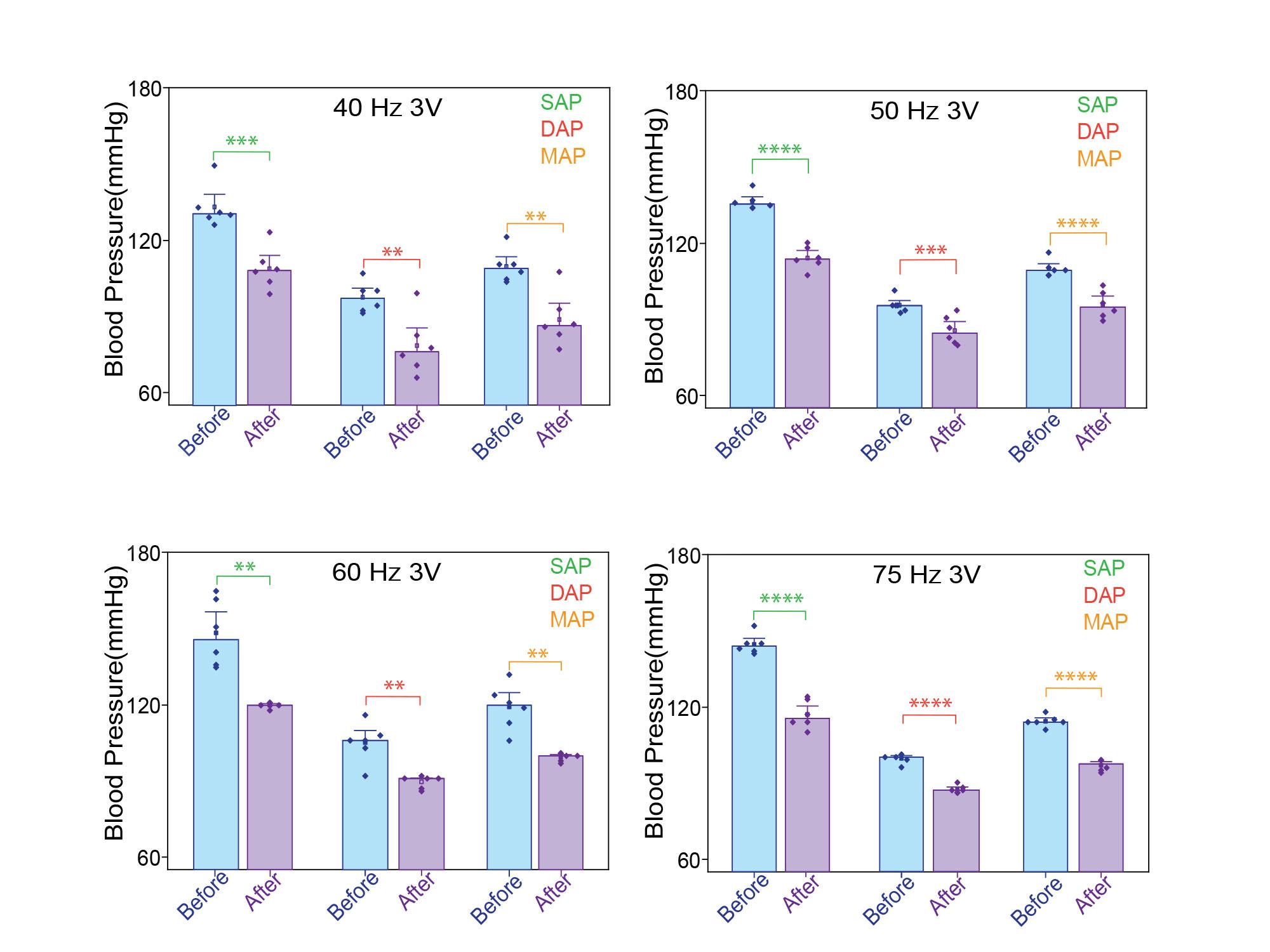
The figure demonstrates the impact CaroFlex had on systolic arterial pressure (SAP), diastolic arterial pressure (DAP), and mean arterial pressure (MAP) in rodent models. The team compared readings taken from before and after stimulation, using four different electrical frequencies, reporting that CaroFlex reduced average levels across all domains. Image courtesy of Tao Zhou.
A look back
Penn State’s implant belongs to a newer area of medicine known as bioelectronic medicine, or neuromodulation, where devices use electrical signals to interact with nerves and the body’s natural reflexes. Researchers have been studying these kinds of treatments for high blood pressure since at least the early 2000s. One of the best-known examples was CVRx’s Rheos system, which used a pacemaker-like device implanted near the chest and connected to electrodes placed near the carotid artery in the neck to stimulate the body’s natural blood pressure response.
Those earlier systems worked, but they relied on pretty rigid materials and wiring. Since arteries constantly expand and contract with every heartbeat, hard implants can be difficult for the body to handle over long periods of time.
Penn State’s newer CaroFlex device is designed differently. The fingertip-sized implant is soft and stretchy, allowing it to bend and move more naturally with the artery itself instead of behaving like a hard object attached to soft tissue. Penn State’s approach is different because the device is soft and stretchable.
But softness was not the only problem the team tried to solve. The researchers also wanted to avoid another issue that is quite common in implantable devices, and that is stitches. Many implants need sutures to stay attached to tissue, but arteries constantly move and stretch with every heartbeat. And over time, those stitches can irritate or damage surrounding tissue.
To get around that problem, the Penn State team developed a “suture-free” design using a soft adhesive hydrogel layer that gently sticks directly to the artery itself. However, that does not mean the implant can be placed without surgery onto the artery, at least in its current experimental stage, but the adhesive does remove the need for stitches to hold the device in place.
3D printing meets bioelectronics
According to the university, the team used 3D printing to build the implant from flexible materials that can bend and move naturally alongside arteries. They also developed an adhesive layer that allows the implant to stick gently to biological tissue without causing major irritation.
“For many patients, even taking a combination of three to five medicines doesn’t alleviate their high blood pressure,” said Tao Zhou, research team leader, author of the study, and an assistant professor of engineering science and mechanics at Penn State. “In these cases, bioelectronic devices that use electrical signals to modulate the body’s natural response systems offer a promising form of alternative treatment.”
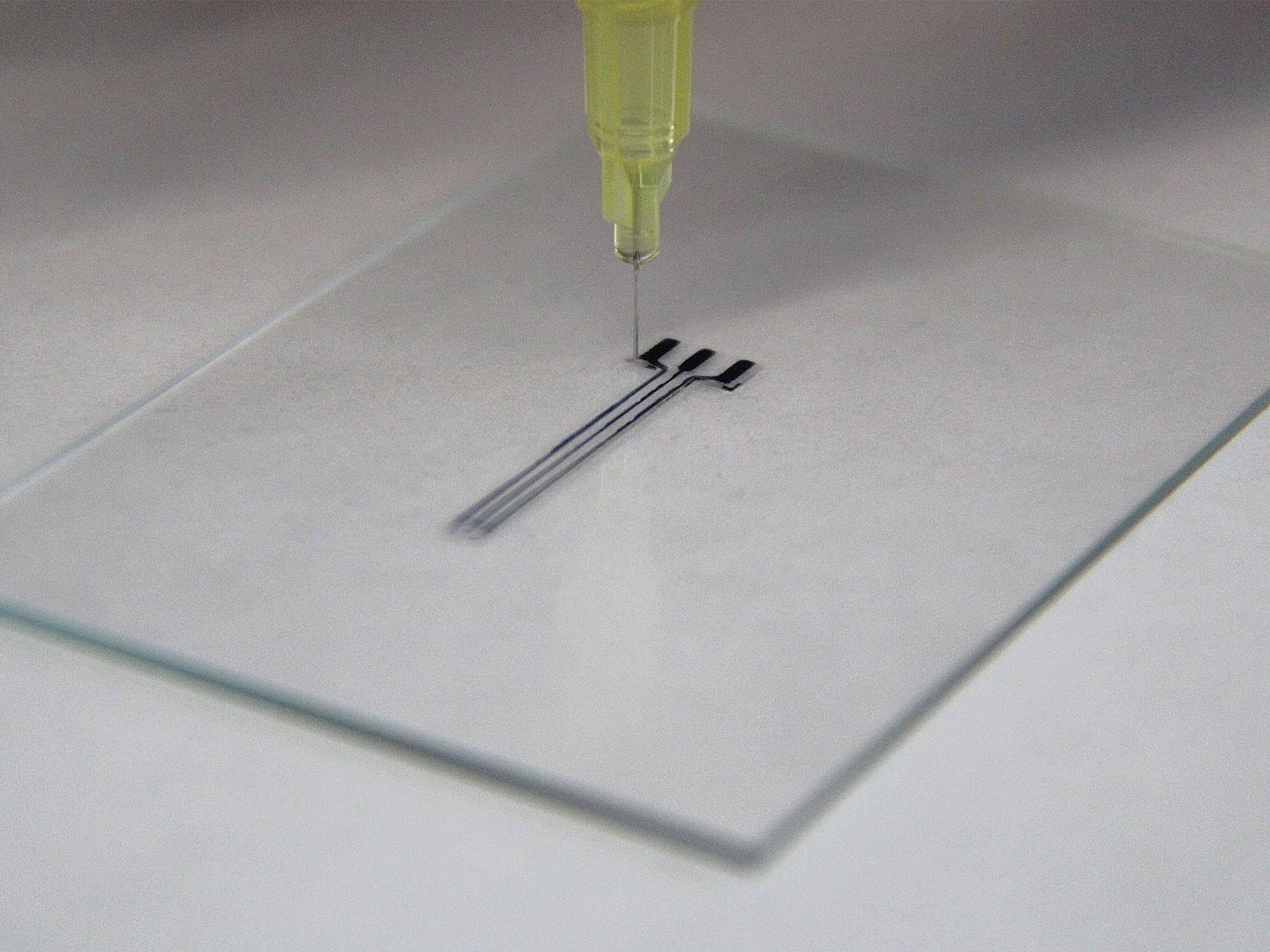
3D printing allows the team to produce bioelectronics faster and with better biocompatibility to the body’s soft tissues than traditional fabrication methods. Image courtesy of Tao Zhou.
For the 3D printing industry, the project also highlights the growing area of research of soft bioelectronics and implantable medical devices. Since traditional manufacturing methods often struggle to produce electronics that are both flexible and highly customized, 3D printing has allowed researchers to create small structures with unique shapes, soft materials, and designs that can better match the body’s natural movement.
Interestingly, CaroFlex is not the first soft bioelectronics project from Tao Zhou’s lab. Earlier this year, the team unveiled experimental 3D printed brain sensors designed to sit directly on the surface of the brain and record electrical activity. The soft hydrogel-based sensors were customized to match the exact folds and curves of individual brains, which researchers hope could reduce irritation and improve performance compared to traditional rigid electrodes.
Like CaroFlex, the project focused on creating electronics that behave more like living tissue instead of relying on hard, one-size-fits-all hardware. Zhou’s lab has also published plenty of research on direct ink printing, conductive hydrogels, and multi-material 3D printing for soft implantable electronics. In fact, images released by Penn State show the devices being printed through syringe-like extrusion systems that deposit soft conductive materials layer by layer.
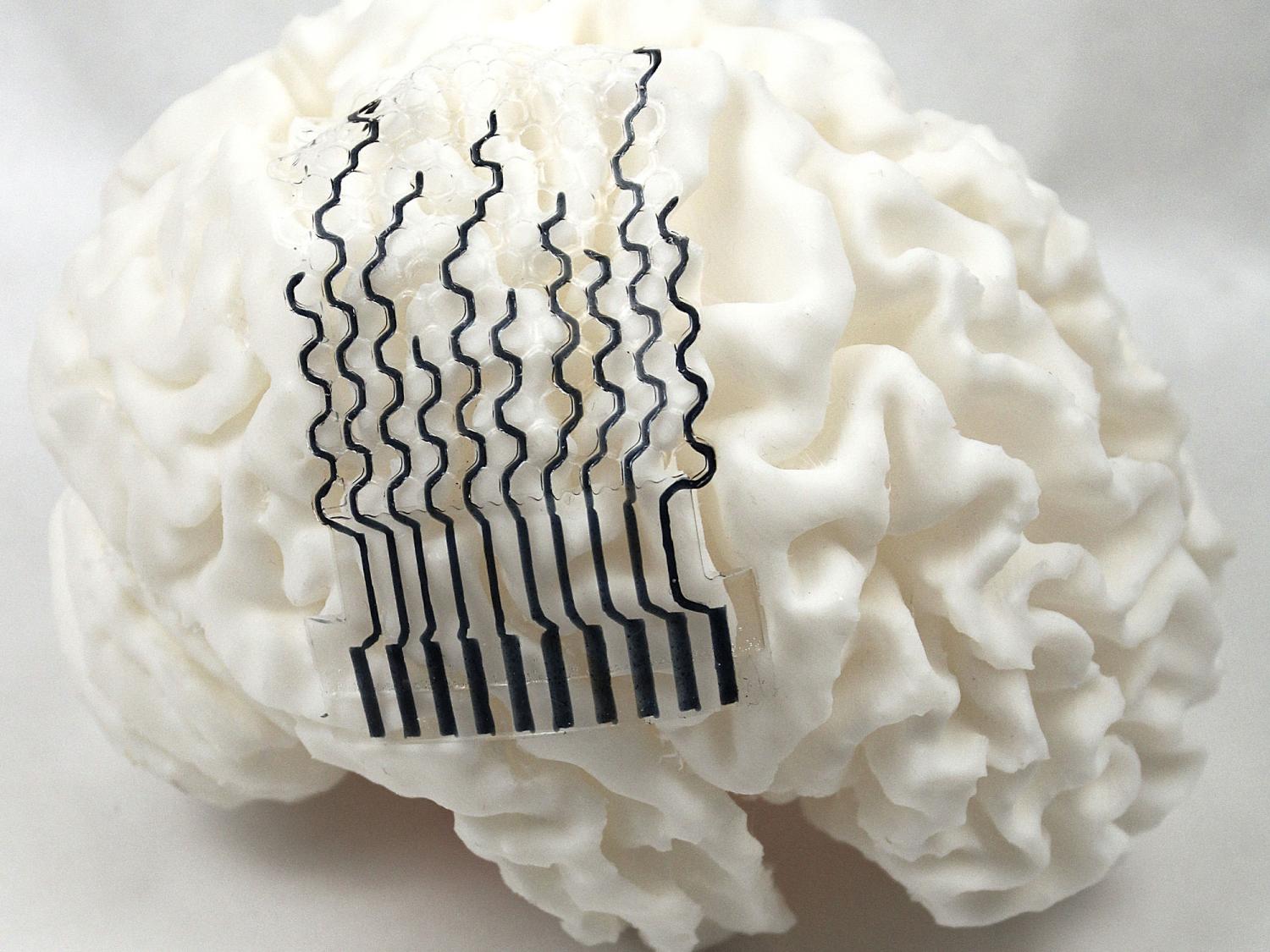
The soft bioelectrodes use a honeycomb-inspired design that allows researchers to stretch them onto the specific geometry of a patient’s brain, without sacrificing structural strength or sensitivity to electrical and physiological signals. Image courtesy of Tao Zhou.
This is also part of a broader trend in healthcare. Over the last several years, researchers around the world have been looking at flexible electronics for everything from “smart” bandages and wearable sensors to brain implants and soft robotics. Penn State itself has been active in the field, recently showing projects involving hair-thin EEG monitors, emotion-detecting wearable sensors, and systems that can monitor wounds in real time.
Still, turning experimental implants into approved medical products is never simple. Long-term durability, safety testing, manufacturing scale-up, and regulatory approval are all still major hurdles. So far, the technology has only been used on animals. The device was tested in rodents, where researchers said it reduced hypertension while causing far less damage to surrounding tissue compared to more traditional implants.