
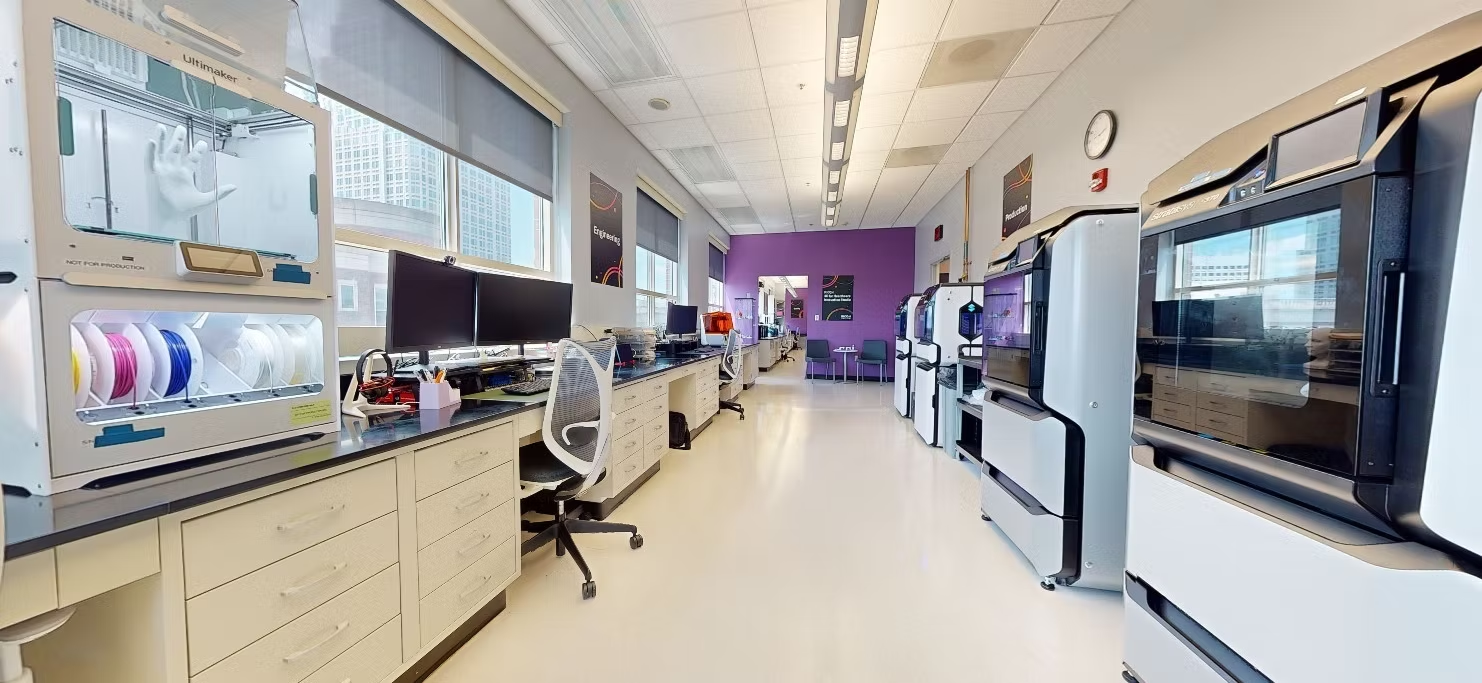
Japanese companies are really good at internal diversification and spin-outs, and this seems to be true even in cases involving foreign subsidiaries of Japanese multinationals. Ricoh USA recently demonstrated this with its sale of Ricoh 3D for Healthcare, which the former spun off as a standalone enterprise last year. Ricoh USA sold the company to Gary Turner, previously the VP and GM of Additive Manufacturing at Ricoh USA, who has rebranded the business as Myrava.
Under Turner’s leadership, Ricoh 3D for Healthcare amassed a diverse range of FDA clearances for patient-specific anatomical models, one of the topics he discussed in a 2023 interview with 3DPrint.com’s Vanesa Listek. In 2024, Turner helped Ricoh USA open an AM Center of Excellence at North Carolina State University (NCSU), which augmented the company’s presence in a key cluster of medical innovation.
In addition to its FDA compliance and its foothold in research hubs, the strength of the 3D for Healthcare division lay in its extensive relationship with providers that allowed it to serve customers at the point-of-care. Judging from Myrava’s website, the rebranded company will continue to make that a priority.
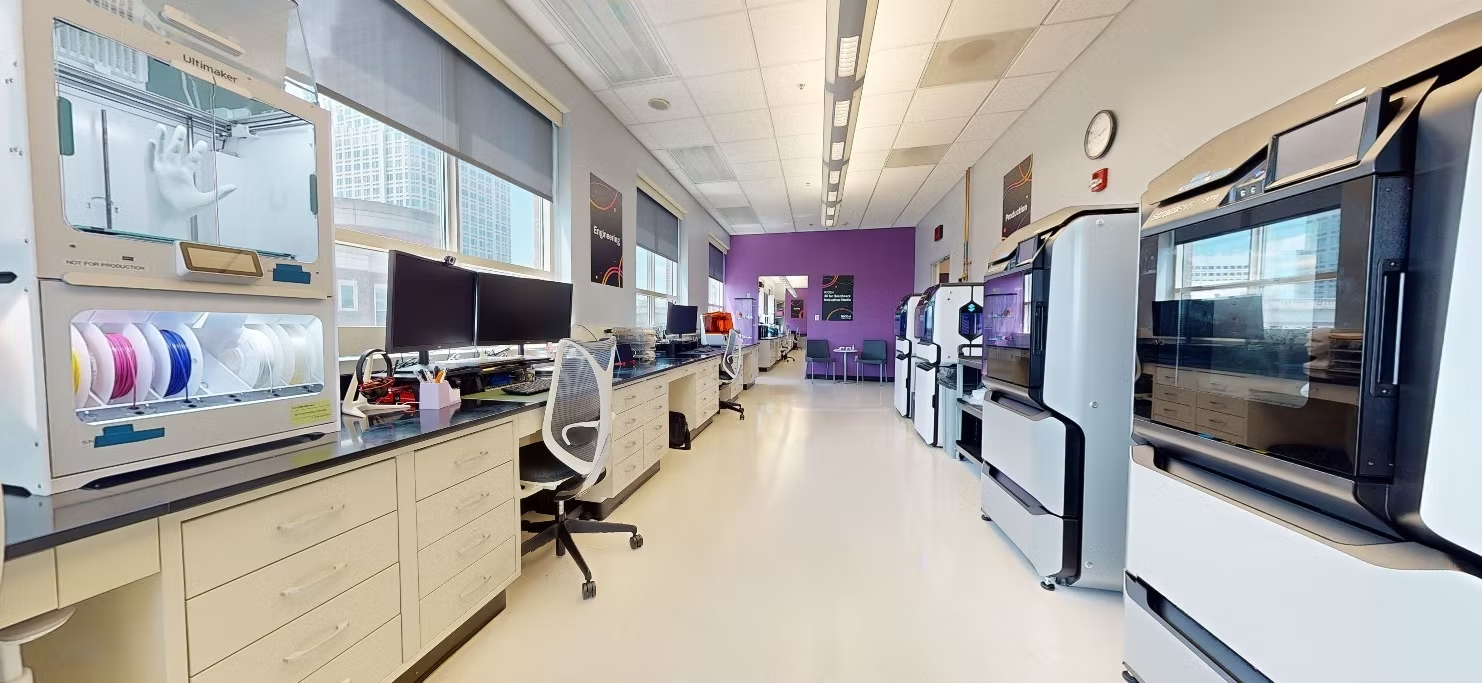
While AM industry focus has broadened in recent years, medical is still arguably the industry’s most valuable market segment, and the persistent demand for patient-specific solutions should support the segment’s growth well into the future. The US, meanwhile, remains the world’s dominant force in the medical device market, and that also appears like it won’t change any time soon.
In a press release about Ricoh USA’s sale of 3D for Healthcare, and its subsequent rebrand to Myrava, Bob Lamendola, Chief Digital Services and Delivery Officer, Ricoh USA, Inc, said, “While healthcare remains a key growth area for Ricoh, patient‑specific medical devices require specialized capabilities that extend beyond the scope of our broader business priorities. This move enables the business to scale under dedicated ownership, while allowing Ricoh to concentrate on the areas where we deliver the greatest value—helping healthcare providers reduce cost and administrative burden, facilitate regulatory compliance, improve operational efficiency, and measurably support better patient and clinician experiences through our scalable, reliable services and technology.”
Gary Turner, CEO of Myrava, Inc. and formerly Vice President and General Manager of Ricoh 3D for Healthcare, LLC, said, “Ricoh took an important step last year by establishing Ricoh 3D for Healthcare, LLC as a standalone entity, creating the focus and structure needed to serve a highly specialized and rapidly growing market. This acquisition is a natural next step in that evolution. As an independent company, Myrava, Inc. will benefit from dedicated investment and leadership fully focused on advancing personalized, FDA‑cleared medical devices and point‑of‑care manufacturing for healthcare providers.”
This feels like the best-case scenario for everyone involved. Ricoh USA doesn’t have to sell the division to a competitor (or potential competitor), and from afar should still benefit from the long-term investment it made in building up a viable medical device manufacturer.
For their part, Turner and Myrava get to keep up their good work with minimal changes in the continuity of the business, and this is especially valuable in an industry that’s so dependent upon long-term customer relationships. Plus, the team at Myrava has already had a year to accustom itself to operating a standalone business.
All of the advantages here are precisely why Japanese companies, which have very long time horizons and generally stay loyal to their employees, like to do internal diversification. I wish more American companies would do this, but they don’t in large part because the investment landscape so heavily favors short-term thinking. That said, Ricoh USA is of course still an American company (albeit a subsidiary of a foreign parent), so there’s presumably more opportunity for this sort of scenario than has been the norm historically.
In that vein, there is no shortage of diversified foreign companies in the AM industry that have started divisions in the US. Maybe what Ricoh USA has done here will become more commonplace.
Images courtesy of Myrava