
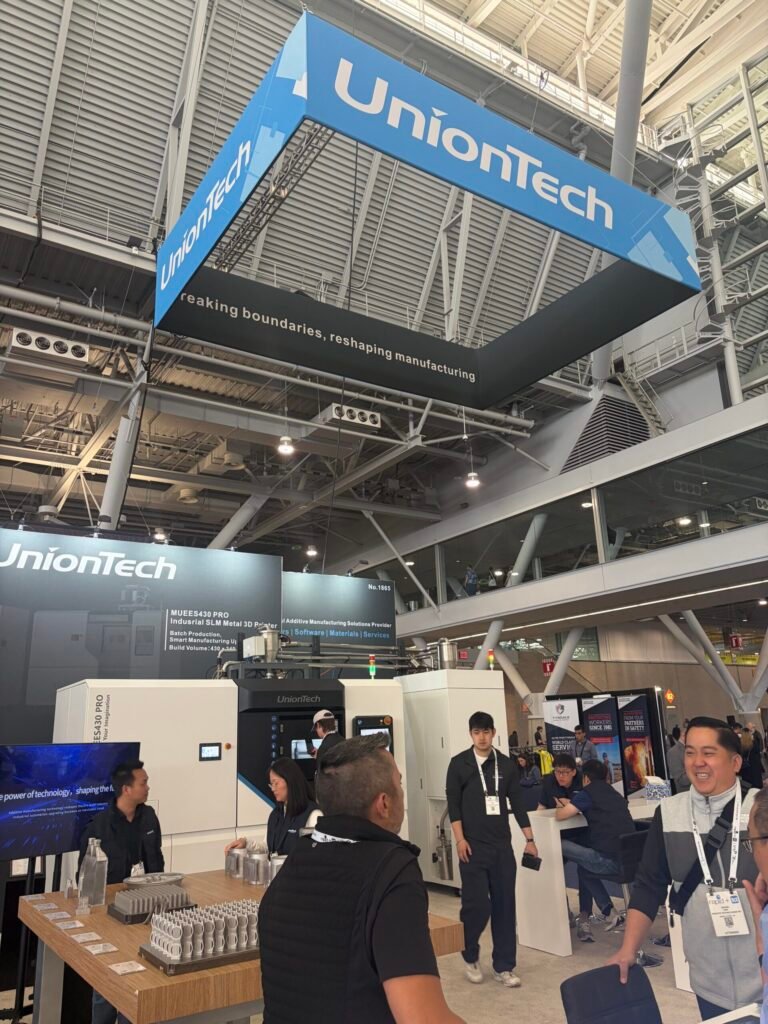
RAPID + TCT 2026 wrapped up yesterday, but the show floor proved there’s a lot happening across the additive manufacturing (AM) space, especially when it comes to new hardware and partnerships.
From large-format systems to new metal machines and fresh collaborations, companies used the event to show where they’re headed next, and in many cases, to make a push into new markets.
New Machines Across the Board
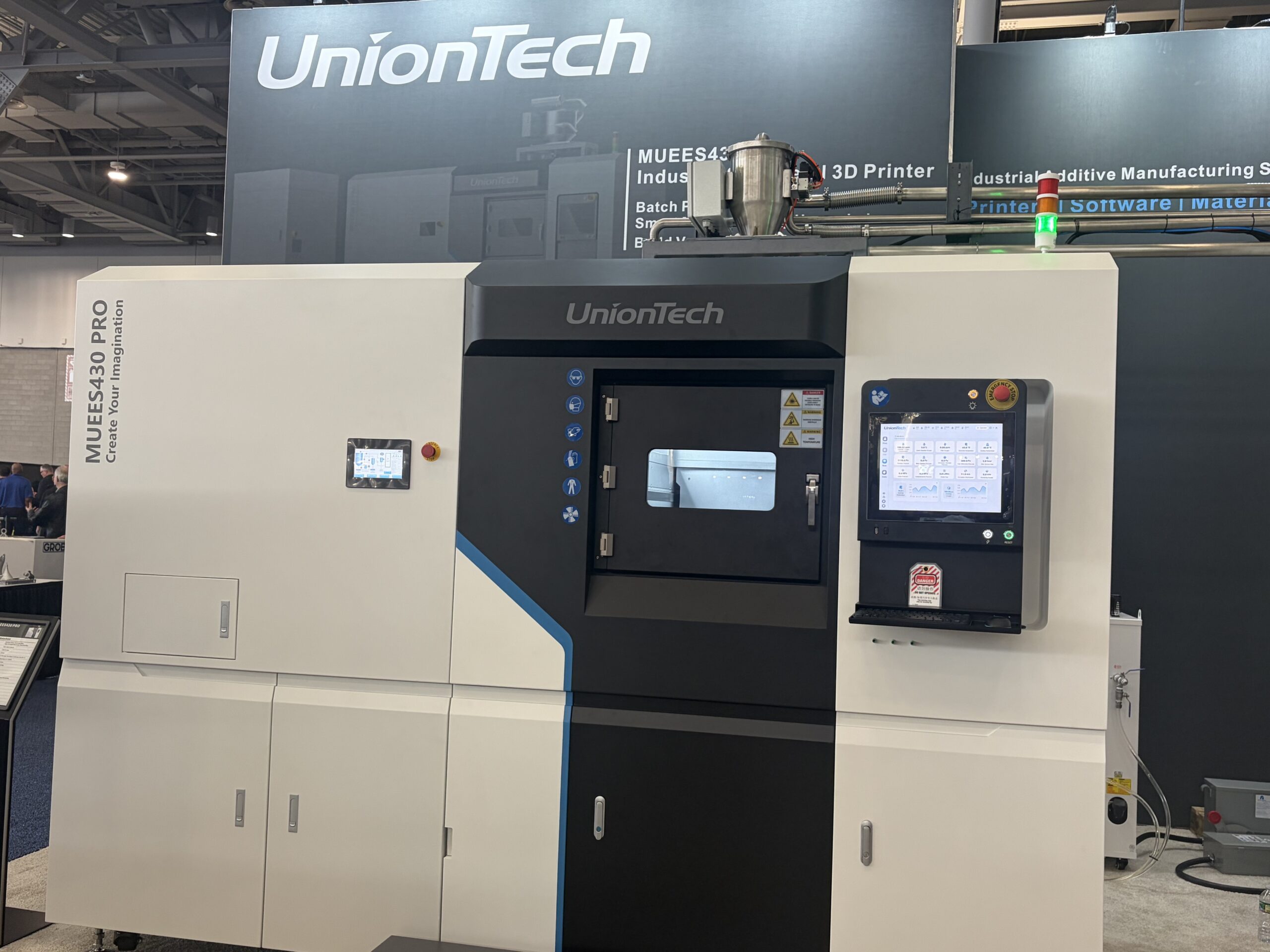
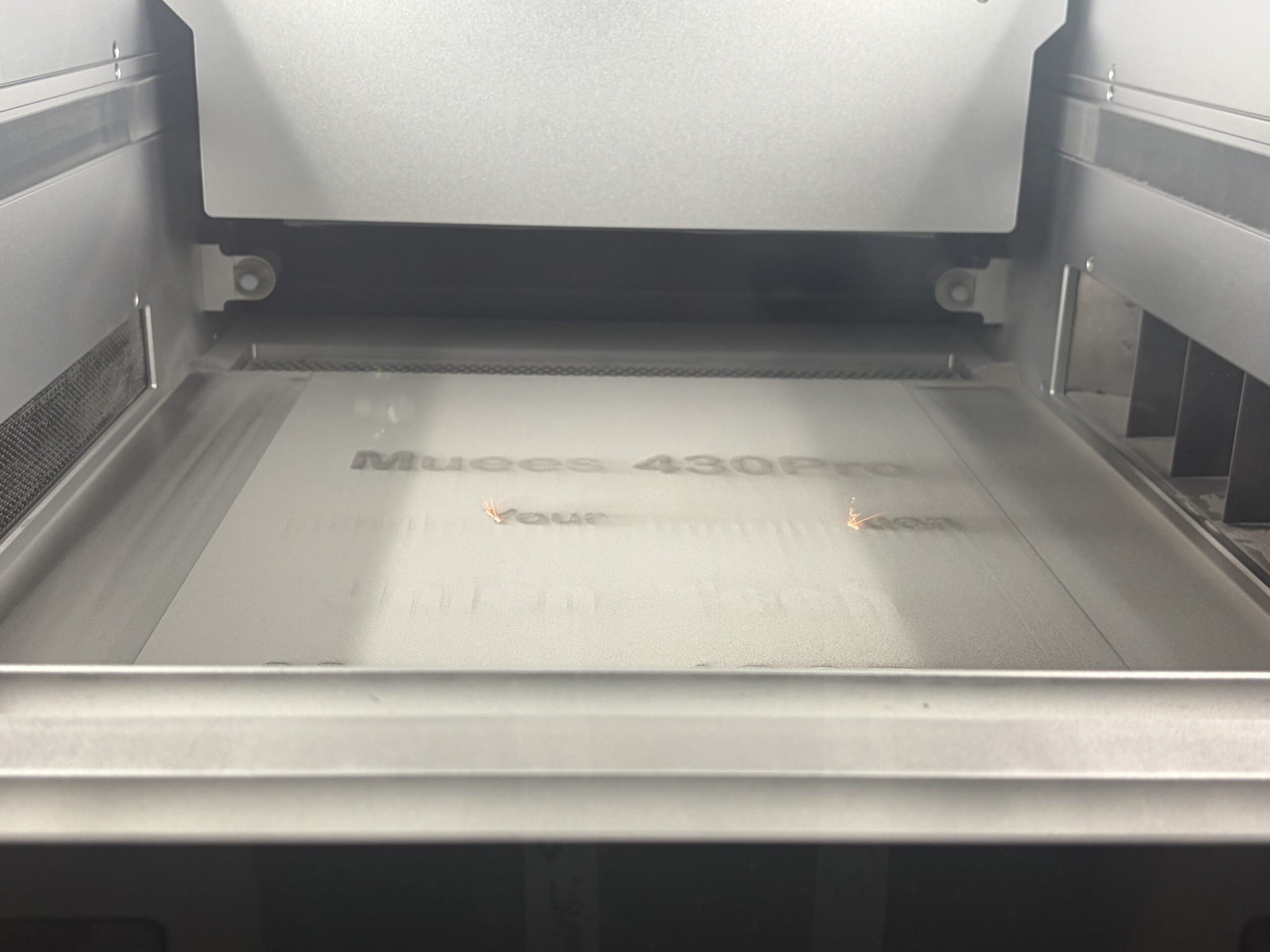
One of the more interesting debuts came from UnionTech, which introduced its MUEES430 PRO, a new metal AM system. The move shows that Chinese OEMs are continuing to expand their global presence, especially in the metal sector.
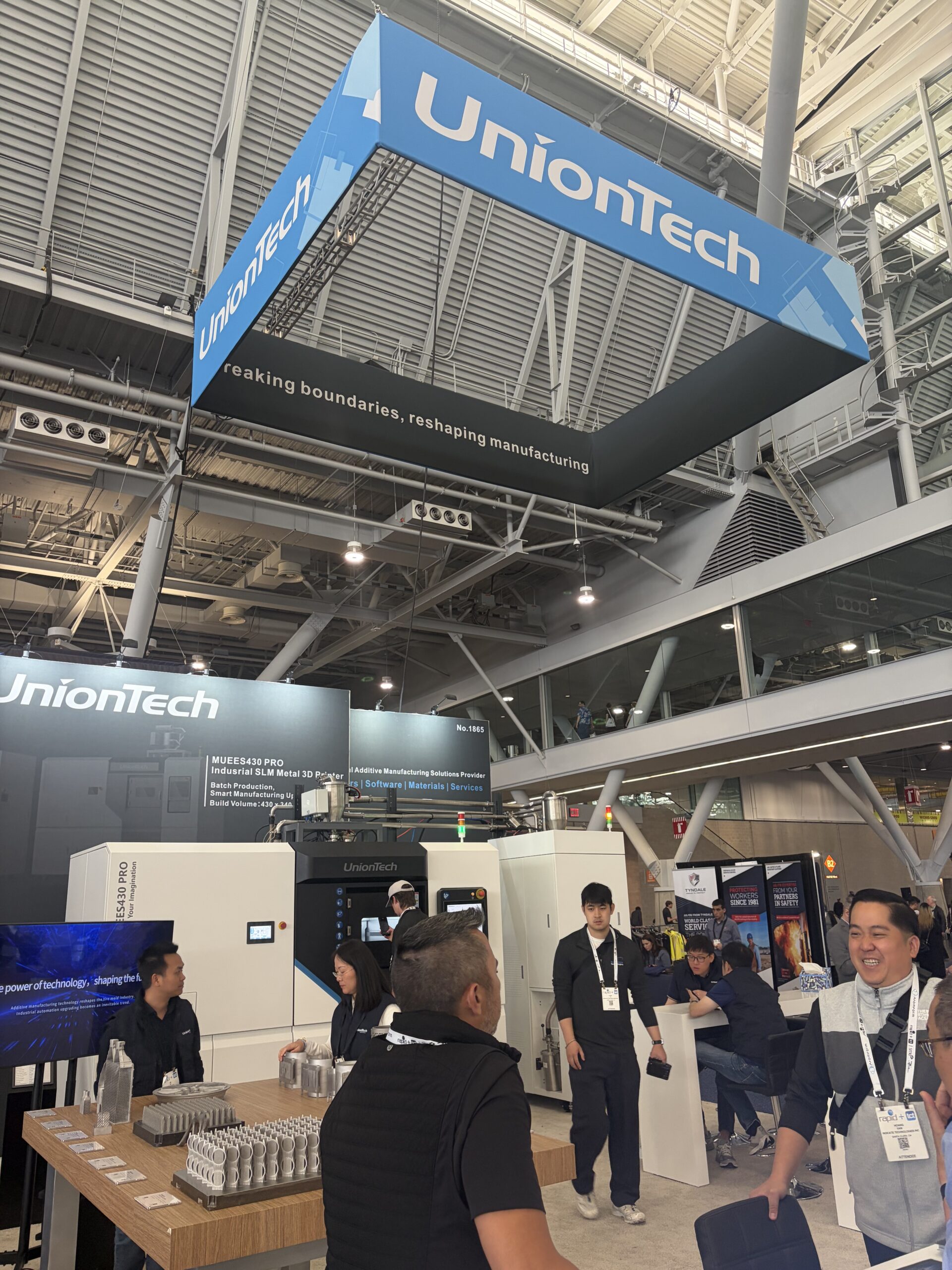
UnionTech booth at RAPID + TCT.
The system is designed for larger, industrial parts, with a build size that puts it closer to production-focused machines rather than entry-level metal printers. It also supports multi-laser configurations, which can help speed up production and improve throughput. In simple terms, it’s built for companies that want to move beyond prototyping and into making real parts at scale.
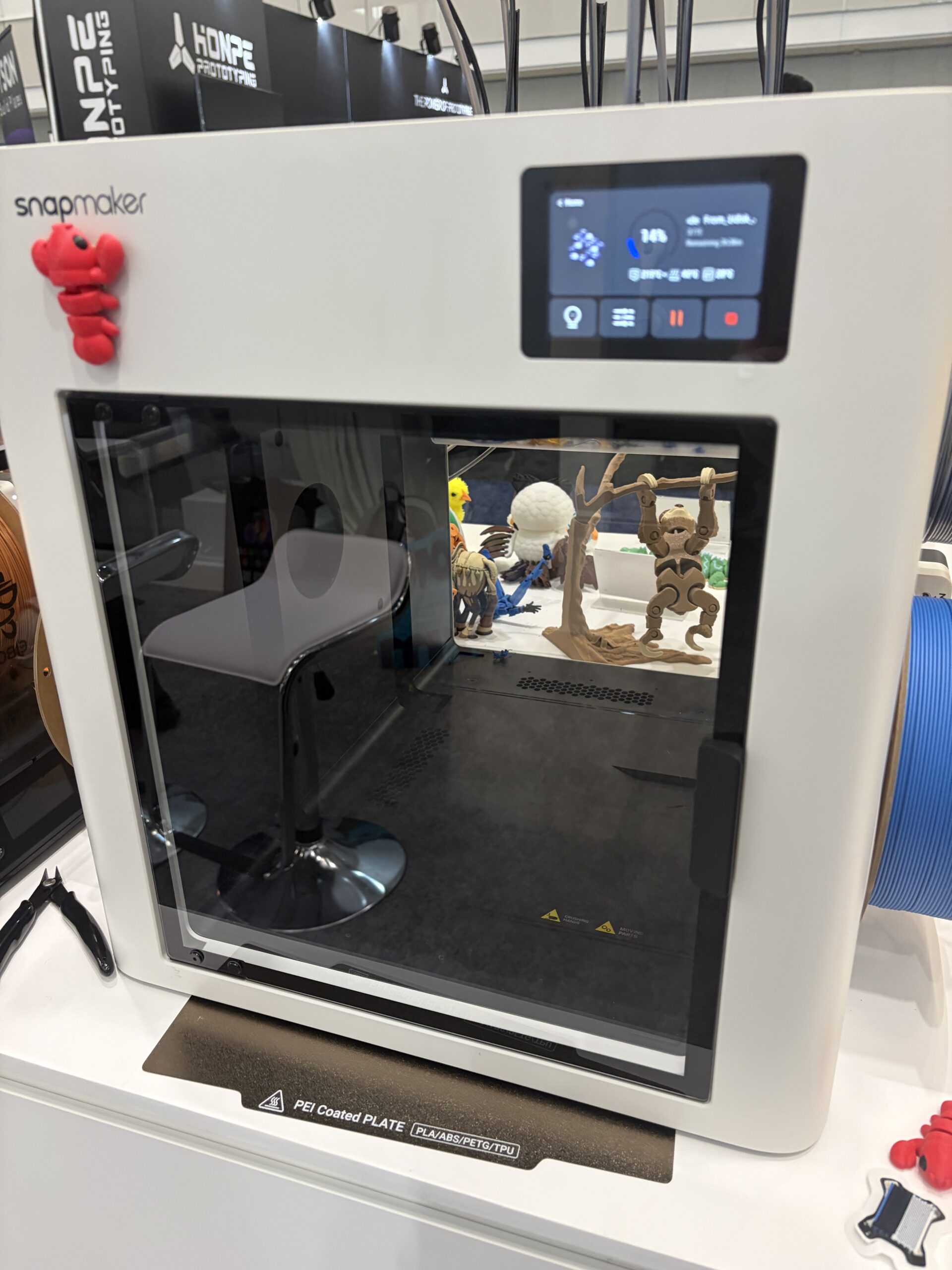
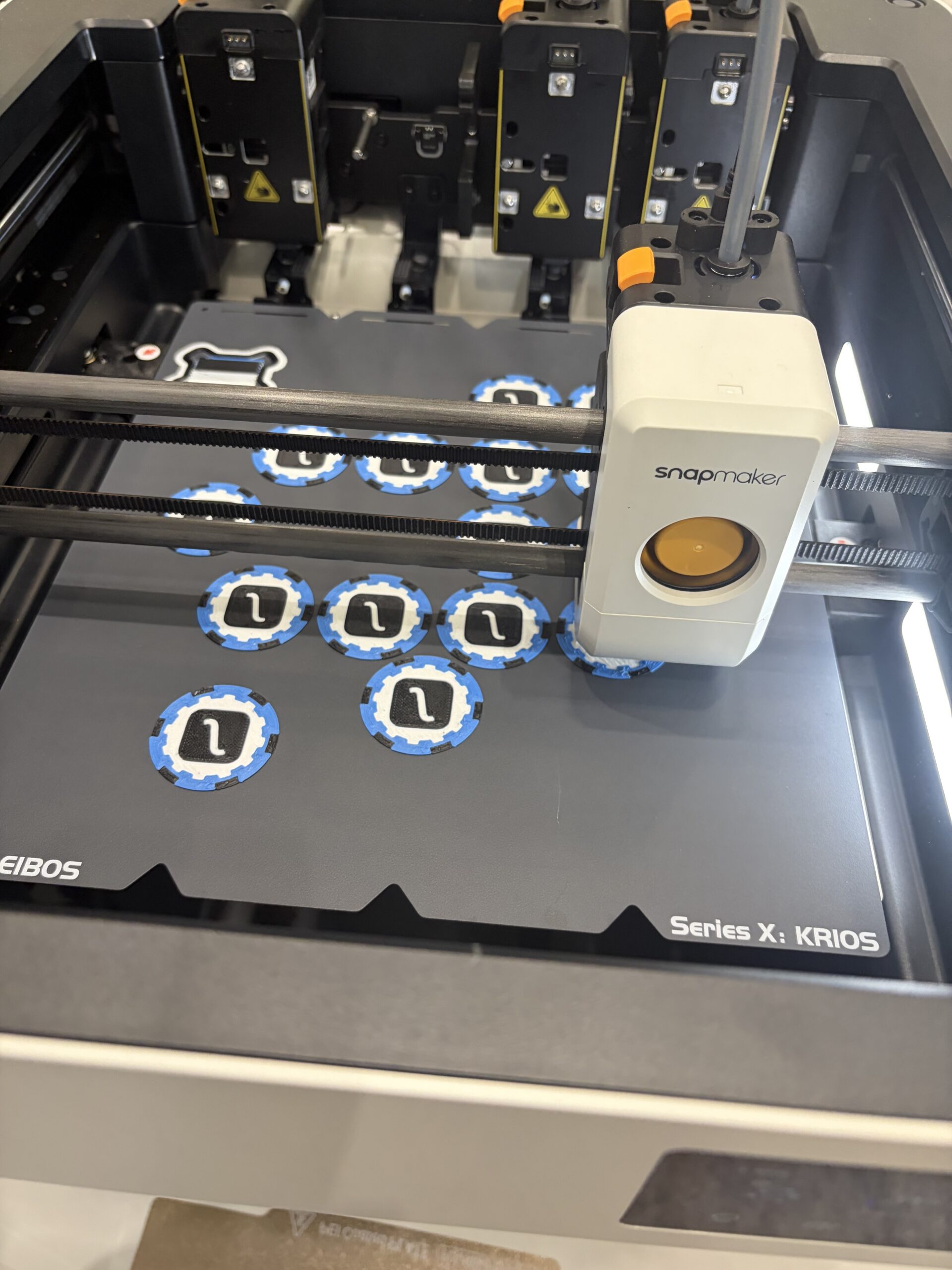
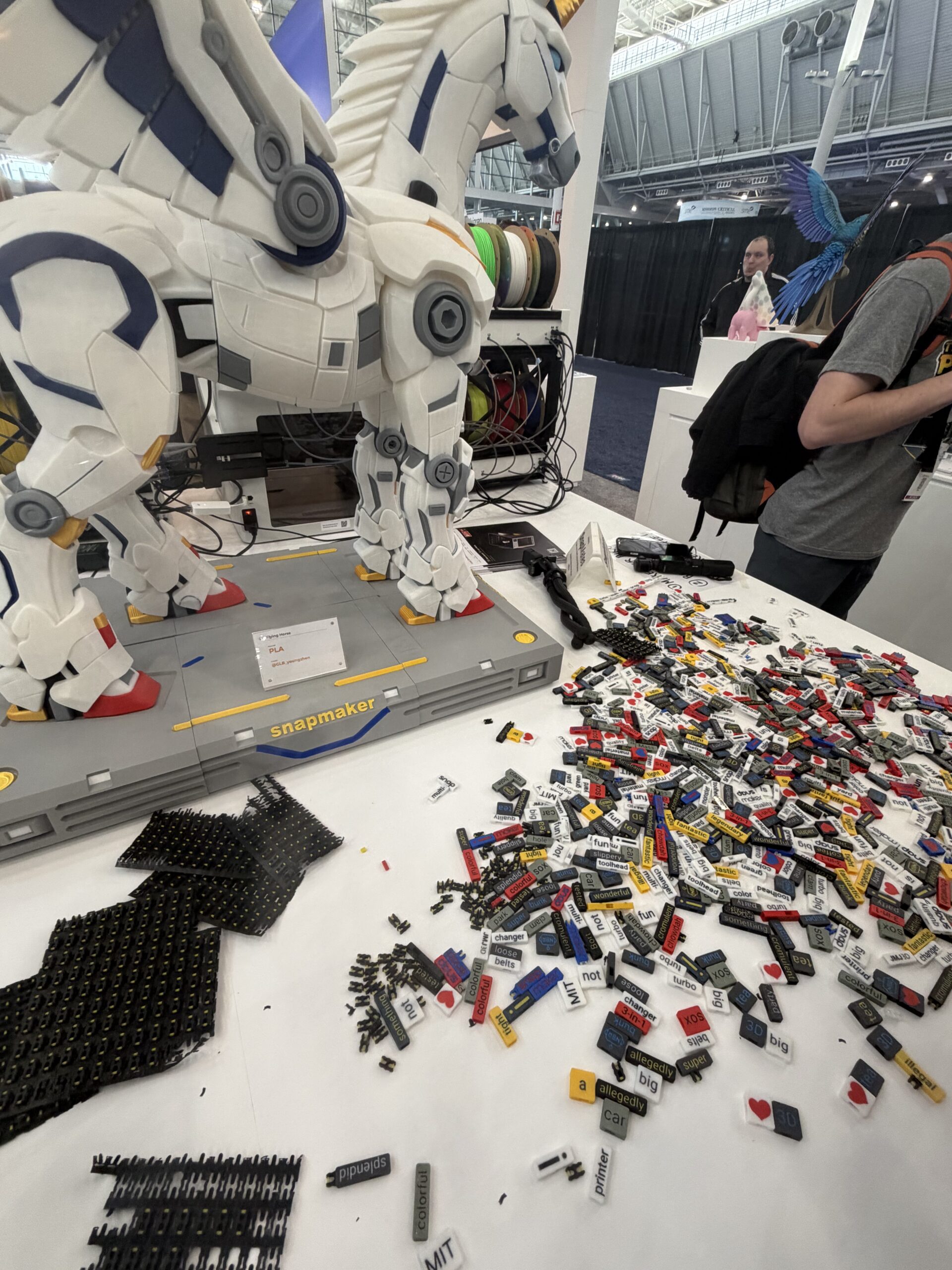
Across the show floor, several other Chinese manufacturers were introducing new systems across different categories. Snapmaker presented the U1, pushing further into more capable, multi-use machines. The company has built its name on modular systems that combine 3D printing, CNC, and laser engraving, and the U1 continues that approach with a more industrial feel, aimed at users who want flexibility in a single platform rather than separate machines.
Chinese firms SUNLU and Inslogic also announced the FilaDC I10, a system that blends filament printing with more industrial-style capabilities. The machine is designed to push beyond standard desktop FDM, with a focus on stronger materials and more consistent output, closer to what users would expect from entry-level industrial systems. Which basically means it sits somewhere between a typical desktop printer and a more production-oriented machine, showing how hybrid approaches are starting to fill that gap.
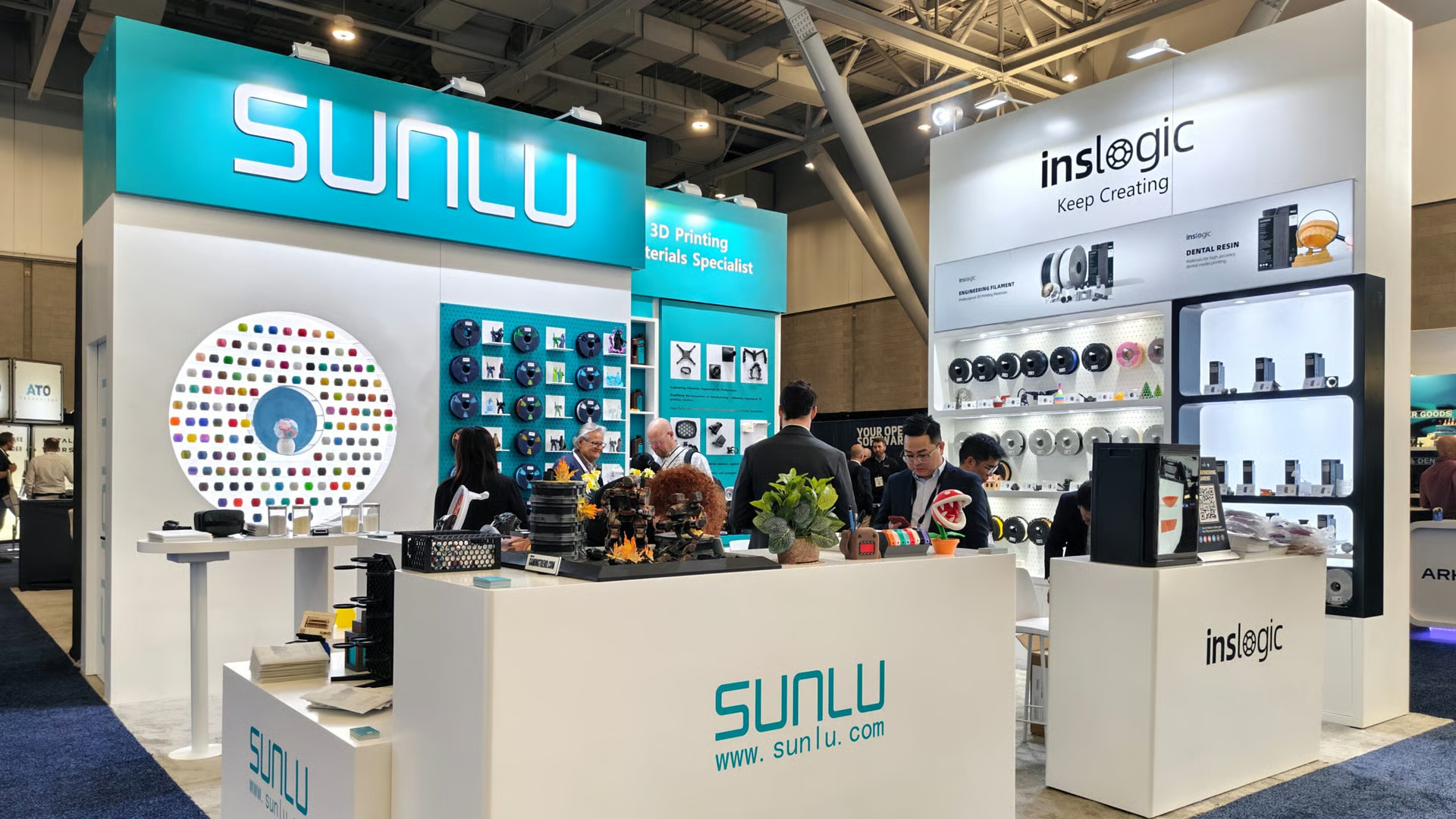
SUNLU and Inslogic Team Up to Announce the FilaDC i10 at RAPID + TCT in Boston. Image courtesy of SUNLU.
One of the hardest printers to miss was BigRep’s large-format ONE.5X, a system designed for industrial-scale parts. While the machine was announced ahead of RAPID, seeing it in person made it clear BigRep is leaning into bigger, more production-ready applications. The ONE.5X is built for large components and continuous output, aimed at industries that need size and throughput more than fine detail. In simple terms, it’s about making big parts reliably at a scale beyond prototyping.

BigRep showcased its ONE.5X printer at RAPID + TCT.
Creality also had a booth at RAPID this year, showcasing two machines that came out ahead of the event but were nonetheless exciting to see in person. In addition to its K2 Pro Combo printer, Sermoon P1 3D scanner, and Falcon T1 laser engraver, the company also had its relatively new SPARKX i7 and CFS (Color Filament System). Also seen at TCT Asia last month, the printer and its combined CFS are said to reduce filament waste by 50%.

Creality SPARKXi7 printing live at RAPID+TCT 2026.
Speaking of cutting down on material waste, Creality also showcased its Filament Maker M1 and Shredder R1, which were launched just weeks ago. The R1 processes prepared 3D printing waste into reusable material, and the M1 mixes, extrudes, and spools filament. This is said to be the first desktop system for users to recycle and make their own filament.
Partnerships and Market Moves
While the machines usually steal the show, partnerships were also a big part of the AM ecosystem at RAPID.
Inkbit announced a collaboration with Stratasys Direct as it moves into wider industrial use. Inkbit develops its own polymer 3D printing systems, using a vision-controlled process that relies on cameras and software to monitor and correct each layer in real time. This approach helps improve accuracy and consistency, making it better suited for repeatable production rather than one-off prints.
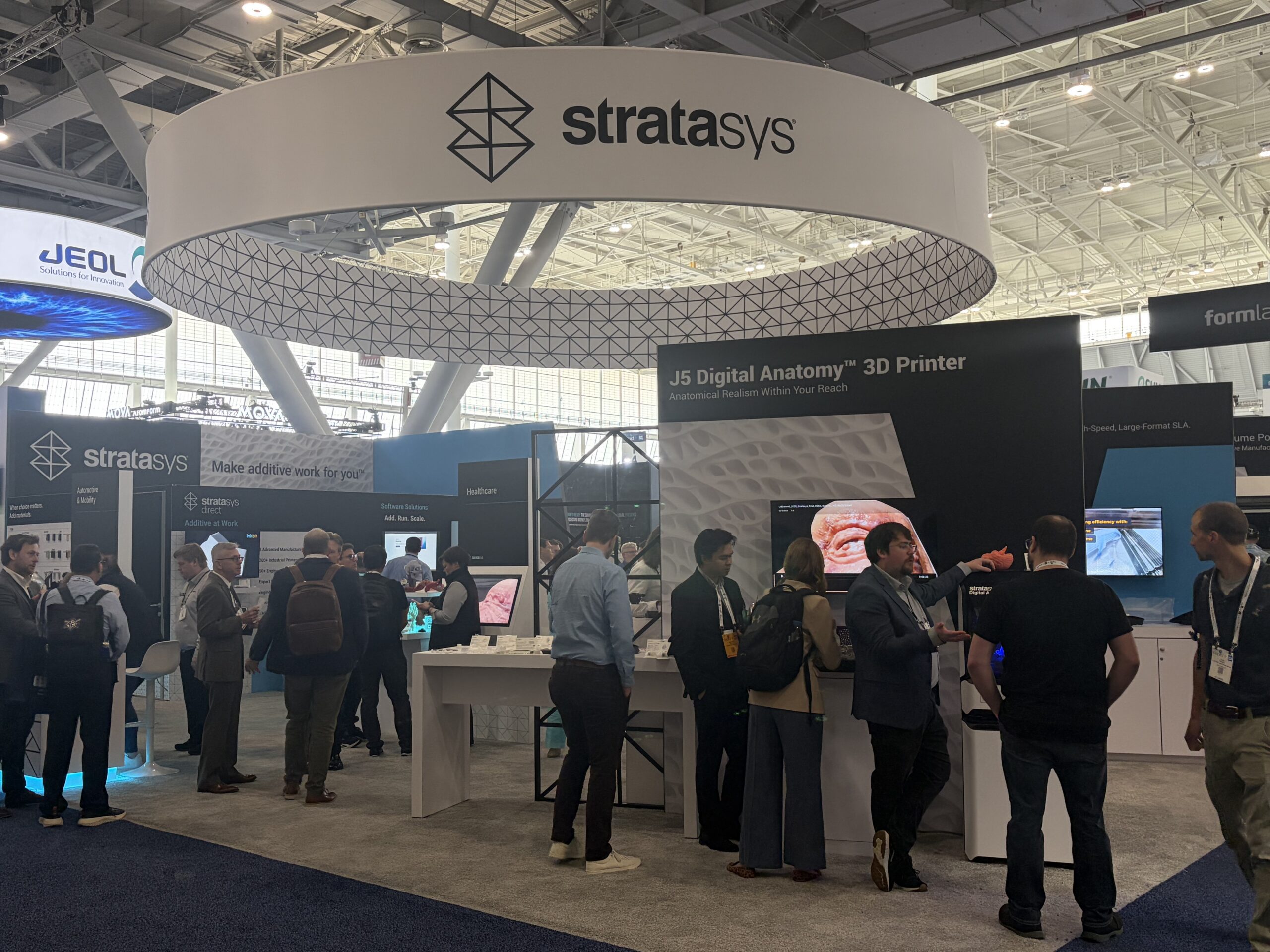
Stratasys booth at RAPID+TCT 2026.
The partnership with Stratasys Direct is about getting that technology into real manufacturing environments. By working with an established service provider, Inkbit gains access to customers and applications that go beyond testing and into actual part production.

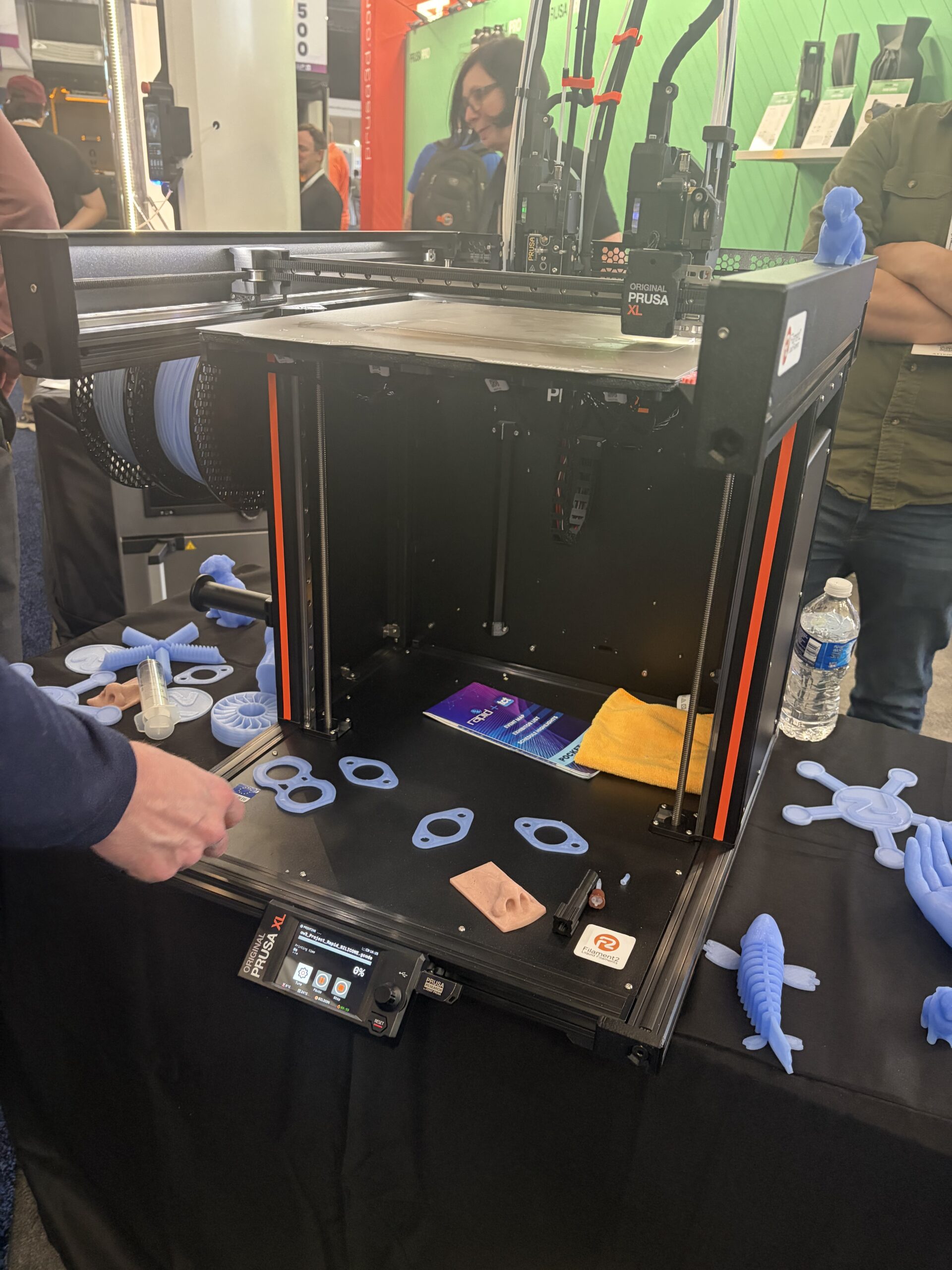
Prusa booth at RAPID + TCT.
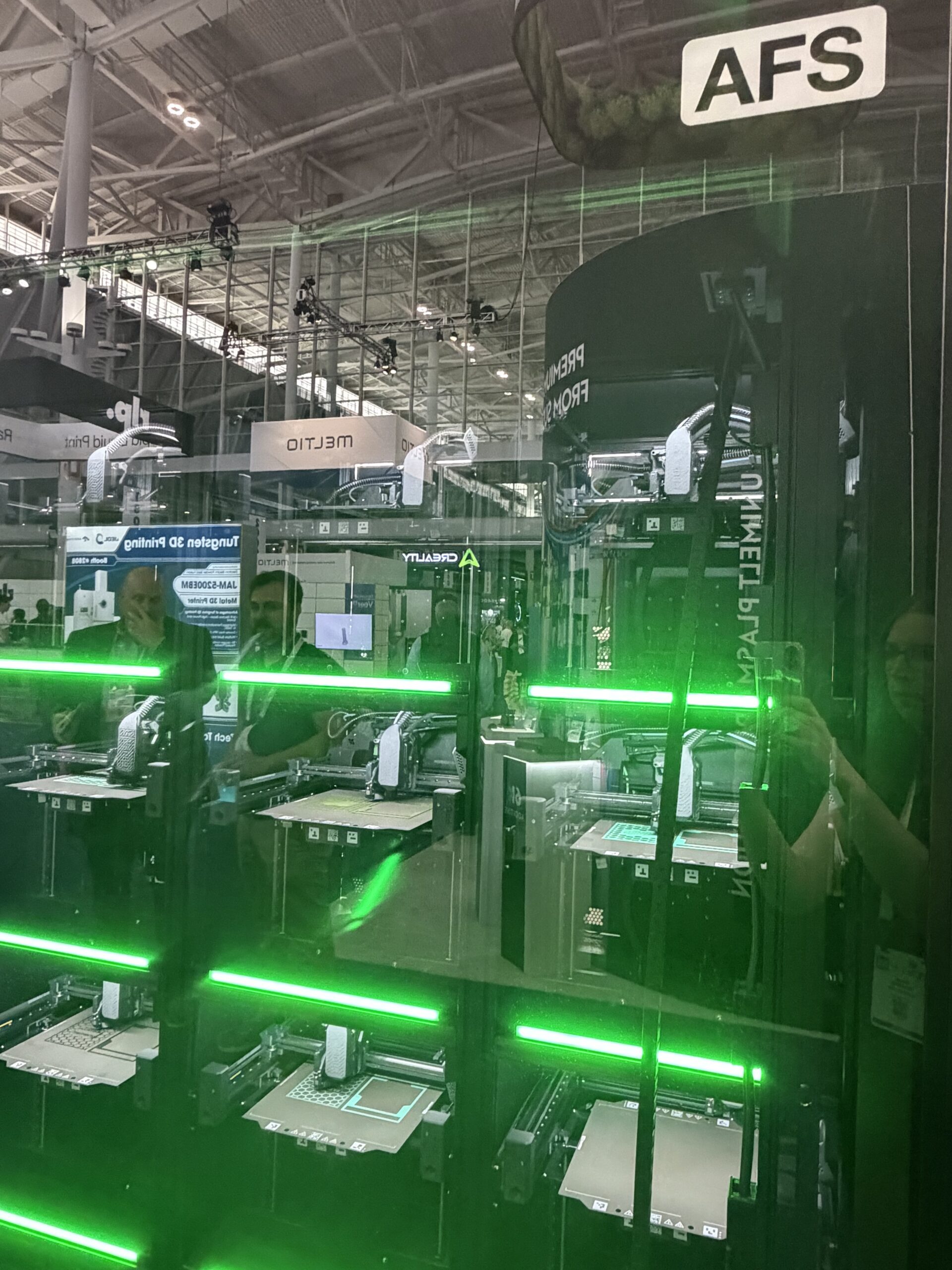
Meanwhile, Prusa Research brought its Pro SLX and AFS systems to the U.S. for the first time. Best known for its desktop printers, the company is now pushing further into more industrial applications. The Pro SLX is designed for higher-end resin printing, while the AFS system focuses on automated farm-style production with multiple machines working together. Together, they show how Prusa is trying to move beyond individual machines and into more complete production setups. RAPID gave the company a chance to show that shift more clearly.


There’s still a push to make 3D printing easier to use, through lower-cost systems, simpler workflows, and machines that don’t need complicated setups.
At the same time, scale keeps coming up. Large-format printers, bigger resin systems, and new metal machines are all targeting the same goal: making parts that aren’t just prototypes, but actually usable at size.
And partnerships are playing a bigger role, too. Instead of doing everything themselves, companies are working with service providers and local partners to get their technology into real production environments and really fast.
Images courtesy of Sarah Saunders for 3DPrint.com unless otherwise noted.