
Last week, North America’s premier 3D printing trade show, RAPID+TCT 2026, came to Boston. I spent two days trekking the show floor, trying to see as much as I could, from new machine releases and software integrations to partnership announcements and more. I’ll break down more of my discussions later, but for today, I wanted to quickly share some of the coolest, and the craziest, things I saw at RAPID.

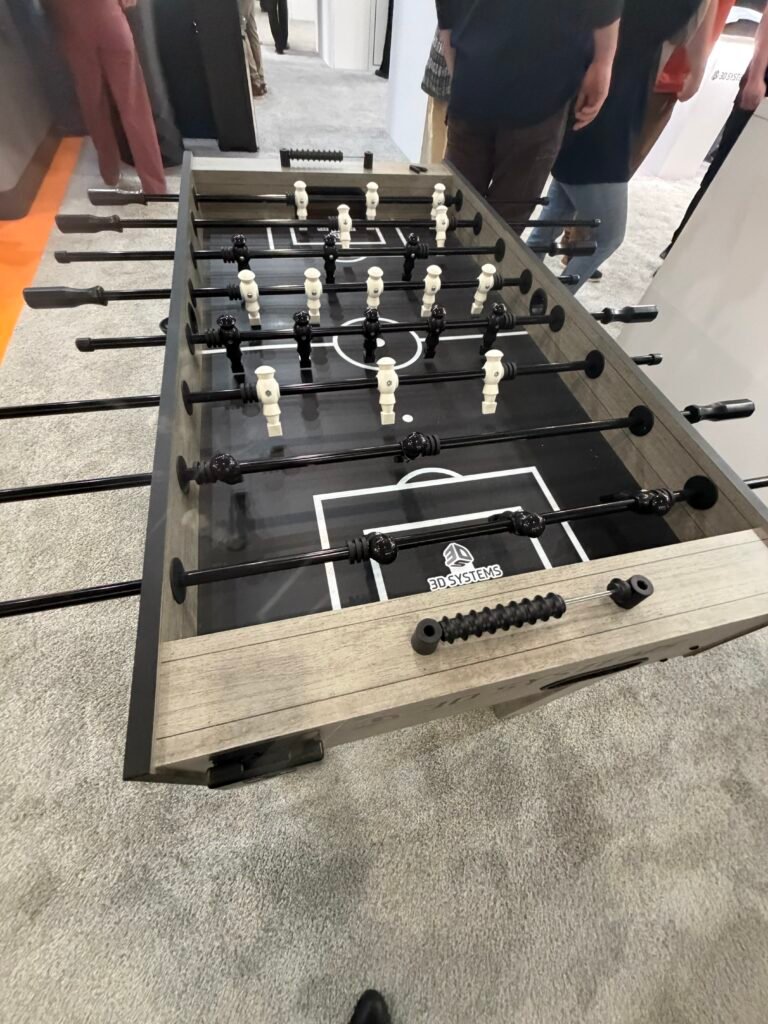
3D printed foosball at the 3D Systems booth
Modular Quadruped Centaur
We’ll start with a little nightmare fuel—the modular quadruped Centaur by PANAM in Space, though I prefer to call him a next-generation Horseman of the Apocalypse.
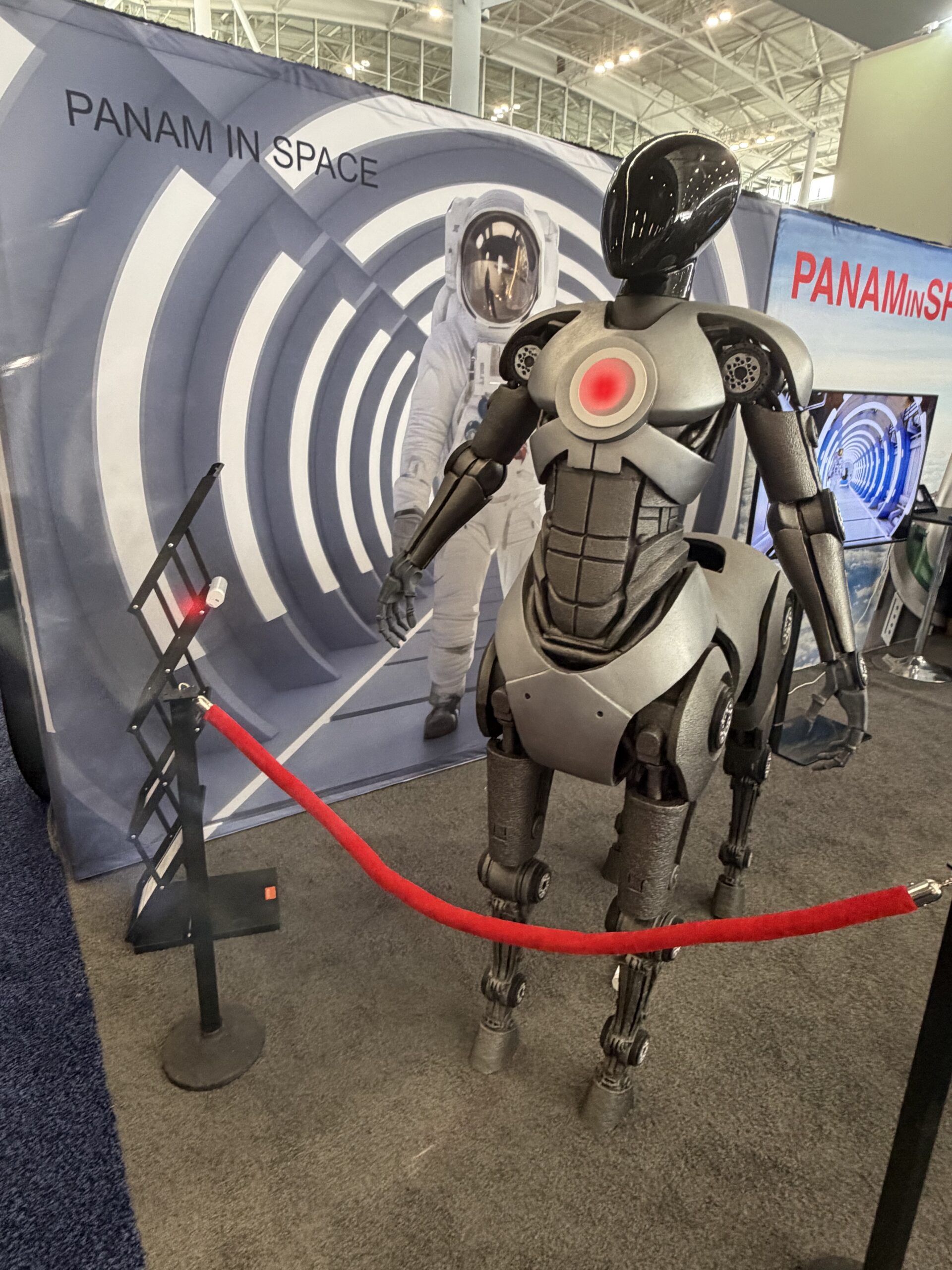
Please tell me this isn’t the freakiest thing you’ve ever seen on four legs. But wait! It also comes apart to form two two-legged demon robots! The back end is the Centaur’s power supply, so if it’s running low on charge, you can just detach that part, and add a different one to the front end, so you don’t have to stop what it’s doing.
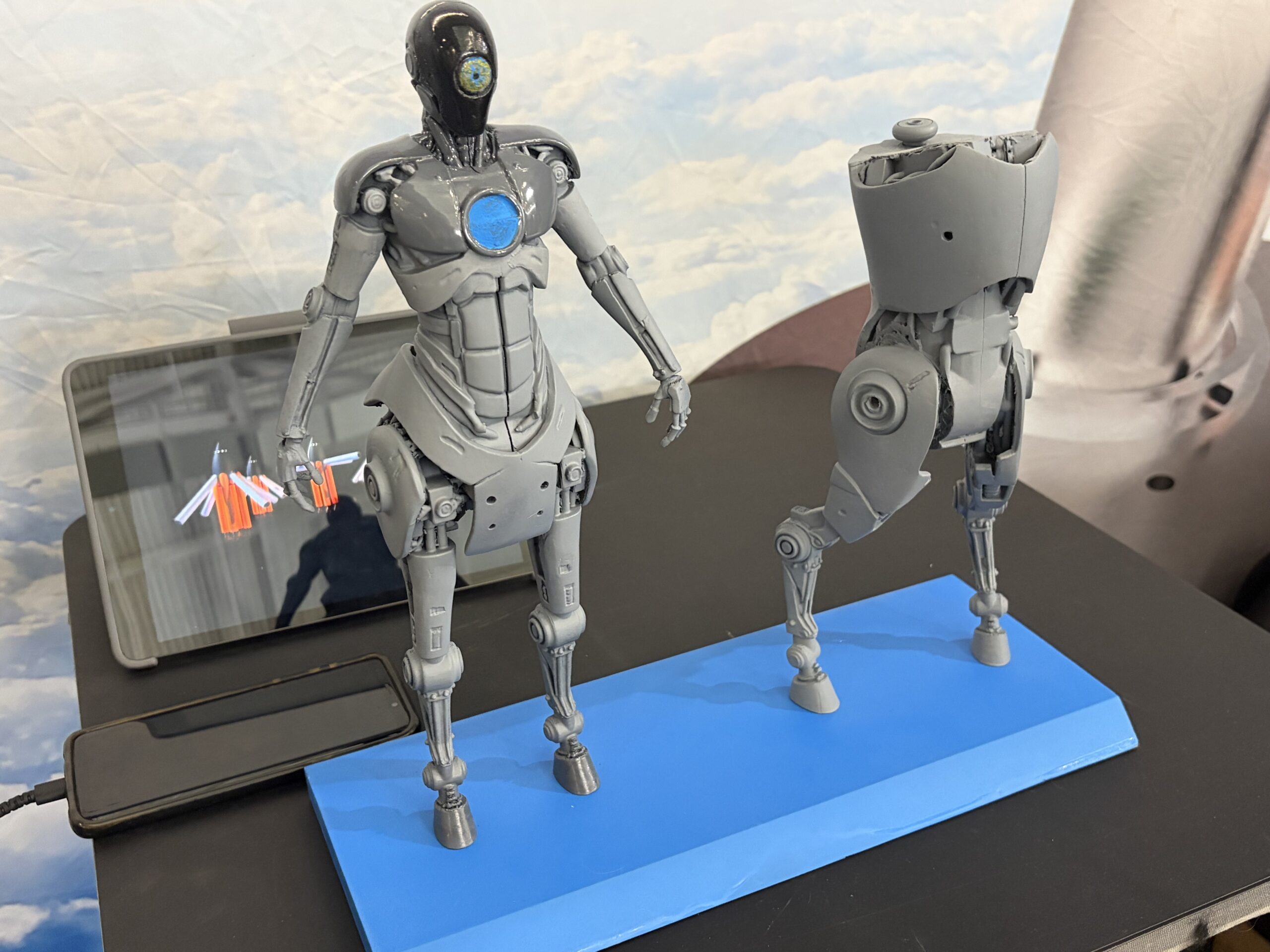
The team told me that four legs will make this much sturdier than any bipedal robots. The Centaur could cover more ground, and different types of terrain, than robots on wheels or two legs are able to handle.
“A quadruped with some AI training will be able to cover a lot more complicated ground.”
The idea is that the Centaur would be AI-powered, so it would be self-sufficient. The version at the booth was 3D printed out of plastic filament, but they are looking into printing a metal version some day.
The company’s real focus is a polar coordinate metal 3D printing system for building modular, stackable rocket modules to form the basis of a city in space; they’re also developing a smaller electron beam-powder bed fusion (EB-PBF) system for the commercial market as well.
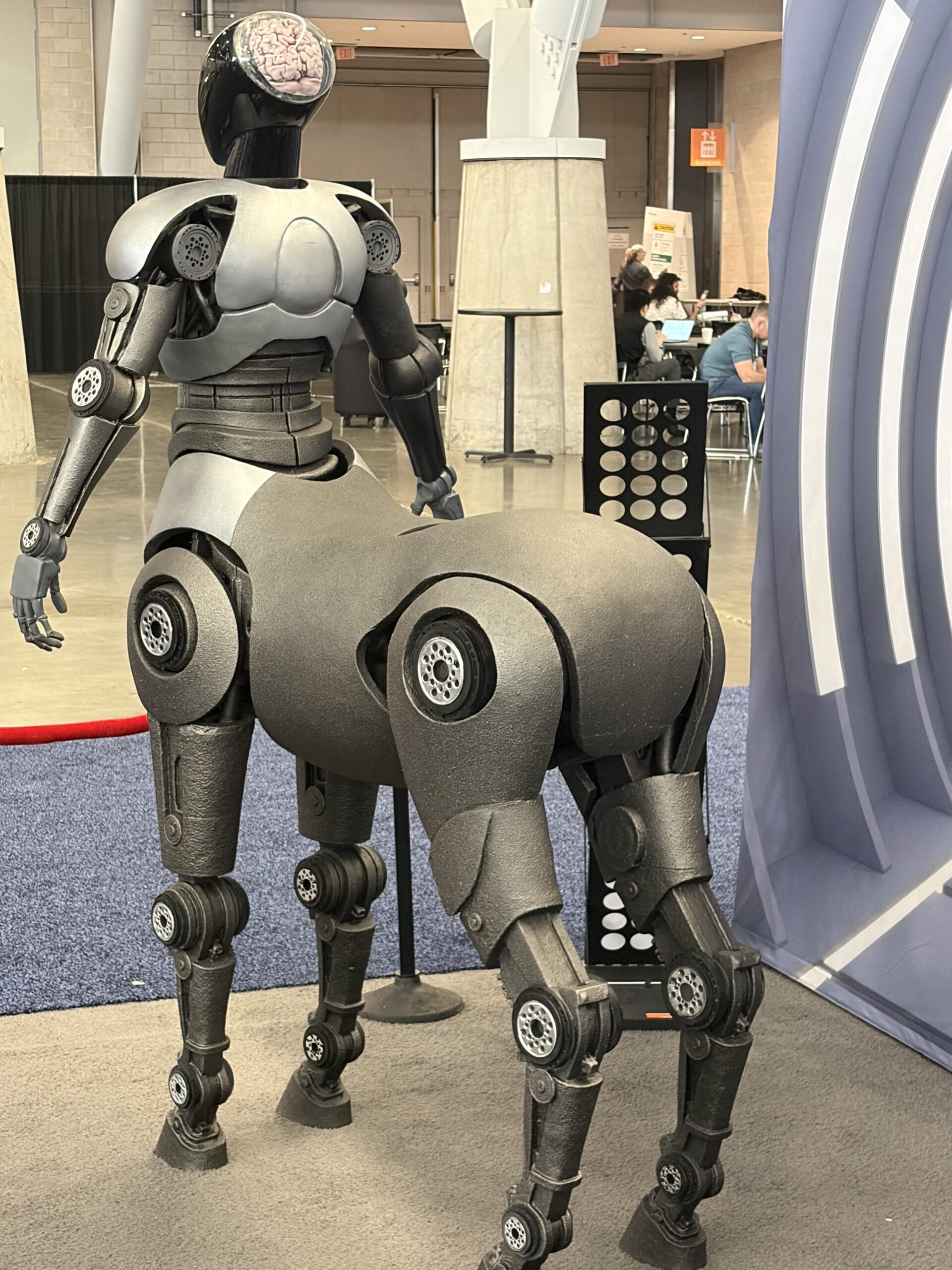
I asked about the possible applications for something like this, and learned that due to its size, the Centaur could theoretically carry medical-grade lasers into areas where it wouldn’t be as easy for a human medical professional to traverse. But really, it could be used to complete whatever labor you wanted it to, like filling a warehouse with goods…until, of course, the robots rise up, take over the planet, and follow the Centaur as their leader.
Pantheon’s Motorcycles
From four legs to two wheels! According to its website, Canadian company Pantheon Design loves “the idea of 3D printing a motorcycle in one day that they could go race the next.”

The company says that its HS-Pro, featuring a 400 x 400 x 300 mm print bed, can fabricate a motorcycle frame in one week, offering “2kg per day of productivity in Carbon Reinforced Polymers.” The printer can process PA-CF, PA-GF, PETG-CF, and 95A Flex materials, and also features an active 60°C chamber temperature, a patent-pending nozzle contact probing strain gauge, and a 7″ HD touchscreen.
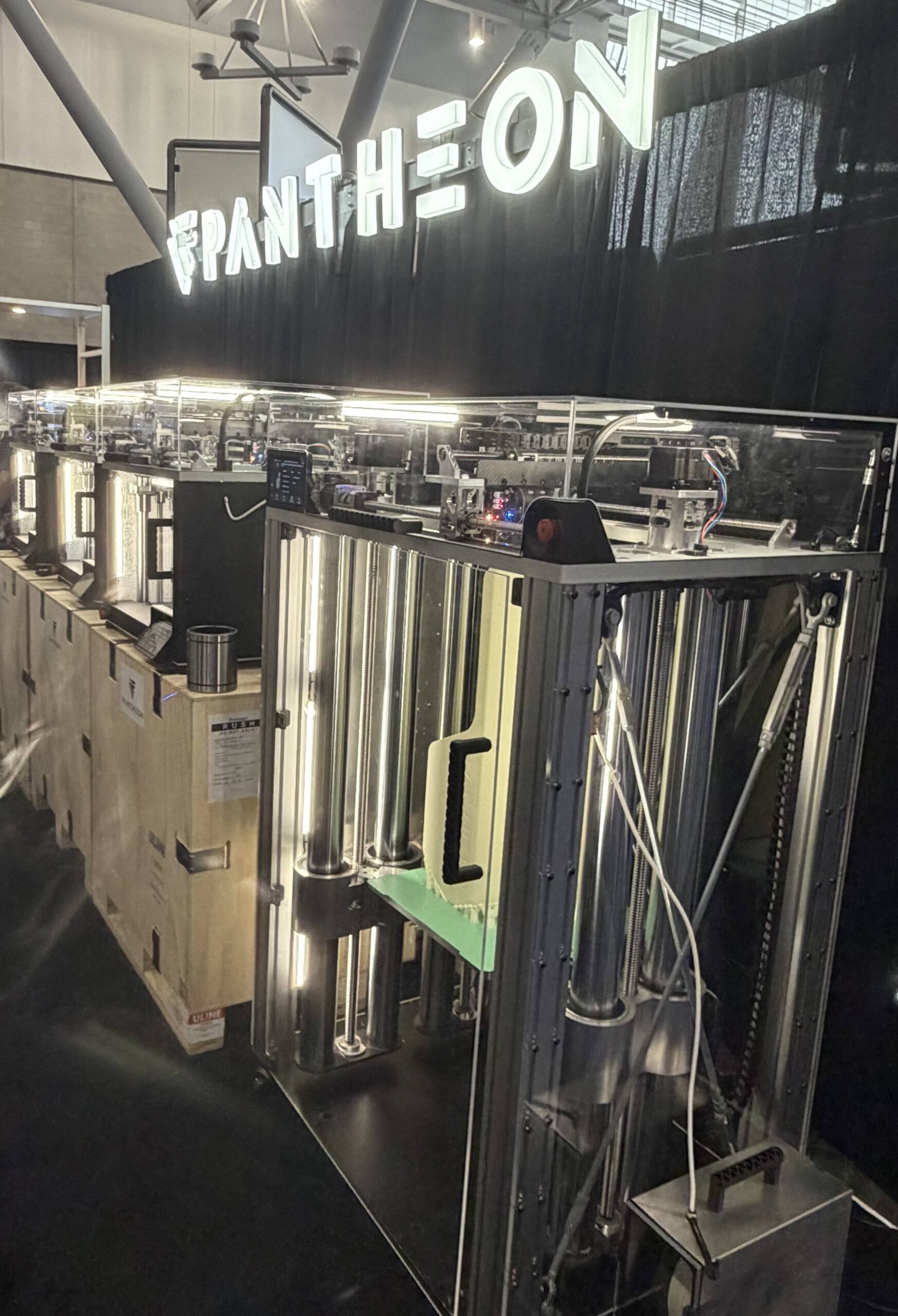
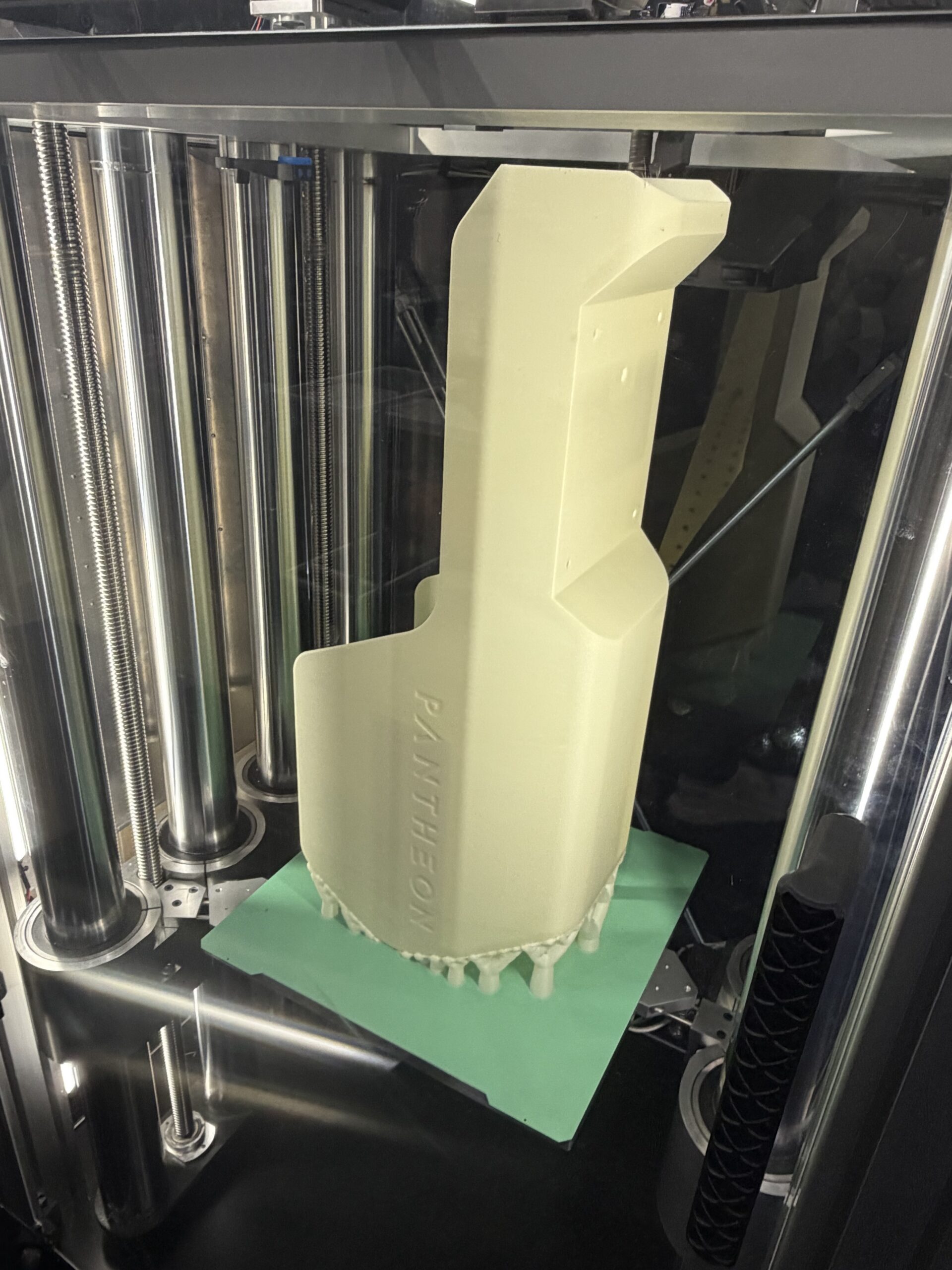
“Pantheon parts can replace aluminum components in many cases,” the company wrote on its website.
“We designed a functional equivalent for additives and printed them in various processes.”
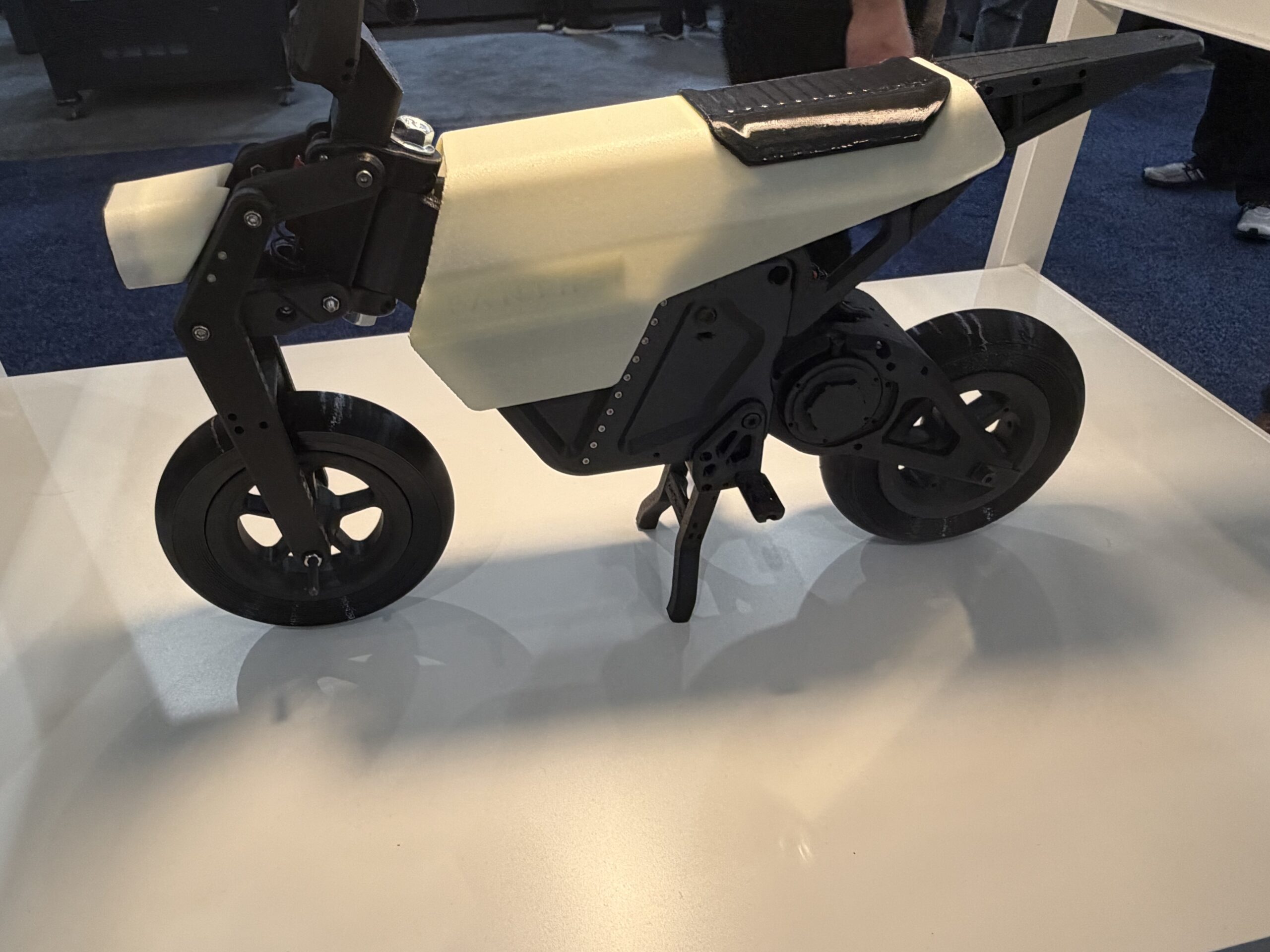
I think this looks more like a dirt bike than a motorcycle, but it’s still cool.
Mobility Devices for Kids
New York-based Stratasys reseller CADimensions offers industrial design, simulation, training, manufacturing, and 3D printing services. The company also partners with non-profit ARISE, which provides support and services for people with developmental disabilities and their families.
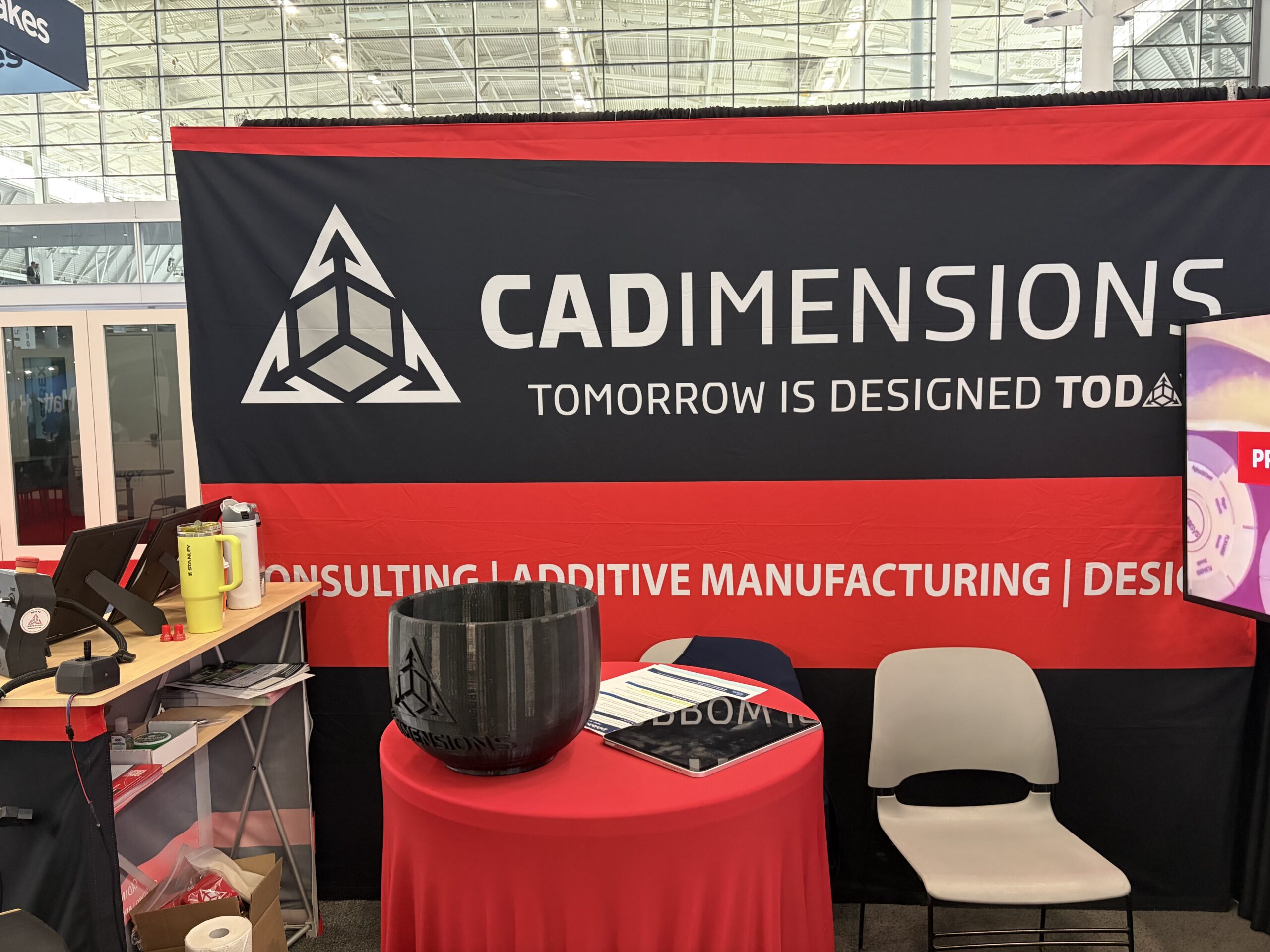
According to a sign at the CADimensions booth, ARISE offers a wide range of programs, from housing services and equine therapy to the Adaptive Design Program (ADP). This program uses everyday materials to create custom, practical, low-cost solutions, like adaptive equipment and assistive technology, and provides them to children and adults who may not otherwise have access.
“Each week, a group of community members with different backgrounds come together to design and build tools to help people with disabilities participate in everyday life,” the website states.
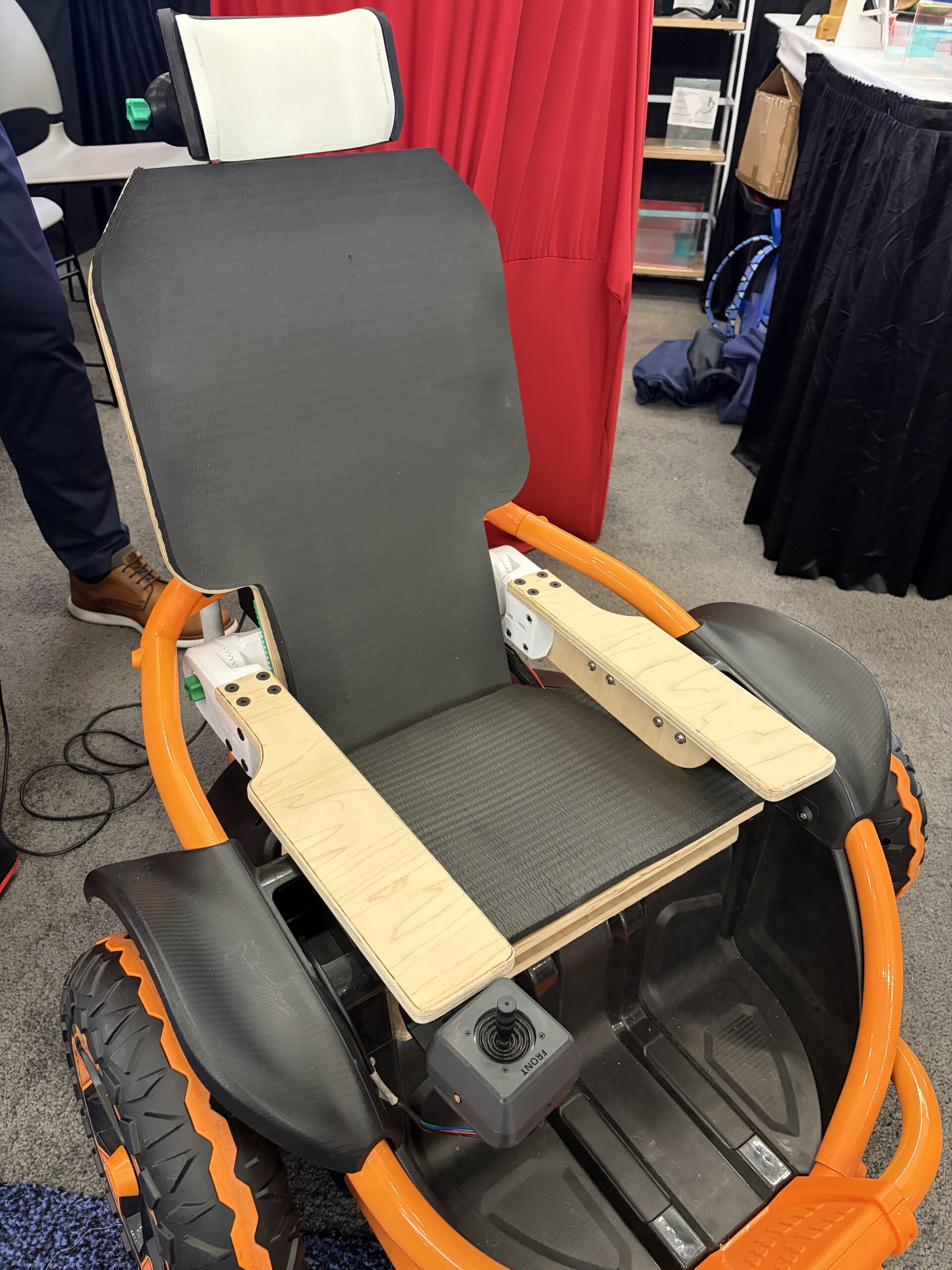
CADimensions is an official supporter of ARISE, offering design and assembly assistance, as well as 3D printed parts. The example the company had at its booth was the Wild Thing Mobility Chair for young children.
It can get expensive trying to keep kids in wheelchairs and other mobility devices that fit, because they grow so fast. To solve this challenge, ARISE decided to retrofit Hot Wheels Wild Thing battery-powered vehicles for kids under 5 with mobility issues. CADimensions provided some of the 3D printed parts for the powered mobility devices
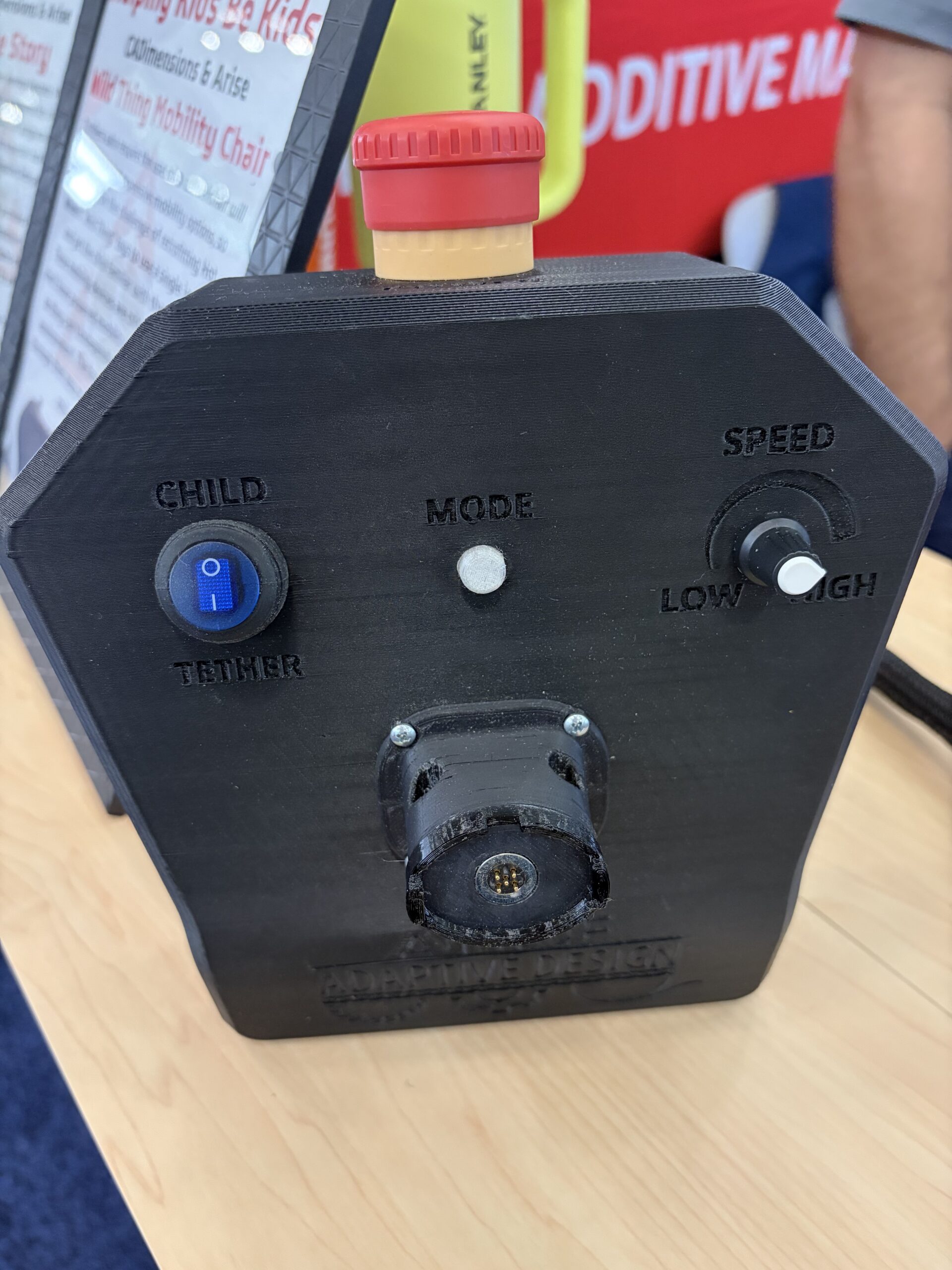
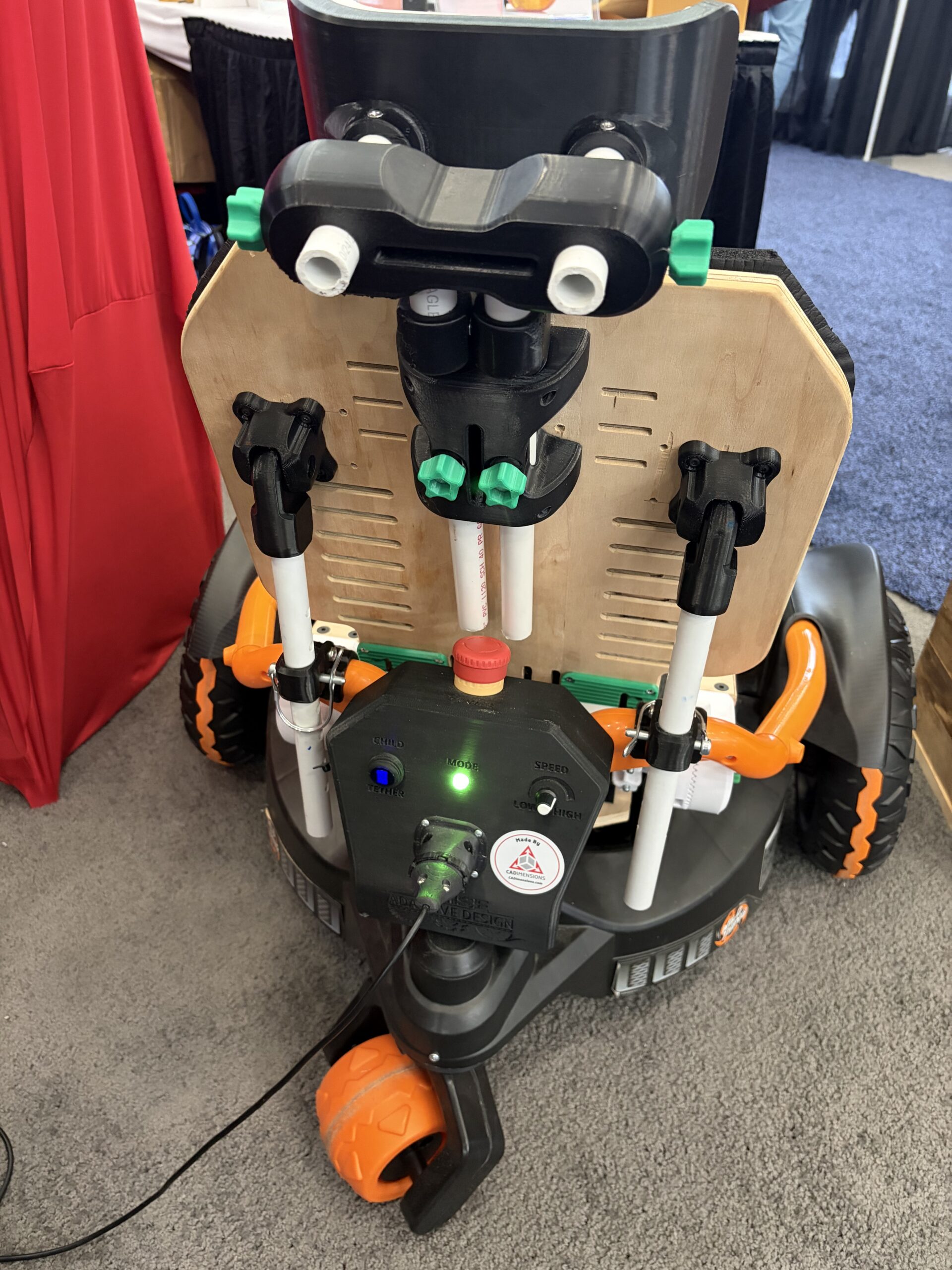
“The freedom these children enjoy through their new mobility tools is enough to put a smile on anyone’s face,” the sign at the CADimensions booth declared.
3D Printed Snare Drums
The Polymaker booth featured something pretty unique: a set of snare drums by Voxel Percussion.
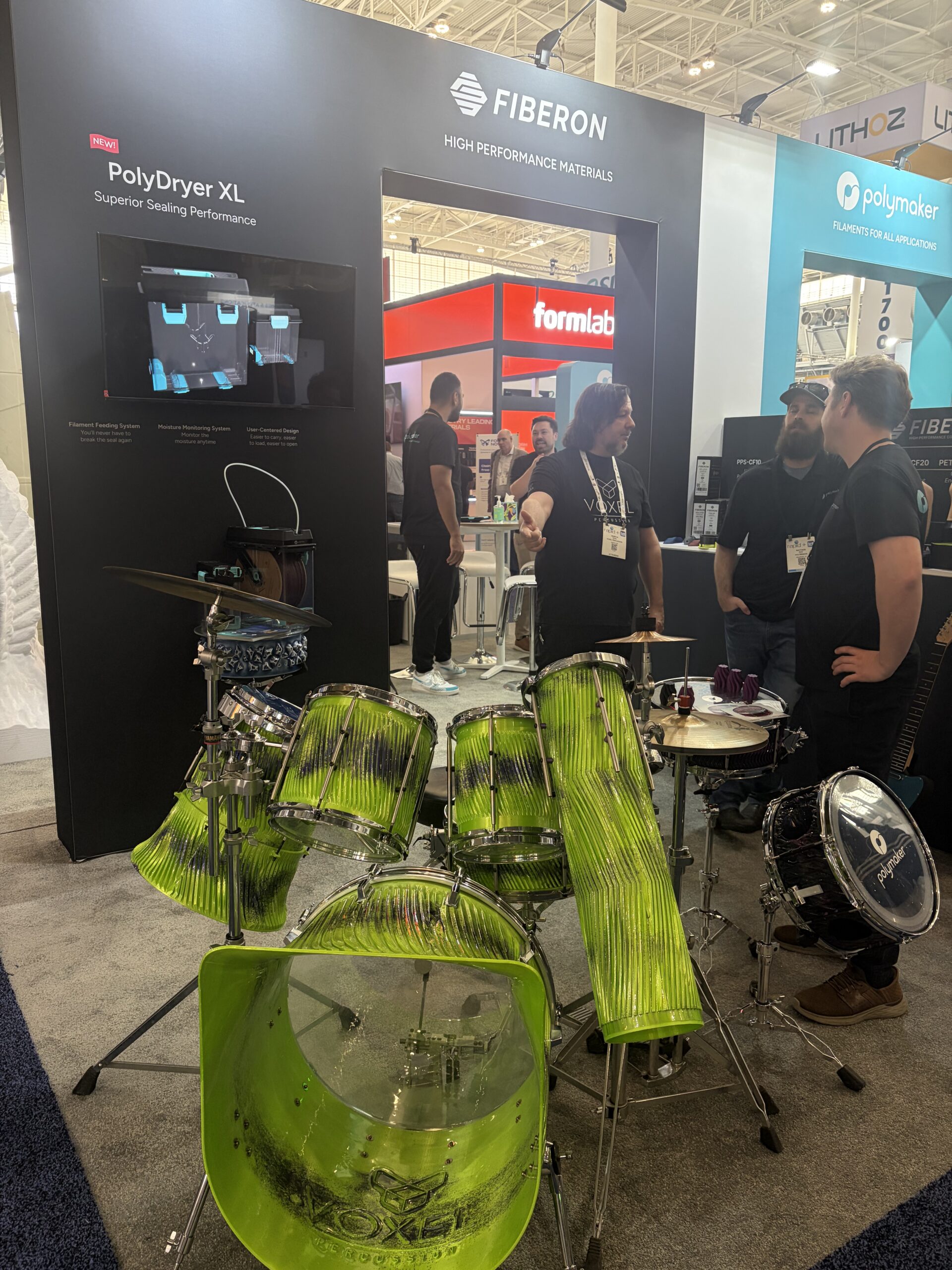
Based in Akron, in my home state of Ohio, Voxel Percussion uses 3D printing, laser cutting, and post-processing to give its drums their unique look. Each one is customized, featuring complex geometries and intricate textures. According to the website, the bespoke, epoxy-strengthened drum shells can be printed in just about any color you want.
Voxel Percussion also makes custom laser cut drum inserts, which can be used to give your drum a unique tone. Additionally, the company also offers 3D printed shakers, and “Groove Buddies,” which are “small gestures that can be mounted to your cymbal wingnut.”
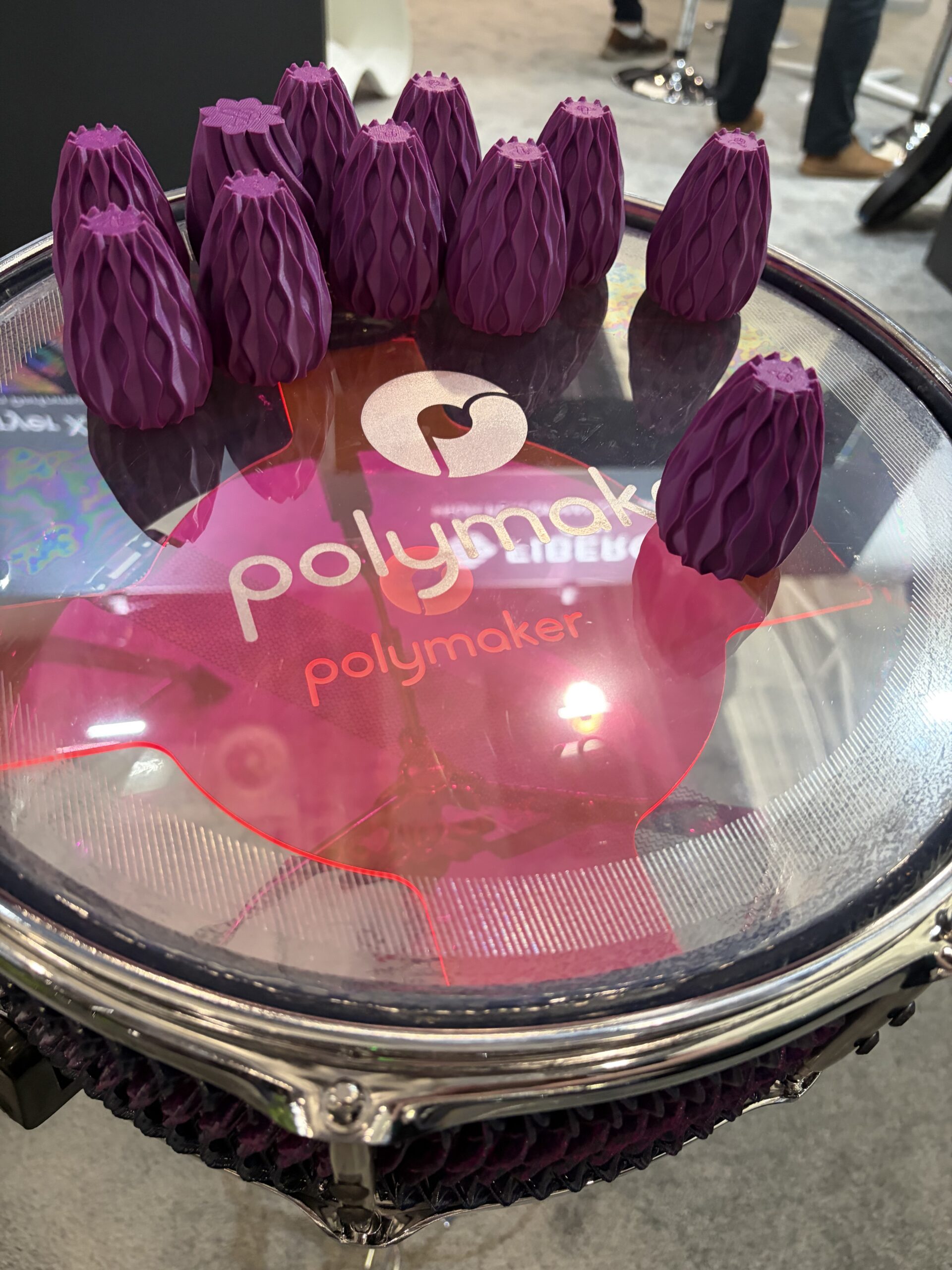
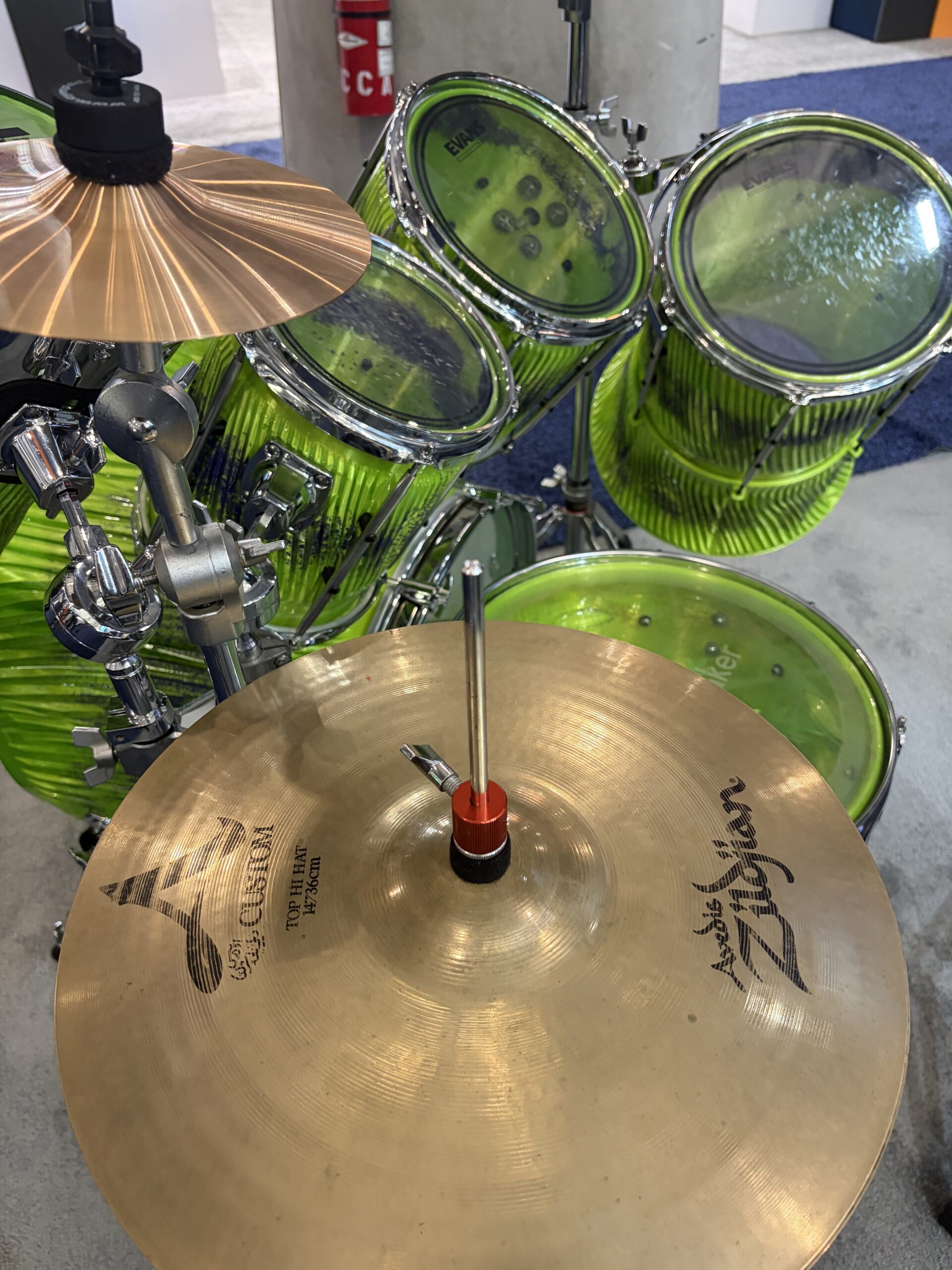
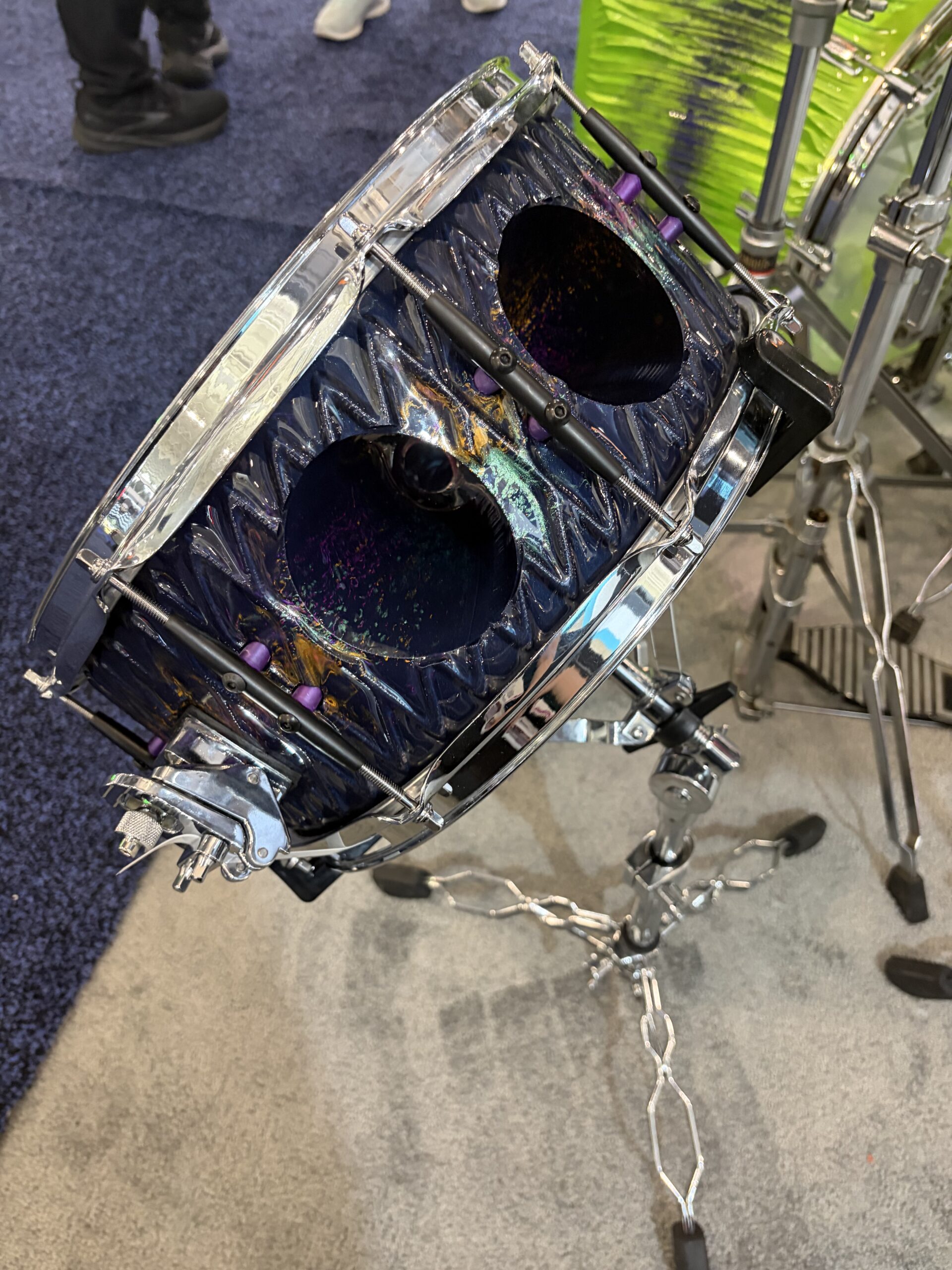
These drums were neat to see, but depending on where you were in relation to the Polymaker booth, they often made it hard to hear. If someone put a pair of sticks in my hand and told me to go to town on the kit, I probably would have too. But the first time I heard them being played, I was so startled that I almost fell off of my chair.
Drones, Drones, & More Drones
Something you saw all over RAPID this year were 3D printed drones.
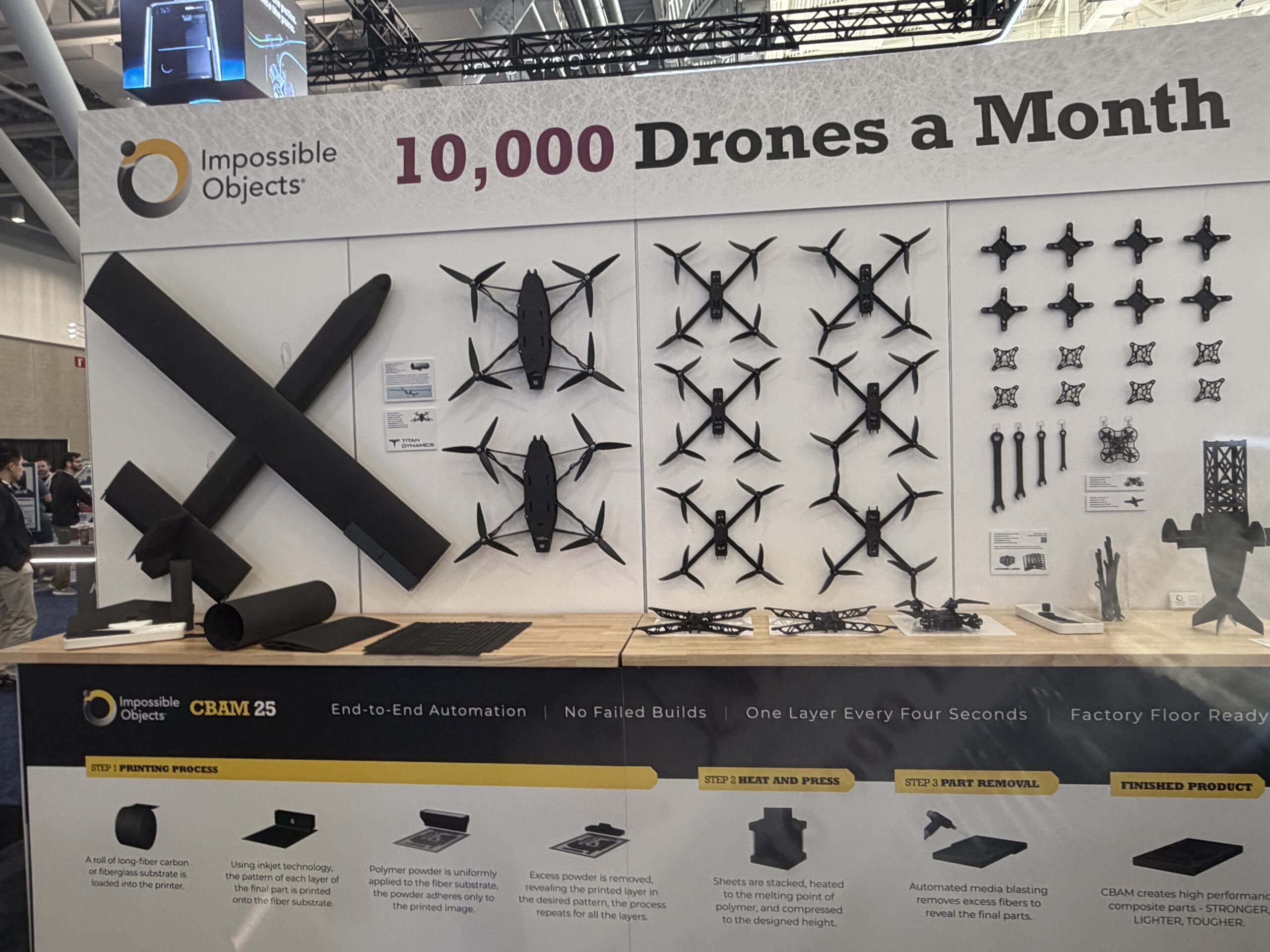
At the Impossible Objects booth, the company had a wall of 3D drones on display, which were printed on its incredibly fast CBAM 25 system. As you can see, Impossible Objects claims that it can print 10,000 drones a month with its composite-based AM technology.
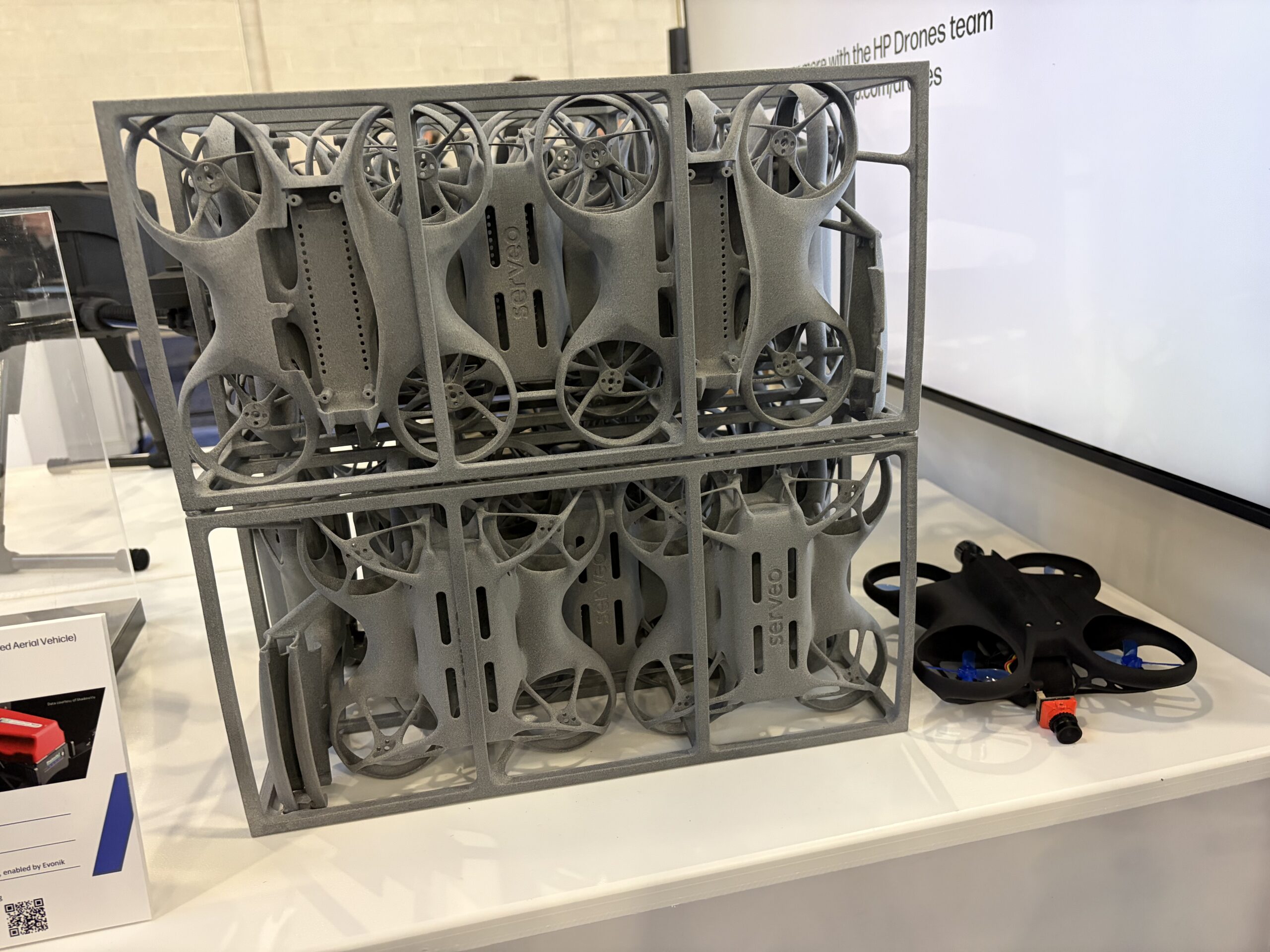
Drones at HP booth
HP also had plenty of drones at its RAPID booth. Applications Engineer Emily Levin said “there’s a couple value propositions of Multi Jet that are super important” when it comes making drones, such as the ability to create complex geometries and ultra-thin walls. Because they were seeing so much adoption of MJF for this particular application, the company now has a dedicated drones team.
“At HP, we’re not selling drones, it’s not designed to be a product, it’s designed for us to understand what our customers need from us,” Levin said, noting that every design iteration helps inform the team so it can better meet customer needs.
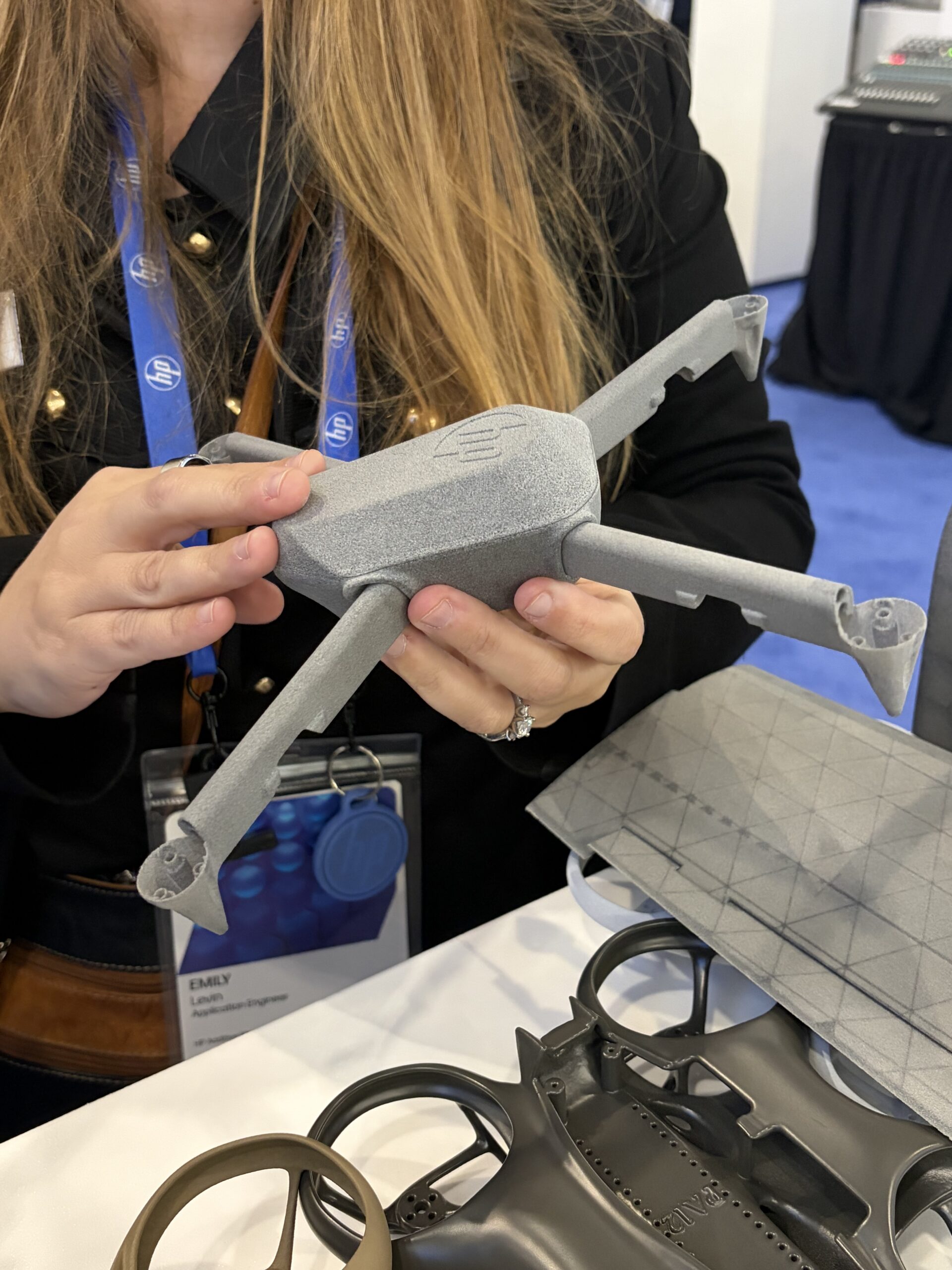
She said that, depending on the design, HP can print up to 140 small drones in one build, “so it’s extremely scalable.”
We also saw a Blueflite “last mile delivery” drone hanging above the booth. Its wings, landing gear, and body panels were all 3D printed with MJF technology.
“The interior of the wings are all latticed, so it has extremely lightweight properties but is also extremely strong.”
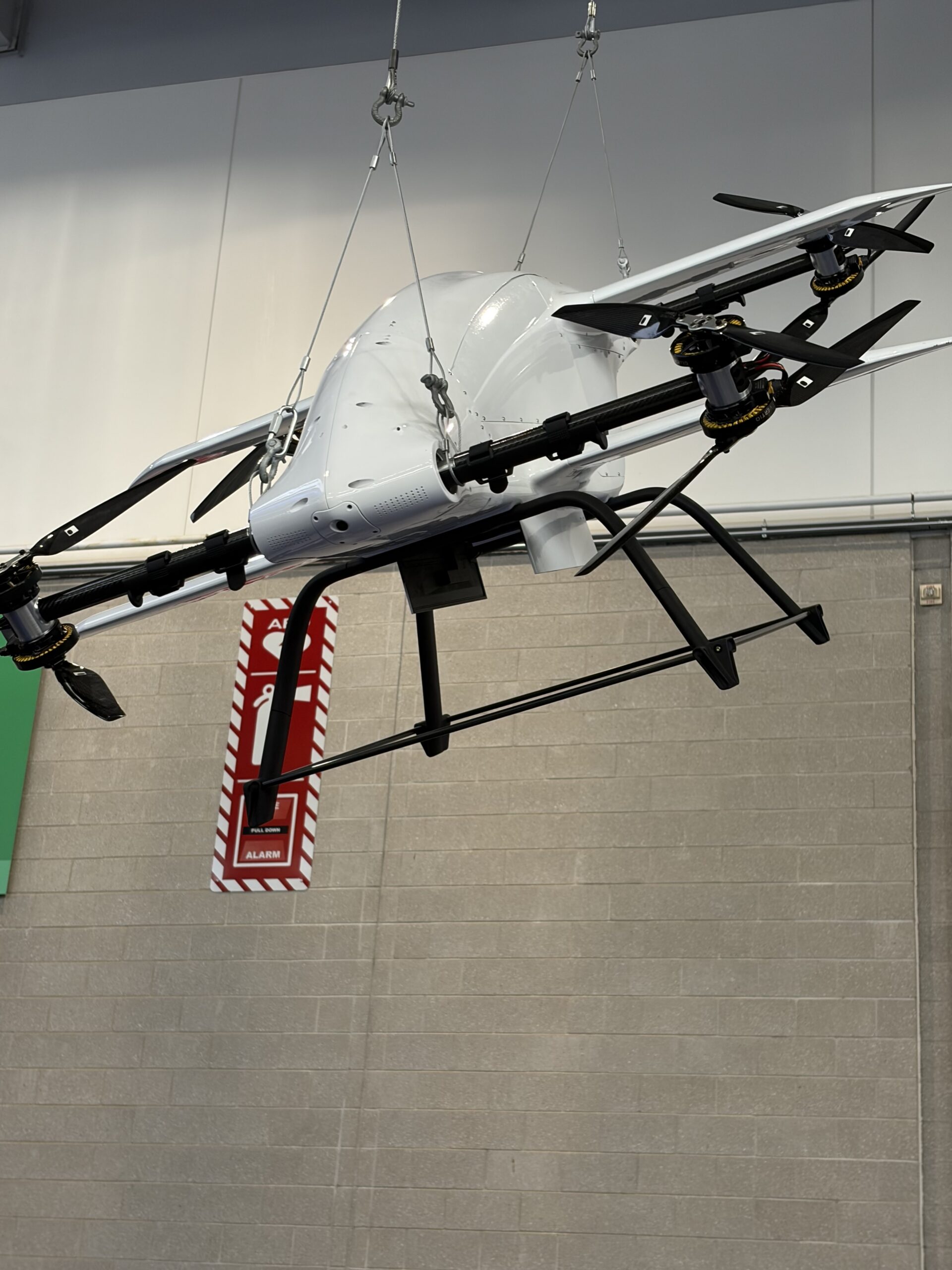
Blueflite drone
If you’re interested in drone 3D printing, you should attend our UAS Additive Strategies online event on “The Future of Drone Manufacturing.” It’s coming to a computer screen near you on June 30th!

HP’s Dual Tone Technology
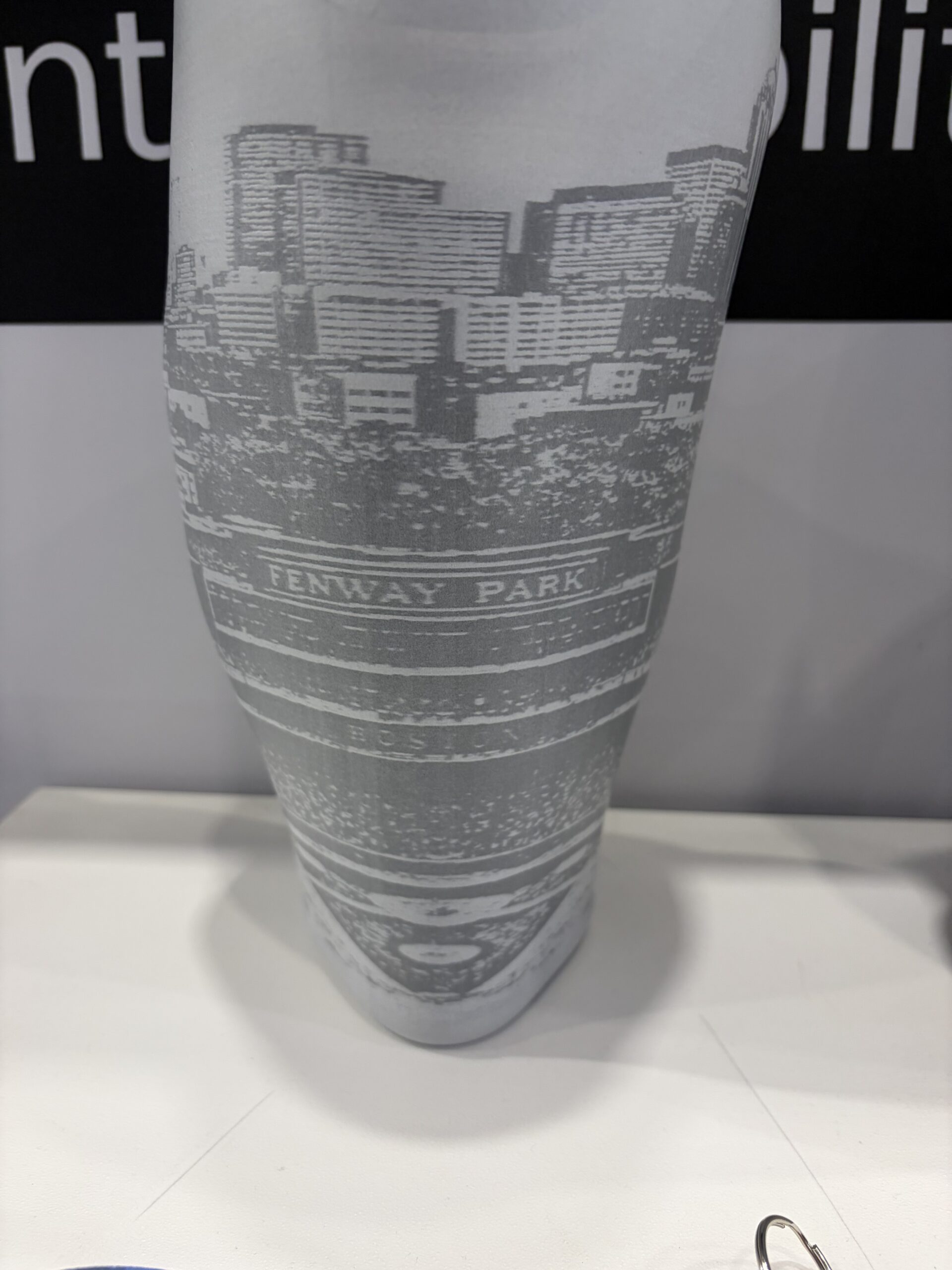
Speaking of HP, I also think its new Dual Tone technology is cool. It’s historically meant extra work, and even extra money, to add logos, text, or visual cues like QR codes to 3D prints. Dual Tone is a new capability that enables parts to appear in distinct white and dark gray tones right off the printer.
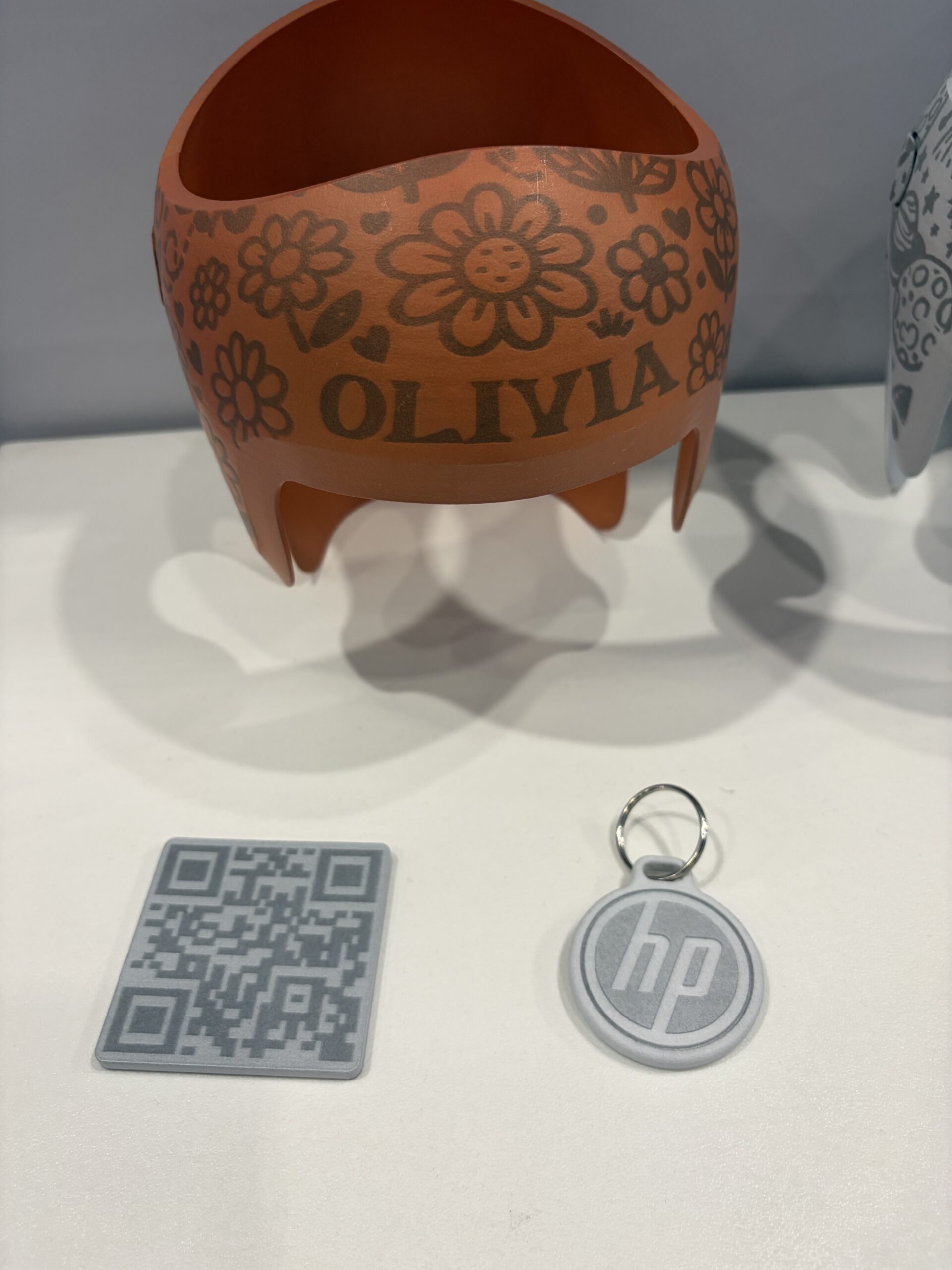
“Walking around here [RAPID], any industrial printer you see, what do they have in common? They all come out one color,” said Brian Ingold, Head of Applications and Business Development at HP Additive. “What we are doing with this technology is printing visualizations on parts.”
Ingold explained that HP has “two agents” in their machines, and to enable Dual Tone, they just add more detailing agent wherever they want the visualization to go. This is especially helpful for adding QR codes to parts, which usually has to be done with engraving or some kind of post-processing.

“You can also do individual part numbers,” Ingold said. “So from a traceability perspective, you can have serialized production and have an individualized part number right on the part.”
Using Dual Tone for MJF, HP can embed personalization, information, and contrast right onto the printed part. You can also really get creative with AI use here; Ingold said while designing a prosthetic socket, he added the Boston city skyline to the part just by typing that request into the software.
“We don’t want to launch a process that’s hard to do. We want to make it very accessible, so a patient, or a consumer going into a service bureau, can add it on really easily.”

This is obviously just a small sampling of some of the great 3D printing innovations I saw on the show floor at RAPID this past week. Stay tuned for more!
Images courtesy of Sarah Saunders