
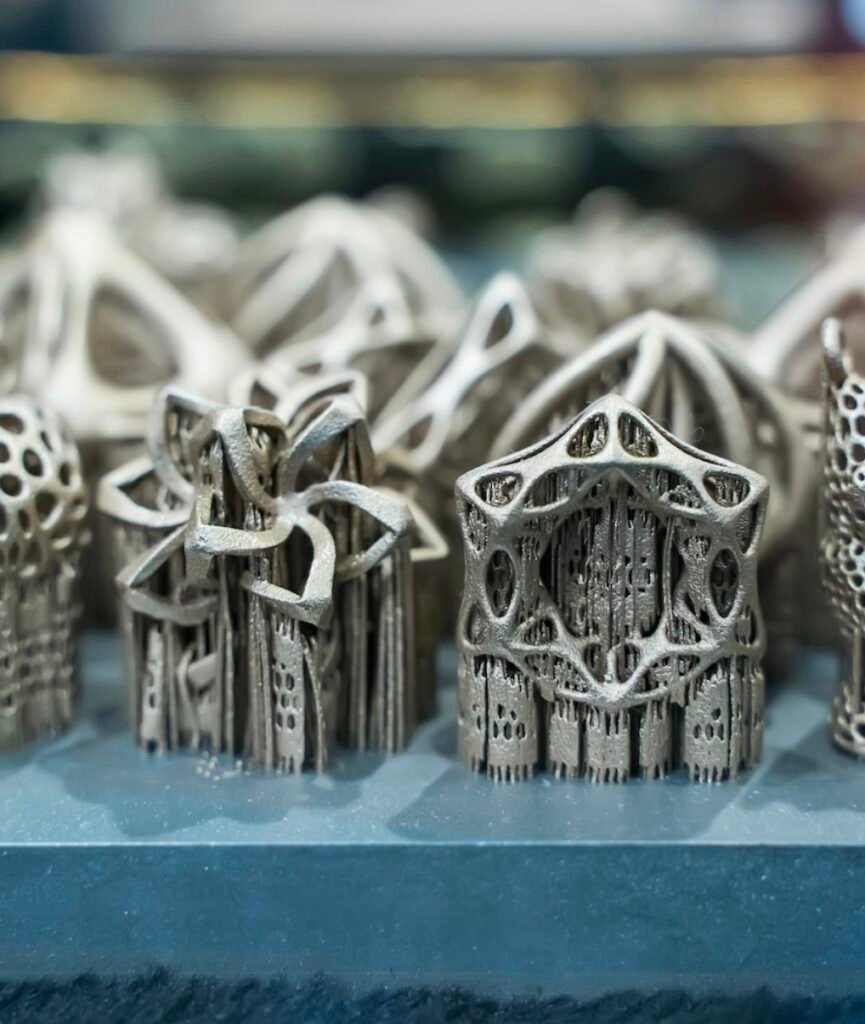
In my most recent post about the 2026 edition of Rim of the Pacific (RIMPAC), a biannual exhibition that constitutes the world’s largest joint maritime exercise, I focused on the prevalence of expeditionary additive manufacturing (AM) at this year’s event. I also pointed out that the use-cases I covered in that post and other posts weren’t even the only 3D printing demonstrations at RIMPAC, and along those lines, it’s worth mentioning that the US military has framed the event as the Pentagon’s “largest-ever advanced manufacturing demonstration“.
As more announcements roll in, it appears difficult to challenge that assertion, with the Naval Postgraduate School’s Consortium for Advanced Manufacturing Research and Education (CAMRE) noting that, along with its partners, it “deployed more than 50 advanced manufacturing technologies” at RIMPAC. That detail comes from an article about participation in the event by SPEE3D, the cold spray AM OEM for whom, at this point, attending RIMPAC is a biannual tradition.
Despite being a US war game mainstay, SPEE3D keeps bringing new ideas to the table, and this was, in fact, the first time the company’s machines have been used at sea on an operational vessel, with SPEE3D bringing its Expeditionary Manufacturing Unit (EMU) to the Hawaiian Islands. In addition to CAMRE, SPEE3D worked alongside a team from the Army Research Laboratory (ARL), as well as personnel from the Tennessee Army National Guard and the University of Tennessee’s Defense Development and Applied Research Center (DARC), two organizations with which SPEE3D worked earlier this year in a live-fire exercise.
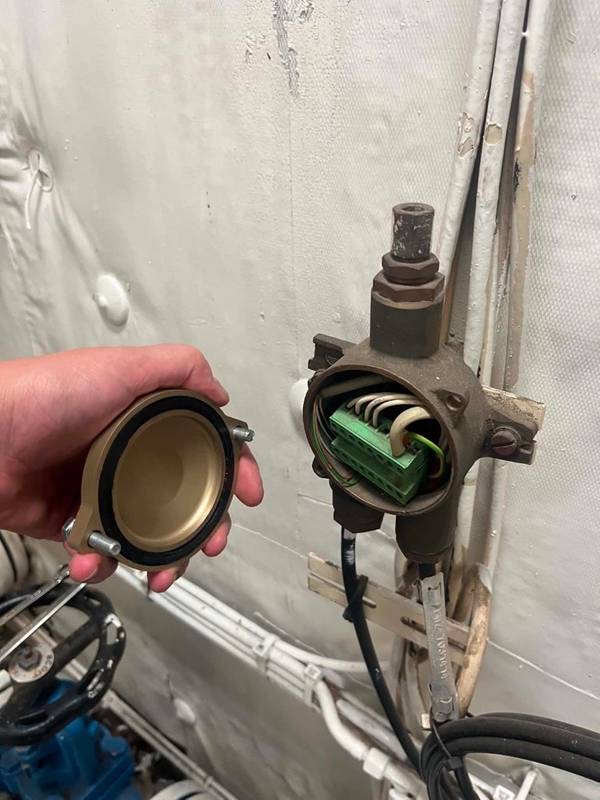
A 3D printed metal part produced during RIMPAC 2026.
The unique DARC program helped the National Guard participants test an EMU unit at that earlier exercise, too, which involved delivery via drone of a replacement ground vehicle part through a contested environment. At RIMPAC, a similar concept, transposed to a maritime environment, was tested, and an interesting wrinkle here is that the at-sea manufacturing didn’t take place on the USS Essex (which thus far seems to be the site of the majority of US Navy on-the-move manufacturing demonstrations), nor even aboard a US military vessel. Instead, SPEE3D and its US partners worked with the Royal Canadian Navy (RCN), printing parts aboard the MV Asterix, an RCN supply ship that originated as a commercial container ship before being converted in the 2010s.
At RIMPAC 2024, not long after the machine’s public release, SPEE3D demonstrated the EMU’s capabilities from shore, printing 11 parts. This year, both on shore and at sea, SPEE3D and its collaborators printed a total of 32 parts: 24 produced on shore using Knoxville Armory’s global ‘reachback capability‘ (I feel like the 3D printing industry will be seeing more and more of this term), and the remaining eight printed on the MV Asterix. Impressively, SPEE3D notes that all but three of those parts moved along to final post-processing, a capability enabled by the EMU’s inclusion of the full array of requisite equipment, such as a CNC mill.
As I commented in my post about the previous exercise that SPEE3D engaged in with its Tennessee customers, the Australian company is excellent at addressing multiple different demand signals in a single use-case. Here, in addition to executing mobile manufacturing and everything that entails, it’s just as noteworthy that SPEE3D folded in a non-US partner aboard a supply vessel. Combined exercises appear to be rapidly gaining relevance beyond the purely military sphere, with the most recent piece of evidence in this context being Trump’s order to reduce joint exercises with South Korea.
Ostensibly, that’s to placate North Korea ahead of some currently unplanned nuclear negotiations, and Trump also mentioned South Korea’s refusal to come to the US’s assistance in Iran, but to me it seems more likely that it’s punishment related to the recent reports that China is considering holding a summit with South Korea in the near future. In any case, the point is that the privilege of joint training activity with the US military appears to be the latest thing that the Trump administration has repurposed as a bargaining chip.
If that’s the reality, then the US must consider that what it’s doing in these joint exercises is quite valuable. Given the extent to which advanced manufacturing has become a centerpiece to seemingly every one of these events, one wonders if that’s largely where the perceived value lies.
Images courtesy of SPEE3D