
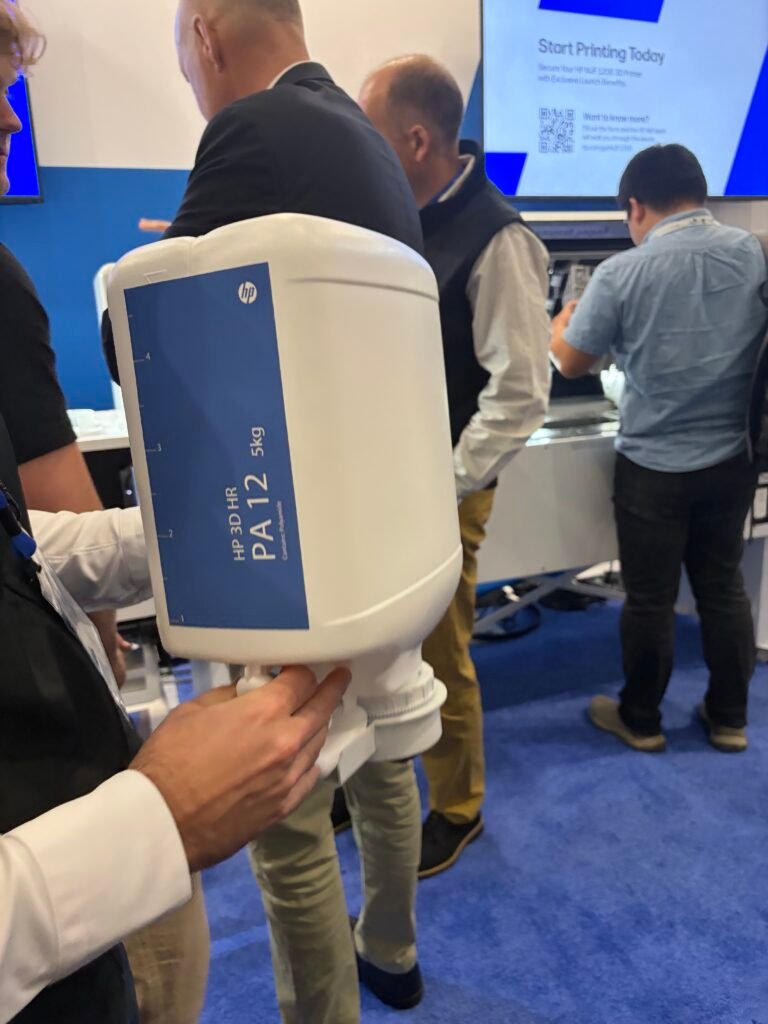
HP has launched an entry-level MJF solution, the HP Multi Jet Fusion 1200 3D Printer Solution, which will be available in 2027. What is the 1200 exactly? What does it mean for the market, and what will it do for HP?
The 1200 is a sub-$60,000 PA12-centric 12-liter MJF system with a build volume of 12 liters, officially unveiled live at RAPID + TCT 2026. Not just a printer, it comes with an unpacking station, Magics Print for HP by Materialize, and a live viewer tool. The system is meant to work without extra gas or other requirements for the site and on standard electrical outlets. Initially, it launches with HP 3D High Reusability PA 12, “enabled by Evonik,” a great material with strong economics. That material can reuse up to 80% of surplus powder. The material costs around $100 per kilo. The overall economics of the material should be better than most on offer. The powder can lead to strong, well-defined parts and should suit most applications. Some PA 11 would be nice, but perhaps this will follow. It’s unclear whether Evonik is somehow sponsoring this system to get an exclusive powder on board, or if HP just went with a popular powder with good business economics.
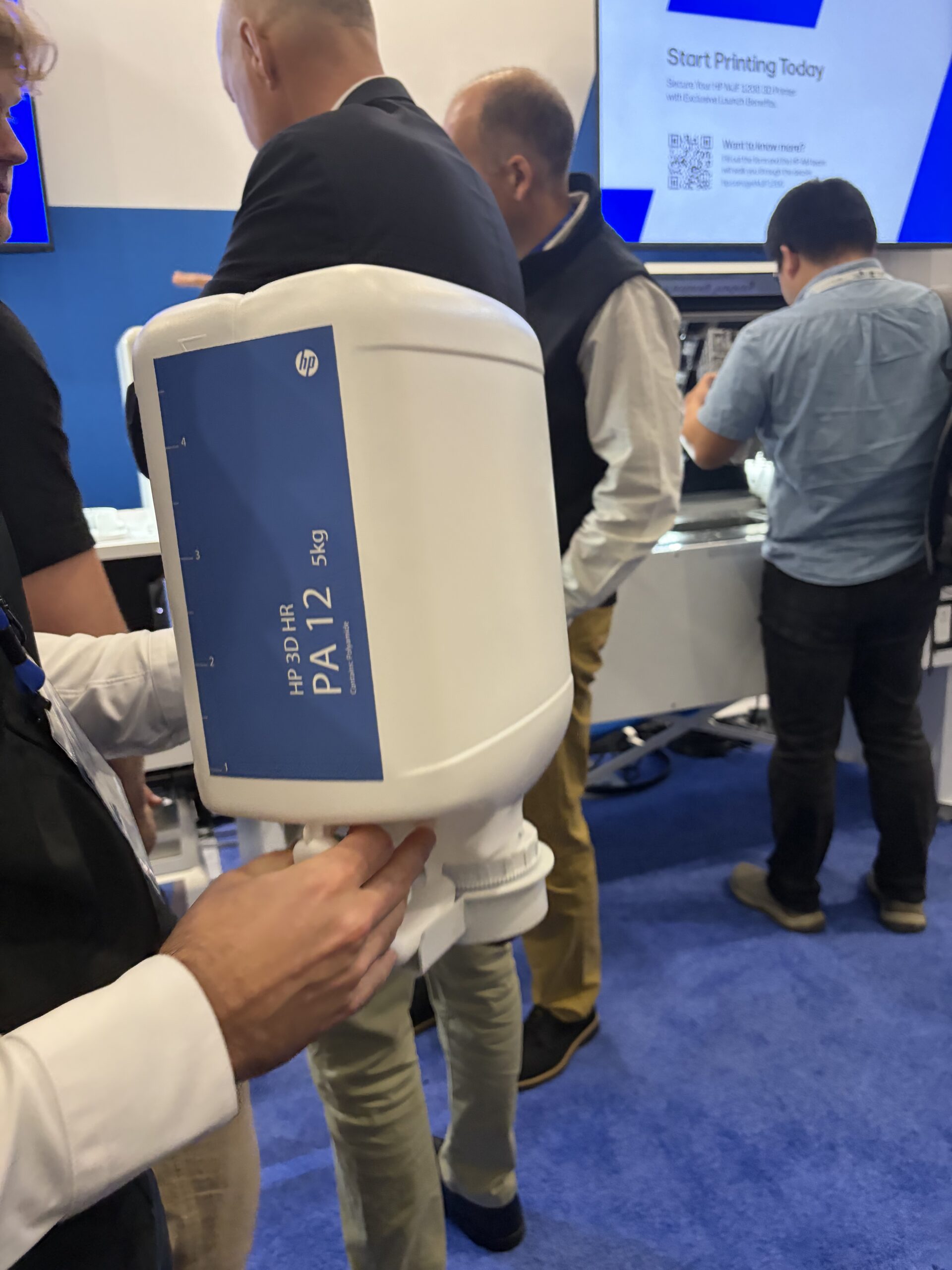
A genius feature of this printer is that it comes with a service contract that costs about 10% of the system’s value. This is, of course, a goldmine for HP, and I’ve been telling vendors in the space to offer service contracts with next-day replacement for years, as it turns the boring economics of box selling into a lucrative business. 10% sounds like a lot, actually, so I hope that’s not off-putting to some. HP has designed many components to be user-replaceable, and in the main markets says replacement parts can be delivered the next day while service people arrive within three business days. The latter sounds a bit slow, but if they can ship parts the next day, that can solve my issue. This will work well for most.
Alex Moñino, the GM of HP Additive Manufacturing Solutions, said that the company’s focus is “on bringing industrial-grade capabilities closer to where ideas take place.”
“By lowering cost per part and simplifying workflows, we are making it easier for customers to adopt additive manufacturing and scale it across new applications. This commitment to innovation and lowering TCO.”
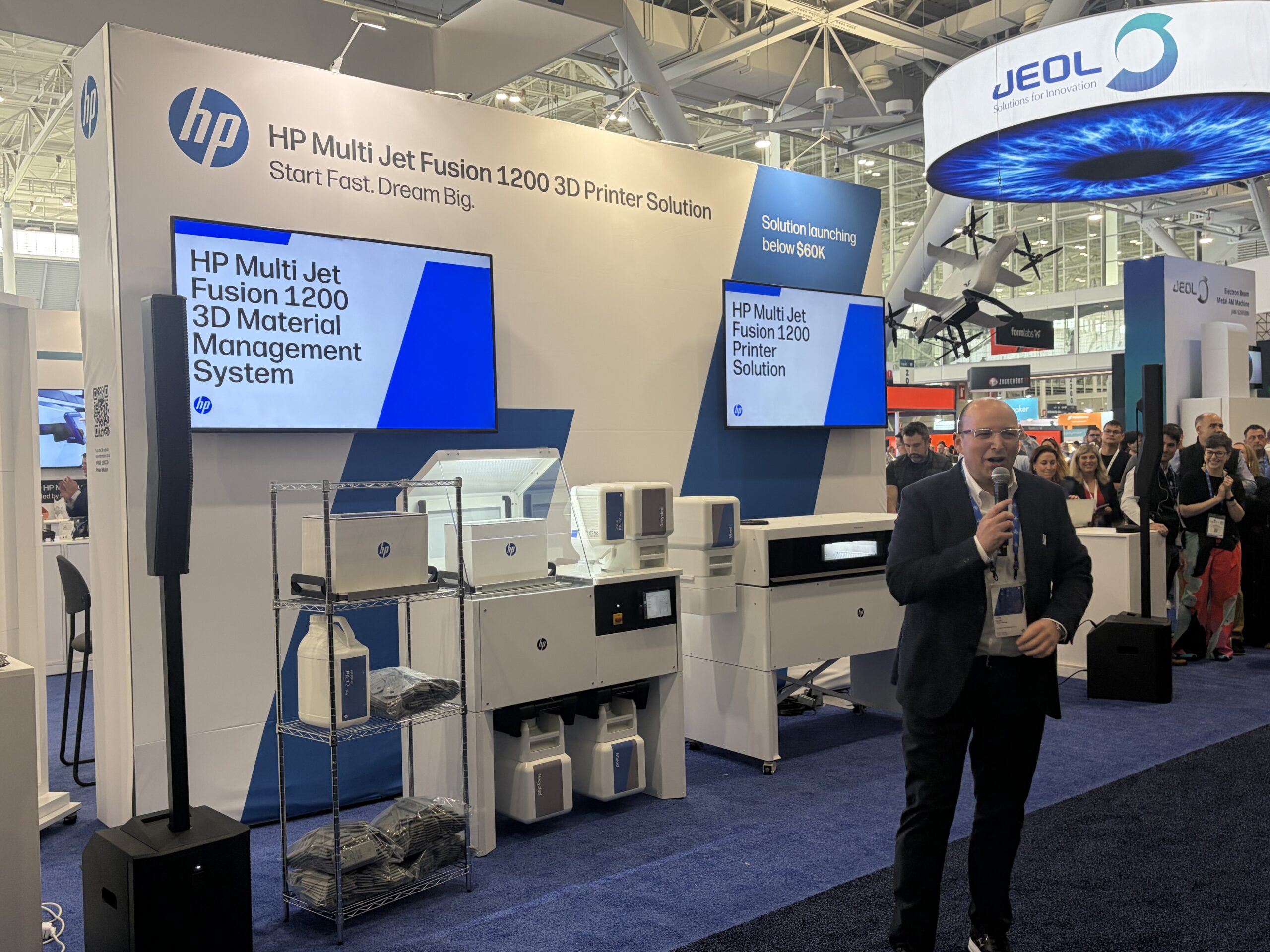
Alex Moñino, Senior VP and General Manager, HP Additive Manufacturing Solutions, as HP debuts new 3D printing products at RAPID + TCT 2026.
Indeed, lowering cost per part has been a consistent HP focus for many years now, with Alex and Francois echoing the need to continue doing this to drive the market forward. The company says that the workflow is easy, while unpacking and mixing can be automated. The Magic’s tools should let nesting and build prep go well. This focus on simplicity should make adoption easier and let more people in the office use the system.
What is the 1200?
So what is the 1200? It’s something that will make entry-level LPBF much more attainable and accessible for companies, especially those that trust and work with HP. It enlarges the entry-level LPBF market. If it works as advertised, it can bring more new users into the HP system. At the same time, small labs, designers, machine shops, and university departments could use this system without being able to afford a larger one. In this sense, it could enlarge the overall market. The 1200 is also a very definite shot across the bow of Formlabs. Priced similarly, it is clearly targeting the Fuse 1. If a healthy competition ensues between the two, then the 1200 suggests the overall market could grow well off the back of a competent duo duking it out with well-functioning systems.
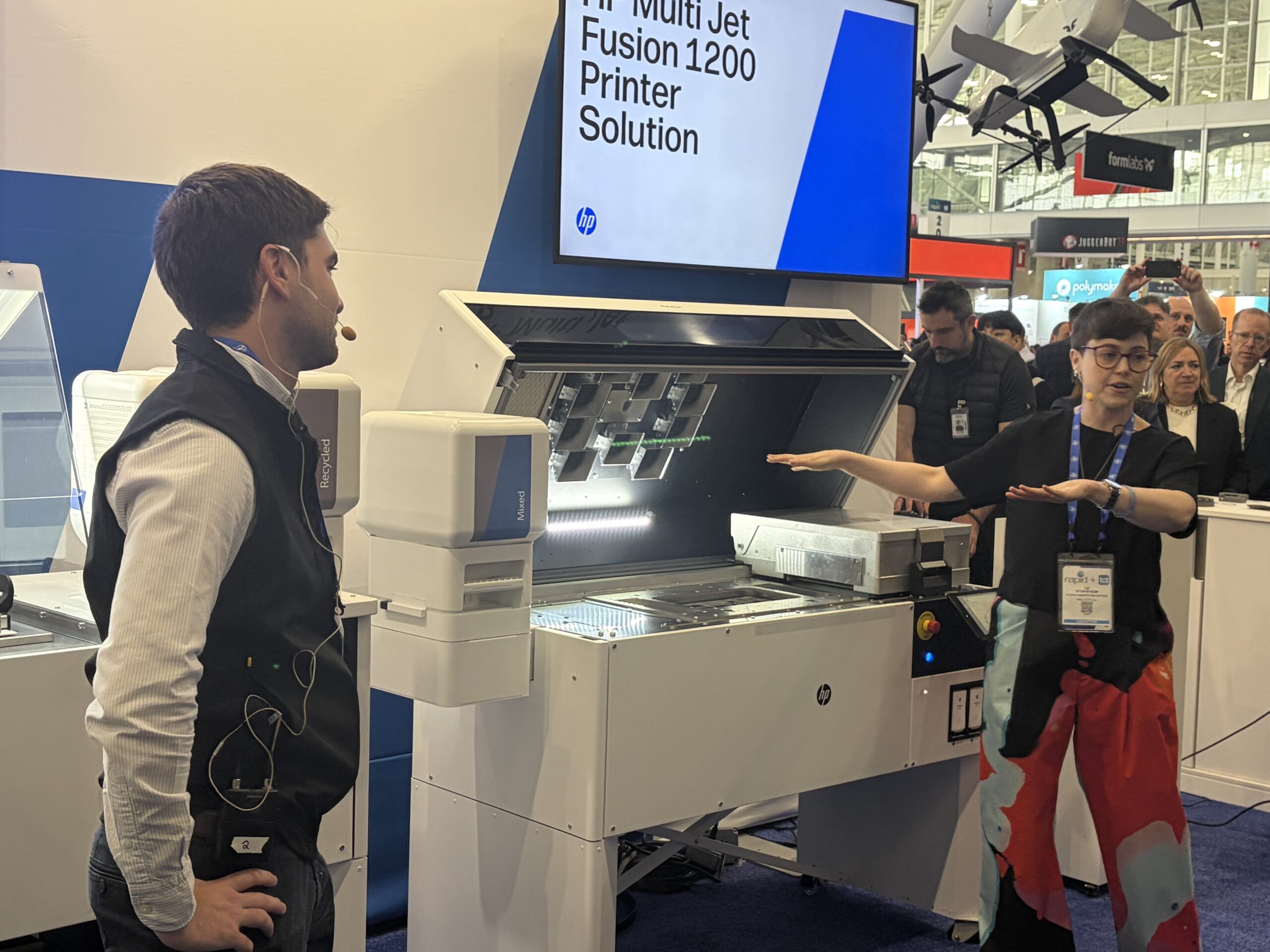
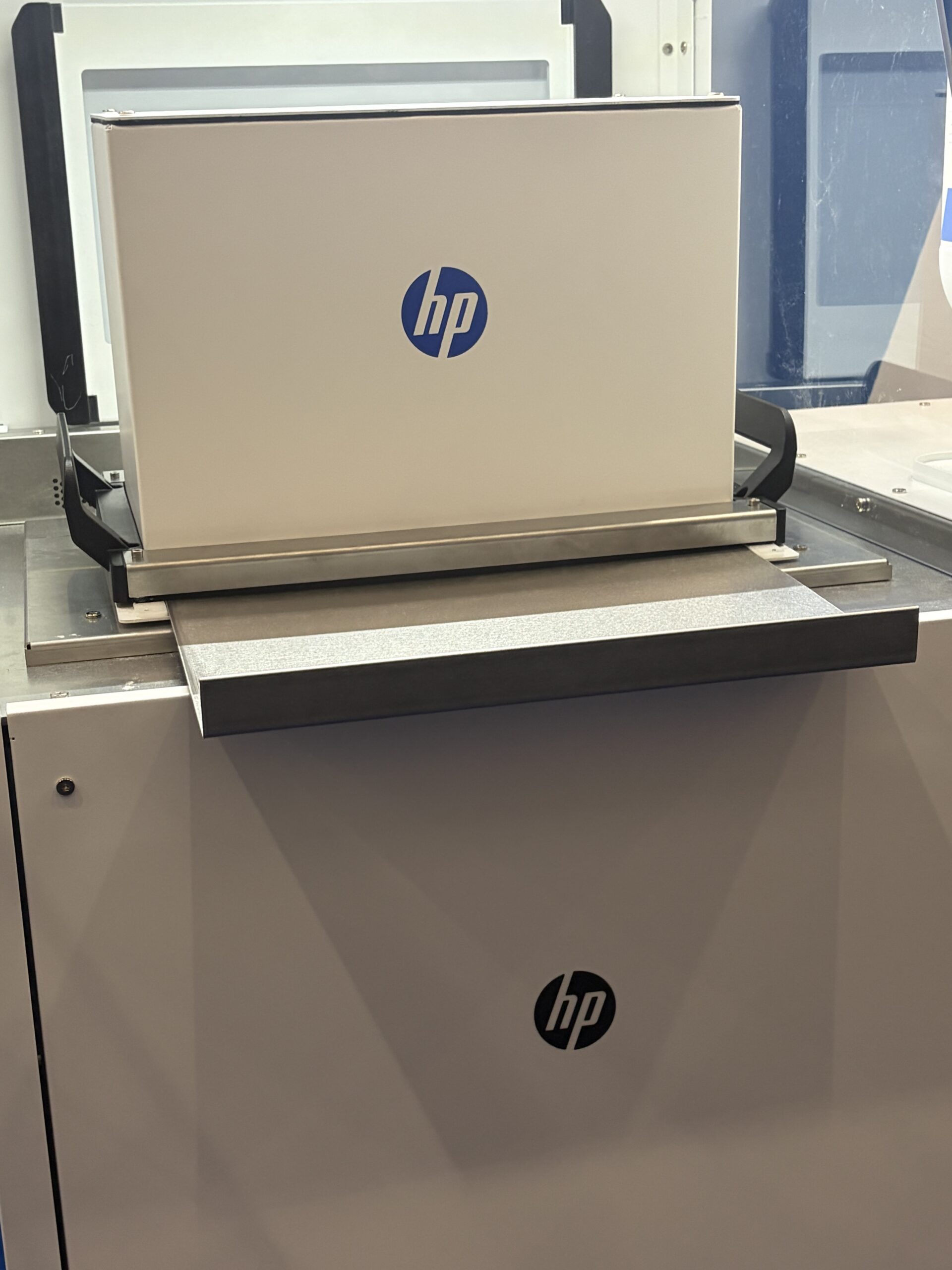
HP unveils the Fusion 1200 printer on the RAPID + TCT 2026 show floor.
What is the 1200 for HP?
The 1200 shows that, ten years into HP, it is still committed to additive. The 1200 shows that the company is serious about expanding its additive business and growing its installed base. This kind of product can get a kid in college interested in LPBF, have her try it out in her first job on a larger system, and then use the smaller system to go into production with her own startup years later. It is significant because it can get people into MJF at a lower price point and also lets people consider it as a system for different sites. So for the main production site, we use larger systems, but at this overseas location, we just put in a 1200. It also makes it much more likely that designers and inventors will use MJF to commercialize inventions and take them to market. MJF can now be a solution where your prototype can be the same file as your first series. Later, if you should scale, you can outsource it and expect the same performance and part to come out, even though your partner uses bigger systems. Then, later, you can produce some parts in-house again with your fleet of 1200s before scaling up to larger systems in-house. Importantly, this system forestalls competition from below from Formlabs either through people opting for many smaller systems or through Formlabs eventually growing in capacity and capability.
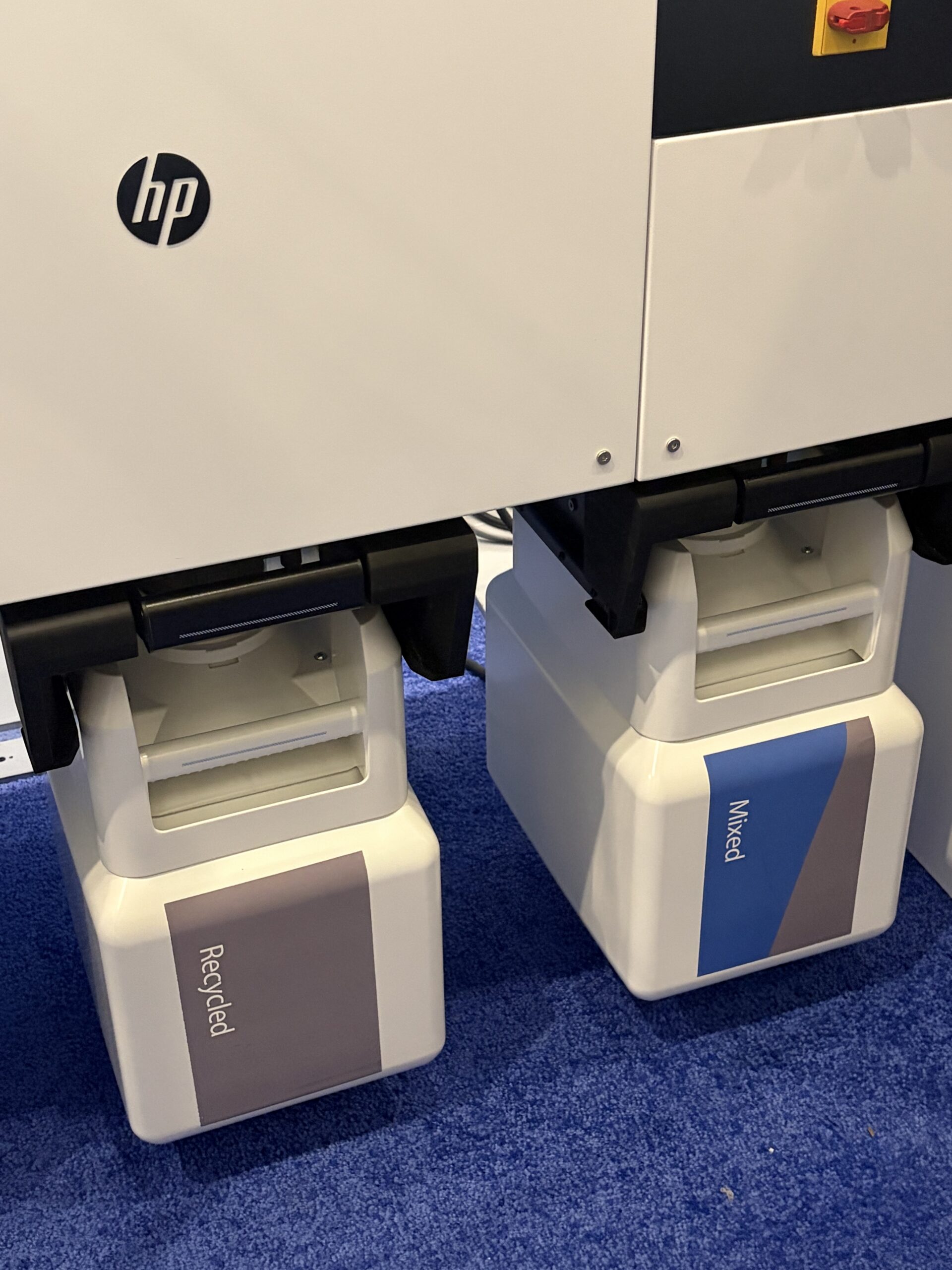
This system could be a real winner for HP if it performs well and delivers good process economics. We know this is why MJF wins in many service bureaus. It’s just the most profitable process for most. If people leave MJF, it’s because of material needs, a particular material or part that works better elsewhere, or because HP’s ancillary costs are simply too burdensome. This could therefore be a good system for HP’s revenues, but also a good system to grow MJF and HP’s overall offering.
What does the 1200 mean for Competitors?
The news is not great for Sinterit, whose SUZY model is well regarded, but it is now the relatively unknown entrant amid two more prominent firms. The SUZY could remain open and accessible, making it a more logical choice for universities and research. But, design agencies and manufacturers may be swayed by the name and ease of use of the HP system.
Formlabs has a fight on its hands. The Boston-based firm is formidable and delivers well-functioning, integrated software, materials, and system offerings. The firm’s positioning has been stellar, with it pioneering the PRO desktop segment and then putting the Fuse at the right price point between small systems and larger full units. This excellent positioning means it has pioneered within its own offering. So essentially, it has built its own market with its own value proposition, defining and building out a new category. Formlabs has never had to play defense, and didn’t face a horde of Chinese competitors. It has been able to build its own business, its own way. This also means that the firm has never had to play defense. We saw at EOS that a shift towards meeting a new player is very difficult to do organizationally and culturally. Good farmers don’t always make good hunters. This may therefore be difficult for Formlabs. The joint battle should be good for everyone else, though.
For Chinese firms on the desktop, this makes it less likely that they’ll enter polymer LPBF right now, right? The space looks more crowded, but there’s not enough growth to make them all pile in. With people making $10,000 kit metal LPBF machines and that market seeming to grow to the moon, it’s more likely they will play there than in polymer.
For Farsoon, this may represent a real threat from below. The company is winning on flexibility, open materials, and cost. For some players, a few 1200’s may be more sensible than an entry-level Flight system. This is a particular threat to the 252P and may deter people from entering into business with Farsoon. An early choice for HP may let people remain there. It’s unclear if Farsoon will come up with something to counter the 1200. The company seems content to try to dislodge EOS from some customers and open up some industrial use cases with larger machines. Even though Farsoon is not close to the Chinese government, it is still Chinese. This means it can’t rely on industrial largesse as much as BLT or Avimetal, but it is still barred from certain markets. And the Chinese market is currently squarely focused on industrial production. With services currently driving each other out of business in China, it’s unlikely any entrepreneur will seriously consider buying an entry-level system there. A lot of parts can be had at below cost, so why invest?
Farsoon, therefore, seems very production-focused and is leaning more towards the metal side of the business than before. By using many parts and architectures across both metal and polymer systems, the company is likely to stick to architectures that support both. Especially because metal printing guys seem a bit allergic to the $10K systems from MetalBase and ScrapLabs. This may cause it to focus less on entry-level and more on the 403-sized systems.
What does this mean for the market?
This is a great thing for the market. I can really see this system and Formlabs breaking open an untapped segment of the 3D printing market. Entrepreneurs, businesses, and products made locally and iterated quickly could be easily scaled with this tool. If the 1200 works as advertised, the system could be a boon for small businesses and departments alike. There are hundreds of thousands of machine shops and factories that could benefit from well-working LPBF as a capability. How many will convert at what price point is not yet known. But for machine builders, factories, industrial automation professionals, inventors, and entrepreneurs, this could really open new avenues for growth. Something like a glasses business done locally or in a hospital, 3D printing with SLS for guides is much more accessible now. This could also work really well for some Orthotics and Prosthetics applications, as well as assistive devices. I really like it for sporting goods as well, and think this may enable people to start businesses making custom tennis racket handles, thumb splints, and the like. I really like this as a development, and it stands a chance of really enlarging our market.
Featured image courtesy of HP. All other images courtesy of Sarah Saunders for 3DPrint.com.