
Shares of Nike stock hit all-time highs in late 2021 but have cratered in the years following, with the company losing nearly 80 percent of its market cap since peaking. Even so, it is still obviously a very large corporation, although if this downward spiral continues much longer, the “very” would have to be dropped, and Nike might be forced to settle for being merely a large corporation.
This same trajectory already existed last year — albeit not yet suggesting quite as bleak a state as Nike faces now — which I wrote about in a post from October 2025, on Nike’s drop of a shoe called the Air Max 95000, one of its many releases done in collaboration with the innovative Brooklyn design house and 3D printing user, Zellerfeld. In that post, I discussed how Nike’s actions seemed to contradict the narrative around the company’s hiring of a new CEO, Elliott Hill, previously its President of Consumer and Marketplace. Essentially, the narrative was that Nike would deemphasize the direct-to-consumer (DTC) approach that investors seemingly saw as the source of the brand’s decline.
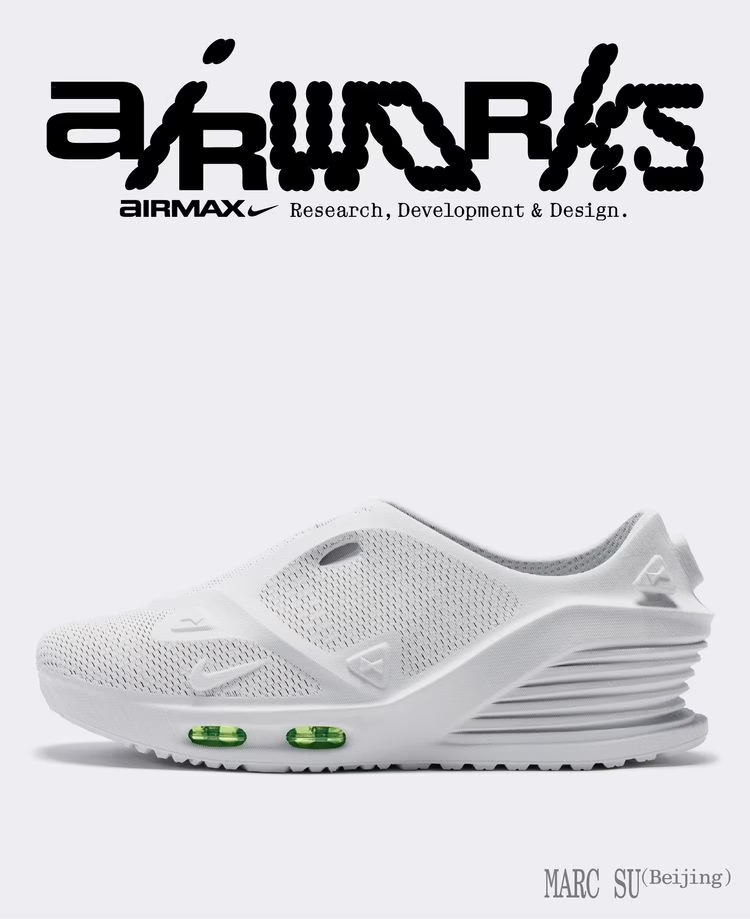
I noted that, alternatively, Nike’s 3D printing activity seemed to indicate it was doubling down on DTC, and the restructuring plan that it just announced, as part of its latest disappointing earnings report, reinforces this idea. Shortly before the earnings release, Nike also unveiled its latest collaboration with Zellerfeld and announced that, through March of next year, it will be doing five more such drops globally. Each new release involves Zellerfeld and an up-and-coming designer, tailored to a different major metropolis.
That campaign, called Air Works, perfectly embodies the approach that Nike described in its restructuring plan, a plan which has been curiously titled “Pace”. There are four key features to “Pace”, an endeavor which the company expects to last through 2031: (1) supply chain modernization; (2) geographic reorganization; (3) a new India campus; and (4) layoffs, which are set to begin next year.
As you might be able to gather just from a quick glance at the plan’s four pillars, they’re all closely related to each other, and, I would argue, AM is fairly relevant to them all as well. It’s also worth mentioning that, in his open letter to employees (linked in the paragraph above), Elliott Hill stressed that Nike must be “closer to athletes, more responsive to consumers and better positioned to win.”
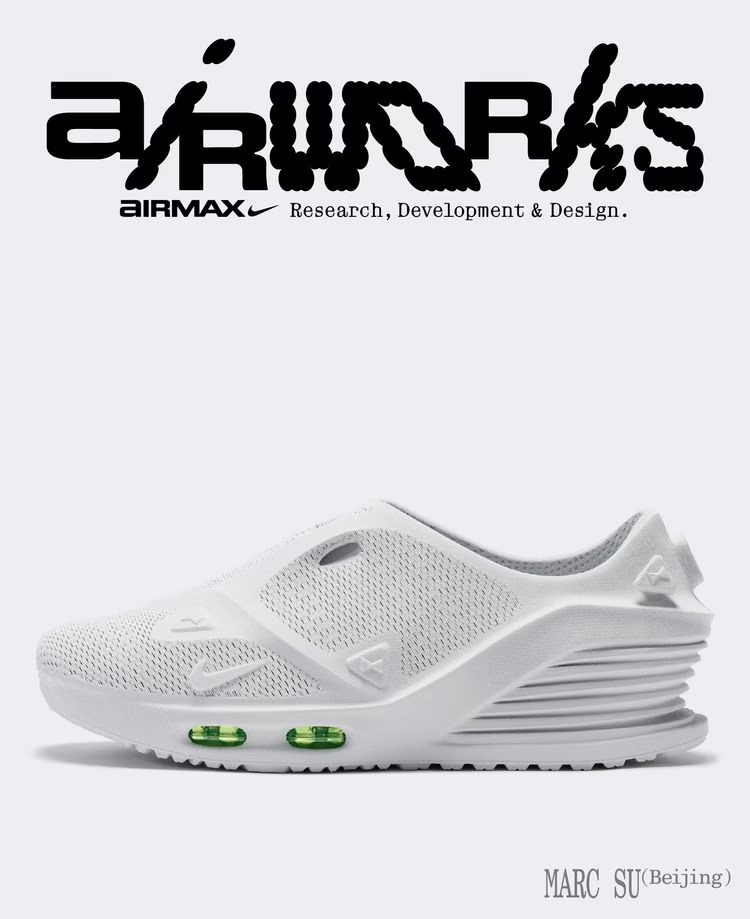
One of the releases in Nike’s Air Works campaign.
That idea explains why they’ve adopted the strategy they have, and AM helps explain how they plan to achieve it. Clearly, ‘supply chain modernization’ is the part of the restructuring effort that AM fits into most directly, but that supply chain modernization angle will need to succeed for Nike’s other plans to work.
If we take the Air Works campaign as an example, the company is trying to execute an extremely literal version of the idea that you should “meet customers where they’re at”, with each release designed with the relevant market in mind. Nike can do this only because it has built up its AM capabilities over several years, even training each designer in the campaign at its campus in Oregon.
Additionally, one of the Air Works releases will be in Mumbai, and, while the new Nike campus in India will be in another city, Bengaluru, it’s clear that India is a major priority for the company, as it keeps proving to be for every Western brand that’s starting to struggle in the Chinese market. The Chinese market is extremely relevant to the Pace strategy, by the way, as the major change embodied in Nike’s geographic reorganization is its decision to fold its Chinese operations into its broader Asian Pacific operations, while those operations will be headquartered in Singapore.
Finally, the company’s personnel reductions will presumably be supported in part by its AM strategy, and both the personnel reductions and the AM strategy will depend to a large extent on the significant investments that Nike is making in AI. The general objective seems to be to focus its energies on growing its market presence in areas outside of China, while aiming to become more lean through continued attention to its technology-driven DTC activities.
Will it work? There’s no accounting for taste, which is what makes operating a fashion brand difficult in any market, let alone on a global scale. Nike does appear to be on the road to looking like a very different company by the end of this decade, however, for better or worse.
Images courtesy of Nike