

For years, the additive manufacturing (AM) industry promised to reinvent production. But as the technology matured, the real challenge turned out to be proving that 3D printed parts could be made consistently, meet industry standards, and work in real industrial applications.
For companies like Fathom, the industry’s push toward real production has meant moving beyond the traditional “service bureau” model. Once known mostly for prototyping and digital manufacturing services, Fathom has spent the last few years becoming more of a manufacturing partner for aerospace, medical, and industrial customers where quality and consistency are just as important as innovation.
I spoke with CEO Rush LaSelle after reconnecting with Fathom’s team during the AIAA SciTech Forum in Orlando at the beginning of the year. With years of experience in AM and contract manufacturing, including previous leadership roles at Jabil, AddUp, and 3DXTECH, LaSelle spoke about where industrial 3D printing is today, what the industry got wrong in the past, and where companies are finally starting to see real demand.
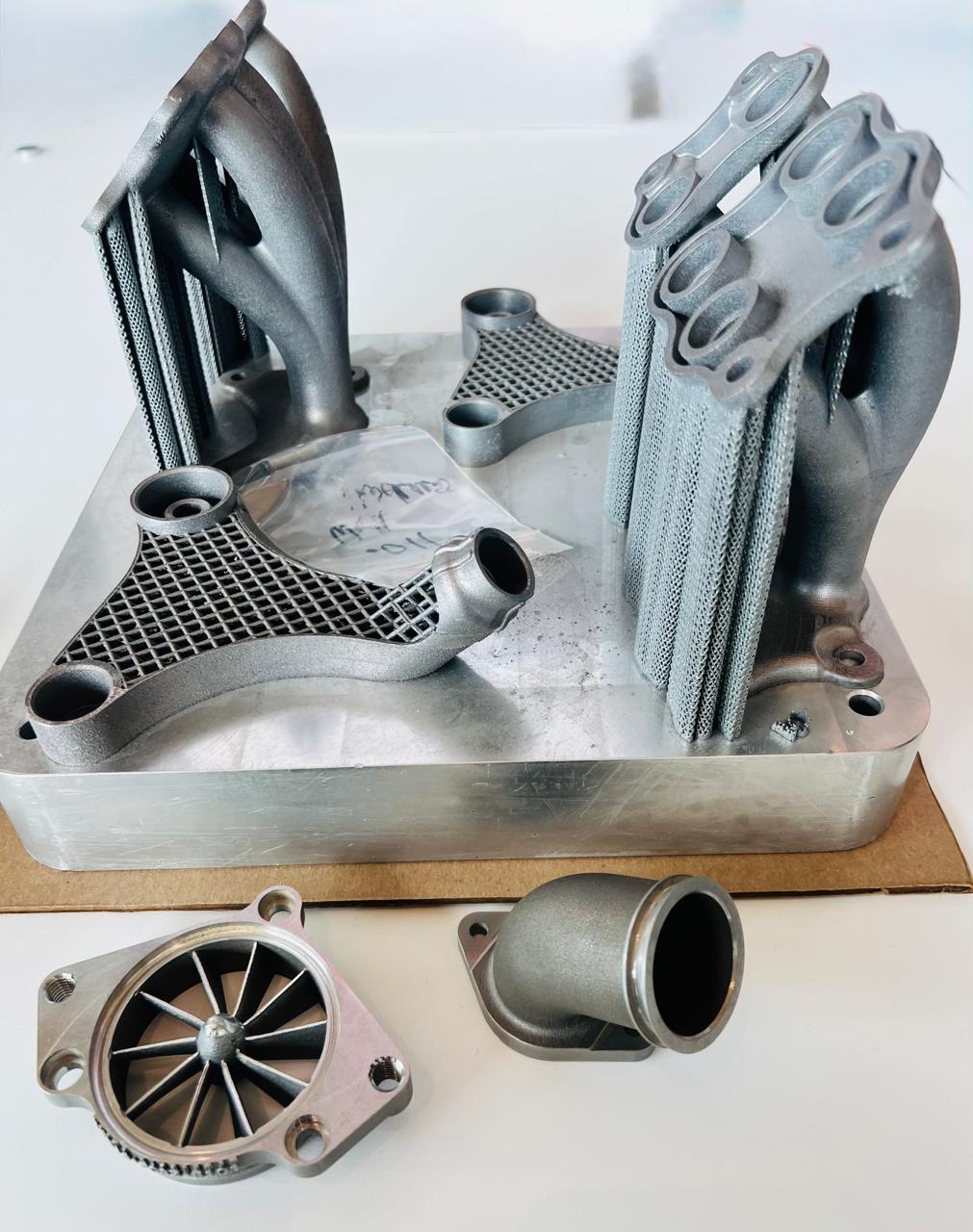
Metal 3D printed demonstration parts on display at Fathom’s booth during the AIAA SciTech Forum in Orlando. Image courtesy of 3DPrint.com/Vanesa Listek.
“It’s been an interesting 30 years for additive. But it’s certainly been a very interesting five years for industrial additive. Fathom is focusing more heavily on industrial applications where customers care less about whether something can be printed and more about whether it can actually perform reliably in the field,” said LaSelle. “We’re really more focused on manufacturing outcomes. It’s not just printing a part anymore.”
That shift reflects broader changes happening across the AM industry. Over the last decade, many companies promoted 3D printing as a technology that would rapidly transform automotive production, aerospace manufacturing, and supply chains overnight. Some of those expectations proved premature. What companies like Fathom discovered, according to LaSelle, was that qualifying and producing repeatable industrial parts was far more difficult than early marketing materials suggested.
“When I got into the AM space 15 years ago at Jabil, we believed what the manufacturers were telling us,” he explained. “We thought we could plug additive right into industrial manufacturing environments. What we found very quickly is that the properties are not the same.”
That realization forced much of the industry into years of qualification work, process development, and post-processing refinement. According to LaSelle, AM is only now reaching a level of maturity at which manufacturers can reliably produce the repeatable outcomes that industries like aerospace and medical require.
“We’ve just reached that level of maturation where we can deliver good outcomes the way we thought we could 15 years ago,” LaSelle said. That progress has changed Fathom as well. “What we are really more focused on is manufacturing outcomes. It’s not just printing a part anymore,” he said, adding that the company has increasingly focused on industrial applications that require engineering, quality controls, and production rigor. As a result, he believes the traditional service bureau label no longer reflects where the company is today. “I think service bureau has become a little bit of an antiquated term.”
Instead, Fathom now focuses heavily on engineering support, manufacturing strategy, post-processing, machining, heat-treatment coordination, and qualification workflows for additive parts. The actual printing process, LaSelle argued, is only one piece of a much larger manufacturing challenge.
“Lots of people can print parts,” he said. “What we’ve really focused on is the process around it. That includes design-for-additive support, understanding dimensional realities inside powder bed systems, managing thermal treatments, machining, inspection, and quality documentation. These are the areas where aerospace and medical customers increasingly need help. And those customers are growing.”

Engineers working on drones. Image courtesy of Fathom.
According to LaSelle, Fathom is seeing particularly strong demand in aerospace, medical devices, and metal additive manufacturing applications, especially DMLS.
“For us, metal additive is one of the places where we just see there’s not enough supply to meet a very rapidly growing demand,” he said.
The company is also seeing growing activity connected to drones and defense-related startups, an area that has accelerated significantly following lessons learned from the war in Ukraine.
“The Ukraine war will have gone down in history as something that informed industry as much as warfare,” he noted. “They moved really fast, iterated on design, and found ways to manufacture at a quality level that most people wouldn’t expect. That speed has caught the attention of major defense organizations now trying to modernize their own manufacturing systems. Many startups are working in that space. They come to a company like ours and say, ‘We think we want to use a metal component for this part of our drone. We don’t know if it’s really feasible.’”
Still, despite the growing momentum around AM, LaSelle stays realistic about the industry’s challenges. Certification and qualification remain major hurdles, particularly for critical aerospace applications. Powder bed fusion systems still involve significant variability, and many companies underestimate how much post-processing and quality management are required after a part comes off the machine.
“Very few parts get printed and shipped,” LaSelle said. “Most metal parts still require machining, heat treatment, EDM work, support removal, and inspection before they become usable production components. In many cases, the complexity lies less in printing the part and more in proving it can consistently meet industrial standards. We get a lot fewer questions about ‘Can you print this?’” he explained. “And more questions about ‘Can you get this level of quality and mechanical property?’”
So rather than presenting AM as a technology that will replace every traditional process, LaSelle described it as one tool among many, best suited for specific industrial problems where performance, complexity, or speed justify the cost. And cost is still very much part of the conversation.
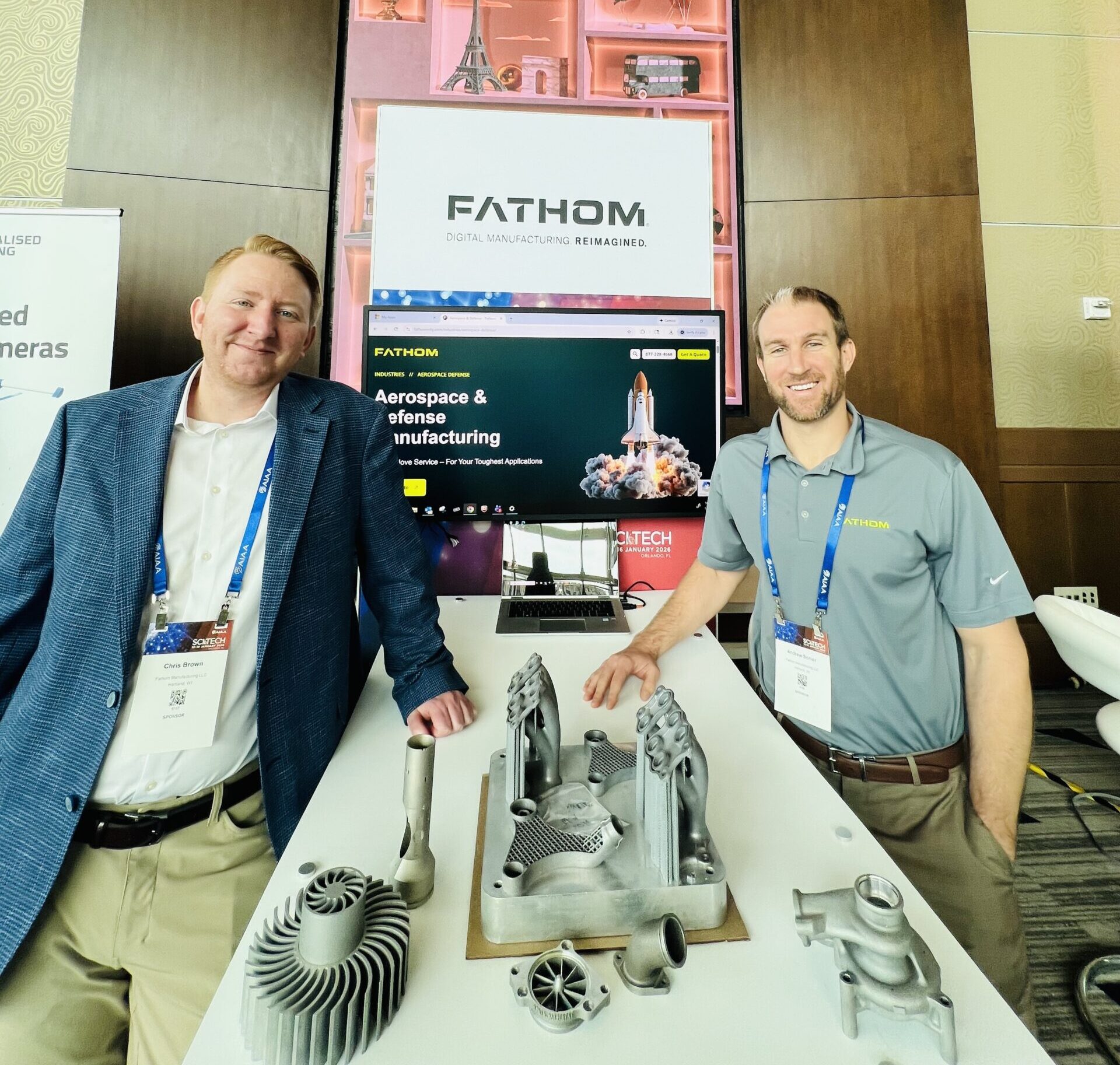
Fathom at AIAA SciTech Forum 2026. Image courtesy of 3DPrint.com/Vanesa Listek.
“Everything’s expensive,” he admitted. “Machines remain expensive. Powders and specialty materials remain expensive. Skilled labor remains limited. And unlike CNC machining, which benefits from decades of scale and workforce development, additive manufacturing still lacks the same depth of industrial infrastructure. You have tens of thousands of people who can run a Haas CNC. You don’t have tens of thousands of people who can run an EOS printer.”
That workforce issue, he believes, may ultimately be one of the industry’s biggest bottlenecks.
“What’s really slowing the industry down is getting the best and the brightest minds and young people that want to come do this.”
For LaSelle, manufacturing no longer resembles the outdated image many younger workers still associate with factories.
“We’re so much cooler than that,” he told me.
Indeed. After years of ambitious promises, AM is entering a new phase, one defined less by what might be possible and more by what companies are actually delivering today. The technology has definitely earned its place in manufacturing. Now comes the harder part: scaling it.
Editor’s Note: The role of additive manufacturing in drone production, defense applications, and supply chain resilience will be discussed further during the Additive Manufacturing Strategies UAS: The Present and Future of Drone Manufacturing event on June 30, 2026.