
The AM market is projected to reach $20.3 billion by 2030, but growth is shifting toward proven applications, production value, and disciplined investment.
In 2025, the additive manufacturing market’s growth appeared increasingly tied to applications with clear production value, especially across aerospace, defense, medical, and industrial use cases. This shift reflects a broader trend across the industry as investment and adoption become more focused on proven applications and measurable outcomes.

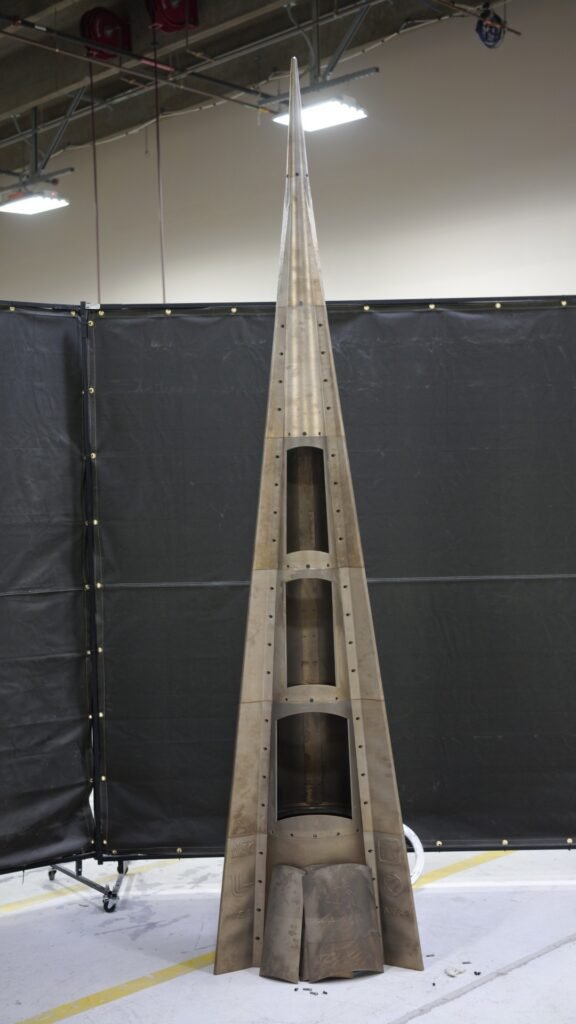
Aires Tide will be one of the featured exhibits in the AMT Emerging Technology Center (IMTS booth #236700). From Sandia National Laboratories as part of the U.S. Department of Energy’s Genesis Mission, Aires Tide demonstrates how AI, advanced engineering, and additive manufacturing can dramatically accelerate the development and testing of next-generation aerospace systems.
Venture capital funding, mergers and acquisitions, and public market investments throughout the year suggest the AM industry is continuing to move from broad R&D experimentation toward niche commercialization opportunities.
AMT – The Association for Manufacturing Technology estimates the global AM market at approximately $12.5 billion in 2025, with projections reaching $20.3 billion by 2030. This represents a more measured growth trajectory than some previous industry projections anticipated. This slower pace is not necessarily a negative sign. As AM matures, growth is increasingly shaped by factors such as qualification requirements, cost-per-part, material performance and availability, machine utilization, and integration into existing manufacturing workflows. AM’s shift from experimental technology to a more established manufacturing tool may indicate broader acceptance and adoption across industrial markets.

Subsector performance also points to a market becoming more utilization-focused. Service providers remained the largest portion of the AM market, with revenue increasing by approximately $630 million from 2024. Materials revenue also rose by over $600 million from 2024, while industrial systems revenue remained relatively flat compared with the prior year. This pattern may indicate that manufacturers and service providers are utilizing existing installed capacity rather than expanding through new system acquisitions. Higher material consumption and stronger service provider activity could be signs that AM assets are being used more consistently for production.
For investors, this marks a more disciplined phase for AM markets. Earlier investment cycles focused on platform development, broad technology adoption, or long-term disruption. In 2025, investment activity appeared more closely tied to proven use cases. Funding was focused on companies with clear applications, demonstrated ROI, and production scalability. Simultaneously, consolidation and restructuring across the industry suggest that companies are seeking stronger business models, more efficient operations, and greater vertical integration capabilities.

Regional growth rates from 2021 to 2025 were 11.7% in AMER, 13.1% in APAC, and 1.8% in EMEA. APAC’s growth could be attributed to increasing momentum within Asian manufacturing ecosystems, while AMER’s growth continues to benefit from demand in aerospace, defense, medical, and advanced manufacturing applications. EMEA’s slower growth may reflect a combination of broader industrial softness, cautious capital investment, and selective AM adoption across automotive and industrial machinery markets. It may also reflect a more mature installed base in parts of Europe, shifting from new system purchases toward utilization, qualification, and productivity improvements.
Despite these signs of maturation, challenges such as qualification timelines, material availability, workforce skills, and post-processing requirements continue to impact how quickly AM is able to scale. For many manufacturers, the decision to adopt AM depends on whether the technology can meet existing production standards while delivering a measurable advantage over traditional processes.

As additive manufacturing continues its transition from an emerging technology to an established production tool, success will increasingly depend on measurable business outcomes rather than technical capability alone. The companies best positioned for growth will be those that can demonstrate qualified applications, scalable economics, and seamless integration into broader manufacturing operations.
To explore the trends shaping the industry, download the latest AMT Additive Manufacturing Report. Manufacturers, investors, and industry stakeholders can also access AMT Research Services for deeper market intelligence, forecasting, and analysis.
For those seeking these technologies in action, IMTS 2026 – The International Manufacturing Technology Show will showcase the latest advancements in additive manufacturing alongside the broader manufacturing technologies driving the future of production. From metal and polymer AM systems to hybrid manufacturing platforms and post-processing solutions, IMTS offers a firsthand look at how additive manufacturing is creating value on today’s shop floors.

FormAlloy (IMTS booth #338474) is one of dozens of exhibitors in the Additive Manufacturing sector at IMTS 2026, September 14-19, at McCormick Place in Chicago, Illinois.
Visitors to IMTS 2026 will see how additive manufacturing is strengthening America’s ability to rapidly scale production through two featured exhibits in the AMT Emerging Technology Center (IMTS booth #236700). The Aires Tide exhibit, from Sandia National Laboratories as part of the U.S. Department of Energy’s Genesis Mission, demonstrates how AI, advanced engineering, and additive manufacturing can dramatically accelerate the development and testing of next-generation aerospace systems. Nearby, a live end-to-end production system will manufacture drone airframes throughout all six days of IMTS using hybrid manufacturing, robotics, automation, and digital twins, illustrating how connected manufacturing technologies support industrial surge capability through flexible, scalable production. This drone production system is a collaboration among AMT, Oak Ridge National Laboratory, FANUC (IMTS booth #338900), Haimer (IMTS booth #431510), Kennametal (IMTS booth #431800), Mazak (IMTS booth #338300), and Schunk (IMTS booth #432010).
IMTS 2026 takes place September 14-19 at McCormick Place in Chicago, Illinois. Visit IMTS.com.
Author: Matthew Foulk, Senior Analyst at AMT – The Association For Manufacturing Technology, which owns and produces IMTS – The International Manufacturing Technology Show