
Johnson Controls has agreed to acquire Alloy Enterprises in a deal expected to close in the third quarter of the year. The move brings Alloy’s advanced manufacturing and thermal management technology into a much larger industrial company, as additive manufacturing (AM) continues to be absorbed into established platforms.
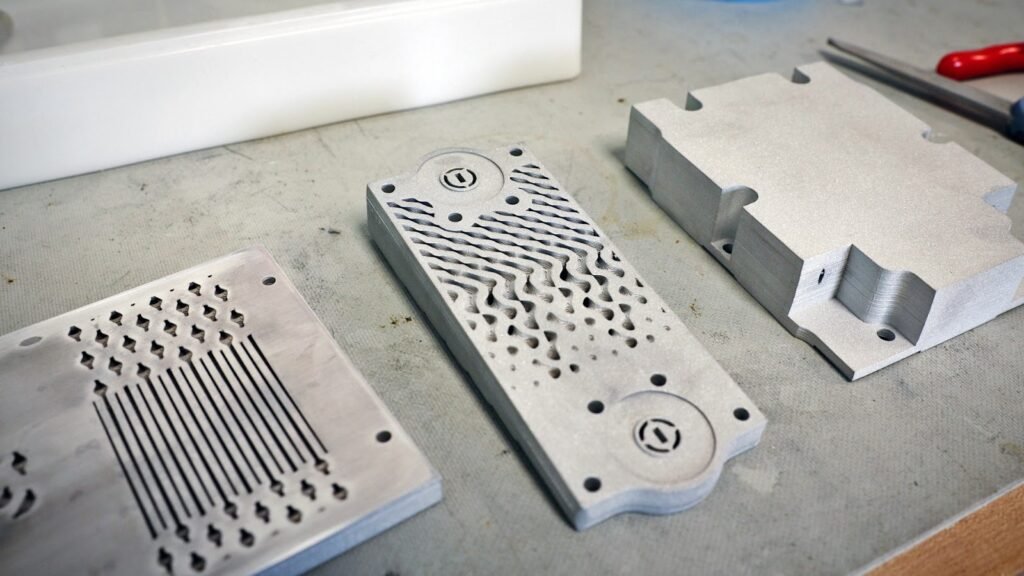
For readers of 3DPrint.com, Alloy is not an unfamiliar name. We visited the company’s Boston-area headquarters in 2025, where the team spoke of a clear vision: use AM not just for prototyping, but to rethink how high-performance metal components, especially those tied to heat exchange and fluid flow, are designed and produced, with a particular focus on data center and high-performance computing applications. At its core, Alloy has built a process it calls Stack Forging, producing dense metal parts with complex internal channels, making it especially well suited for heat exchangers and fluid systems.
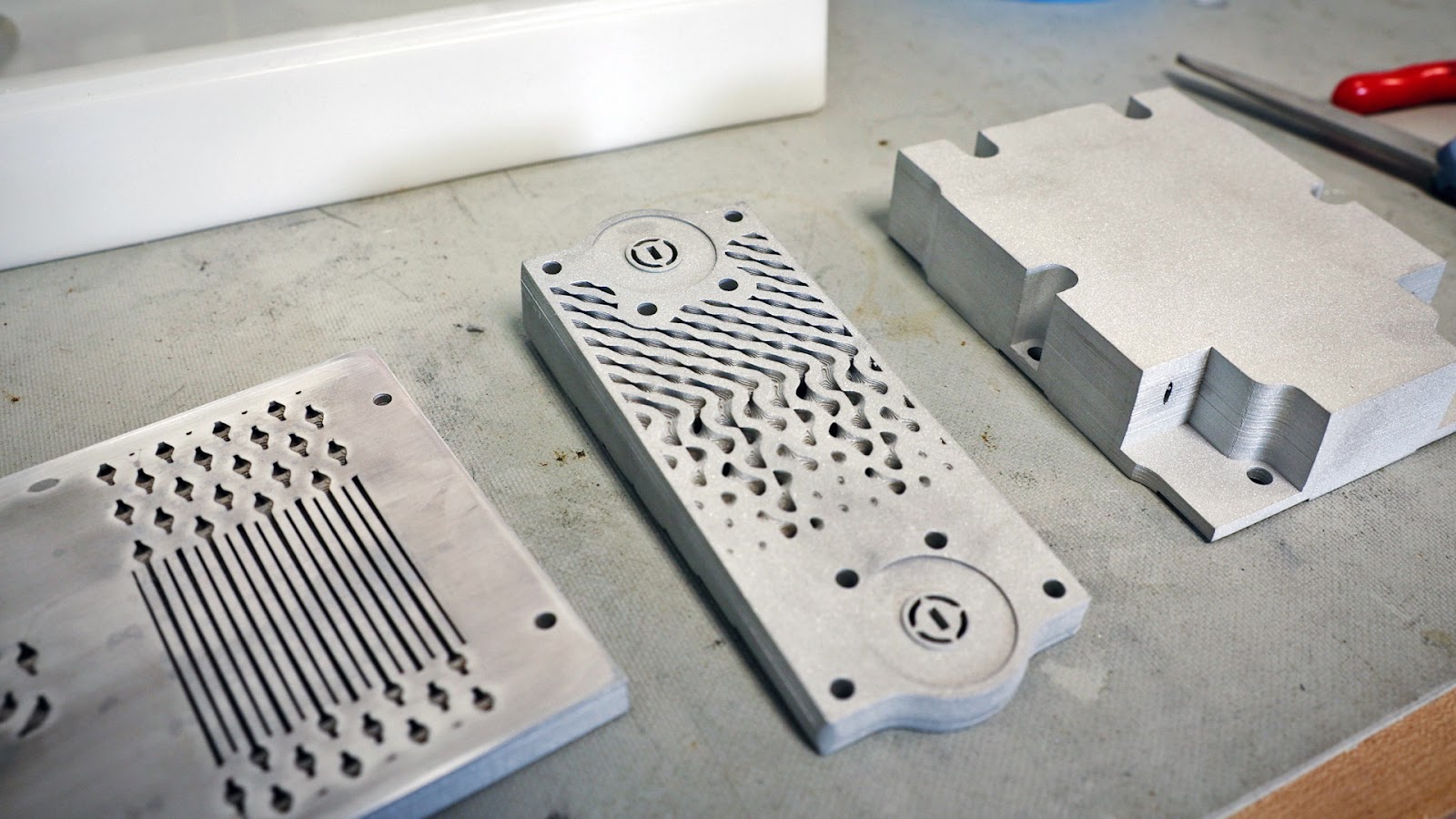
Alloy’s Stack Forging process builds fully dense metal components with internal microfluidic features that would be impossible to machine or print with traditional methods. Image courtesy of Alloy Enterprises.
At the time, what stood out was not just the technology itself, but the focus on applications that demanded both performance and scalability. Alloy wasn’t positioning itself as another service bureau or hardware play. Instead, it was building a vertically integrated approach to manufacturing complex metal parts, particularly in areas where traditional methods struggle, including tight internal geometries, thermal efficiency, and weight reduction, exactly the kinds of challenges found in modern data center cooling systems.
That focus aligns with broader industry expectations. As noted in a recent Additive Manufacturing Research (AMR) report on data centers, additive manufacturing is expected to see significant growth in this segment through the next decade, with the market projected to expand at a strong pace through 2033, driven by the need for more efficient thermal management and increasingly complex system designs. That combination of design freedom and performance is what allows these parts to do more in less space, an increasingly important factor as data center cooling requirements grow.
The company has developed its own proprietary metal AM approach, combining design, process development, and production under one roof to produce dense, high-performance components with complex internal channels. By keeping those capabilities in-house, Alloy has been able to move more quickly from concept to production, something that stood out during our visit.
That helps explain the acquisition
Johnson Controls, a global leader in heating, ventilation, and air conditioning (HVAC) and building technologies, is increasingly targeting data center cooling and AI infrastructure, one of the fastest-growing segments in industrial technology.
Best of all, Alloy’s ability to produce highly optimized thermal components fits directly into that strategy. The company has focused on parts that improve heat exchange and fluid flow, exactly the kind of performance gains that matter in modern data centers. In particular, Alloy’s work on compact, high-efficiency heat exchangers and fluid systems positions it well for next-generation cooling architectures, where space, weight, and thermal performance are critical.
Rather than developing those capabilities from the ground up, Johnson Controls is accelerating the process through acquisition. The move gives it immediate access to technology and expertise that would otherwise take years to develop internally. It also gives Johnson Controls a way into advanced manufacturing capabilities that are increasingly important as cooling systems become more complex and performance-driven.

Dave Tedder next to one of the machines at Alloy headquarers in Burlington, MA. Image courtesy of 3DPrint.com.
This is part of a broader trend
Across the AM industry, smaller companies are increasingly being picked up by larger players as the technology moves into real production. The focus is shifting from machines and materials to actual applications and performance. That’s where companies like Alloy, built around specific, high-value use cases, start to stand out.
When we spoke with Alloy’s team on site, it already felt like the company was operating a bit differently from many of its peers. “We made small things very slowly to start, but with a foundation to scale,” CEO Dr. Ali Forsyth told us at the time. The focus wasn’t on showing what additive could do, but on solving real engineering problems at scale. That approach now seems to be paying off.

Alloy Enterprises CEO Dr. Ali Forsyth. Image courtesy of 3DPrint.com.
The deal hasn’t closed yet, and details on how that integration will take shape are still limited. However, once it happens, we’ll see Alloy moving from an independent company into a much larger industrial organization. This is part of a wider move in the additive manufacturing industry where growth is no longer just about new startups or new hardware, but about how these technologies are absorbed into larger manufacturing and infrastructure systems. In this new ecosystem, companies built around real, high-value applications that solve concrete problems are the ones being pulled in.