
The US additive manufacturing (AM) industry faces a turning point in terms of its approach to R&D. As has been the case for aggregate R&D in the US economy at least since World War II (especially when it comes to manufacturing activity), the AM industry seems overly dependent on money from the US military and the broader defense sector in funding its innovation.
On the other hand, there are enough examples of AM companies creating R&D partnerships with applicability beyond defense to instill confidence that the industry as a whole can diversify its R&D approach going forward. The idea shouldn’t be to abandon research into military applications, but rather to supplement that research with the development of synergistic use-cases for commercial markets. Partnerships with universities are a great way to accomplish that objective, as Phase3D is illustrating with its announcement of a collaboration with Rowan University in New Jersey.
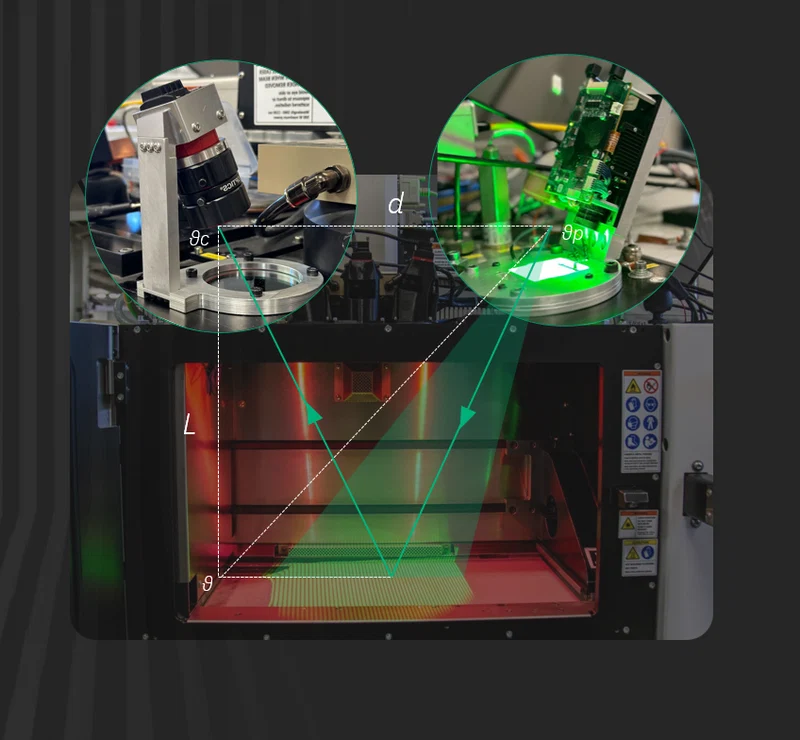
Phase3D makes the Fringe Inspection hardware solution for metal AM, which leverages the company’s own software platform to enable real-time monitoring and on-site certification of printed parts. Rowan University’s Digital Engineering Hub (DEHub) just installed a new metal printer (the DMG Mori Lasertec 30 SLM US), and used the Fringe ecosystem starting from the very first build.
Neither Phase3D nor the DEHub are strangers to defense funding. Phase3D is a regular recipient of SBIR contracts, while an article on the DEHub website notes that the program is initially focused on supporting defense R&D via DARPA funding. The important nuance is the setting where the R&D is taking place: a university is very different from a federal lab or an armaments testing site. The R&D partnership between Phase3D and Rowan will no doubt benefit the defense sector, but it also has a much better opportunity to lead to innovation in other parts of the economy than would likely be the case with defense-related pure research.
This is particularly likely because, based on the initial results, Phase3D has made an immediate positive impression on its new users at Rowan. According to the company, the first print presented an error early in the build process, forming the first 60 layers of the print with only the part’s contours, skipping the infill and support structures. As Phase3D explains, in addition to signaling a potential failed print, a “contours-only” start to the process could also end up damaging the printer if left unchecked.
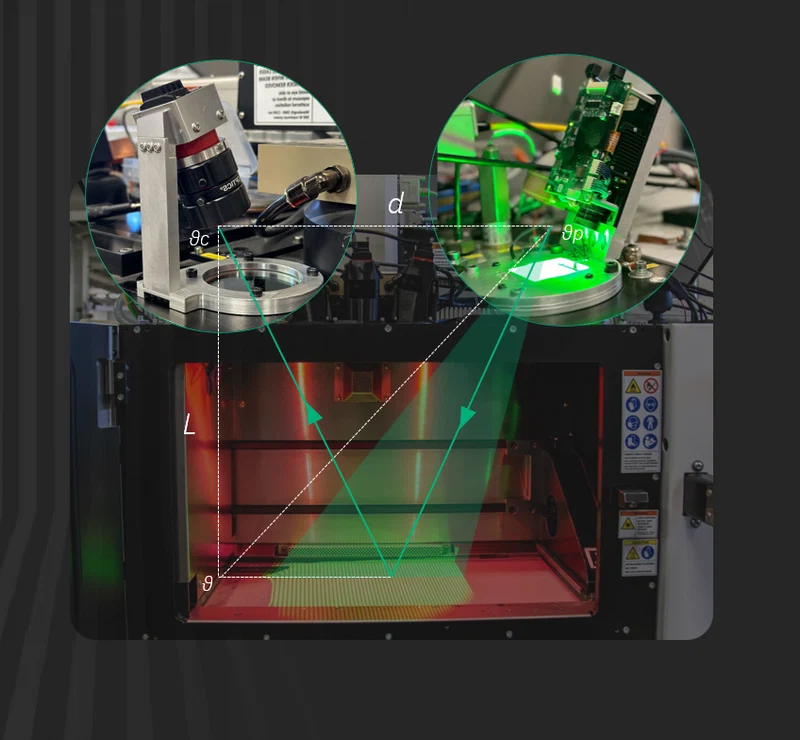
Image courtesy of Phase3D
In lieu of Fringe, that scenario would’ve typically led a conscientious user to stop the print early out of caution. But the team at Rowan worked on a solution with Phase3D: “…if the Fringe Inspection heightmaps showed part protrusions, abnormal swelling, improper powder coverage, or evidence that the parts were not forming correctly, the team would cancel the build immediately.” The partners monitored the print along those lines, and it ended up printing successfully.
There are plenty of reasons why companies and universities make particularly fruitful R&D partners, as I described in a post from about a year ago. Spin-off companies from universities have a disproportionately high success rate compared to competitors, and corporate R&D partnerships are excellent catalysts for spin-offs. If a student learns to operate a 3D printer on a system integrated with Phase3D’s products, then ends up starting a 3D printing company after graduation, there’s a good chance that student’s company will be a Phase3D user.
Aside from that, the university is typically the first opportunity for companies to interact with the relevant future workforce in their industry. Students don’t have to become founders: if they end up working in the AM industry, they represent a likely potential source of future demand for products/services from the companies they’ve already worked with in college. They may in fact end up working for precisely those companies.
Even when government is funding, or partially funding, the research project, executing that project in a university setting represents the best chance for maximizing value to the overall economy. This isn’t necessarily a compelling argument for the private sector, since it’s nearly impossible to convince companies to take on the responsibility of improving the state of a national economy. But it does suggest that industry should push for government R&D policy that incentivizes both universities and businesses to work together more closely.
Featured image courtesy of Rowan University