
Garbage in, garbage out: that cliche is currently associated most often with AI, but it really refers to the universal principle whereby a final outcome is only as useful as the quality of the data that led to it. The principle is highly relevant to any emerging technological field, with the potential for future progress being disproportionately dependent on the validity of the relatively scant existing information that’s available.
The ‘new space’ industry is a perfect example of a context in which stakeholders have to remain particularly cognizant of the rule of ‘garbage in, garbage out,’ and so is metal additive manufacturing (AM). Phase3D, the Chicago-based provider of both hardware and software solutions for metal AM in-situ monitoring (ISM), will be addressing the need for quality data in both new space and powder bed fusion (PBF) thanks to its latest contract award from NASA.
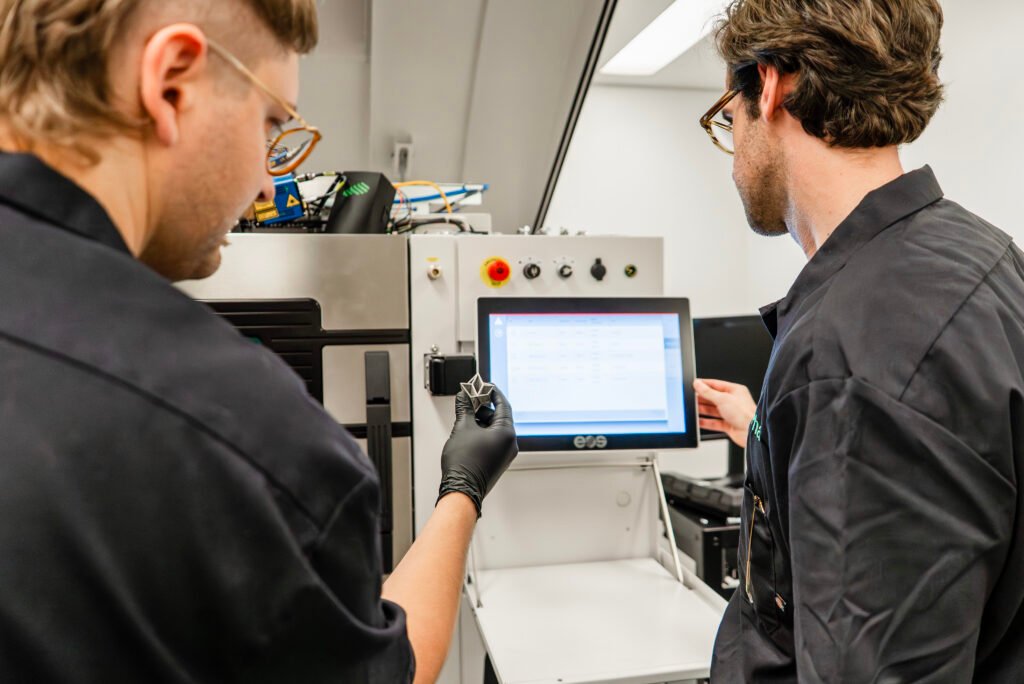
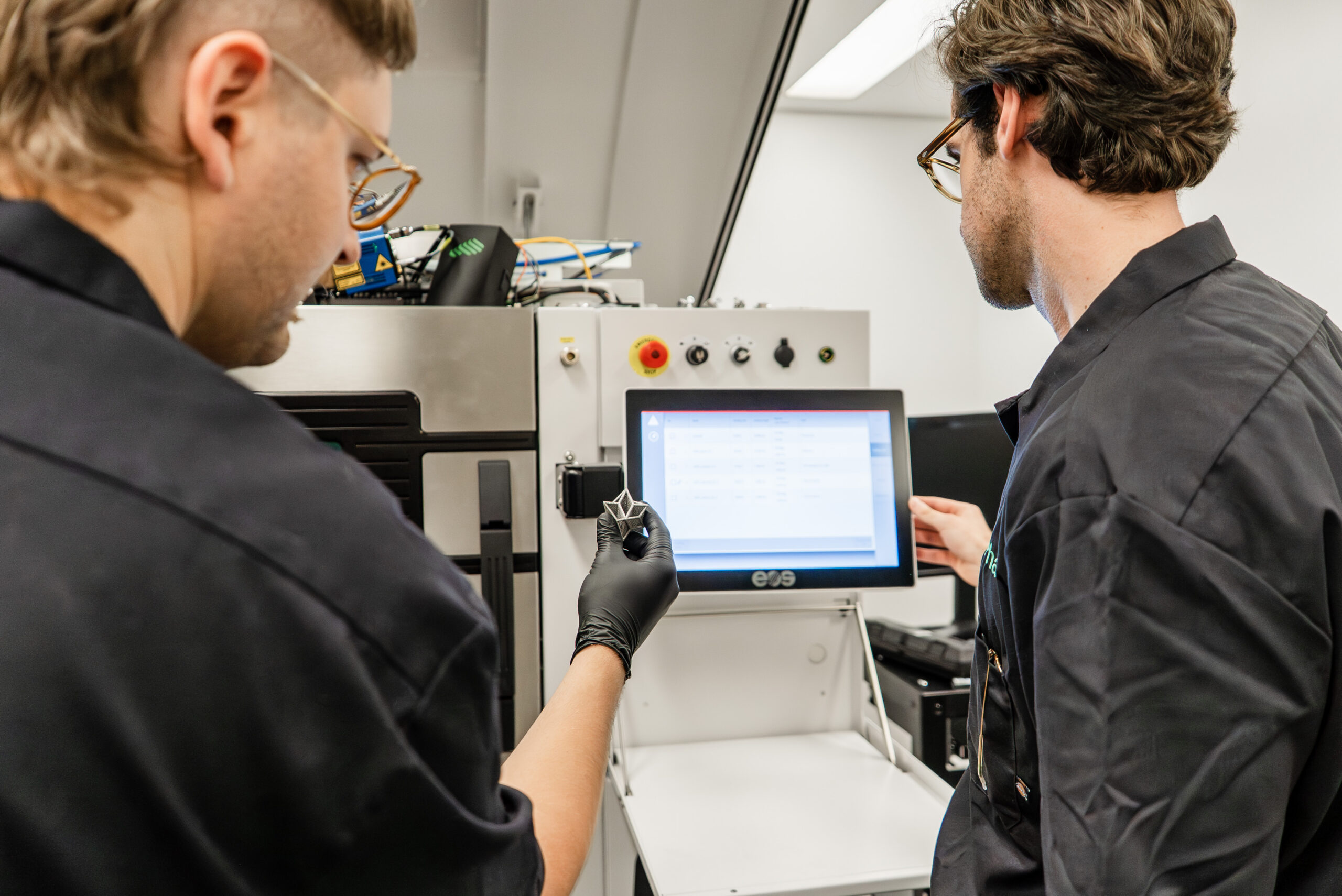
Via the grant, Phase3D will partner with an unnamed aerospace and propulsion prime to deploy the Phase3D Fringe Inspection (hardware) and Fringe Qualification (software) systems on the EOS M300-4, a quad laser machine. Phase3D and its private industry partner will use structural brackets made from Invar 36 (Iron-Nickel alloy) as a test case. They’re aiming to reduce the qualification timeline 2-3x compared to the standard qualification time for space components produced with metal AM, which Phase3D notes can currently take more than eighteen months.
Moreover, according to Phase3D, metal AM for space is currently challenged not only by a lengthy qualification process, but also by a rejection rate as high as 30 percent. If Phase3D can improve on both of those metrics, it would signal major potential for cost savings for new adopters of metal AM.
In a press release about Phase3D’s latest contract award from NASA, Phase3D’s founder and CEO, Dr. Niall O’Dowd, said, “For decades, qualifying a 3D-printed part for spaceflight has meant months of destructive testing and CT scanning, an approach that does not scale. With Fringe Inspection, the part is qualified as it is built. Every powder layer, every weld, every anomaly is captured in calibrated, defensible data. That is the foundation the industry needs to unlock [AM] at scale, not only for NASA, but for every aerospace, defense, and energy program building flight-critical hardware.
“Real-time inspection is the missing piece in the [AM] ecosystem. Powders, lasers, machines, and process parameters have all matured. What has been missing is a way to prove, in real time, that the part you built is the part you designed, on every layer, every time. That is what Fringe Inspection delivers, and that is what makes large-scale, mission-critical [AM] possible.”
This type of contract demonstrates why Phase3D’s latest funding round, which I wrote about last month, was oversubscribed. Partnering with a propulsion prime for a NASA research project that qualifies parts on an EOS machine represents a formula that simultaneously responds to three of the most urgent demand catalysts currently pushing contract manufacturers to increase metal AM adoption. Phase3D is meeting the needs of a manufacturing giant that’s serving a national security strategic imperative, and doing so on one of the most relevant metal 3D printing systems globally.
As I pointed out in my post about the funding round, Phase3D’s ecosystem may very well end up being integral to the scale-up of metal AM, not just in the US, but in any nation prioritizing the exclusion of Chinese 3D printing equipment from its industrial base. There aren’t many companies even attempting to do what Phase3D has been developing over the course of years, and it’s the sort of application where it would seem very difficult for a latecomer to make significant headway.
Along these lines, the next couple of years could be pivotal in terms of determining the long-term winners and losers in metal AM, precisely because of the need for qualified parts, and the relatively small number of OEMs and manufacturers that can deliver them. It seems likely that the US government and its most indispensable contractors are about to drive an unprecedented surge in new metal AM business, and if you aren’t already part of the government qualification ecosystem, then it might be too late.
It’s not that the government and defense contractors will be the only ones buying metal 3D printing equipment and services, but that it will be easier for all the other metal AM customers to simply adopt the technologies and offerings of the companies that have already been qualified for the most heavily regulated industries. Look up any longstanding corporation at random and there’s a good chance that its first boom phase was the result of some major war or crisis. Qualified parts and processes explain how short-term events transform into long-term viability.
Images courtesy of Phase3D