
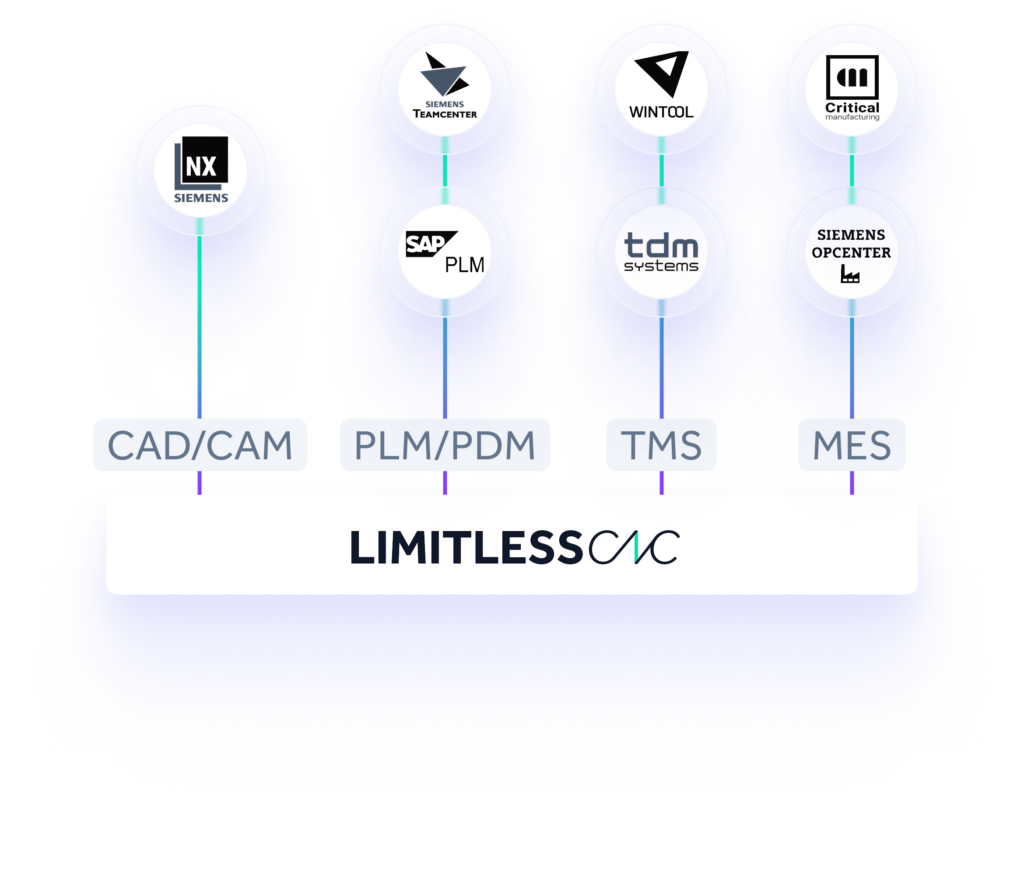
Limitless Labs has raised an additional $20 million for its agentic CAD/CAM platform, bringing its total funding to date to $27.3 million. Investors in the Series A round include Dell Technologies Capital, Square Peg, Grove Ventures, Meron Capital, and Kinetica.
Limitless Labs CEO David Priev said,
“The manufacturing world doesn’t just need more automation, it needs a better way to capture and scale the expertise that still lives inside the heads of a relatively small number of experienced machinists. We built Limitless Labs to work inside the CAD/CAM systems manufacturers already use, helping teams standardize best practices, reduce programming bottlenecks, and free senior programmers to focus on the hardest work, without giving up control. We believe the next major AI platform will be built for the physical world, and that starts with giving manufacturers a way to scale their best knowledge across every new part and every new engineer.”
Yair Snir, Managing Director at Dell Technologies Capital, stated,
“Limitless Labs represents the next wave of enterprise AI, moving beyond digital workflows and into the physical world of precision manufacturing. Their unique foundation model and the caliber of their production deployments gave us conviction that this team is building the defining platform for AI in manufacturing.”
The company says that its AI model is a,”Physical AI Foundation Model, trained not on text or generic code, but on the physics of metal cutting, CAD geometry, and the operational constraints of real machines.” The firm has a CAM Agent that can recommend tools, prioritize operations, and generate tool paths. This is similar to Toolpath.com, but in this case, the idea is that the CAM Agent works with or in established tools such as Creo, Siemens NX, and Mastercam, which saves the machinist time. Limitless Labs thinks that it can save half of the work.
Lior Handelsman, General Partner at Grove Ventures, added,
“Eighteen months ago, we backed Limitless Labs’ vision that agentic AI could transform the factory floor. What the team has achieved since then has exceeded expectations. They are combining deep technical innovation with practical software in a way that could reshape how the world’s most critical parts are made.”

The company is targeting defense, aerospace, and motorsports applications, and reporting pilot programs in place with companies like Cadillac, Blue Origin, and Sandvik. Blue Origin is notable since the astronautics firm is usually less than talkative about any manufacturing information. Limitless Labs also says it can deploy in ITAR compliant set-ups. The funding it’s raised will be used for a sales ramp up, help growing headcount, improvements to its model, and new versions automating more CAM operations.
To be fair, I expected a whole lot more of these firms a year ago. So far, we have seen dozens of CAD and authoring-based startups, and around 50 additional startups in broader CAD/CAM automation using AI. They all promise similar things: just by existing in the space, AI will save operators and companies time. There is also a lot of talk about physical AI and real world models, or models based on machines and operations. If so. where are these models being created? How are they being created? What are the datasets like? And does this mean that this particular model will be fed from your CAD/CAM files? Will your G-code, your CAD model, and your manufacturing data be used to power this startup and others? How are they getting this data, and how can they firewall my data? Because if they take tool paths or CAD, then I can reverse engineer model data from them.
There is a huge amount of risk around these models sucking in training data, which is then reverse engineered to the individual file or machine. G-code reversing and just general usage data for specific installations would also be very valuable. But I think this is a huge security risk and would not be comfortable having any sort of AI CAD/CAM tool in any kind of professional environment at the moment. Sure, I’ll play with this stuff at home, but if it comes time to invent things, I’d never use them. With their originality and their intrusiveness, there is just too much risk associated with these models currently. Some of them may, in some distant future, save operators time, but will you risk your firm’s future or your job on this today? I wouldn’t. The AI CAD/CAM companies must explain how they’re, on the one hand, getting real world data that is relevant, while on the other hand, not sucking up their user data. And the fact that this startup can’t even manage to secure a picture of a factory floor or CNC machine doesn’t exactly make me warm and fuzzy inside.
Images courtesy of Limitless Labs