
We’ll start with business news in today’s 3D Printing News Briefs, as XJet appointed a value-added reseller in Germany, BIO INX is expanding its presence in the Italian market, and DSH Technologies is relocating to join its sister company. Moving on, Sandvik introduced a copper alloy powder for applications in space manufacturing. Finally, scientists used 3D printing to make scaffolding trays for producing larger human gut organoids.
XJet Appoints 3D-Werk as Value-Added Reseller in Germany

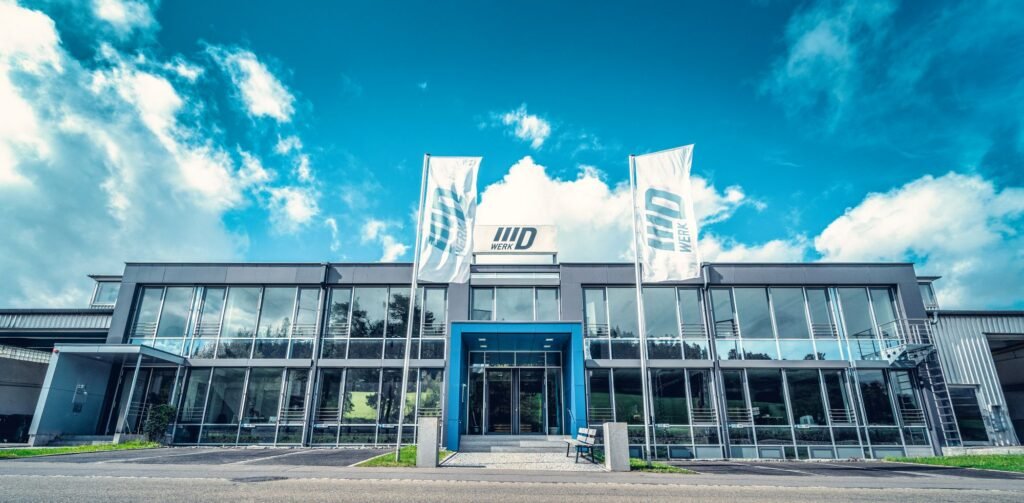
3D-Werk’s Experience Center gives manufacturers a hands-on environment to evaluate additive manufacturing technologies, such as XJet’s NPJ solution.
Israeli company XJet is strengthening its manufacturing ecosystem in Germany with the announcement of a strategic collaboration with 3D-Werk Black Forest GmbH, a leading German competence center for additive manufacturing (AM). XJet has already been active in the German market for years, and has an established network and customer base there. But now, by appointing 3D-Werk as a Value-Added Reseller (VAR) for its Carmel systems and ceramic and metal NanoParticle Jetting (NPJ) technology, XJet is taking a strategic step to make its presence there even greater. 3D-Werk has deep application expertise, and is uniquely qualified to help customers from demanding industry sectors, thanks to its business pillars of machine and material sales for metal and polymer AM technologies; parts production service with full post-processing capability; and its Experience Center, where customers can evaluate technologies before choosing one. 3D-Werk will introduce NPJ technology to its Experience Center, and will represent the full Carmel system lineup as part of an integrated solution.
“3D-Werk has spent years building the expertise, the facilities, and the customer trust to help German industry make genuinely informed decisions about needed migration of production to additive manufacturing,” said Gerhard Duda, CEO of 3D-Werk Black Forest GmbH. “XJet’s NPJ technology represents something we have not been able to offer before – a path to manufacturing complex, high-performance parts that were simply out of reach previously. Adding the Carmel system family to our portfolio and to our Experience Center gives our customers access to a new category of manufacturing capability, and gives us the strongest possible argument for moving upmarket into the most technically demanding applications in Germany.”
BIO INX Strengthens Presence in Italy with MP Strumenti Partnership

Advanced biomaterials developer BIO INX announced a distribution partnership that will help its continued European expansion. Helping to strengthen its presence in one of the most dynamic biofabrication markets in Europe, MP Strumenti will now be the official distributor of BIO INX products in Italy. BIO INX is a spin-out from Ghent University and the Vrije Universiteit Brussel, and is a leader in developing bioinks for high resolution bioprinting, while MP Strumenti is a leading distributor of scientific instruments in Italy that’s recently decided to strengthen its focus in healthcare. It will be distributing the full BIO INX portfolio of materials, covering a range of bioprinting methods, including extrusion-based printing, multiphoton lithography, Digital Light Processing (DLP), and volumetric bioprinting. Together, the two will work to support a new generation of biofabrication techniques.
“This collaboration reinforces MP Strumenti’s broader strategy to expand beyond our well-established solutions and provide a fully integrated ecosystem for the biofabrication and advanced manufacturing sectors. By introducing a comprehensive catalogue of biomaterials – from standard 3D printing filaments to specialized bioinks – we are creating a strong synergy with our portfolio of additive manufacturing technologies,” said Mauro Petretta of MP Strumenti. “Our goal is to position ourselves a trusted partner for researchers, industry professionals, and clinical users throughout their whole process.”
DSH Technologies Relocates to Join Elnik Systems Headquarters

DSH Technologies, which is the international authority on debinding and sintering education and services, is relocating to Pineville, North Carolina, specifically to join its sister company, Elnik Systems, at its headquarters. Elnik is a provider of industrial debinding and sintering furnaces, and makes its flagship AM/MIM3000 batch furnace at the Pineville facility. Stefan Joens, who is the president of both companies, relocated Elnik to Pineville in 2023, while still holding on to about 75% of its New Jersey-based workforce. Both Elnik Systems and DSH Technologies support the metal injection molding (MIM) and metal AM industries, and will continue to do so. In fact, this “much-anticipated” move by DSH to join Elnik will strengthen its commitment to metal parts manufacturing. The relocation is reflective of their shared vision to help better support partners and clients, and streamline metal parts manufacturing operations.
“This is another major milestone in our journey to make a greater impact on manufacturing at a global scale. By consolidating these two companies under one roof, we are better equipped to serve our customers and scale both businesses while continuing to deliver the high-quality sintering capabilities and innovative solutions our customers and partners expect from us,” Joens said.
Sandvik Launches Copper Alloy for Applications in Space 3D Printing
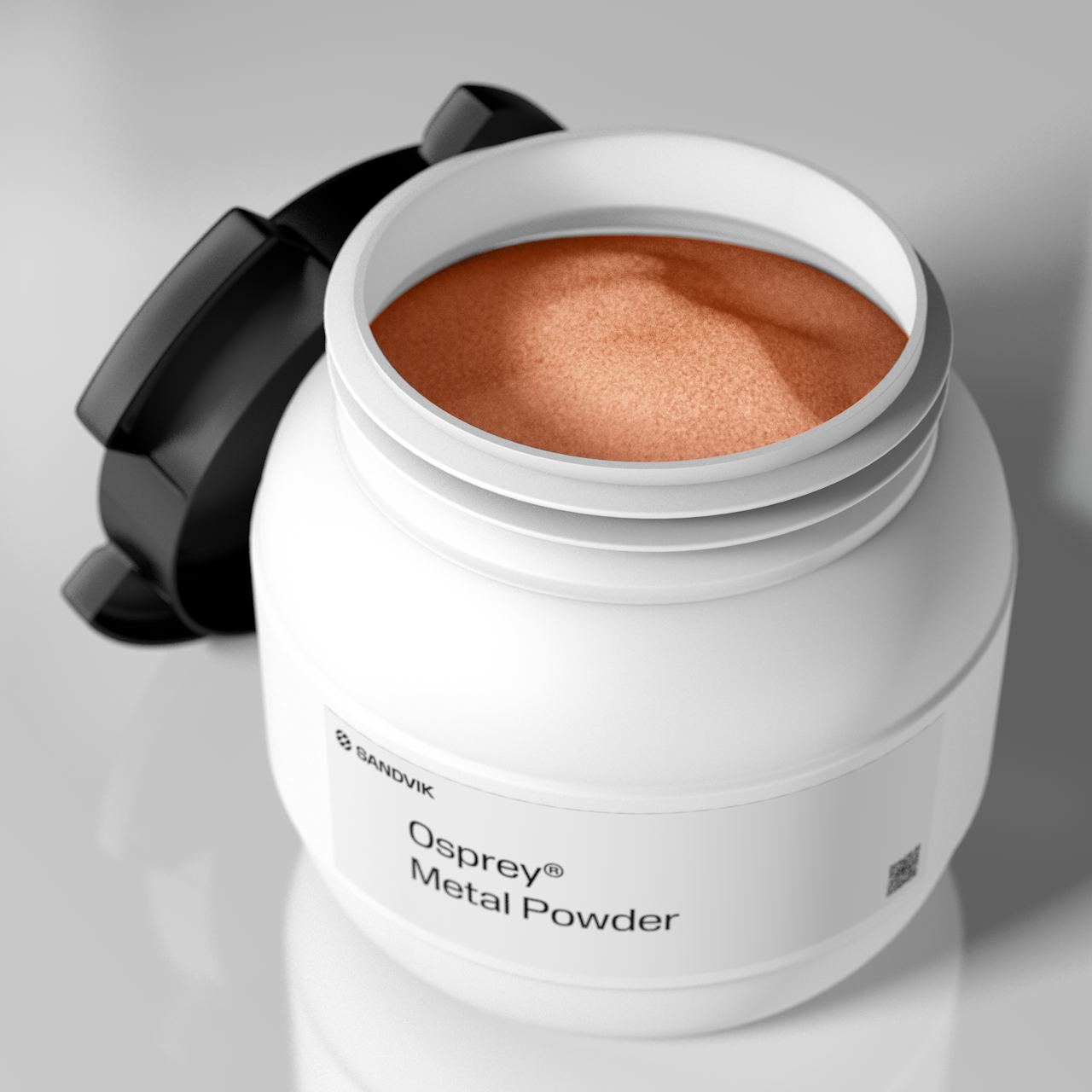
Sandvik, which was recently acquired by Swedish investment firm Mimir, has introduced Osprey GRCop-42, a metal powder originally designed by NASA for 3D printing space components operated under extreme mechanical and thermal loads; examples include regeneratively cooled rocket engine parts, combustion chamber linings, and fuel injector faces. The copper-chromium-niobium alloy powder offers both high strength and high thermal conductivity, and is able to retain its properties at elevated temperatures, which should help lower qualification risk for space manufacturing. GRCop42 is known to be one of the most difficult copper alloys to manufacture to specification, especially due to the major differences in melting temperature between niobium and copper. But Sandvik adapted its Vacuum Inert Gas Atomization (VIGA) process to achieve controlled, repeatable production of the alloy and consistent batch-to-batch characteristics. The company produces the traceable Osprey GRCop-42 within its AS9100-certified quality system, and is now fully integrated into the Sandvik product portfolio, available in volumes for ongoing production as well as qualification activities.
“GRCop42 is a material where production control is just as important as alloy design. Customers in the space sector need powder that performs predictably during qualification, printing and in service. Our focus has been to make this demanding alloy available with the consistency, documentation and traceability required for space programs,” said Szymon Kubal, Director of Technology Business unit AM, Powder Solutions, Sandvik.
3D Printed Scaffolding Trays Used in Production of Larger Human Gut Organoids

A team of scientists and other experts at Cincinnati Children’s in Ohio and Nantes Université in France developed and tested a new system for scalable production of human gut organoids that can grow their own nerve cells. For nearly two decades, experts at Cincinnati Children’s Center for Stem Cell & Organoid Medicine (CuSTOM) have been making miniature versions of digestive system organs to improve the lab-grown tissues. Their most recent work has focused on developing methods to make customized, transplantable tissues that are large enough to help restore diminished organ functions and patch up damage. Here, they used a Form 2 and Formlabs’ Surgical Guide Resin to print tray-like scaffolding molds that will enable the production of larger functional gut organoids twice as fast. This isn’t about bioprinting organoids, but about using 3D printing to create specialized lab equipment. The molds have grooves that can confine several sphere-shaped organoids, or spheroids, in a row, which encourages them to fuse together and mature within a mix of nutrients and other ingredients that support growth. The team used their new confined culture system (CCS) to grow colon, small intestine, and stomach organoids that developed a nervous system on their own.
“We are now able not only to generate complex gastrointestinal organoids at scale, but also to guide their differentiation into functional tissues with integrated enteric neuronal networks. By leveraging a defined growth environment, the intrinsic self-organization capacity of the cells drives the formation of tissue structures that closely resemble the human gastrointestinal tract,” explained Maxime Mahe, PhD, senior author of the team’s paper.