
Stratasys (Nasdaq: SSYS) started 2026 with lower revenue and a larger loss as customers continued to slow down spending on new 3D printers. Still, the company pointed to stable recurring revenue from materials and customer support, along with continued growth at Stratasys Direct, its parts manufacturing business. During the quarter, Stratasys also focused more on aerospace, defense, dental, and production-focused applications, while keeping its full-year 2026 guidance unchanged.
First-quarter revenue totaled $132.7 million, down from $136 million a year earlier. Product revenue dropped to $88.8 million from $93.8 million, while system revenue fell to $28.8 million from $31.2 million. Consumables revenue was also lower at $60 million, compared with $62.6 million last year. Service revenue, which includes Stratasys Direct, moved in the opposite direction, rising to $43.9 million from $42.2 million. Customer support revenue was nearly unchanged at $29.7 million, versus $30 million a year ago.
The company’s margins also came under pressure during the quarter. Gross margin fell to 41.7%, down from 44.3% a year ago, while adjusted gross margin declined to 46.3% from 48.3%. CFO Eitan Zamir told investors during the earnings call that the decline was mainly tied to lower revenue during the quarter and a $2.4 million year-over-year increase in tariff costs. He also said tariffs and foreign exchange rates reduced profitability by roughly $5.3 million during the quarter.
All of that also affected the company’s bottom-line results. Stratasys reported a net loss of $23.8 million, or 28 cents per share, compared with a net loss of $13.1 million, or 18 cents per share, in the first quarter of 2025. The company also reported an adjusted net loss of $1.3 million, or one cent per share, compared with adjusted net income of $2.9 million, or four cents per share, a year ago. Adjusted EBITDA totaled $2 million during the quarter, down from $8.2 million a year ago.
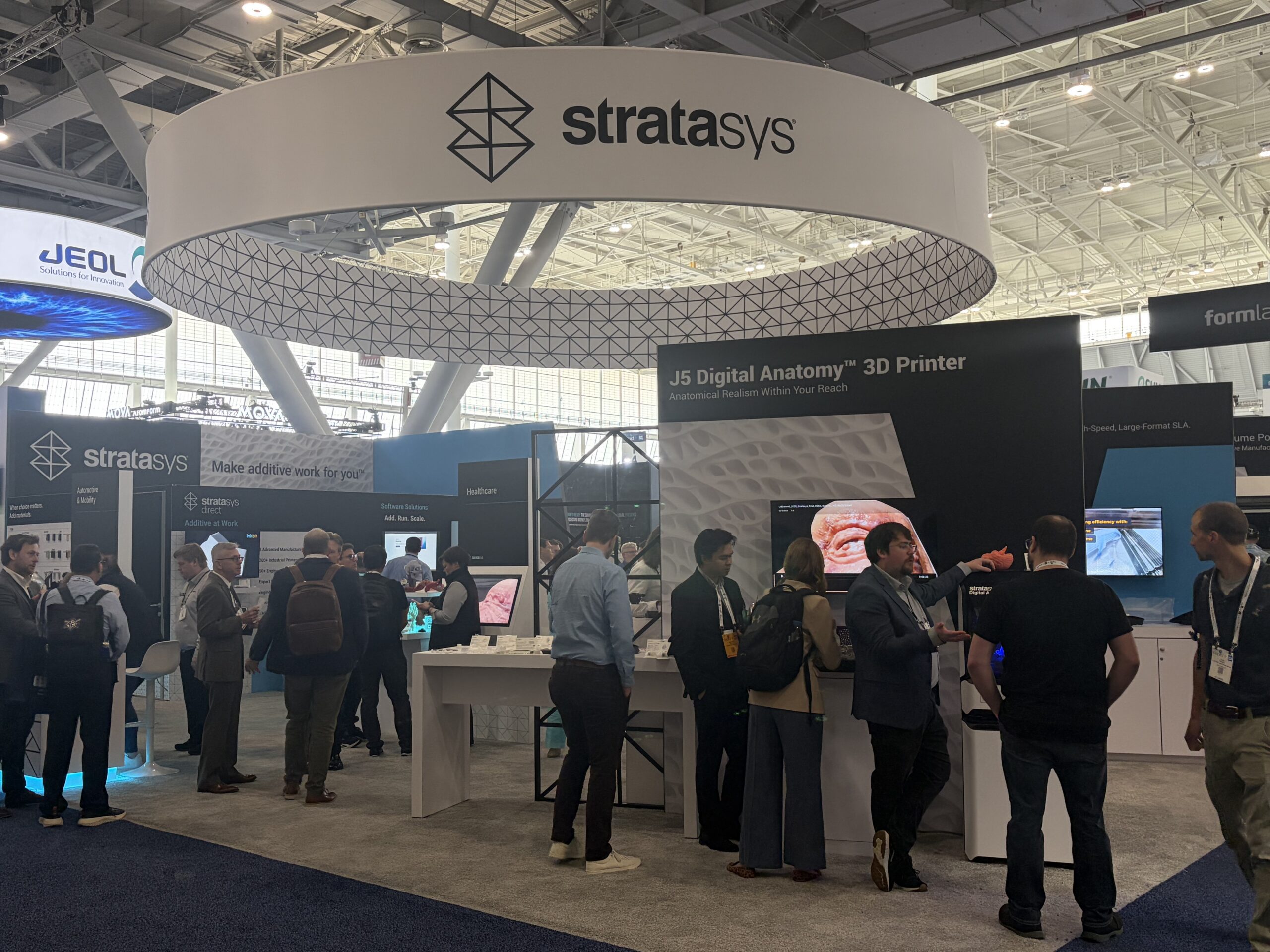
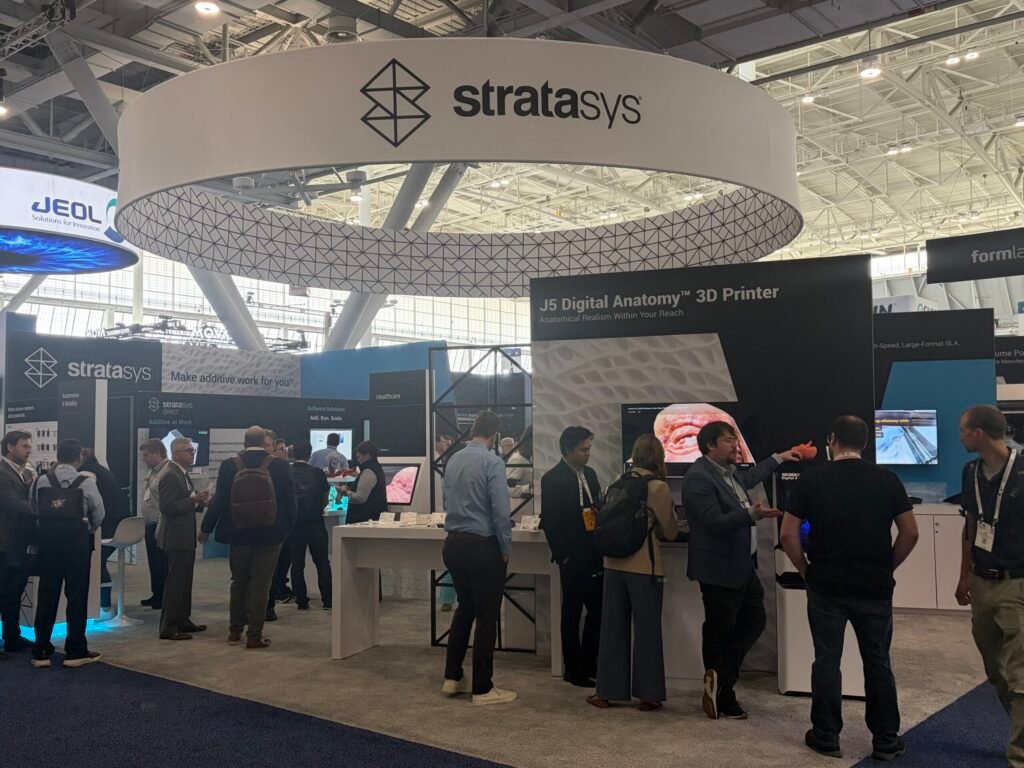
Stratasys booth at RAPID+TCT 2026. Image courtesy of Sarah Saunders/3DPrint.com.
Despite the lower earnings, Stratasys generated $2.4 million in operating cash flow and ended the quarter with $237.8 million in cash, cash equivalents, and short-term deposits. The company also said it remains debt-free.
One of the clearest growth signal during the quarter came from Stratasys Direct, the company’s parts manufacturing business.
CEO Yoav Zeif told investors that “Stratasys Direct delivered over 10% sequential growth and 23% organically after divestments when compared to the first quarter of 2025,” adding that “the top three parts customers were again all U.S.-based drone-related companies.”
According to Zeif, drones are becoming one of the fastest-growing areas for additive manufacturing (AM) because they require lightweight parts, faster production, and more flexible supply chains. During the call, he said Stratasys is already producing parts for both large and small unmanned aerial vehicles (UAVs), particularly using its industrial FDM systems and ULTEM materials. He also linked the growing drone business to broader increases in military spending around drones, missiles, munitions, and sustainment programs. Zeif argued that AM fits these applications well because it can produce parts quickly, reduce supply chain dependence, and create geometries that are difficult to manufacture traditionally.
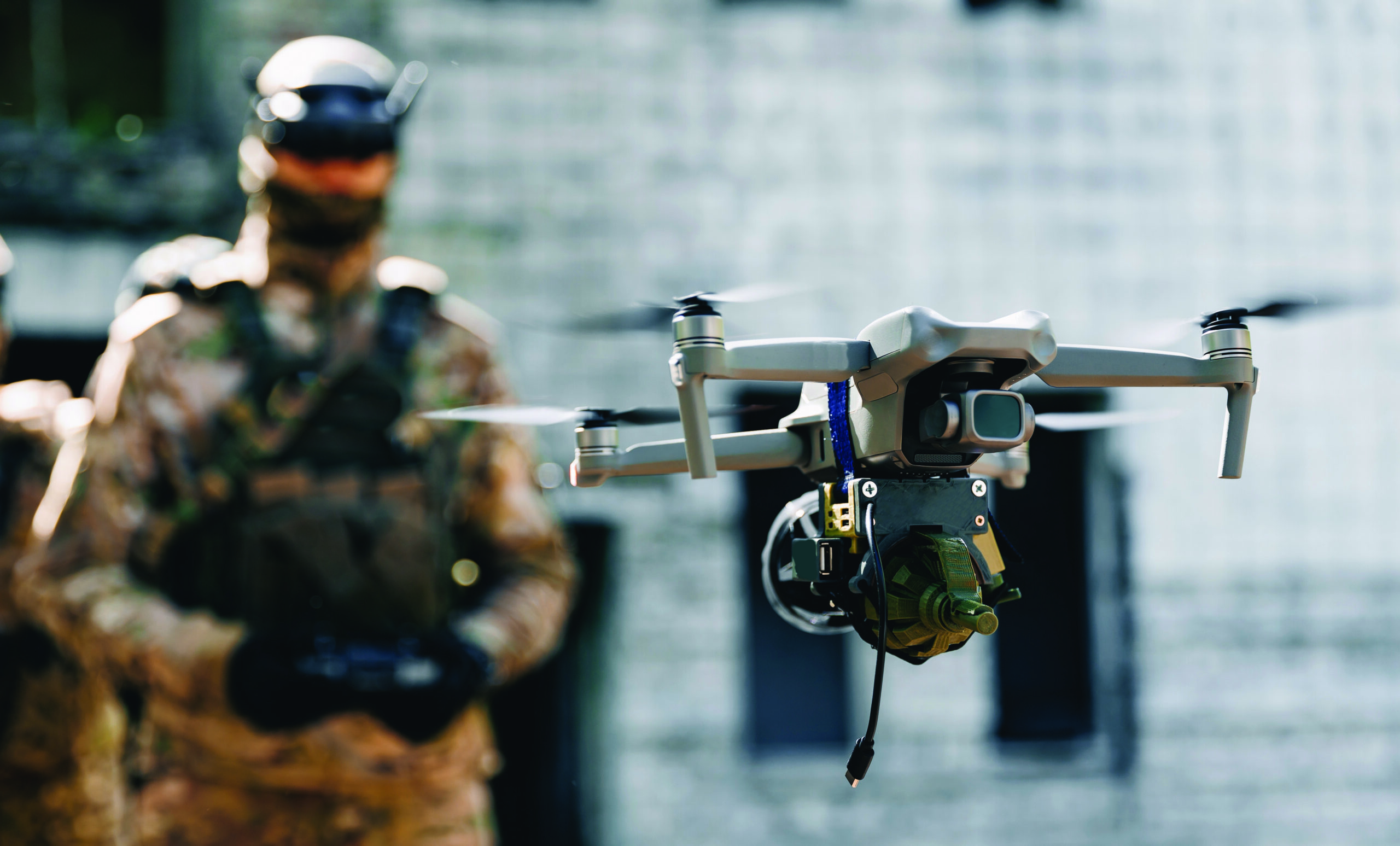
A soldier UAV operator launches an army drone with a bomb to drop into enemy fortifications and trenches. Concept using military robots in modern warfare. Image courtesy of Stratasys
Executives described Stratasys Direct as more than just a service business. According to management, many customers first order printed parts from Stratasys Direct before later buying their own printers, making the business an early sign of future hardware demand. Zeif also said much of the defense work is no longer centered on prototyping. Instead, the company is seeing growing demand for production parts tied to drones, missiles, munitions, military sustainment and repair programs, tooling, and shipbuilding applications.
Defense and aerospace became the central focus of the earnings call. Zeif described aerospace and defense as Stratasys’ “leading vertical today with a very promising pipeline” tied to military and industrial production. He pointed to Stratasys’ ongoing work with organizations such as the U.S. Air Force and NAVAIR, as well as its large installed base across aerospace and defense environments. He also noted that Stratasys Direct ships more than 100,000 parts annually to the defense industry and operates under certifications including AS9100, ISO 9001, CMMC compliance, and ITAR requirements.
During the quarter, Stratasys Direct was also selected for the U.S. Department of Defense’s Joint Additive Manufacturing Acceptability IV Pilot Parts program, known as JAMA IV. The company described the initiative as a multi-million-dollar program aimed at accelerating the qualification and deployment of 3D printed parts across military platforms.
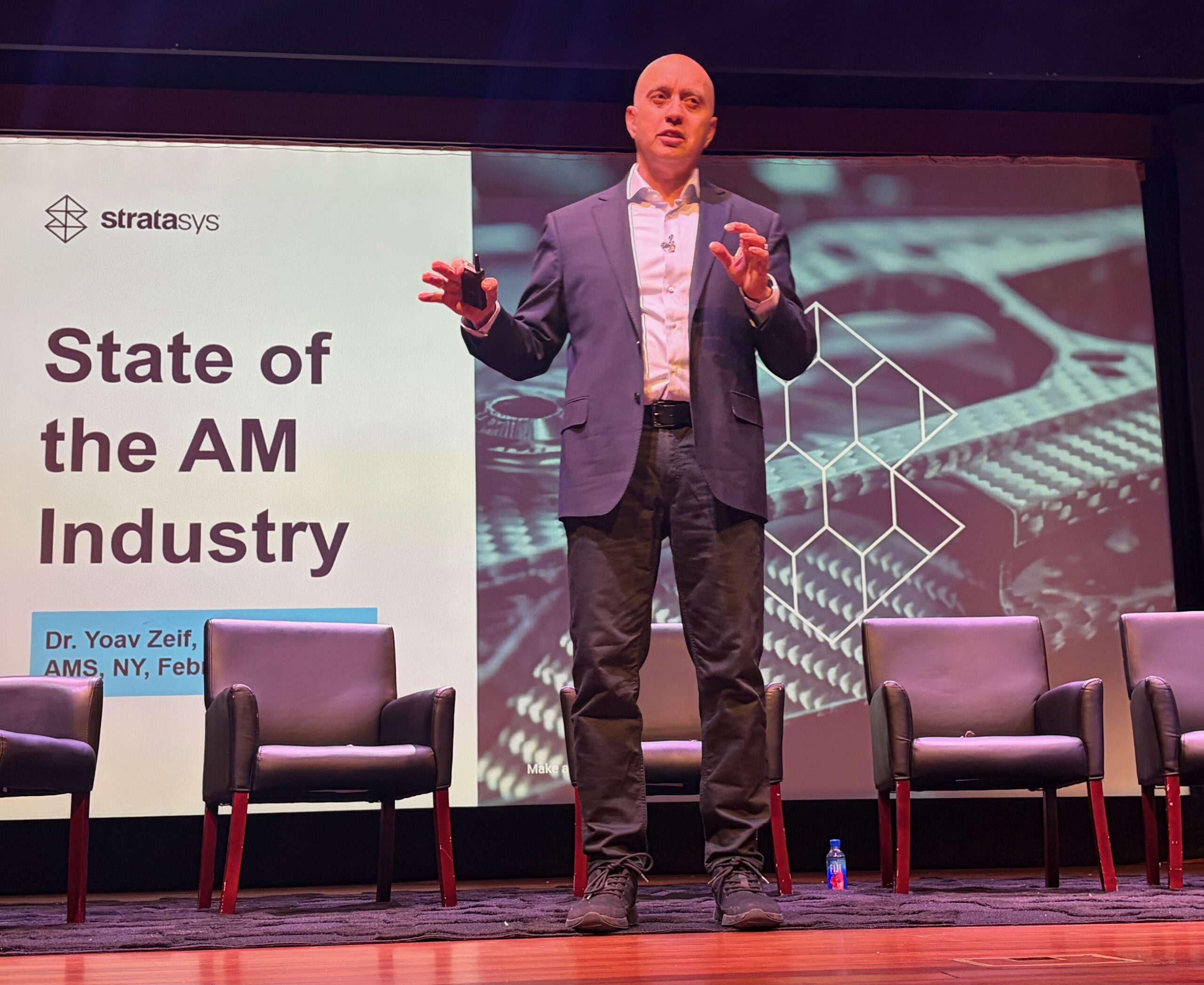
Stratasys CEO at AMS 2026. Image courtesy of 3DPrint.com.
Stratasys also pointed to progress in space and aerospace applications. Zeif said, “We are seeing continued momentum in high-reliability aerospace applications with thousands of parts in orbit, leveraging our materials. In fact, on the recent Artemis II moon mission, hundreds of components produced with Stratasys Antero materials on our FDM system were flown, highlighting the maturity and scalability of additive manufacturing in space systems. This is a strong validation of the high-performance applications of our materials and our position in mission-critical environments, reinforcing the growing role of additives in next-generation space and defense platforms.”
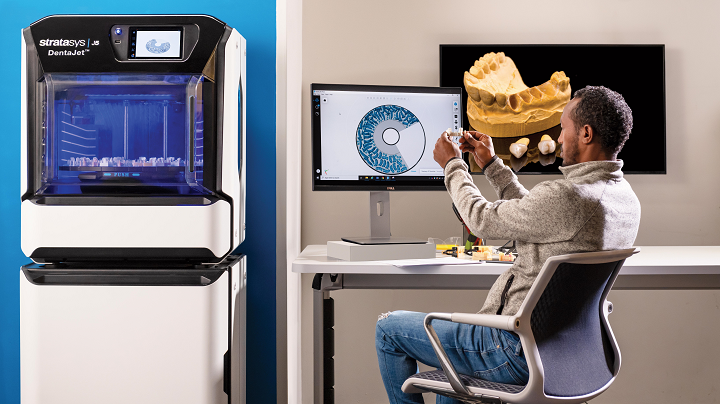
Stratasys’ latest 3D printer for the dental market maximizes productivity in a small footprint. Image courtesy of Stratasys.
Dental was another important area. Stratasys said its TrueDent resins received CE Class IIa medical device certification in Europe, expanding the product’s use for long-term intraoral removables, crowns, and bridges. Zeif said this removes an adoption barrier in Europe and gives Stratasys a first-mover position for polychromatic 3D printed dentures in that market.
Stratasys also rolled out several updates tied to materials and software. ULTEM 1010 is now available as filament for the company’s F3300 system, opening the platform to more aerospace and high-temperature tooling applications. The company also expanded the availability of its ToughONE material to additional PolyJet systems, including the J3 and J5. On the software side, Stratasys said it is adding measurement-based warp correction features to GrabCAD Print Pro for Origin One P3 users, with the goal of reducing trial-and-error adjustments on complex parts.
Stratasys did not change its full-year 2026 outlook. The company still expects revenue between $565 million and $575 million and said results will improve as the year goes on. It also maintained its forecast for adjusted gross margins of 46.7% to 47.1%, adjusted EBITDA of $25 million to $30 million, and positive operating cash flow. Executives, however, said tariffs and foreign exchange rates continue to pressure the business.
Overall, the quarter showed that Stratasys is still dealing with slow printer sales and cautious customer spending. At the same time, the company continued to focus on production applications, especially in defense, aerospace, dental, and industrial manufacturing, where it sees 3D printing becoming part of regular manufacturing operations instead of being used mainly for prototyping.
The growing connection between drones and additive manufacturing is also expected to be a major topic at the upcoming Additive Manufacturing Strategies UAS: The Present and Future of Drone Manufacturing event on June 30, 2026, which will focus on how 3D printing is being used across UAV production and defense applications.