
Nano Dimension (Nasdaq: NNDM) started 2026 with a much larger first quarter business than it had a year ago, mainly because Markforged is now part of the company and included in its results. But it also reported a significantly larger loss, suspended its full-year guidance, and continued a strategic review focused on lowering cash burn, selling off some business units, and deciding the company’s direction for the future.
“The Board and management have been working with Houlihan Lokey to evaluate and refine a focused set of go-forward alternatives, which may include, but not limited to, a strategic merger, a reverse merger or other strategic transactions,” CEO David Stehlin reflected during the earnings call. “Our financial resources and public company platform create a compelling opportunity to pursue alternatives that could unlock value.”
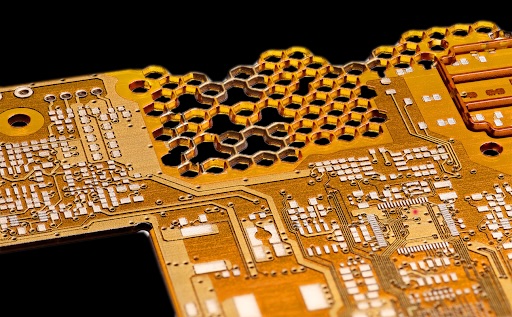
Nano Dimension’s DragonFly IV produces functional circuits and devices, allowing users to utilize new levels of resolution to generate complex board layouts and virtually limitless routing topologies. Image courtesy of Nano Dimension.
For the first quarter ended March 31, 2026, Nano Dimension reported revenue of $29.7 million, up 106% from $14.4 million in the same period last year. Markforged contributed $17.1 million of that revenue. So excluding Markforged, Nano’s stand-alone revenue was $12.6 million, down about 12% year over year, which management attributed mainly to lower sales tied to tariffs and the impact of divestments. Although executives did not specifically identify which divestments affected revenue during the quarter, the decline is probably related in part to the company’s ongoing restructuring efforts, including the sale of its AME (additively manufactured electronics) and Fabrica product lines announced soon after the quarter closed.
Meanwhile, the company’s net loss rose to $69.7 million, compared with a loss of $25.5 million a year before. The company’s larger loss was mainly related to Nano lowering the estimated value of the Markforged business on its books by $40.4 million.
Adjusted EBITDA was a loss of $12.5 million, compared with a loss of $10.1 million in the first quarter of 2025 and a loss of $9.8 million in the fourth quarter of 2025. To this effect, CFO John Brenton said during the earnings call that the results reflected “the inclusion of Markforged and lower stand-alone revenue impacted by tariffs and divestments, partially offset by gross margin performance and continued cost discipline.”
Nano ended the quarter with $441.6 million in cash, cash equivalents, deposits, restricted deposits, and marketable equity securities, down from $459.6 million at the end of 2025. The company said about $8.4 million of the decline was tied to changes in the value of some of its investments.
The quarter also showed how much Nano Dimension has changed over the past year. In April 2025, the company completed its acquisition of Desktop Metal after a long legal battle, and later that same month, finalized its acquisition of Markforged. Just a few months later, in July 2025, Desktop Metal filed for Chapter 11 bankruptcy before its key assets were acquired by Arc Impact just a few months later. Then, in September 2025, Nano replaced CEO Ofir Baharav with David Stehlin and launched a broader strategic review with Guggenheim Securities and Houlihan Lokey.
That strategic review has now become the main focus of the company. Nano said it is trying to simplify the business, reduce spending, sell off some product lines, and explore larger deals that could reshape the company in the future. According to Stehlin, all of these efforts are happening at the same time, rather than in separate stages.
The first major step in that plan came shortly after the quarter ended. On April 6, 2026, Nano sold its AME electronics business and Fabrica product lines to Inspira Technologies OXY. The deal included an upfront payment of $2 million, with the possibility of another $10.5 million tied to future performance. Nano said the sale “should lower the company’s yearly cash burn by about $10 million.”
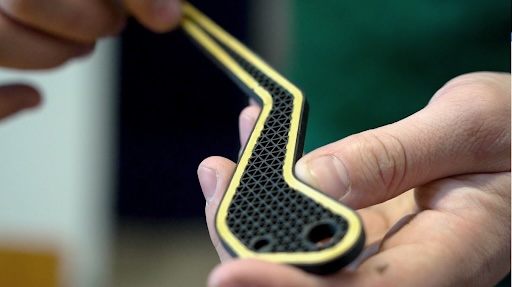
Markforged’s FX generation printers enable continuous fiber reinforcement (carbon, Kevlar, and fiberglass) to make composite parts as strong as aluminum. Image courtesy of Nano Dimension.
Beyond its restructuring efforts, Nano said its two biggest businesses are now Markforged’s 3D printing systems and Essemtec’s electronics manufacturing equipment. During the quarter, the company expanded its work with a major U.S. automotive manufacturer and said it is continuing to see growing opportunities in defense. Nano also said Essemtec is gaining traction in electronics production, AI-related manufacturing, and the space and satellite sectors.
Nano also stopped providing full-year guidance for 2026. The company said it is still in the middle of selling businesses and evaluating larger strategic options, so its financial results could change a lot during the rest of the year.
After Nano released its earnings on May 7, the stock dropped from about $1.91 to a low of $1.58 the next trading day. Nano shares have also struggled for most of 2026, usually staying below $2 as the company continued with its restructuring efforts.