
During the last few weeks, I spent time on the ground at both the Additive Manufacturing Strategies Forum (AMS) and the Additive Manufacturing Users Group (AMUG) meeting.
What stands out is not just how different these gatherings are, but how clearly they reflect two necessary halves of the same industry. The contrast is not superficial. It is structural, revealing where additive manufacturing is aligning and where it is still working through friction.
In New York, the energy at AMS is deliberate and tightly framed. Conversations tend to begin with markets and end with outcomes. Capital efficiency, application focus, and pathways to profitability are recurring threads, but what felt different this year was the level of discipline in those conversations. For example, a panel of OEM executives and investors quickly moved past technology differentiation and instead debated utilization rates of installed systems. The question was not whether a platform could achieve a certain resolution or throughput in isolation, but whether it could sustain repeatable production volumes without creating downstream inefficiencies. There is noticeably less appetite for broad claims about disruption and far more scrutiny on how additive fits into existing manufacturing systems in a way that is economically defensible.
For example, in a session focused on defense and aerospace, the conversation centered on qualification timelines being a system-level constraint. What was notable was how openly this was discussed, not as a barrier to adoption, but as a factor that must be built into any realistic growth model.
You could sense that the audience, largely composed of executives, investors, and strategic operators, is calibrating expectations. The questions are sharper. Where does this technology win today? What is the repeatable application? How does it scale without eroding margins? The tone is not skeptical but measured, and that shift alone says a great deal about where the industry is in its maturity cycle.
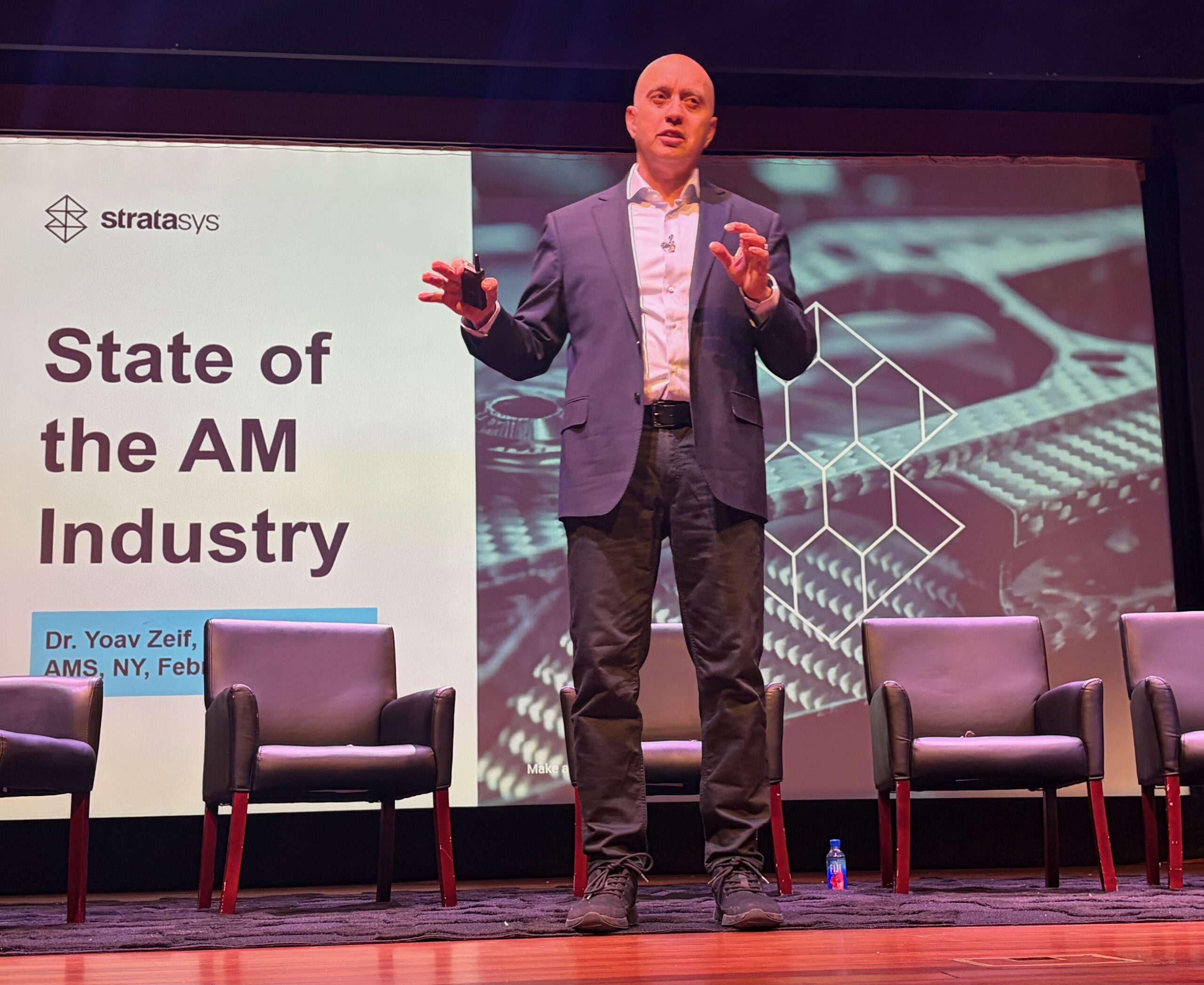
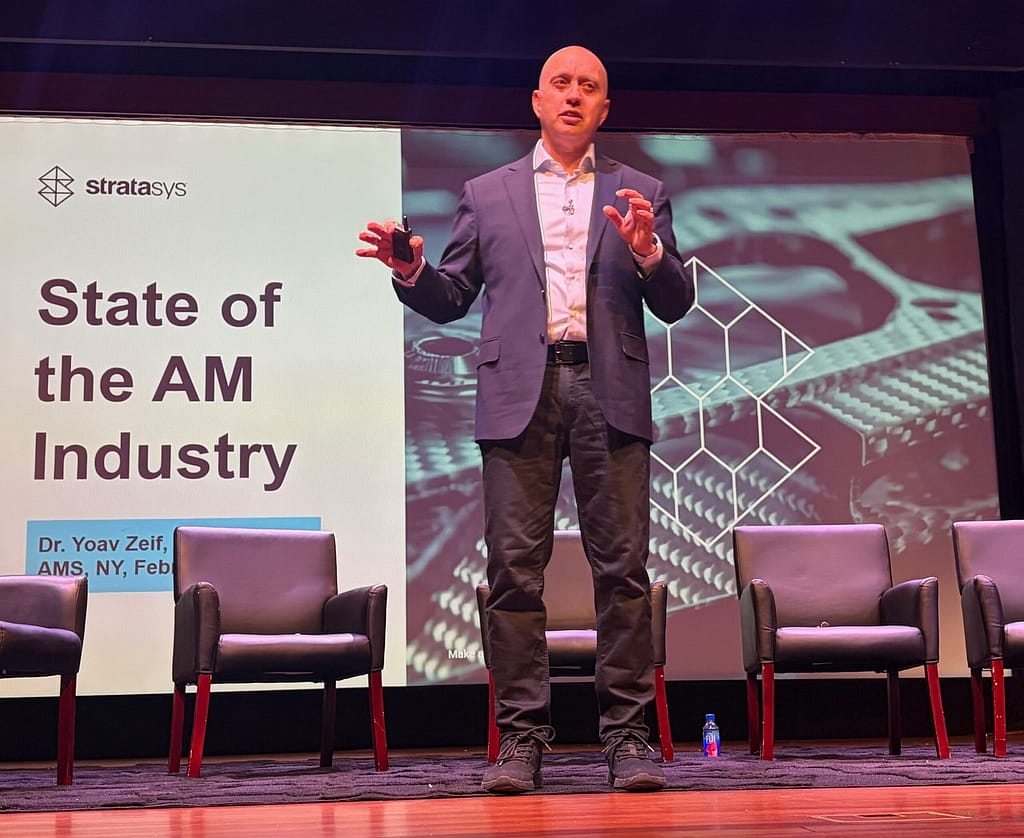
Stratasys CEO at AMS 2026. Image courtesy of 3DPrint.com.
A couple of weeks later at AMUG, those same themes reappear, but in a very different form.
The conversations are less structured but, in many ways, more revealing. They happen in hallways, around machines, and during informal technical exchanges where users compare notes on what worked and what did not. There is a level of openness that is difficult to replicate in more formal settings. Engineers are willing to share failures in detail, and those failures are not framed as setbacks but as data points. You hear specifics. Material behavior under certain conditions. Post-processing bottlenecks that were not anticipated. Design decisions that looked optimal on paper but created issues in production. It becomes immediately clear that this is where the industry is being stress-tested in real time.
In a session focused on polymer applications, multiple users compared notes on post-processing bottlenecks. One user had successfully reduced print time by optimizing build orientation, only to find that support removal became the new constraint, offsetting much of the gain. Another shared a workaround involving minor design modifications that eliminated the need for support altogether. These are not headline innovations, but they are exactly the kinds of incremental improvements that determine whether an application is viable at scale.
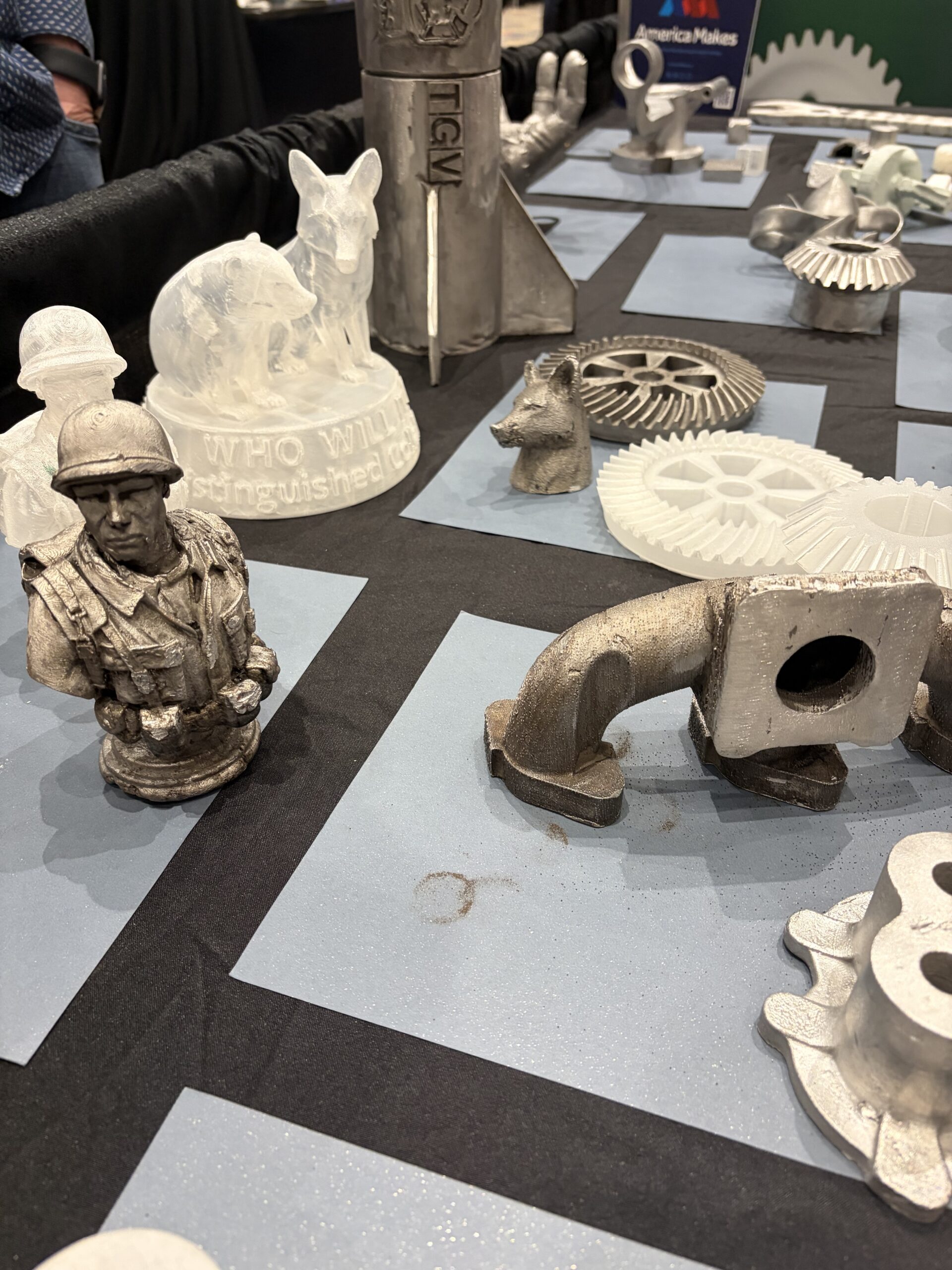
Skuld booth at AMUG. Image courtesy of 3DPrint.com.
What becomes particularly interesting when you step back and connect these two environments is how closely they are beginning to inform each other.
At AMS, there is a growing emphasis on application-driven growth. Still, the definition of a “real application” is increasingly shaped by what users on forums like AMUG are proving in practice. The distance between narrative and execution is shrinking as it is no longer sufficient to position technology around theoretical advantages. The expectation is that those advantages have already been validated somewhere, by someone, under real constraints.
One of the more subtle observations across both events is how the center of gravity is shifting away from hardware as the primary story.
At AMS, this shows up in discussions around integrated solutions, software layers, and workflows. At AMUG, it shows up in a different way. Users are less focused on the machine itself and more on making the entire process stable and repeatable.
In both cases, the implication is the same. The value is moving up and down the stack, and companies that remain anchored solely in hardware risk becoming less differentiated over time. There is a recurring theme around expectations versus reality.
Another pattern that becomes evident is the increasing importance of constraint.
At AMS, constraints are discussed in terms of economics and scalability. At AMUG, they are discussed in terms of physics, materials, and process limitations. They are different expressions of the same reality. Additive manufacturing is no longer being evaluated in isolation. It is being measured against highly optimized, established manufacturing methods. That comparison forces clarity. It pushes the industry to identify where additive is not just viable, but meaningfully better.
For those looking to translate these observations into action, a few implications stand out.
First, application specificity is no longer optional. The market is rewarding clarity over breadth. Second, validation cycles are becoming more critical. What is said in strategic forums must be backed by what is proven in operational environments. Third, differentiation is increasingly tied to ecosystems rather than standalone products. Whether it is materials, software, or process integration, the winners will be those who can control more of the value chain in a meaningful way.
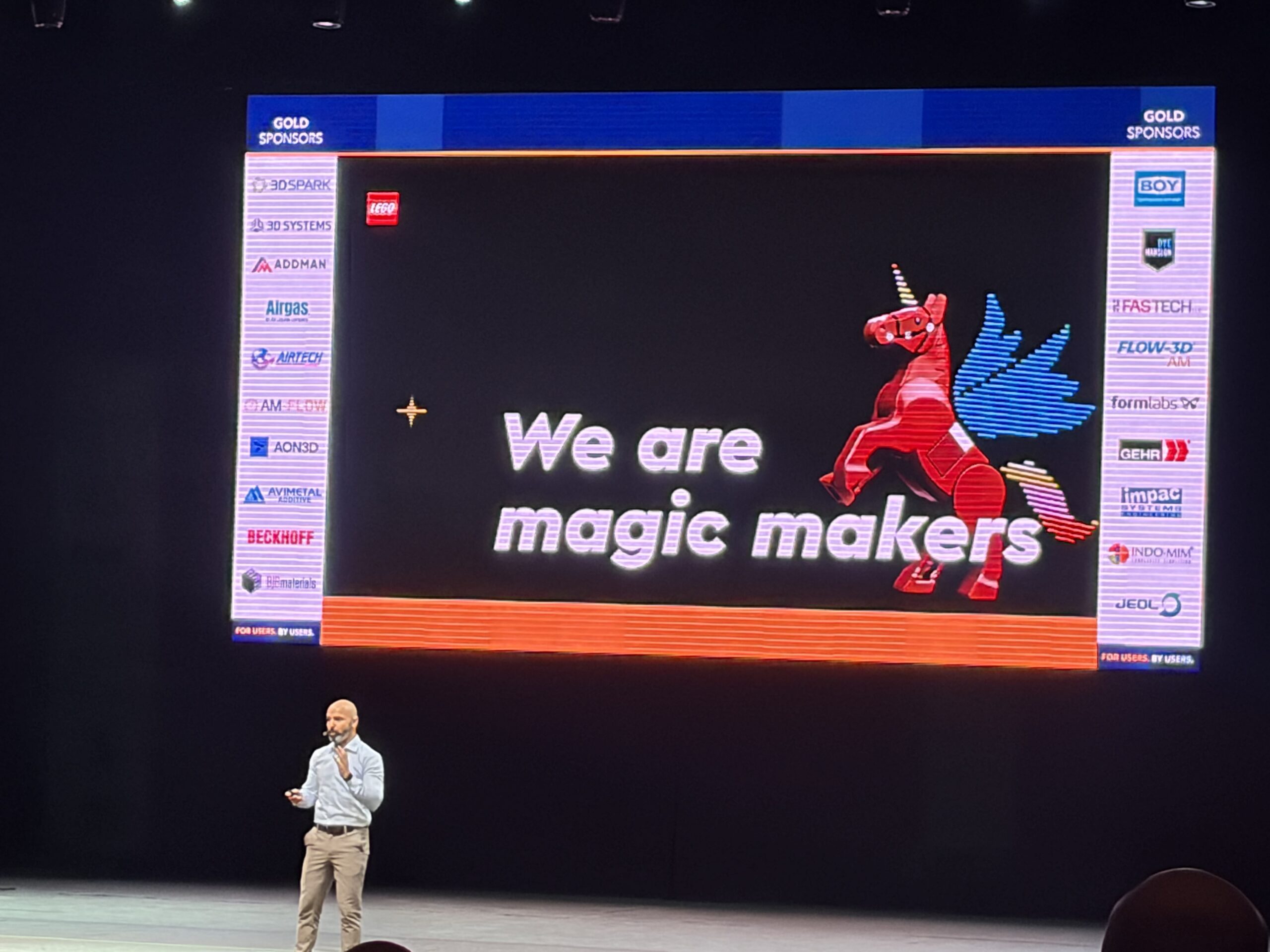
Ronen Hadar, Senior Director and Head of Additive Design and Manufacturing at LEGO, onstage at AMUG 2026. Image courtesy of 3DPrint.com.
Perhaps the most important takeaway, however, is that both these environments are very complementary.
AMS offers a view of where the industry intends to go, shaped by capital and strategy. AMUG offers a view of where the industry stands, shaped by experience and execution.
The gap is narrow, and the convergence is not accidental. It is driven by a collective need for alignment between promise and performance. Spending time in both settings reinforces a simple but important point.
The future of additive manufacturing will not be defined solely by better technology or stronger narratives. It will be defined by the ability to connect those narratives to repeatable, economically viable outcomes in the real world. The signals are there, but they are distributed. Some are found in structured discussions about market direction and investment. Others are embedded in detailed conversations about actual prints.
The ability to observe both and connect them is becoming increasingly important. That is where actionable insight will emerge.