
The US Army’s additive manufacturing (AM) capabilities have taken some time to catch up to those of the Air Force and Navy, but the catch-up phase now seems to be in full acceleration mode. We saw that at the beginning of February when Velo3D announced it was the first qualified AM vendor for the Army’s Ground Vehicles Systems Center (GVSC). Further evidence of the Army’s progress just surfaced in the form of a new SPEE3D case study that was executed with the Tennessee Army National Guard, the University of Tennessee (UT), and the Army Research Laboratory (ARL).
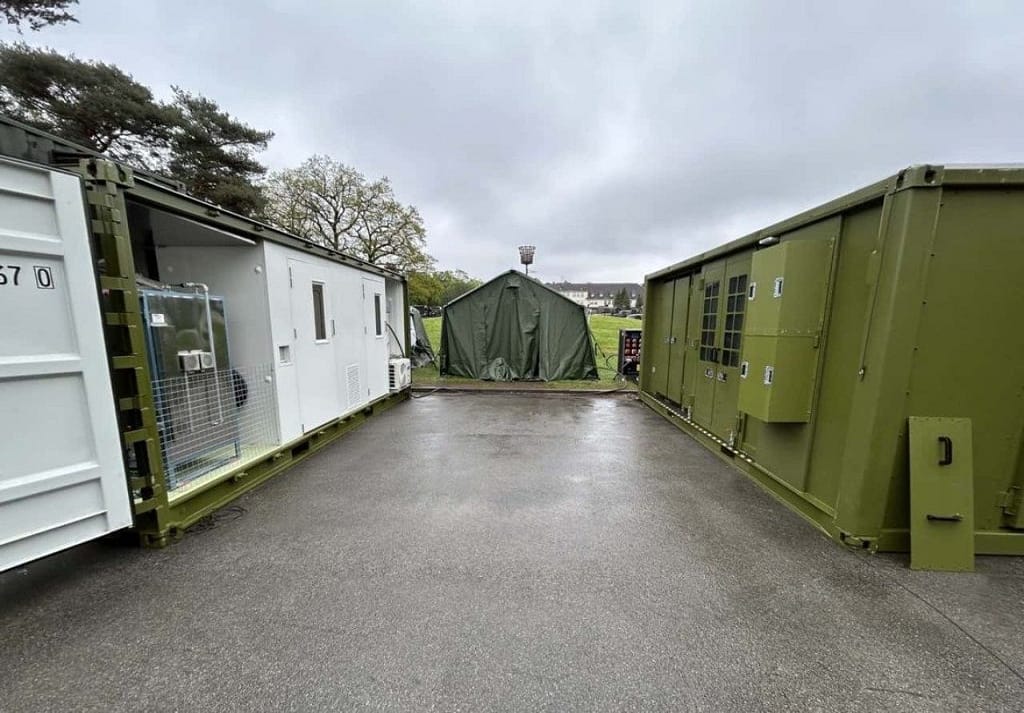
As with the Velo3D deal, the SPEE3D case study involves Army ground vehicles: specifically, mine-resistant ambush protected (MRAP) vehicles, which are designed to withstand munitions including improvised explosive devices (IEDs). SPEE3D and its partners on the project benefitted from getting to work at UT’s Defense Development and Applied Research Center (DARC), where the cold-spray AM (CSAM) OEM’s Expeditionary Manufacturing Unit (EMU) was tested in a live mission scenario on a DARC training range.

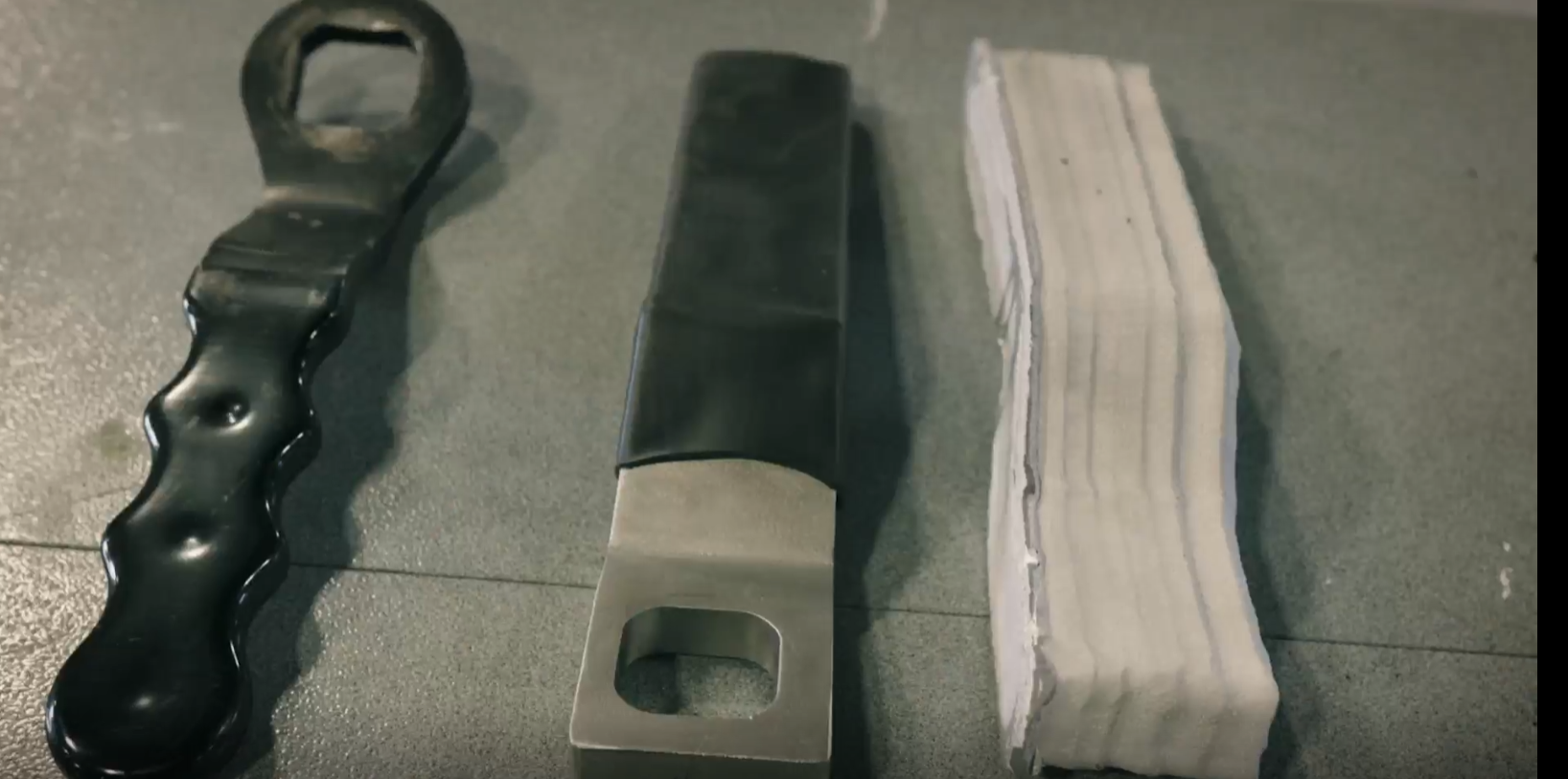
In the training exercise, Army National Guard soldiers and UT engineers used the EMU to design, print, heat treat, and machine a Battle Lock Handle for an MRAP vehicle in under ten hours, demonstrating how frontlines manufacturing could drastically reduce the time it takes to return vital hardware to the battlefield, optimizing preparedness and thereby potentially reducing casualties. Just as intriguing as the production of the part itself was the delivery mechanism: instead of transporting the Battle Lock Handle through contested, unnavigable territory, the soldiers delivered it via drone.
For their efforts, the Army National Guard, DARC, and the ARL won the Expeditionary & Tactical 3D Printing Excellence Award at the MILAM 2026 conference. After purchasing an EMU system at some point in the last couple of years, UT also recently purchased SPEE3D’s large-format TitanSPEE3D printer.
In a press release about SPEE3D’s Tennessee training exercise with the US Army, Army Lt. Col. Colby Tippens, Executive Officer, 278th ACR, who “helped embed the EMU at the Knoxville Armory”, said, “We wanted to maximize the value-added of this unprecedented initiative with ARL, UT, and SPEE3D to grow our expertise in this field and then serve as a force multiplier to other Army units and organizations who are not as fortunate to have this capability in their own backyard.
“This allows our soldiers and maintenance leaders to help shape the Army’s future of maintaining our critical combat systems when we are deployed and in harm’s way. If we can give our soldiers the ability to build critical repair parts in a timely manner, that will help improve combat power, enhance readiness, and reduce risk and our logistics footprint that could ultimately help save soldiers’ lives.”
Even as SPEE3D focuses so diligently on fine-tuning all the ins and outs of its core processes over and over again in response to user feedback, the company simultaneously manages to approach every new use-case opportunity more like a Hollywood director than like a traditional deep tech enterprise. And what’s most striking is how SPEE3D intertwines its creative vision with its technological perfectionism in ways that maximize both.
On the surface, delivering a part via drone that’s been printed in a contested logistics environment sounds like a concept that’s just trying to cram as many buzzwords as possible into one press release. But when you consider all the elements in the context of the entire range of operational capabilities that the US military has been cultivating for over a decade, it becomes clear that the scenarios SPEE3D is gaming out are simply the logical conclusion of a generational advanced manufacturing buildup.
If it hasn’t already happened and simply hasn’t been reported upon, at some point in the not-so-distant future, drones with components printed on a battlefield somewhere will deliver mission-critical parts printed in that same combat zone to the soldiers fighting on the frontlines. I’ve been focused on the idea of manufacturing on the frontlines, but the change is an even bigger milestone than that: miniature contingency supply chains are moving to the frontlines.
Finally, less poetically, this case study also reinforces just how integral of an advanced manufacturing hub Knoxville has become in an age of heightened geopolitical sensitivity. While that has been the case at least since the Manhattan Project era, the diversity of the work currently happening in the eastern Tennessee city amounts to a microcosm of the future of US hardware.
Images courtesy of SPEE3D