
As additive manufacturing continues to move into production, one question keeps coming up: not just whether a technology works, but where it actually makes sense to use it.
HP’s upcoming webinar on March 31 takes a closer look at industrial filament 3D printing, but instead of presenting it as a major breakthrough, it focuses on a more practical idea. Even as filament systems improve, they are not meant to replace every other additive manufacturing technology.
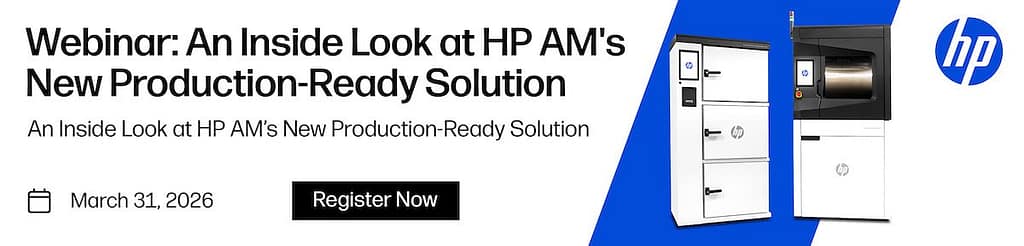
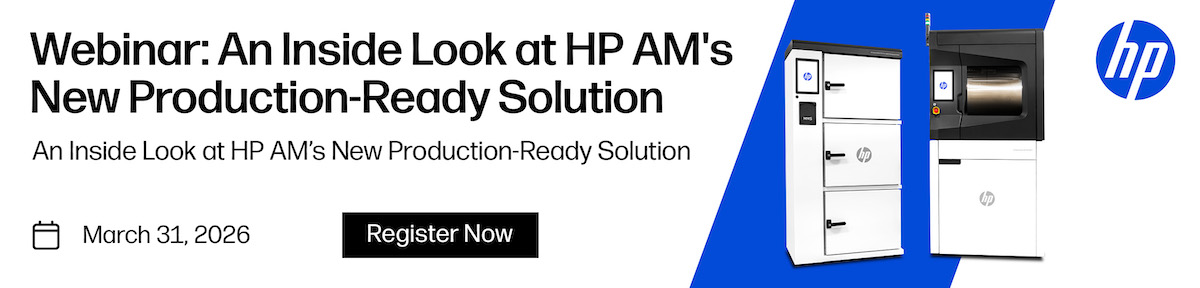
The discussion comes as HP offers a first look at its new high-temperature filament platform designed for production use. The webinar, titled “High-Temperature Industrial Filament 3D Printing: An Inside Look at HP AM’s New Production-Ready Solution,” will focus on an end-to-end system built to deliver consistent part quality, process repeatability, traceability, and access to certified materials, while maintaining an open materials approach. It will also cover key components, including the industrial printer, Material Management System (MMS), and modular extrusion architecture, as well as how filament-based production can be used in regulated and high-temperature applications.

Guillermo Fabregat.
The session will be led by Guillermo Fabregat, HP Industrial Filament Product Manager at HP Additive Manufacturing Solutions. An industrial engineer, Fabregat has experience across manufacturing, operations, R&D, and product management, with a focus on bringing complex industrial systems into scalable, production-ready use.
For years, filament-based 3D printing has mainly been used for prototyping and lower-cost applications. It has been accessible, flexible, and relatively easy to use compared to other additive processes. But in industrial settings, it has often been harder to use for production, especially when it comes to repeatability, material performance, and consistency. Differences between prints, fewer options for high-performance materials, and slower production speeds have made it more challenging to scale.
HP’s new system is designed to expand what filament can do in these environments, with a focus on high-temperature materials, improved reliability, and an open materials platform. High-temperature capability is important because it allows the use of engineering-grade polymers for more demanding applications, including parts exposed to heat, stress, or chemicals. At the same time, the system is designed to support more consistent results and better process control, which are key requirements for industrial use.
But as we mentioned before, the more important question is not whether filament can reach production, but where it makes sense to use it.
In many cases, industrial filament printing is used alongside other technologies like powder bed fusion or HP’s own Multi Jet Fusion systems. Each process has its strengths and limitations, and those differences become more important as additive manufacturing moves into production.

Industrial production environments demand repeatability, traceability, and consistent part quality.
Filament systems usually come with lower upfront costs, more material options, and are easier to use. They’re also easier to set up in smaller environments, whether that’s an engineering team, a small shop, or a distributed setup. In contrast, powder-based systems tend to offer higher output, better surface finish, and more consistent part quality across larger production runs.
That difference is shaping how companies think about these technologies.
Instead of choosing one over the other, many manufacturers are now using a mix of processes at different stages. In that setup, filament printing doesn’t need to compete directly with higher-end systems. It simply fills certain roles.
Use cases like high-temperature polymers, functional prototypes, tooling, jigs and fixtures, or smaller batch production are good examples. In these cases, flexibility and cost often matter more than speed or perfect surface finish. Being able to quickly adjust a design or produce parts on demand can also outweigh some of the limitations.
There’s also a growing role for filament systems in distributed manufacturing. Because they are more affordable and easier to run, they can be placed closer to where parts are needed, whether in small production sites, service bureaus, or internal teams. This fits with a broader shift in manufacturing, where speed, flexibility, and supply chain resilience are becoming just as important as scale.
At the same time, there are limits. For high-volume production or parts that require tight tolerances and consistent performance across large quantities, other additive technologies may still be a better fit. Powder bed systems and other industrial processes still have clear advantages in these areas, especially when speed and consistency are critical.
This is where the webinar becomes more relevant. Instead of presenting filament as a one-size-fits-all solution, it focuses on where it actually fits within a broader manufacturing toolkit.
As additive manufacturing continues to mature, this way of thinking is becoming more important. The focus is shifting from what each technology can do on its own to how they can work together. Different processes are increasingly seen as complementary, each playing a role in a more flexible production setup.
HP’s session reflects that shift. It’s less about a single system and more about helping manufacturers understand where filament-based production makes sense, and where it doesn’t.
Attendees will get the first official look at the platform. To do so, register here.
Images courtesy of HP