
Additive manufacturing is steadily moving from experimental use toward routine application in U.S. Navy shipbuilding, sustainment, and much more. In recent years, the Navy, working through its Maritime Industrial Base (MIB) Program in partnership with its technical community, has focused on a core challenge: how to introduce new manufacturing technologies without increasing technical, operational, or lifecycle risk. The answer is a disciplined framework called material maturity.
Material maturity is the structured process by which the Navy rigorously classifies a material produced by additive manufacturing (AM) and characterizes its performance for comparison with similar legacy materials produced by casting or forging processes. Using this framework, material maturity teams have advanced candidate AM materials through an urgent focus on phased research, development, test, and evaluation. Early work in this space focused on feasibility and baseline characterization, relying on coupon- and block-level testing to establish fundamental corrosion resistance and mechanical properties. As programs progressed, testing emphasized robustness: understanding sensitivity to process variation, defect tolerance, post-processing effects, and long-term performance drivers.
This work is leading to a significant milestone in early 2026: developing interchangeability guidance for the first two of nine planned additively manufactured materials: one metal using a laser powder bed fusion (L-PBF) printing process, and one using a directed energy deposition (DED) process. Interchangeability establishes that parts produced using these materials can replace legacy cast or forged components without affecting fit or function. In practical terms, from a fleet perspective, interchangeable parts simply install and perform as expected. As such, these parts won’t require additional engineering, waivers, or separate parts numbers.
Importantly, material maturity has also demonstrated where adoption should pause. A third material studied under the program is not included in the early 2026 interchangeability guidance. This is because test specimens are not consistently meeting required performance thresholds. Though this delays adoption, it fulfills material maturity’s purpose: it identifies limitations early, protecting the fleet from premature use, and signaling to industry where further development is needed.
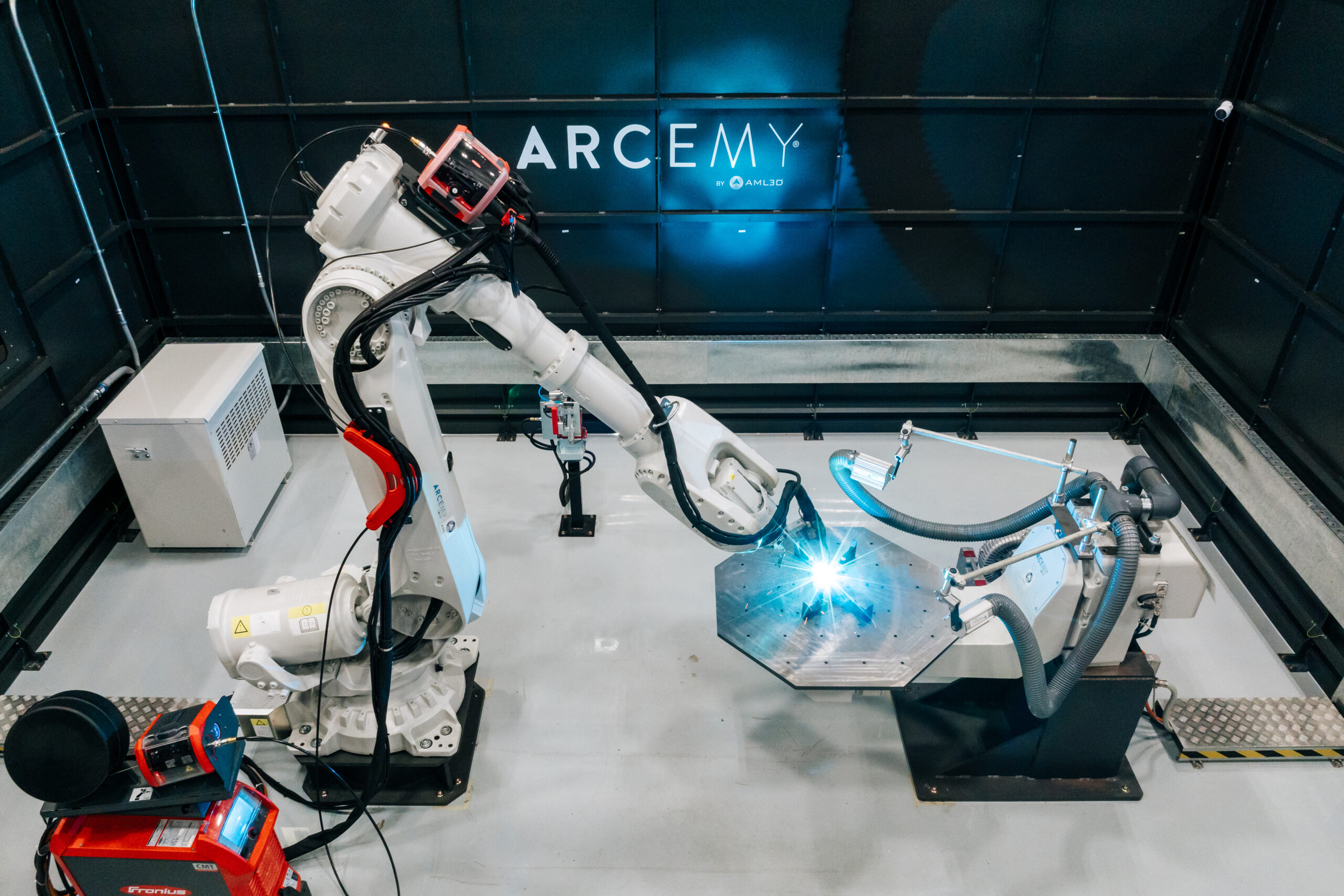
Interchangeability does not represent the end of material maturity activities, but rather a transition point from technical validation to operational execution. From a logistics and acquisition perspective, this signals a new phase. With interchangeability guidance and supporting Military Performance Specifications (MIL-PRFs) in place, additive manufacturing advances from demonstration to procurable capability. Acquisition organizations can reference these as contractual requirements, enabling AM parts as authorized alternatives to legacy production.
Logistics organizations must integrate this guidance into existing procurement and sustainment systems. This includes updating purchasing language, supply catalog references, and internal guidance, ensuring buyers know when and how to use approved AM materials. As a result, this integration supports one-for-one replacement, avoids redesign, and expands sourcing options. Put plainly, from a supply perspective, this opens up additional avenues of procuring parts without requiring any additional testing, waivers, or other barriers.
The operational payoff is greater resilience. Approved AM materials allow multiple qualified suppliers to compete to supply parts for new construction and planned maintenance overhauls, reducing reliance on single-source vendors and cutting lead times with castings or forgings. For emergent repairs, additive manufacturing offers a solution when suppliers are unavailable or schedule is critical.
For manufacturers, interchangeability guidance creates opportunity, but not automatic qualification. Suppliers seeking to parts must demonstrate compliance with the applicable MIL-PRFs. They’ll need to maintain auditable documentation to prove they are using pedigreed feedstock, have disciplined process control, and meet mechanical and corrosion requirements – in other words, that they’re following the Navy’s required processes, so the end product can indeed be trusted.
Just as important, the decision to withhold the third material from initial interchangeability guidance sends a clear, constructive signal to industry. It demonstrates that inclusion in Navy guidance depends on proven performance, not aspiration. Manufacturers can invest confidently in approved AM materials and identify where further development is needed before scaling capability.

Material maturity benefits both the fleet and the industrial base. For the fleet, it builds confidence in approved additively manufactured parts, ensuring they are safe, reliable, and supportable. For industry, it provides clarity on where investment aligns with Navy needs and where technical risk remains.
Material maturity is intentionally conservative in its approach and forward-looking in its outcomes. By combining rigorous testing, formal specifications, and strict acquisition integration, it paves the way for additive manufacturing as a reliable, scalable part of naval shipbuilding and sustainment. Building on the current work, the foundation is laid for the responsible introduction of future materials and processes across the fleet, as additive manufacturing becomes a dependable Navy supply capability.
Matt Sermon is Direct Reporting Program Manager, Maritime Industrial Base Program. In this role, he leads efforts to build needed capability and capacity in support of key Navy programs, advancing naval power through the largest Department of Defense industry revitalization plan since World War II. He oversees strategic initiatives in manufacturing technology advancement, workforce development, supply chain, shipyard infrastructure, and public/private partnerships—strengthening American industry to meet the growing demand for ships, submarines, and other maritime capability , ensuring long-term industrial readiness and national security.
Previously, Mr. Sermon served as the Executive Director of Program Executive Office Strategic Submarines, where he provided executive leadership to the Columbia Class Submarine acquisition program and the In-Service SSBN/SSGN program. He was also assigned responsibility for revitalizing the Submarine Industrial Base, overseeing more than 250 acquisition personnel and managing approximately $130 billion in acquisition and sustainment programs. Before that, he served as the Executive Director for Program Executive Office Columbia Class Submarine and the Executive Director for the Amphibious, Auxiliary, and Sealift Office at Program Executive Office Ships.
Mr. Sermon entered the Senior Executive Service in February 2019, and has been in federal service for more than 20 years. He has served in a variety of key leadership positions throughout his career, including Deputy Program Manager for the Columbia Class Submarine program (2016-2019), a $100 billion DoD Major Defense Acquisition Program. During his tenure, he led the program through detail design, construction readiness, and significant sustainment planning activities. Before leading the Columbia Class, he was the Deputy Program Manager for the Zumwalt Class Destroyer (2014- 2016) during test, trials, and delivery of the lead ship (DDG 1000). Prior to DDG 1000, he was the Deputy Program Manager for International Fleet Support in the Naval Sea Systems Command’s Surface Warfare Directorate (2010- 2014), where was responsible for the management of more than $5 billion in Foreign Military Sales cases for more than 40 partner nations.
Other previous assignments include Principal Assistant Program Manager in the Support Ships, Boats, and Craft Program Office (PMS 325) in PEO Ships (2007-2010), where he led the $1.1 billion Egyptian Navy Missile Craft project while providing program management expertise for numerous other boat building projects.
Prior to starting in Navy civilian service, Mr. Sermon was a U.S. Navy Surface Warfare Officer (Nuclear). He received his Surface Warfare Officer qualification aboard USS Ramage (DDG 61). Additionally, Mr. Sermon served as nuclear engineering officer aboard USS Dwight D. Eisenhower (CVN 69) before leaving the uniformed Navy in 2004. He is a veteran of Operations Enduring Freedom and Iraqi Freedom.
Mr. Sermon is a member of the Acquisition Professional Community and has a Level III Certification in Program Management. He holds Defense Acquisition Workforce Improvement Act certifications in Production, Quality, and Manufacturing and Test & Evaluation, and has completed certification as a Project Management Professional (PMP). He received a Bachelor of Science degree in economics from the United States Naval Academy in 1999, and a Master of Science degree in engineering management from The Catholic University of America in 2006. He is a 2012 graduate of the Defense Systems Management College’s Program Manager Course. During his distinguished federal service career, Mr. Sermon has received three Navy Civilian Meritorious Service Awards and one Navy Civilian Superior Service Award. In 2023 he was named a Presidential Rank Award Distinguished Executive.
At Additive Manufacturing Strategies (AMS) 2026, Mr. Sermon will present a talk about “AM for the Marine Industrial Base: Updates & Outlook” on February 24th. This session is part of the broader AMS 2026 conference, which brings together industry leaders, policymakers, and innovators from across the global AM ecosystem. Learn more and register here.