
For years, ExOne and voxeljet were two of the best-known names in binder jet 3D printing, especially in sand printing for foundries. But in recent years, ExOne “got buried” inside Desktop Metal, as ExOne CEO Eric Bader put it, and customers started to worry about the basics: Who do I call? Will I get spare parts? Will service disappear?
In an interview with Bader and co-founding Managing Partner at Anzu Partners, Whitney Haring-Smith, the message was that the companies are being brought together in a way that makes support stronger, and this is meant to be the start of a more public, more active ExOne again.
Stabilizing Support
The clearest “news” is that ExOne and voxeljet are now combining their aftermarket service and support operations into one coordinated global network, and they are making that the priority of the integration.
Bader said, “The decision was urgent because there are close to 500 installed machines in the field, and customers need to know there will be no disruption.”
Haring-Smith described the combined service team as an immediate upgrade for customers: “They now get roughly double the technician coverage, and those technicians are not new hires. Many have deep experience. Service technicians in general, on average, have a decade of experience, and some of them have more than two decades.”
Just as important, Haring-Smith said they kept the service technicians they wanted to keep during the integration. That’s a big signal to customers that “the support structure isn’t being hollowed out.”

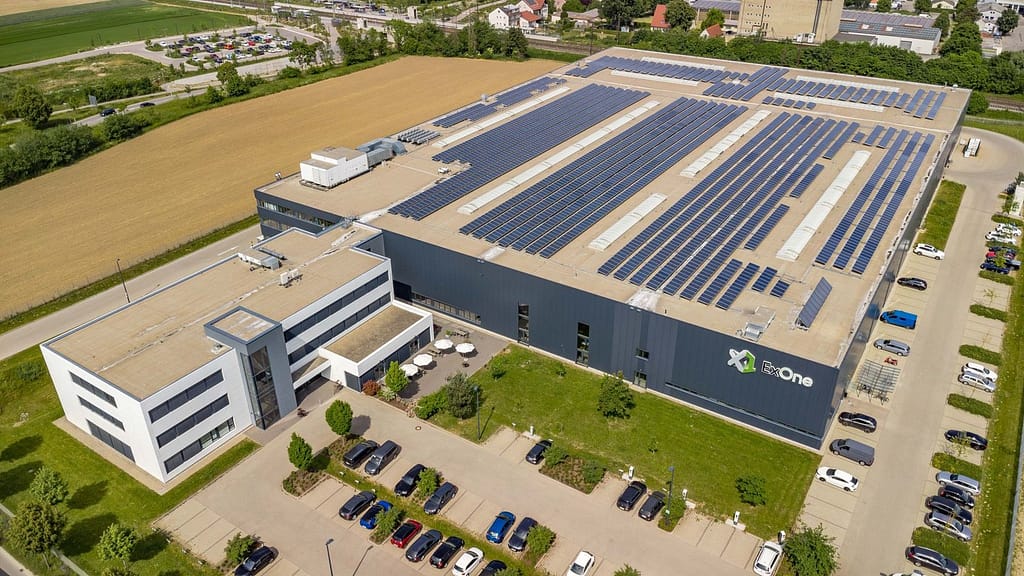
ExOne facility in Gersthofen. Image courtesy of Ehret+Klein AG/ExOne.
A “fresh air” moment after a chaotic year
During our conversation, the executives addressed a concern many customers have raised this year: whether their machines will continue to be supported as the companies merge and restructure.
“With so much consolidation, customers have been nervous about uptime, service, and parts. The Americas were especially urgent because many ExOne customers had been dealing with the turmoil around Desktop Metal,” stated Bader. “voxeljet already had a functioning service base outside Detroit (Canton/Detroit area), and ExOne can now ‘hook on’ to that structure to restore consistency. We can start spare parts once again, we can make service calls from there.”
That’s the core theme for the consolidated company: stability first.
How Anzu fits in and why that matters
The duo also clarified how the company is organized following this year’s acquisitions. According to Haring-Smith, Anzu is now the investment firm behind ExOne. He described Anzu as a firm with about $1 billion in assets and 40–50 portfolio companies, and said ExOne is one of those holdings.
He also highlighted a question customers often ask: “How long are you going to be here?” To which Haring-Smith answers, “Anzu holds ExOne in a fund with a long runway. We hold this in a fund that stretches into the 2030s, so we’re focused on building a company that is an enduring partner for our customers.”
Basically, they want the market to understand this is not a “short-term flip” and not a “keep it quiet” asset like it felt under Desktop Metal.
R&D is staying, and it’s getting bigger
Beyond service, both executives also pointed to “innovation as a second pillar of the combined company.” They said the R&D leaders from both organizations will continue in the new structure: Andy Vardaman, who leads R&D at ExOne, and Alfred Breer, head of R&D at voxeljet. Haring-Smith described technology innovation as “at the heart of both companies.”
Meanwhile, Bader added that the real opportunity is the knowledge built up over more than 20 years, and the best part is that now the teams can actually share what they know: “You see them now exchanging, seeing the opportunities, one can use what the other department developed and vice versa. More importantly, the combined R&D group will be larger than either company’s R&D team was on its own.”
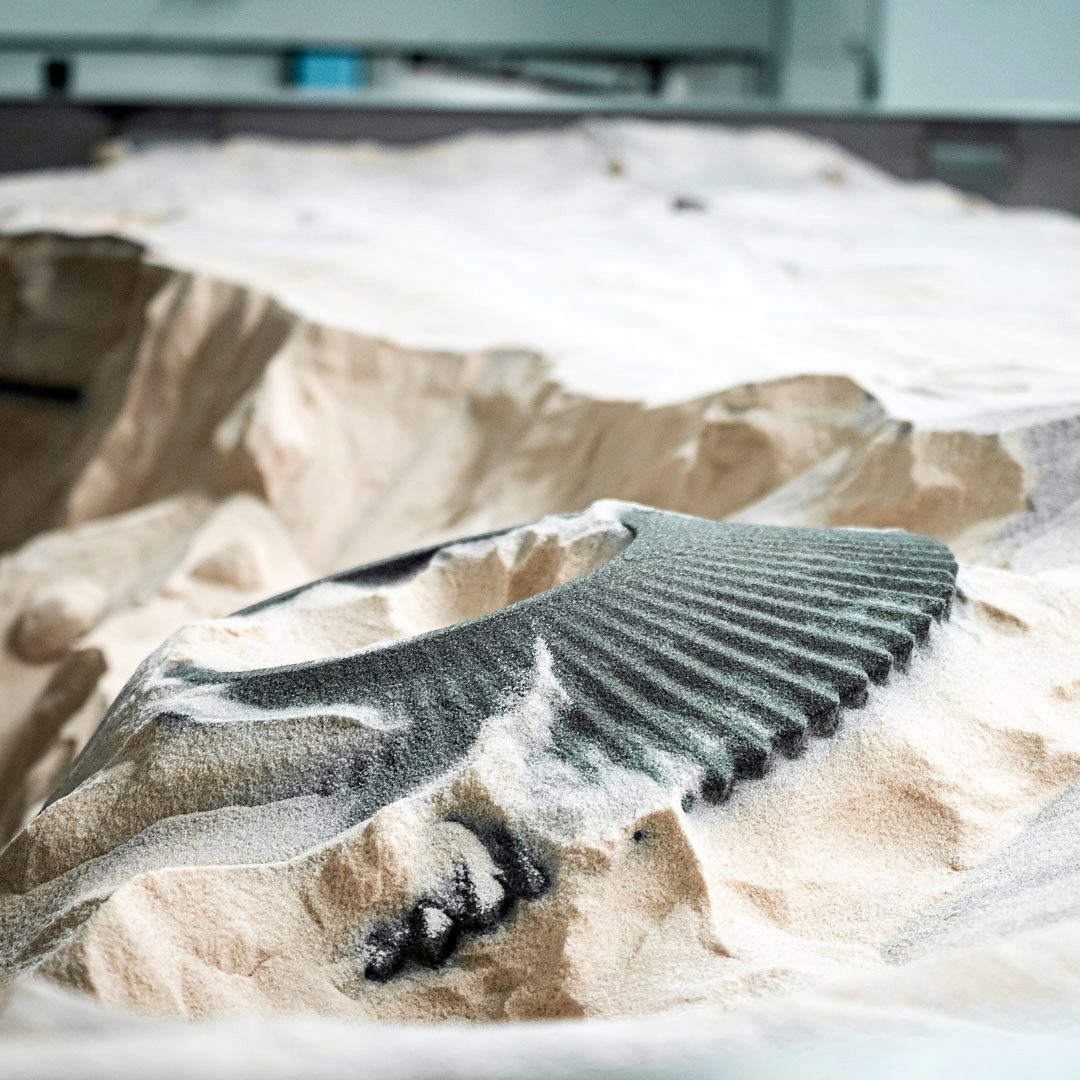
ExOne’s sand 3D printing process. Image courtesy of ExOne
Looking ahead to 2026, Haring-Smith said the company is focusing on three main areas. The first is speed, both in terms of machine performance and how quickly customers can get service and spare parts. The second is local support. The goal, he explained, is to make sure customers can get help in their own region, whether they are in Asia, Europe, or the United States.
The third focus is to continue pushing binder jet technology forward. Both companies have long histories in the space, and the combined R&D teams are expected to play a major role in developing the next generation of the technology. More details about that roadmap, they said, will come in future announcements.
Bader added that the integration work is still underway internally. For now, the focus is on aligning teams and priorities so the company can move forward with a clear strategy. More specifics about the plan, he said, should emerge in the coming weeks.
Where they think binder jet still wins
Bader also pointed to where binder jet is already widely used today, noting that many of its strongest applications are not the high-profile metal stories that often dominate the conversation.
He pointed in particular to binder jet printing for sand molds and cores used in casting. He said the technology has already been widely used in production for many years, especially in the foundry industry, where it is used to make parts in real manufacturing environments rather than just prototypes.
He also noted that new opportunities are emerging beyond traditional automotive applications. Industries such as aerospace, energy, pumps, and defense are increasingly exploring the technology, especially for lightweight parts and efficiency improvements. Even a small improvement in something like a pump, he explained, can lead to significant energy savings over the lifetime of the equipment.
The “preview” they teased but didn’t fully reveal yet
The executives also suggested that more updates are coming very soon. Haring-Smith said the company plans to share additional announcements in the near future as the integration progresses.
For now, the focus is on bringing the two organizations together and stabilizing operations. More details about the company’s structure and technology roadmap are expected in the coming weeks.
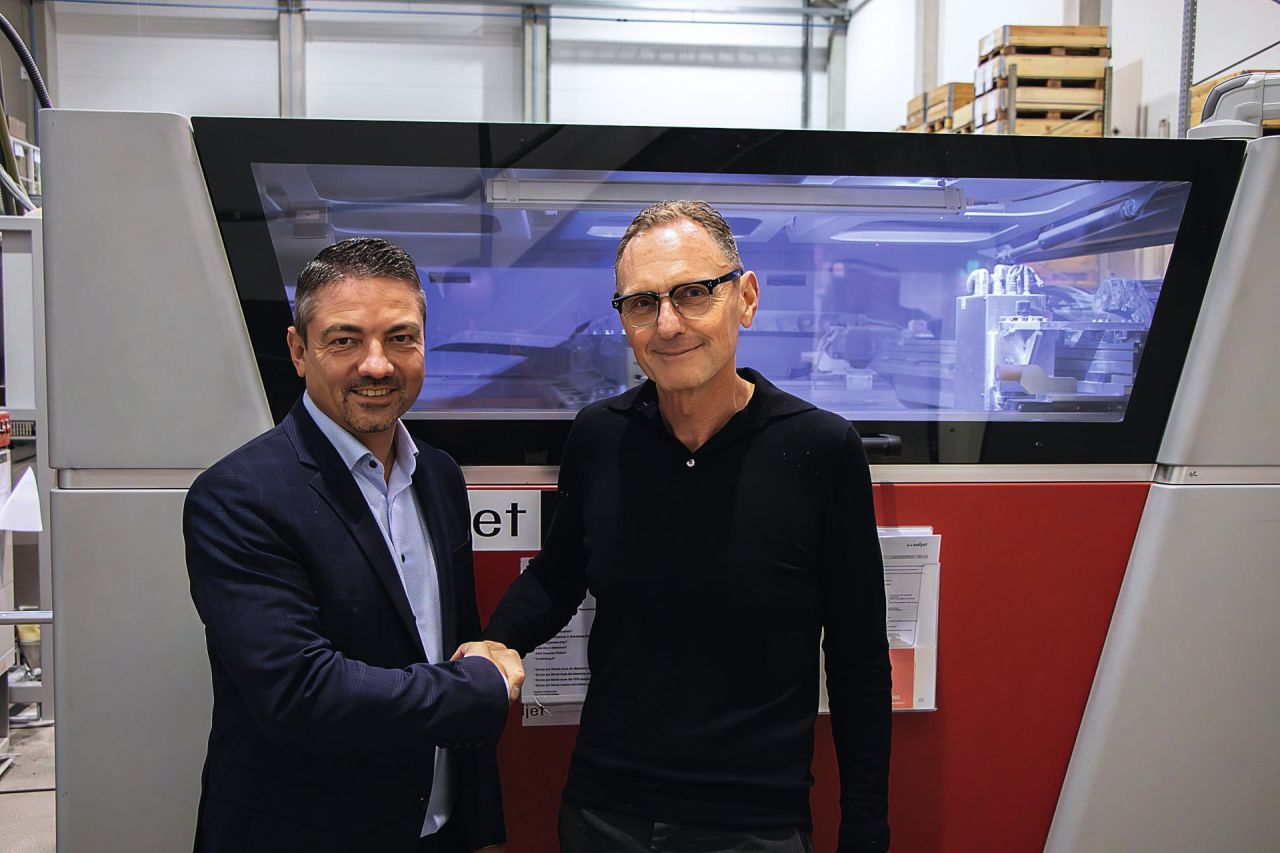
Eric Bader will take on the position of CEO of ExOne Global Holdings and Rudolf Franz will join the supervisory board going forward. Image courtesy of voxeljet via LinkedIn.
For ExOne and voxeljet, the immediate priority is to rebuild confidence with customers and strengthen support for the machines already running in the field.
After a turbulent year across the AM sector, the companies are trying to make customers know that the service teams are in place, the global network is expanding, and the focus is now on moving the technology forward together.
As Bader and Haring-Smith summed it up, the success in 2026 will come down to delivering for customers, which means faster service, faster machines, and stronger value overall.