
EIT Manufacturing ASBL was a public-private partnership between the European Institute of Innovation and Technology (EIT) and a network of industrial and research partners. EIT is a European Union (EU) body, and European citizens can expect it to deliver on its promises. EIT Manufacturing, however, was a separate non-governmental body that helped disburse the EU’s money. By devolving responsibility and power to this supposedly faster and more efficient body, the EU gave up a teeny tiny sliver of its sovereignty to an external organization. We’re seeing this trend replicate itself worldwide. And yes, this may make government bodies more responsive, but it also carries risks.
The EU’s anti-corruption body, OLAF, found irregularities and fraud at EIT Manufacturing on May 25. Subsequent to this, EIT stopped funding EIT Manufacturing, and the firm collapsed. Compared to the rampant and pervasive corruption in countries such as the United States, this is, of course, nothing, and proves that the system works. But at the same time, it suggests that public-private partnerships should be reexamined.
Reportedly, over 200 startups are waiting for funding. This could be very nerve-wracking for them because it’s unclear if the money intended for them is gone or if there is just a delay due to EIT needing a new way to continue paying them. The truth is somewhere in the middle. In this case, some maintain that the entire paper chain needed to get grants is too time-consuming and complex, and the whole system needs an overhaul. There is also some worry about the fact that the first OLAF report stems from 2024; there was a reorganization, then new money was disbursed, only for OLAF to step in again much later.
From LinkedIn and this startup blog, we can learn how one Maltese company, ELM, was affected.
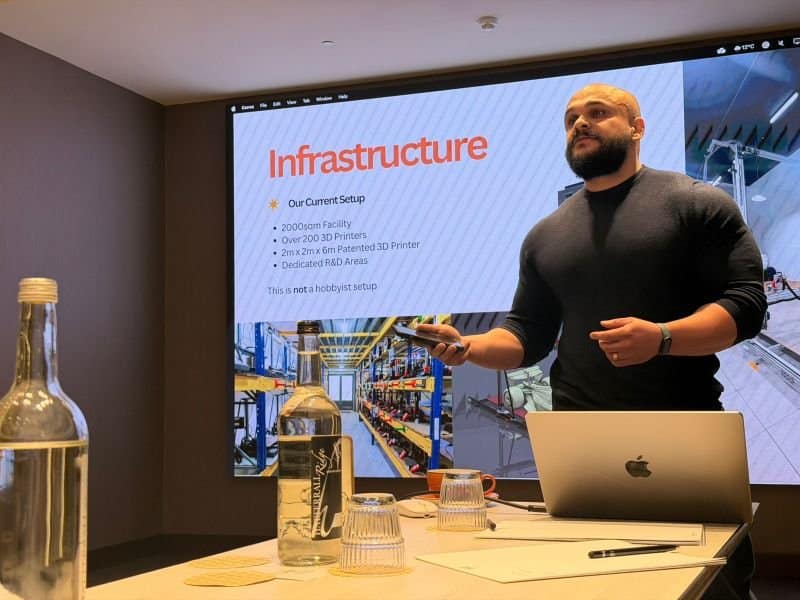
“ELM Fabrication Ltd, founded by engineers David Sciberras and Nicholas Borg Calleja, has developed a 2m x 2m x 6m model capable of 3D printing everything from boats to furniture out of recycled plastic…they secured an initial €217,000 in funding (70 per cent of the cost) from EIT Manufacturing (EITM) to bring the technology to market.”
After green-lighting the project, the company never got the money. Worse still, they continued on the work using their own money and were promised reimbursement, which never materialized. Happily, the bootstrapped founders survived the ordeal,
“However, we kept our operations lean. We didn’t give ourselves a salary or hire loads of people, although unfortunately we did lose people we were going to hire. It’s just good practice not to spend excessively before a product starts generating money.”
It is, however, unclear when, if at all, the firm will receive its €217,000. ELM’s founders were indeed very frugal and careful, and this seems to have paid off for them. Thinking back, a few companies that I’ve advised would have been in serious trouble or gone under should government funding have dried up unexpectedly.
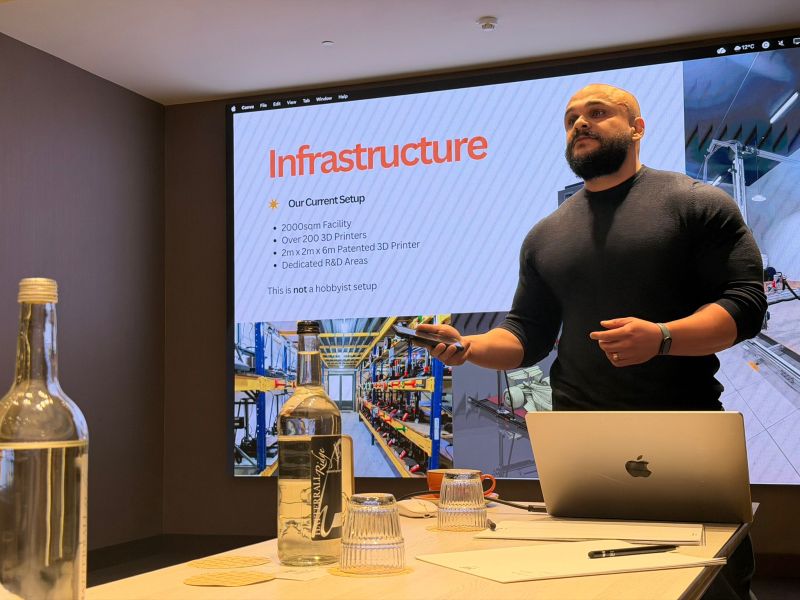
David Sciberras gives an overview of what Invent 3D is up to at a joint chapter BNI Verdala Malta & BNI De Paule – Malta meeting. Image courtesy of David Sciberras via LinkedIn.
On his LinkedIn, ELM Co-Founder David Sciberras explains that,
“We always built to make money as quickly as possible. With ELM, the process was different as we’re building something new…. so we built things much more cautiously. Until the funds were in the account, we worked as if they weren’t there. Even after approval letters, promise of income, etc….until the money hit the account, we didn’t have funding. That helped us build a super lean setup, with zero waste. We built from Xjenza fund to TOSFA fund, putting in our own wages, late nights and expertise to make it happen. When we saw that EIT didn’t even send a signed grant agreement, alarm bells started ringing, so we pumped the breaks even harder on spending. This essentially slowed our path to market, by a year. Now that we opened up to a round of equity investment, we’re in a much happier place with our first investor on-board.”
A few things here really stand out as excellent advice. “Until the funds were in the account, we worked as if they weren’t there,” feels like it should be standard practice anywhere. Promises are just that — promises. Also, I think many people wouldn’t have worried if the grant agreement hadn’t arrived. Many would have continued as normal, expecting some bureaucratic issue to resolve itself. Being as cautious and frugal as the ELM team seems to be is the new way of doing business. Slower, perhaps, but it gives you more control and helps move toward profitability more quickly.
This collapse is significant because worldwide, more and more power is being given to public-private partnerships. Private firms are responsible for billions in government funding. The opportunities for corruption and lack of oversight are significant. We need to be ever-vigilant when applying for grants and, in a more uncertain world, even more frugal and careful.