
I’m a big fan of wire arc additive manufacturing (WAAM), in large part because it’s not that much of a departure from how arc welding already works. It’s a technology that’s disruptive enough to address certain challenges involved in revitalizing the welding industries in nations like the US—above all, the workforce development challenge—without being disruptive to the point that it couldn’t be incorporated into existing manufacturing supply chains.
About a year ago, the UK-based company DEEP Manufacturing, a division of an ocean engineering firm with the same name, launched the HexBot, a six-armed WAAM system for ultra-large-format parts: up to 3.2 meters in height and 6.2 meters in diameter. At the time of launch, the system had already been used for applications including offshore wind platforms, shipbuilding, and subsurface maritime infrastructure for the energy sector.
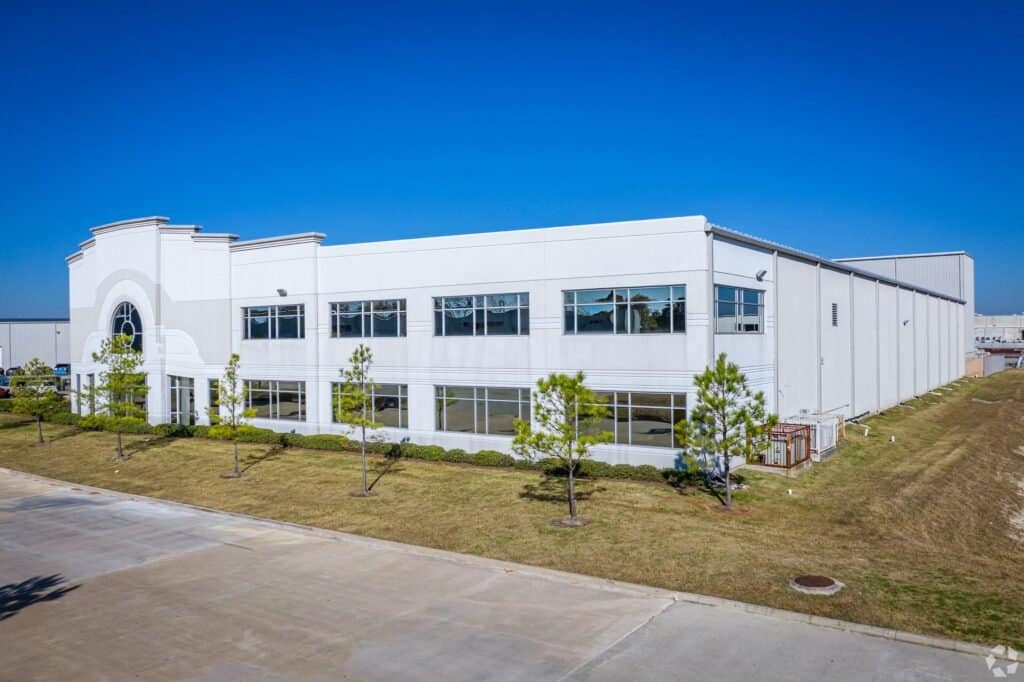
More recently, DEEP announced that it will open a 50,000 square foot production facility in Houston, part of a $10 million investment through the end of 2026 in the company’s US production capacity. The opening of the facility comes at an ideal time for global energy supply chains, which are only just beginning to digest the fallout from the catastrophe that the US and Israel have imposed upon the Gulf region and the world economy as a whole.

As part of the investment, DEEP plans to triple its Houston workforce by the end of the year, from a team of 10 to a team of about 30. DEEP notes that, in February, the company guided US personnel through an accelerated training program led by the UK team, with the Houston facility focused “Inconel 625 deposition trials” happening this month. In April, DEEP is planning for official commissioning of the first US WAAM systems, and DNV Approval of Manufacture audits prior to the May opening.
In a press release about DEEP Manufacturing’s official opening of its Houston production facility, the company’s CEO, Peter Richards, said, “Houston represents a major step in scaling [AM] in the United States. By bringing our WAAM capability closer to customers in energy, defense, and maritime sectors, we can dramatically reduce lead times for large, high-integrity components while strengthening supply-chain resilience for critical industries.”

As I noted last week, whatever you think of the war in Iran—and I find it equal parts disgusting and, sadly, all-too-predictable—it is now a reality that must be factored into the decision making process for anyone planning a business. More so than any other area of the economy, those in the energy sector must adapt immediately, as the order of global fossil fuel flows gets rewritten in real time.
Houston looks set to be perhaps the single most indispensable hub for this repositioning, as oil importers start to prioritize stability of long-term supply over essentially all other considerations. The same goes for US liquefied natural gas (LNG), which is already the leader in global supply, and is all the more important now that Iranian missile strikes have knocked out 17 percent of Qatar’s LNG export capacity—a close second in the international market—for 3-5 years.
Notably, the main current barrier between US supply and global demand in this context isn’t the oil and gas itself, but the pipelines and shipping capacity required to deliver the goods. Oil tanker rates had already been surging leading up to the US’s first airstrikes on Iran, and they’ve gone parabolic in the time since. Now, there is no instant solution to this problem: the US isn’t going to simply flip a switch and start turning out oil tankers.
However, a company like DEEP can certainly help lay the long-term groundwork for cultivating the shipbuilding capacity required to bolster oil & gas tanker MRO operations as traffic through Houston-Galveston intensifies, while simultaneously contributing to the manufacturing capabilities required to build new pipelines and keep existing ones operational. This won’t lower the near-term floor for the price of oil, but, in combination with the implementation of an overall national advanced manufacturing strategy, it could help keep the future price ceiling in check. Additionally, the more agile production capabilities that can be enabled with WAAM would allow DEEP to pivot between production for fossil fuel supply chains, as well as production for equipment needed for transition energy sources.
Images courtesy of DEEP