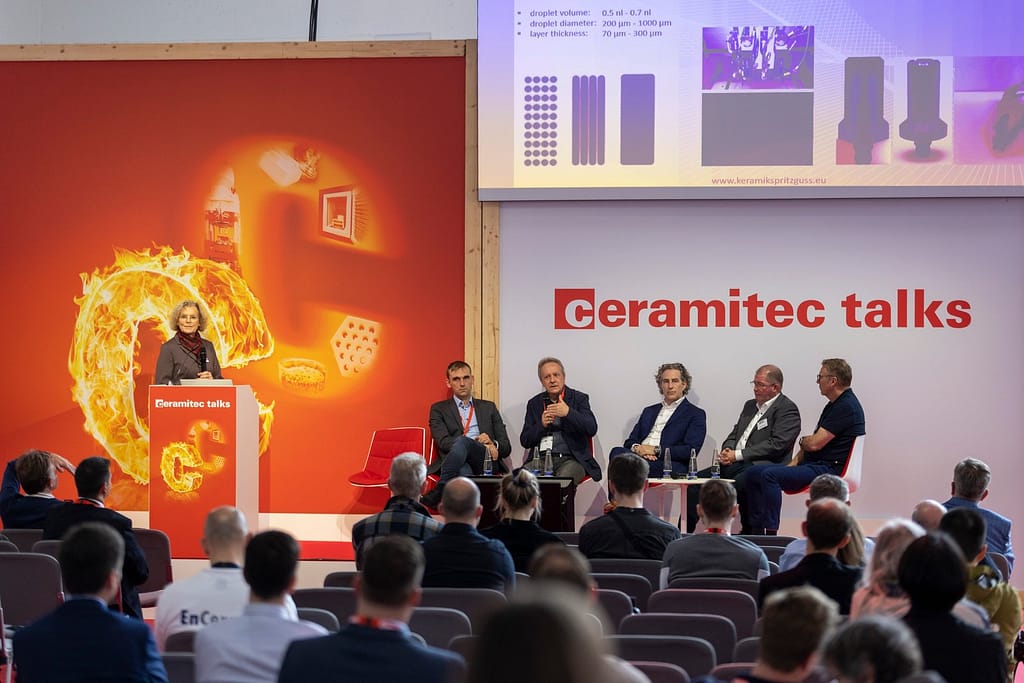
Ceramitec is a key event for the ceramics industry. Held in the lovely city of Munich, it is the leading global event for the ceramics community. With around 13,000 participants and 460 exhibitors its a significant event across three days. This year it is taking place on March 24–26.
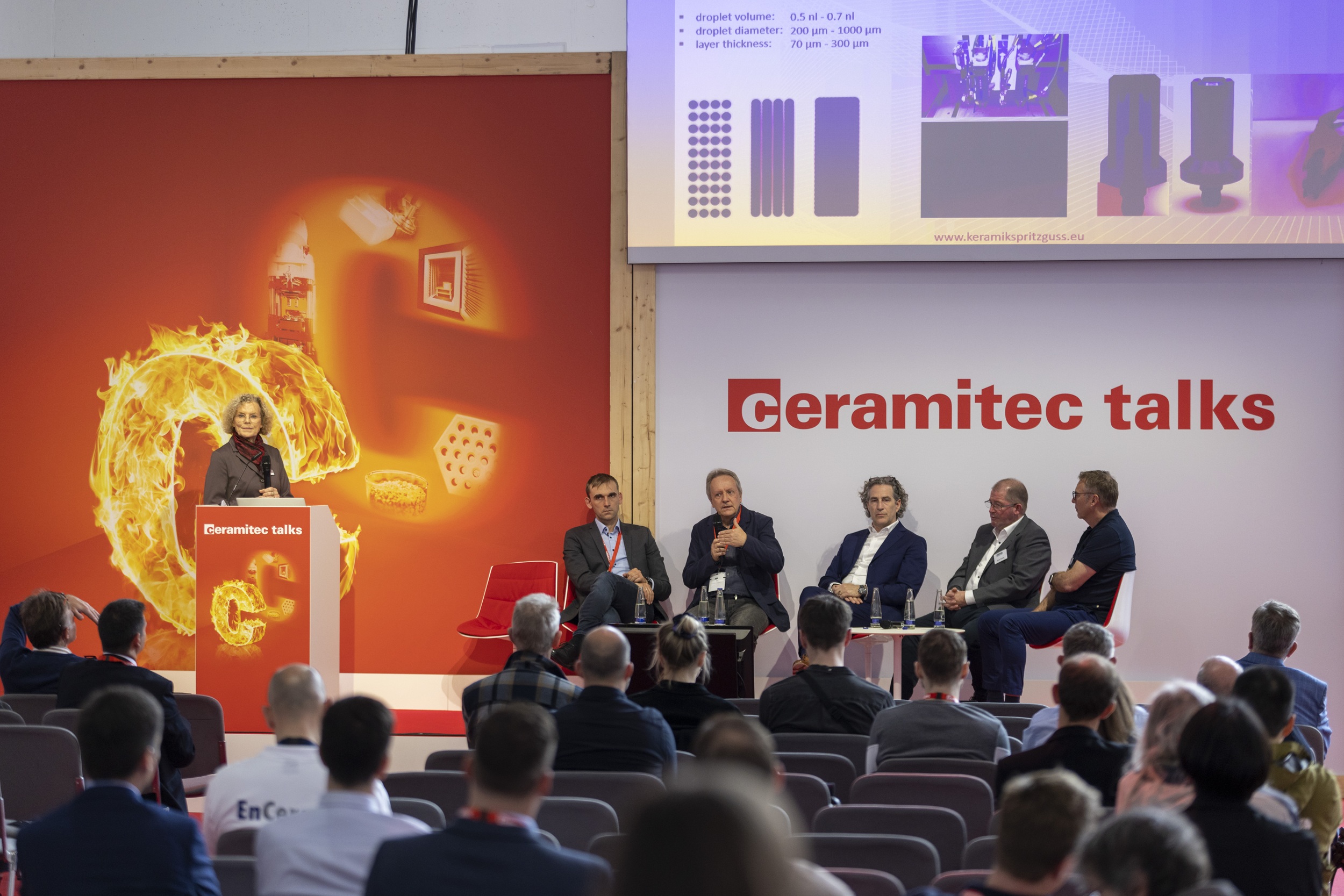
Ceramitec offers a comprehensive range of information and opportunities to exchange on current topics and developments in the industry. Image courtesy of Messe München GmbH.
The technical ceramics industry is both everywhere and nowhere. It’s omnipresent in weird corners and discussed far too little at the same time. We don’t graduate legions of ceramics engineers, and technical ceramics are often a material of last resort. When polymers and metals don’t work, we turn to ceramics for hardness, temperature resistance, and scratch resistance. As well as technical ceramics, Ceramitec brings together people from the fields of powdered metallurgy, fine ceramics, kilns, and raw ceramic materials.
There’s quite a bit of overlap between that industry and our own. These difficult-to-break materials are often difficult to make as well. Using powders, filaments, or doped resins, we can make ceramic components faster and more cheaply than with other processes. For high-value, high-criticality applications, specific geometries, properties, and needs bring together the world of tough ceramic materials and 3D printing.
3D printed ceramics using bound filament 3D printing are growing very quickly, as is vat polymerization. Ceramic 3D printing is expanding across industries. In the medical, watchmaking, and aerospace industries, we now see many people turning to ceramic 3D printing. Nascent areas in dentistry, orthopedics, engines, batteries, and electronics could grow rapidly. Thats why I’m attending Ceramitec this year to check out the latest developments in ceramic 3D printing. I want to see what is happening, what is growing, and what new applications are being unlocked.
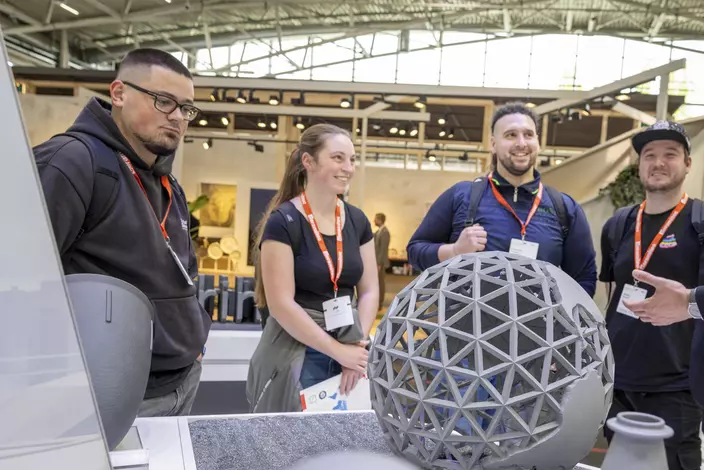
Lithoz booth at Ceramitec. Image courtesy of Lithoz.
There’s quite a bit going on already. Among the participants is 3D Controls, a Korean company that makes DLP ceramic 3D printers. Working with slurry-based SLA, the company can develop custom systems tailored to specific needs. Leading Slurry SLA firm Lithoz is also there, of course. Sinto-owned 3D Ceram is at the event as well, with a range of slurry SLA printers offering build volumes of up to 320 by 320 by 200 mm, while some systems can print multiple materials within each layer. Amarea is also present; the German firm has a multi-material jetting 3D printer that can even perform post-processing with a laser inside the unit. D3 is showing its multi-material jetting process, as is Xjet. CONCR3DE is showcasing its custom binder jetting systems, while Singaporean reseller Creatz3D is also there, alongside Exentis, which uses a screen-printing-based 3D printing process.
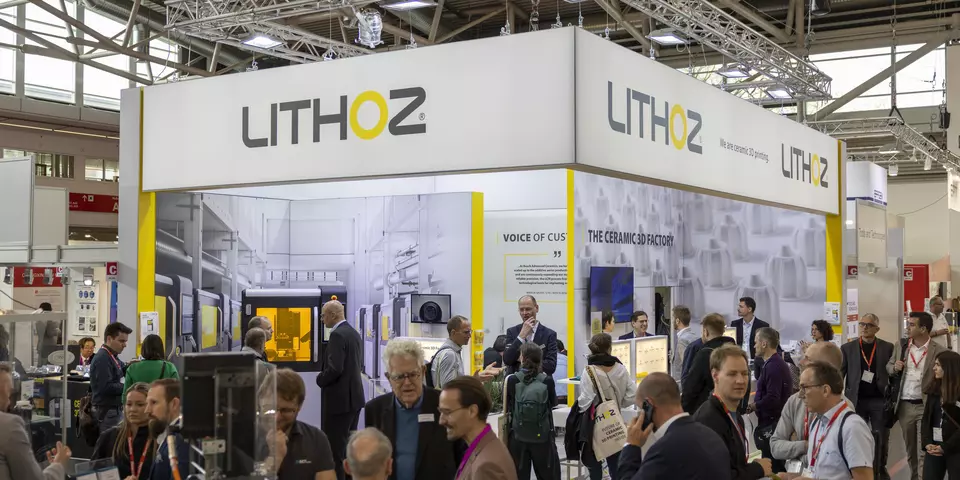
Lithoz booth at Ceramitec. Image courtesy of Lithoz.
Ceramics giant Kyocera is at the event showing its new inkjet head for higher viscosity materials, as well as its ceramics 3D printing services. Lehmhuus 3D Ceramics is also there, showing an extrusion-based ceramics system strongly inspired by Olivier van Herpt. Korean 3D printing industrialization startup MADDE is also presenting its binder jet solutions. Leading firms Schunk Technical Ceramics and Steinbach are there, representing their 3D printing services. French firm Prodways, known for SLS but also active in SLA, is also attending. Materials company Tethon is there as well. WZR is participating with its services, and Chinese firm 10 Dimensions is showcasing its SLA machines.
There are more firms than just these, so I’m super excited to see all these ceramics 3D printing firms in one place. I’m eager to see how ceramics and 3D printing are converging and what new applications will make it into production. Drop me a line if you are attending the event as well!