
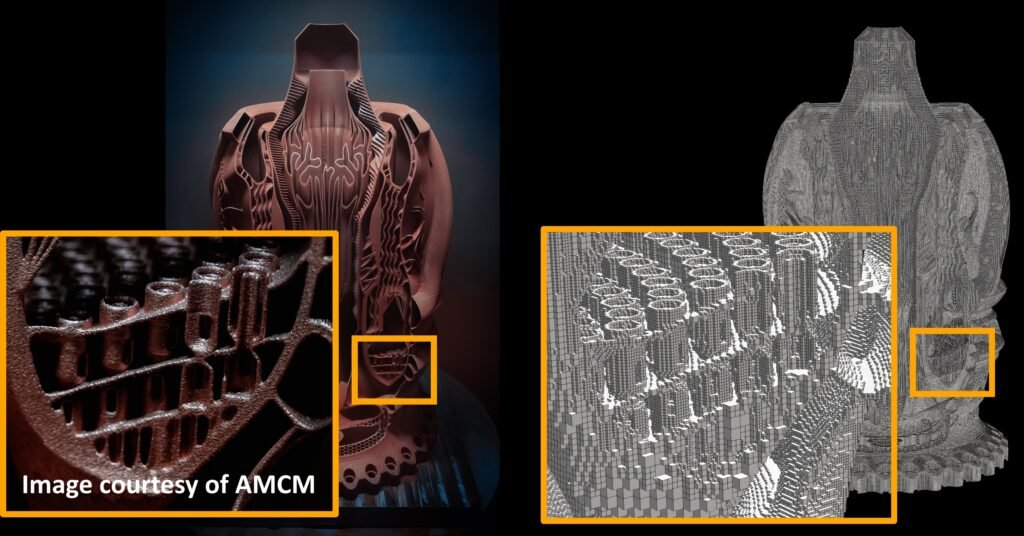
Nikon SLM Solutions is partnering with PanOptimization to integrate PanX into its build preparation software. This is great news for PanOptimization, as it will introduce its technology to a myriad of existing SLM users. For customers, convenient access to an advanced but computationally light FEA solution could help make it easier to optimize more builds and achieve more successful builds. For Nikon SLM Solutions, this means that their software platform just became more powerful.
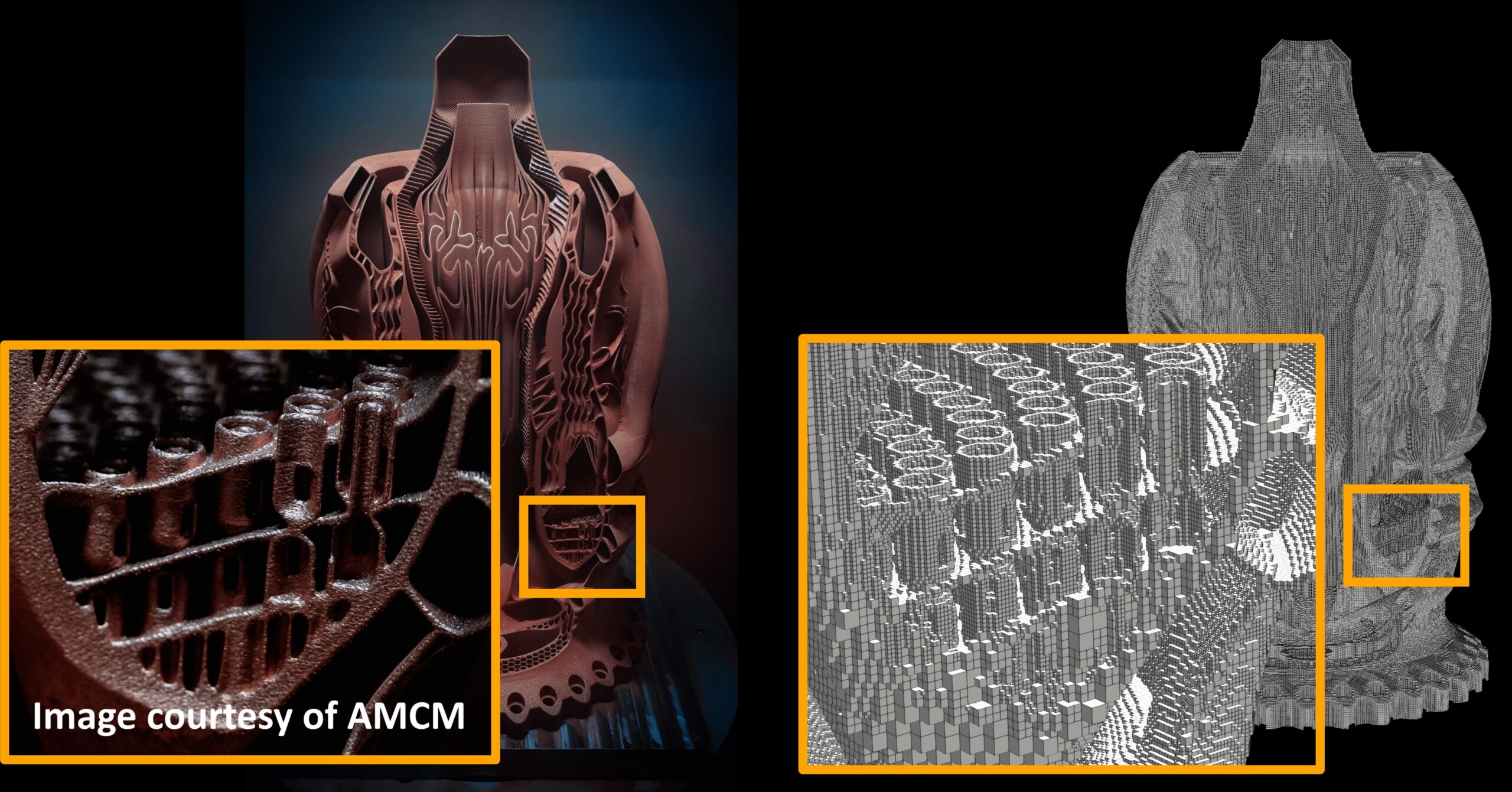
PanX full-part LPBF aerospike simulation at high refinement: 26M elements / 57M nodes. Image courtesy of PanOptimization.
The new PanX lets users load validated, parameter-specific templates tailored to Nikon SLM Solutions systems, materials, and process parameters. These templates give engineers a reliable foundation for analyzing and optimizing the thermal and mechanical behavior of large, complex build jobs before production begins. The company thinks that this will save significant time.
SLM believes that as part complexity, volume, and size increase, thermal history becomes more complex. Failed builds are also much more costly on bigger machines and build volume-filling parts. According to Nikon SLM Solutions, “The collaboration represents an important step toward comprehensive thermal history control. By combining simulation-based build preparation with the advanced thermal management of Nikon SLM Solutions’ NXG XII 600 and MACHX systems, manufacturers can address thermal behavior both before and during the build.”
PanOptimization Chief Engineer, Erik Denlinger, explains that
“Integrating PanX directly into the standard Nikon workflow reduces redundant and error-prone simulation setup, and makes simulation easily accessible to design and manufacturing engineers.”
Executive Vice President, Product Management at Nikon SLM Solutions, Simon Merkt-Schippers stated,
“Our customers print some of the largest and most demanding parts in the industry, and the first build has to count. With our validated templates now built into PanX, engineers can see how a part will behave before it is printed. That saves time, material and machine hours, and gets customers to qualified production parts faster.”
A trend happening over the past five years or so is that people are increasingly looking to software to improve operations and manufacturing in 3D printing. Previously, software was very design-focused or something you did at the beginning of a project. Now people are trying to wring more quality, volume, or excellence from the same build. Quality assurance software, monitoring software, and all kinds of optimization tools are being used.
For OEMs like SLM and EOS, software seemed to be a hindrance. EOS has become more open, which has shocked everyone. And SLM has embraced software in a very proactive way of late. Rather than wanting complete control, these players now see it as a way to enhance customer experience. As software gets more valuable, it may lead to a tussle between OEMs, software firms, and clients over who pays what or who gets what level of control.
For now, we’re in a boom time; however, companies are suddenly being very open to attract and connect the best packages to their user base. Software and external software have become a part of the value of these established players. It used to be that you couldn’t access it as a software firm, and open systems were the only way to run everything you wanted to. But now the walled gardens of the predominant players are open for pollination. In essence, this gives them more control and lets their offering become more attractive.
There will always be people who want deeper integration and more tools, though. So software usage is set to rise. Doing FEA on every build is now doable, and if you make heat exchangers, for example, it may be a very good idea as well. We can only applaud companies that listen to customers and make day-to-day use of their machines easier and more cost-effective.
At Formnext, PanOptimization will be in Hall 11, Booth D49, and Nikon SLM Solutions will be in Hall 12, Booth D119.