
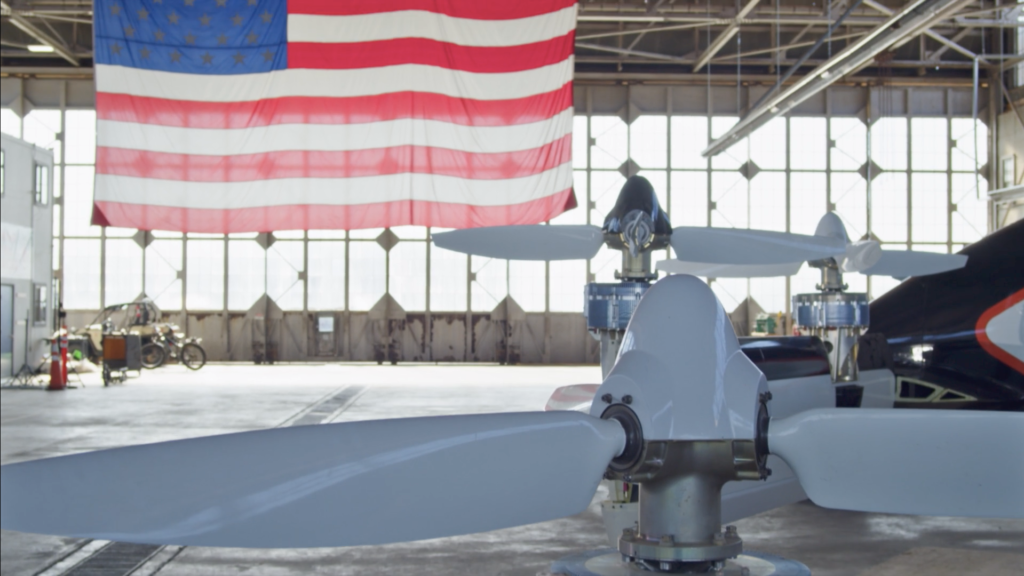
We are in the middle of a major manufacturing shift focused on the production speed and payload capacity of uncrewed aerial systems (UAS), or drones. A recent Manufacturing Dive article puts the 2025 drone market at $15.6 billion, and there are no signs that domestic or international defense initiatives will slow anytime soon. And yes, 3D printing has become a pivotal technology in the manufacturing race for drone dominance.
In my previous article, I explored the government programs and 3D printing OEM’s driving drone production, including EOS, HP, Stratasys, and Impossible Objects. The piece generated a lot of interest and follow-up questions, so I decided to dig deeper, this time looking at the issue from the perspective of drone manufacturers, startups, and other organizations working in the space. That led me to three questions:
- How does rapid drone manufacturing impact American supply chains?
- What resources are required to eliminate the contested supply chain and scale manufacturing operations?
- When does the production of 3D printed components start to transition to injection molding?
To explore these questions, I spoke with people working across the drone manufacturing ecosystem, including Joseph Wyno, President and Executive Director of the UAS Accelerator in Oregon, and Dmitriy Yurchenko, Applications Engineering Manager and New Product Integration Lead at Firestorm Labs.
The American Supply Chain
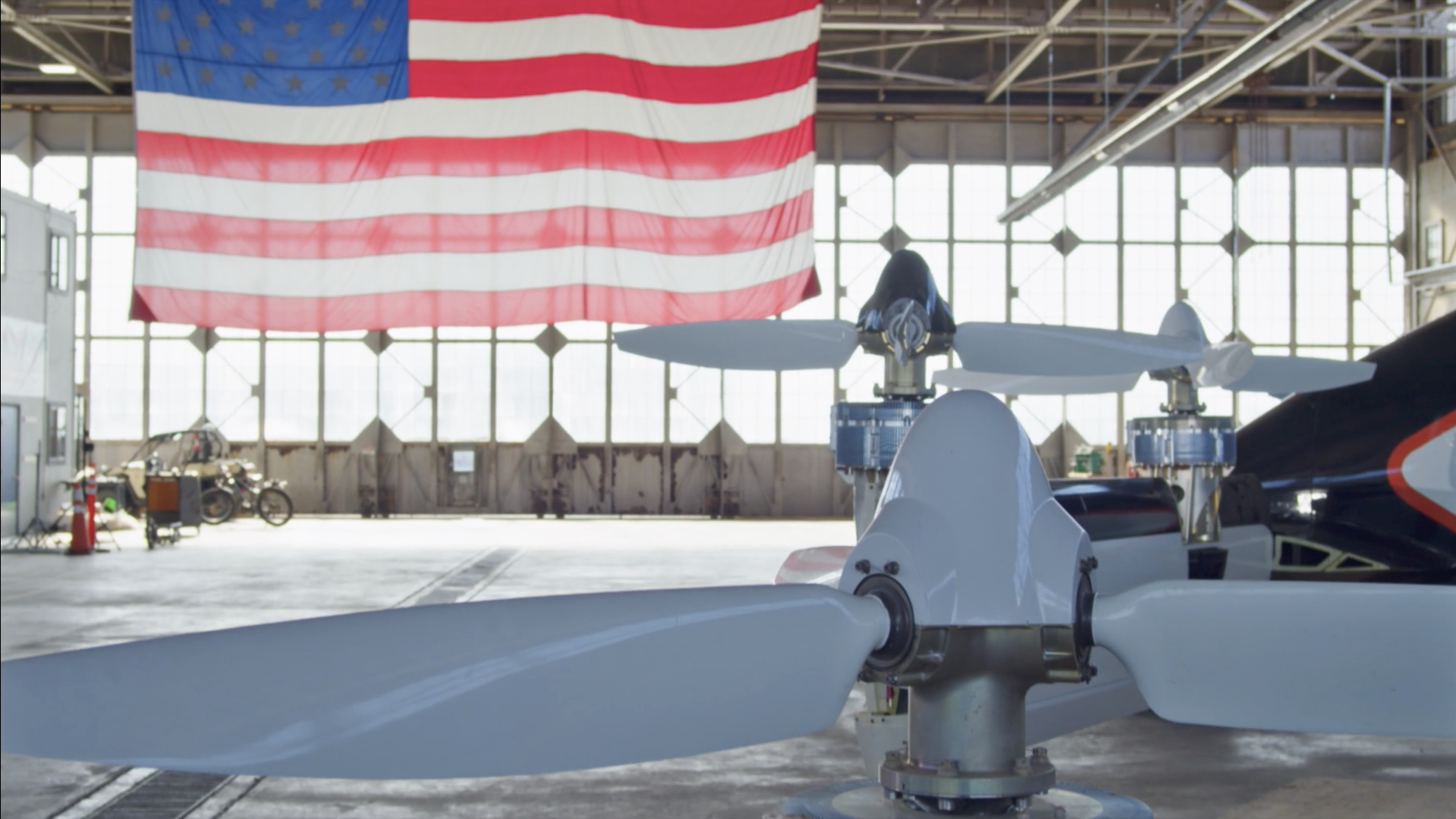
Hangar floor. Image courtesy of Oregon UAS Accelerator.
In the years surrounding World War II, the United States transformed its manufacturing base at extraordinary speed. Between July 1940 and August 1945, American industry produced nearly 300,000 military aircraft.
While the scale, technology, and economic circumstances are fundamentally different, the underlying lessons remain relevant. American industrialism excelled not because we built perfect planes, but because a robust ecosystem matured to meet enormous demand.
“The American drone dominance program created the demand signal, and our manufacturing install base and supply network are responsible for meeting that demand,” says Wyno, a career technologist, entrepreneur, and former startup founder who believes the U.S. manufacturing ecosystem has tremendous depth and capability. “Supporting this transition will require expanding access to agile prototyping and scalable advanced manufacturing tools such as injection molding, CNC machining, and additive manufacturing.”
The Oregon UAS Accelerator bridges the gap for early- and middle-stage founders to take their UAS drone products beyond ideation and commercialize them. One of Wyno’s key objectives is to actively build that manufacturing network by connecting startups with investors, community resources, and workforce development programs that will sustain next-generation autonomous systems companies.
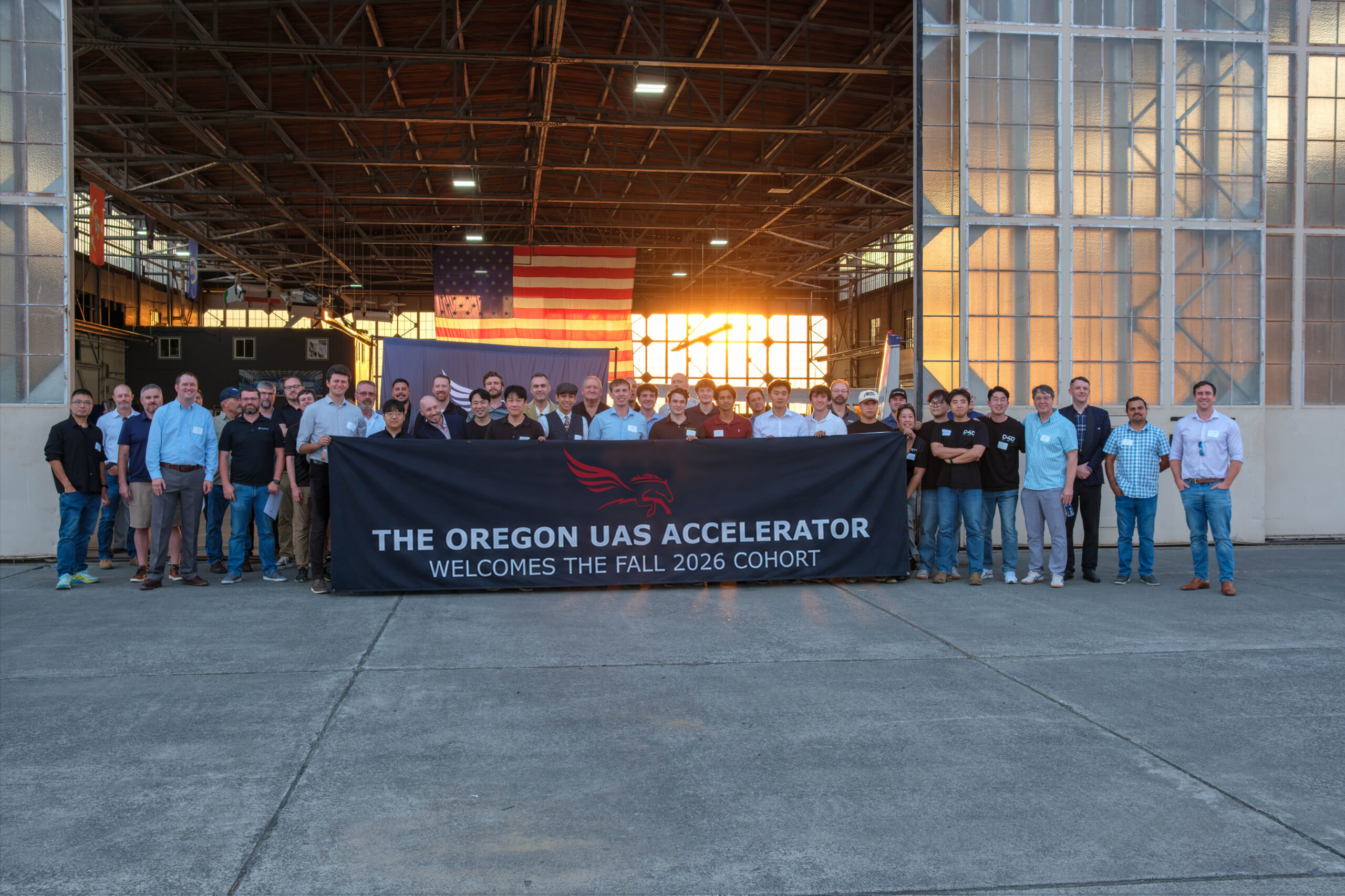
The Manufacturing Race Behind the Drone Revolution. Image courtesy of The Oregon UAS Accelerator.
For the American supply chain, Firestorm takes a more direct approach with its xCell. This containerized expeditionary manufacturing system puts production, repair, and sustainment capability at the point of need. It is a factory that deploys with the unit rather than waiting behind it.
Yurchenko reflects, “xCell supports the manufacturing, repair, and replacement of several of our systems, including Tempest, Niño, and a few others. But what makes xCell so unique and Firestorm so innovative is that it integrates multiple technologies and even other drone products to better support forward operating bases (FOBs) and their respective MRO (maintenance, repair, operations) and service depots. Their issue continues to be the outrageous lead times for components.”
Eliminating the Contested Supply Chain & Scaling Operations
The Drone Dominance Program (DDP) recently announced that it reviewed industry feedback and lessons learned during Gauntlet 1 for a wholly domestic sUAS supply chain. The DDP Supply Chain Framework calls for a resilient and secure domestic industrial base capable of rapidly delivering sUAS at meaningful scale.
It states: “This is not a compliance exercise. China controls critical choke points across the sUAS supply chain and has already begun restricting exports of UAS components. A contested supply chain is not a hypothetical risk – it is a present one.”
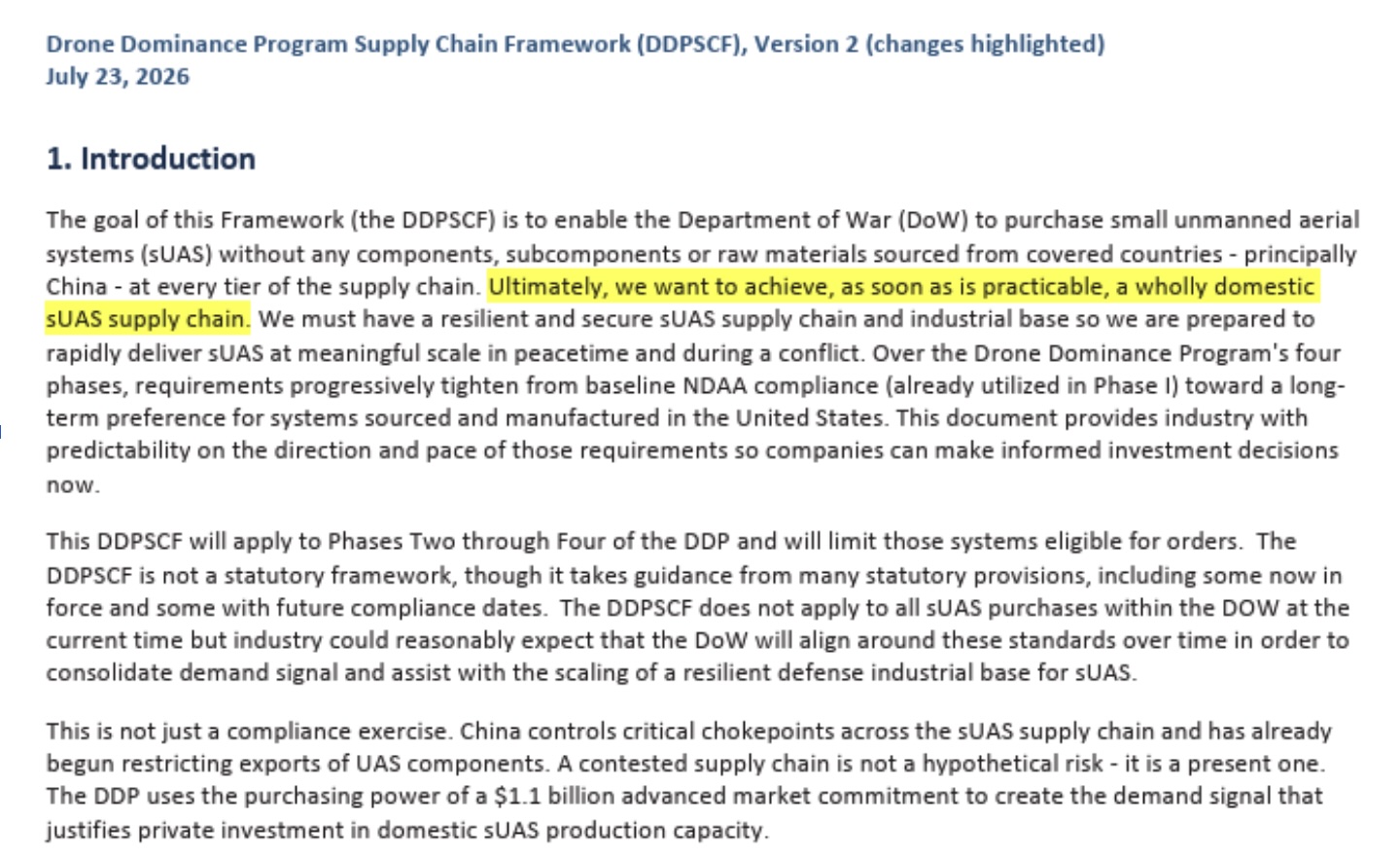
DDP Supply Chain Framework. Image courtesy of DDP.
According to multiple sources, including the Wall Street Journal, China owns roughly 80% of the commercial drone market in the United States and dominates the supply chains for batteries, motors, and cameras. This is a major reason why the U.S. is so focused on reshoring resources and domestic manufacturing.
However, the conversation is no longer about whether 3D printing technologies or materials are qualified for drone manufacturing. It’s about speed and whether we can confidently scale to meet the demand signal the U.S. and other governments are creating across the globe. As the U.S. drone industry moves toward production at scale, a more important question is emerging: who will actually manufacture all these drones?
According to Wyno, the gap isn’t engineering talent or innovation, but building a well-rounded production workforce.
“Most founders that we engage with are aerospace professionals, computer scientists, academics, and mechanical engineers who are excellent. We do not need an engineering pipeline; we need to train the technicians, operators, manufacturers, and quality control teams to apply the speed of additive manufacturing and rapid drone development to their respective processes.”
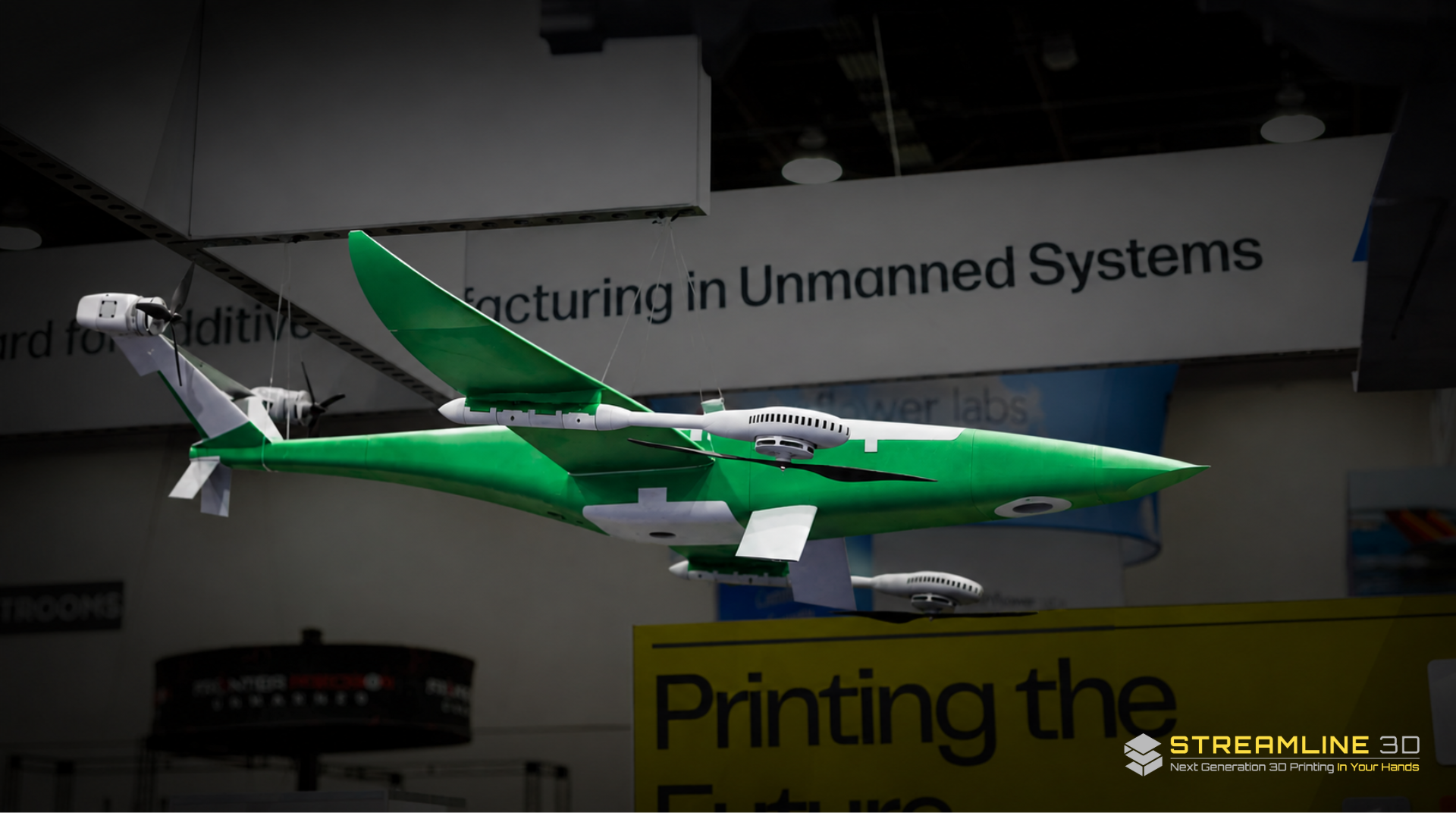
Cody Laursen, Owner of Streamline 3D, is facing a production boom and the need to scale accordingly.
“We have experienced an 80% year-over-year growth pattern and will likely double our Multi-Jet Fusion (MJF) capacity within the next 9 months. The majority of our work is drone-related.”
Streamline 3D has expanded its equipment, finishing capabilities, and workforce to keep pace with drone production.
“We are very excited about our new workflows for powder management and recycling, and have identified several opportunities to improve equipment uptime and begin transitioning to three full-time shifts, instead of two.”
Streamline 3D is addressing a key question in drone manufacturing: 3D printing costs are bearable during iterative and early production phases, but eventually they must compete with the cost benefits of injection molding. So when does that transition happen, and how?
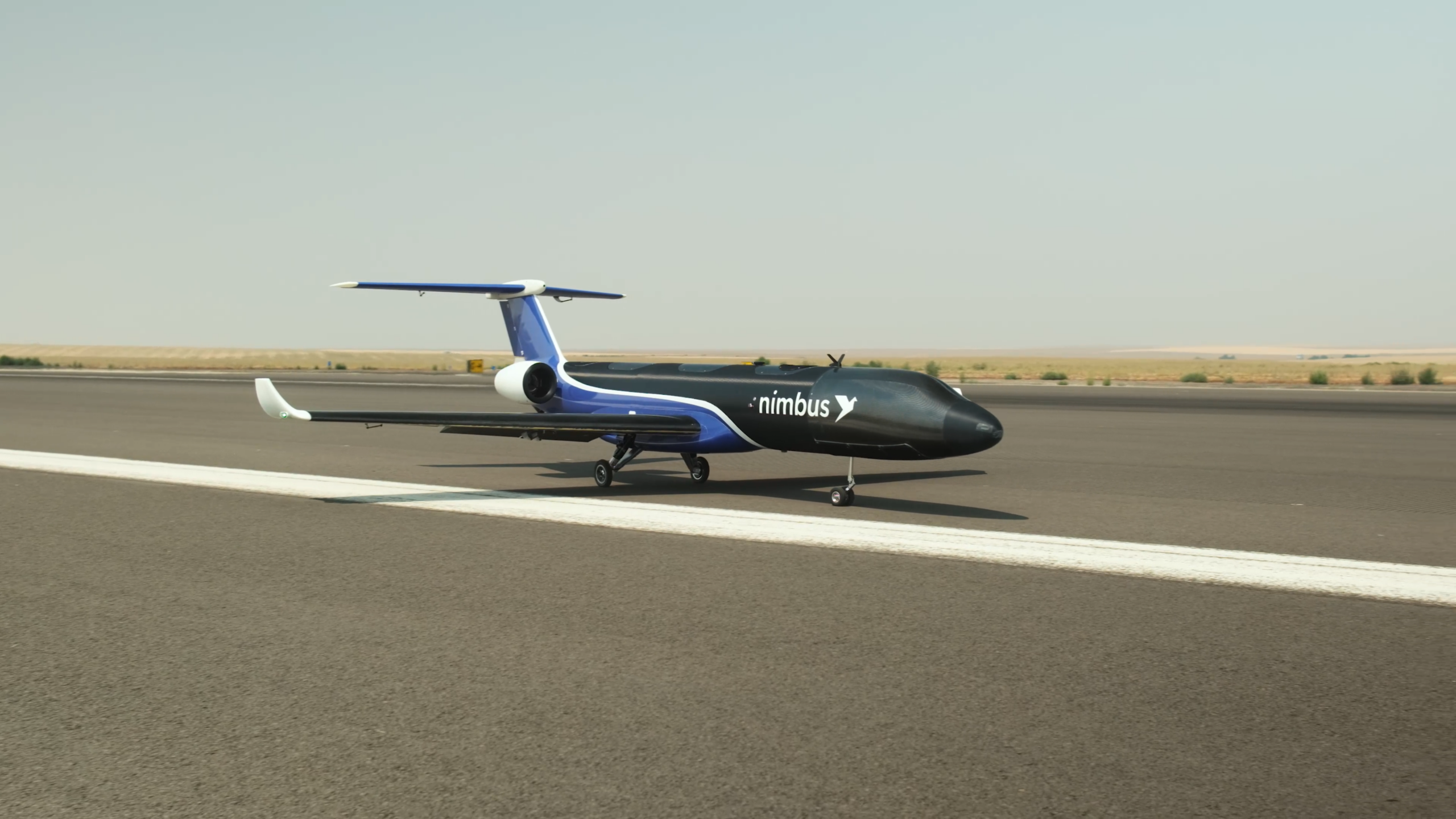
The Intersection Between AM & Injection Molding
Generally speaking, most structural components for Group 1-3 UAVs can be 3D printed. From bracketry to battery housings, frames to fins, and camera mounts, many components are 3D printed and designed to optimize the strengths of specific technologies.
For example, maximizing the build space of powder-bed-based technologies helps manufacturers identify lightweighting and cost-reduction opportunities. Alternatively, composite-based additive manufacturing (CBAM) boasts impressive production speeds, so long as the finishing infrastructure is set up accordingly. With the U.S. Army’s 10,000 drones per month initiative, speed and cost are the highest priorities for 3DP OEMs and contract manufacturers.
Injection molding remains the fastest and most cost-effective option for scaled manufacturing.
“The founders in our program have a high level of AM competency, and that technology will remain critical to the drone missions because the requirements change constantly. However, the winners are the companies that can standardize components, such as tooling or subassemblies, and utilize AM for the mission-specific attachments related to payload, use case, or operating environment.” For Wyno, the long-term model is most likely a hybrid that embraces AM and injection molding.
Industrial polymer AM and injection molding are often considered as either/or.
TJ Root, Sr. Application Engineer at InfinitForm, shares his firsthand experience:
“I navigated the intersection of the two technologies for almost a decade, first as a product designer and later as an applications engineer within AM. Injection molding offers unmatched production rates and part pricing but comes with tooling cost, geometry restrictions, and start-up timelines that AM simply does not have. At InfinitForm, we have been working on a solution to both identify the crossover and achieve the best possible parts.”
Below we see two example parts generated using InfinitForm software, along with sourcing intelligence on those parts. The software helps manufacturers make a more informed choice between production methods. For some, one approach will clearly win; for others, a blended approach might make the most sense.
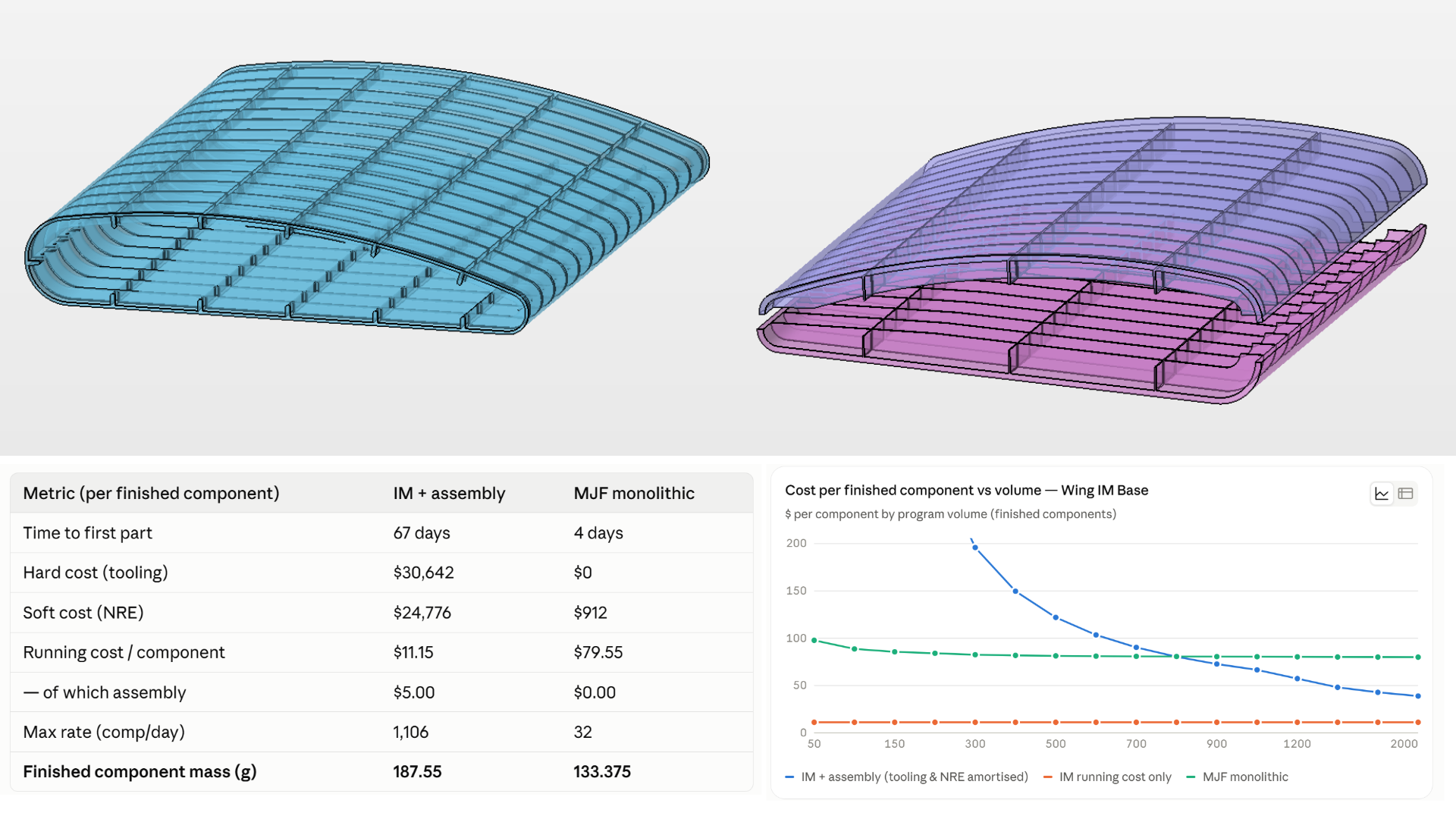
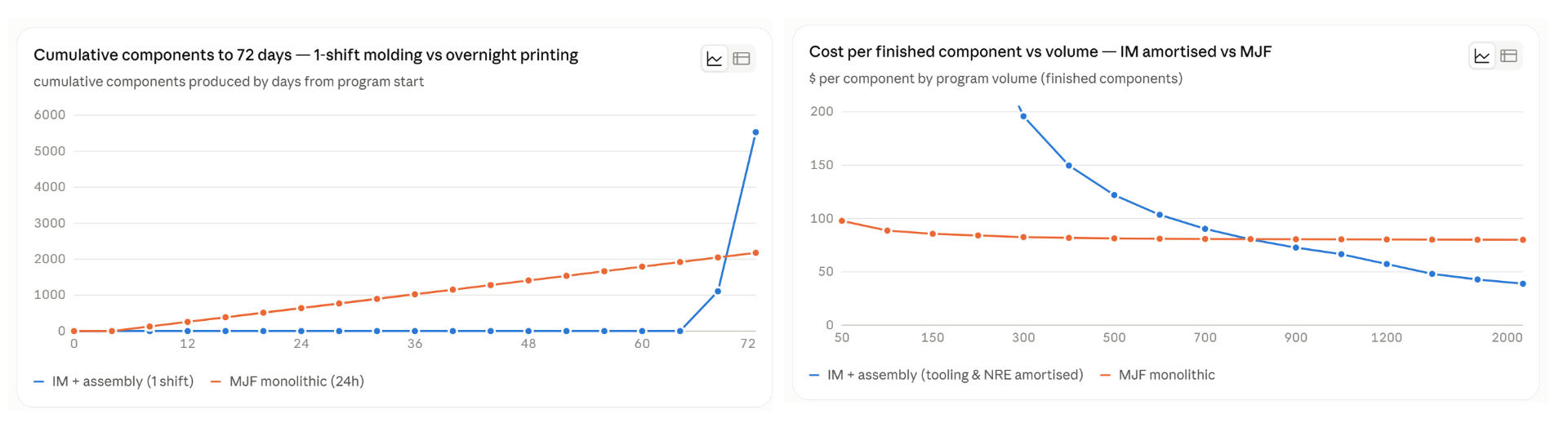
Images courtesy of InfinitForm.
What to Expect?
In my estimation, 3D printing is playing its largest role ever in shaping our new approach to supply chain resiliency and on-demand manufacturing. I’m not one for exaggerated claims, but the momentum behind domestic drone production is difficult to ignore.
The winners will not necessarily be the companies with the fastest printer, the largest factory, or the most advanced aircraft. They will be the organizations that can connect these capabilities into a responsive manufacturing ecosystem, one that combines additive manufacturing, injection molding, machining, automation, skilled labor, and distributed production to deliver the right part, at the right cost, exactly when and where it is needed.
The drone revolution is ultimately becoming a manufacturing revolution. As governments increase demand, supply chains become increasingly contested, and drone designs continue to evolve, the ability to manufacture quickly and adapt just as quickly will become a strategic advantage. Additive manufacturing has already proven that it can accelerate development and bridge the gap to production; now the opportunity is to integrate it with the broader manufacturing infrastructure needed to scale. The technology is here. The demand is here. Now it’s time to build.
About the Author:
Ryan Hayford, Principal at Hayford Consulting, is an additive manufacturing expert and consultant who specializes in marketing, business development, and commercialization. He is a recognized author, presenter, moderator, and outspoken leader who combines intelligence, inquisitiveness, and market data to stay at the top of the 3D printing industry. Learn more or connect with him on LinkedIn.