
3D printers are raising serious money again. On Kickstarter, that is.
Over the last few months, a new group of 3D printer campaigns has attracted millions of dollars and thousands of backers. But many of these campaigns go beyond the typical desktop 3D printer. Many of the printers getting funded are bringing technologies that have traditionally been more expensive or specialized, like full-color printing, continuous carbon fiber, multiple independent toolheads, SLS, and even metal LPBF, into smaller and, in some cases, much cheaper systems.
One of the biggest campaigns came from HeyGears, whose G1 Series raised over $17.8 million from more than 4,000 backers. FibreSeek raised almost $4.7 million from 1,539 backers for the FibreSeeker 3. Sovol pulled in roughly $3.2 million from 2,063 backers for its M1D. LightMake‘s L4 campaign is still underway and has already crossed $3.1 million. Together, those four campaigns have attracted nearly $29 million in just the past few months.
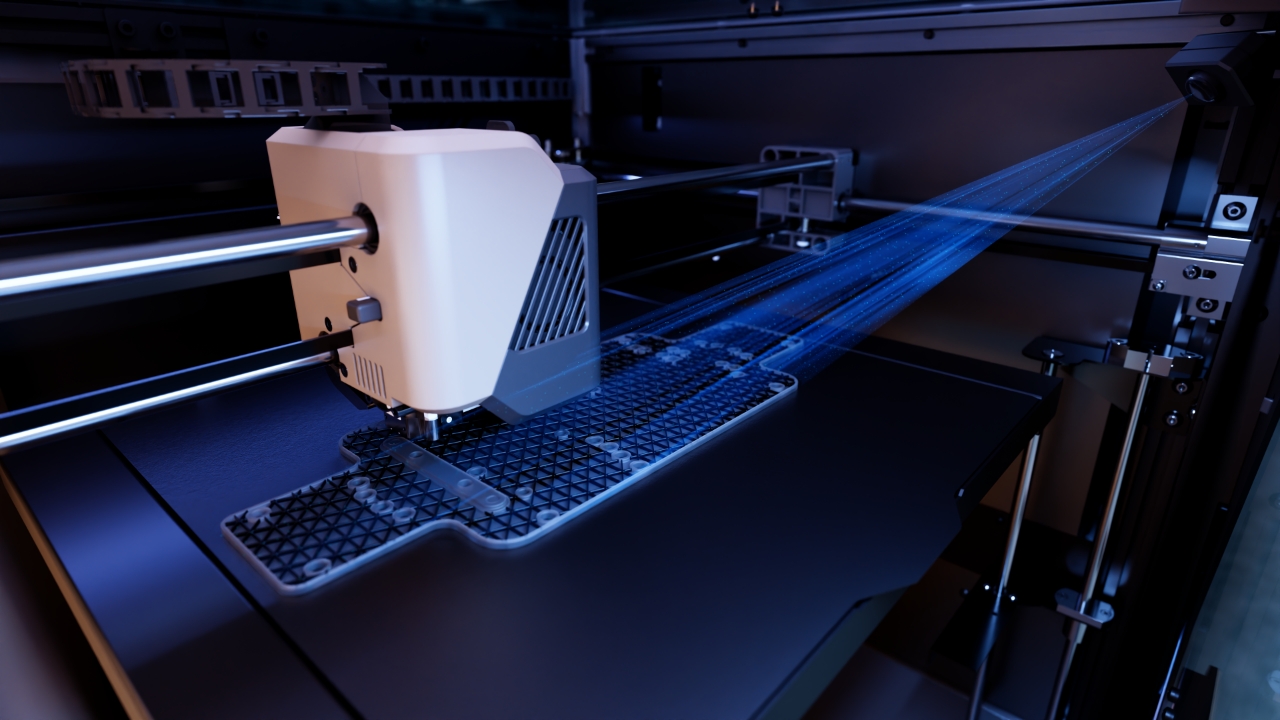
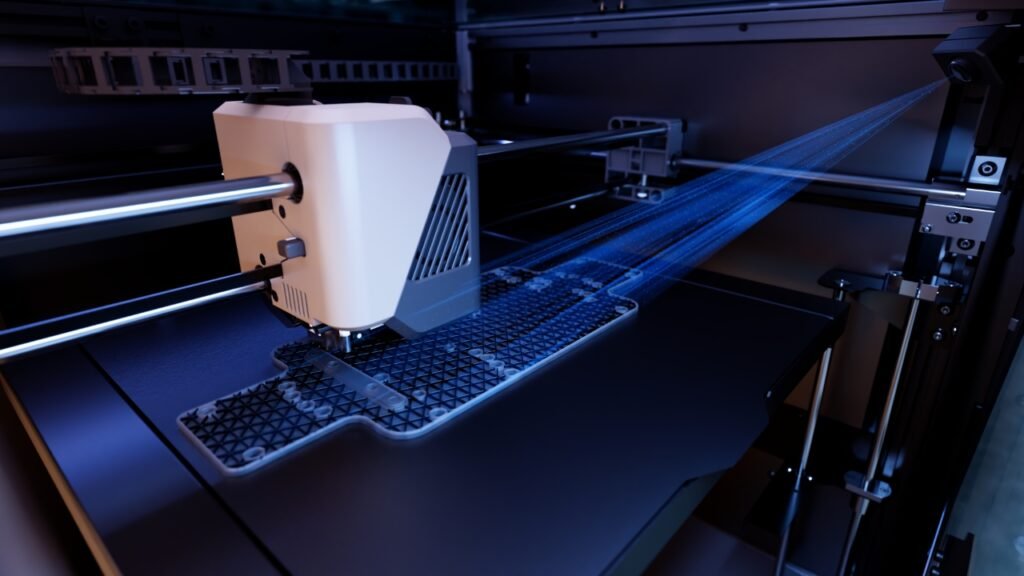
FibreSeeker 3. Image courtesy of FibreSeek.
And there are more coming. Several new 3D printers are already lined up for upcoming Kickstarter campaigns, including systems built around four independent toolheads, five-axis printing, automated resin printing, and even a new approach to stereolithography.
So this isn’t just about a few campaigns that happened to raise a lot of money. Kickstarter is becoming an interesting place to watch where the next wave of 3D printing technologies is being tested, and how much people are actually willing to pay for them.
$17 Million for Full Color
The standout is HeyGears. The Chinese 3D printing company took its G1 Series to Kickstarter this summer with a pitch built around desktop full-color 3D and UV printing. The campaign successfully funded on September 11 with over $17.8 million pledged against a $100,000 goal. That number keeps growing, as HeyGears is still accepting late pledges for available rewards.
Those are big numbers for any crowdfunding campaign, but the hardware price makes them more interesting. These weren’t low-cost machines, either. Kickstarter pricing for the G1 Series started at $1,999, while the G1X Full-3D package started at $3,599. And more than half of the campaign’s backers came from the United States.
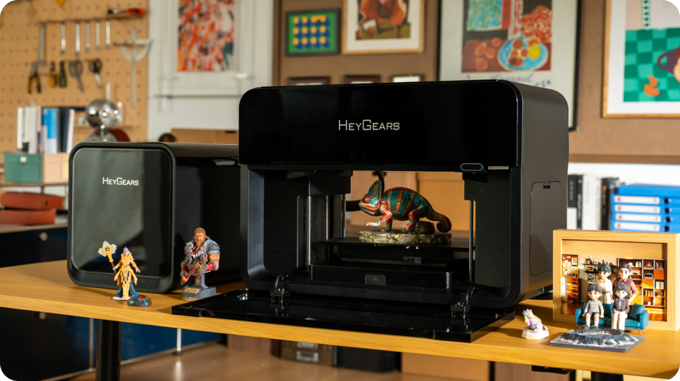
HeyGears G1X. Image courtesy of HeyGears.
HeyGears is an established 3D printing company, not a startup launching its first machine. The company already sells professional resin 3D printers, particularly for dental applications. With the G1 Series, it used Kickstarter to introduce a different kind of product to a broader market. And there was clearly demand.
Multi-Tool Printing Gains Ground
Some of the strongest Kickstarter activity is also happening around multi-tool printing. Sovol’s M1D campaign closed in August with roughly $3.2 million pledged.
The M1D uses two independent extruders and interchangeable toolheads. One stays in place, while the second can switch between six additional toolheads. This allows for multi-color and multi-material printing while reducing the filament waste that often comes with changing colors or materials.
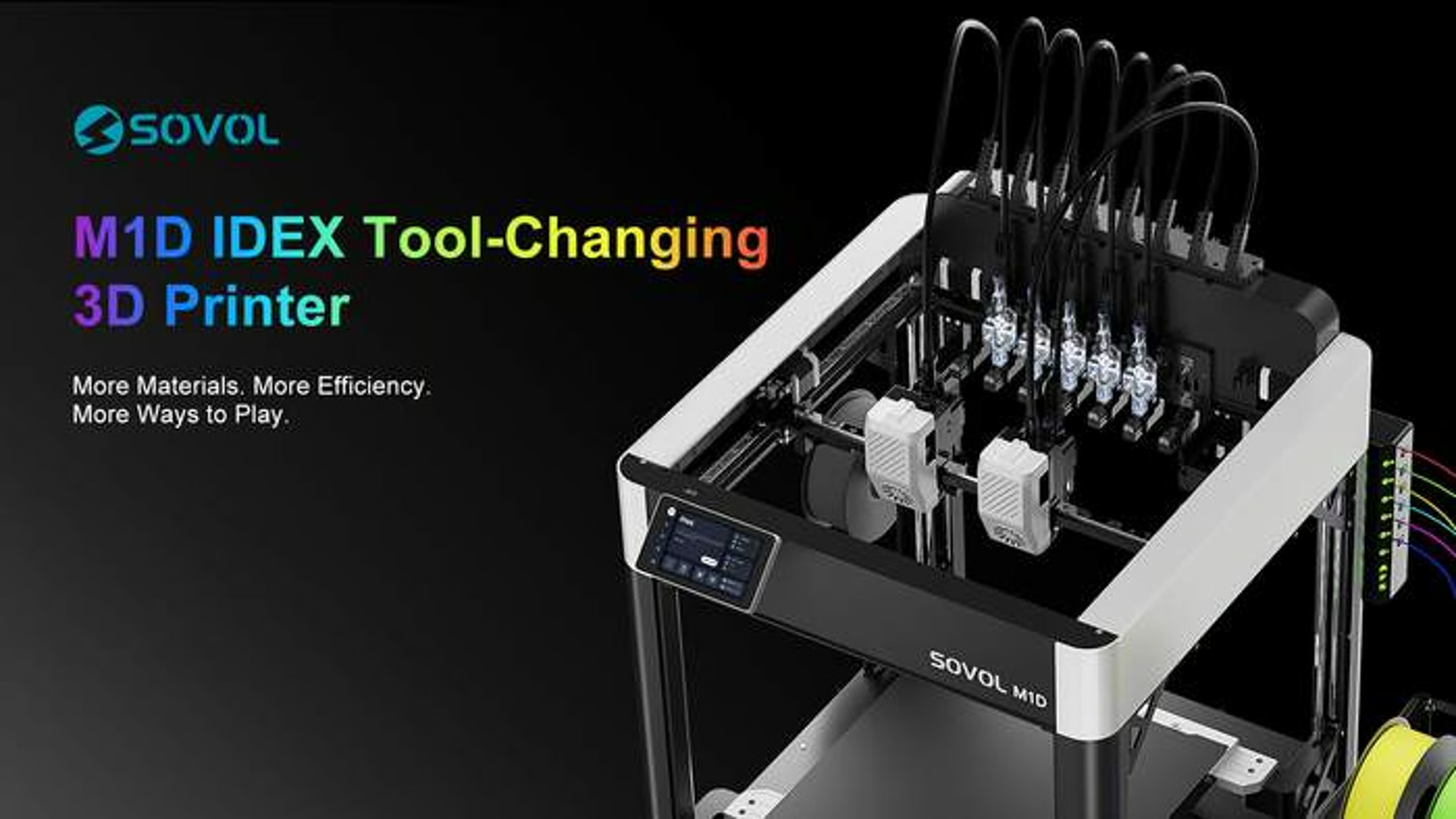
Sovol M1D. Image courtesy of Sovol.
LightMake is pushing the idea even further. Its L4 uses four independent printheads driven by linear motors. The heads can handle multi-color and multi-material printing, but LightMake is also pitching the system for production: four identical parts can be printed at the same time.
As of early October, the campaign had raised more than $3 million from roughly 1,700 backers. The campaign is scheduled to run through October 15.

LightMake’s L4. Image courtesy of LIghtMake.
Together, the two campaigns have attracted more than 3,700 backers and over $6 million. And there is another one coming. Co Print is preparing to launch the Quadro, another four-independent-toolhead printer, on Kickstarter in October. The company says more than 44,000 people have joined its mailing list ahead of the campaign.
Continuous Fiber Comes Down to the Desktop
Then there is FibreSeeker 3. The system embeds continuous carbon fiber into thermoplastic parts and is being positioned as a desktop route to stronger functional components. Its Kickstarter campaign ended with $4.7 million pledged against a $50,000 goal.
FibreSeek has since moved beyond Kickstarter and opened a limited global presale, suggesting the campaign served its purpose: to prove enough demand to move toward broader commercialization.
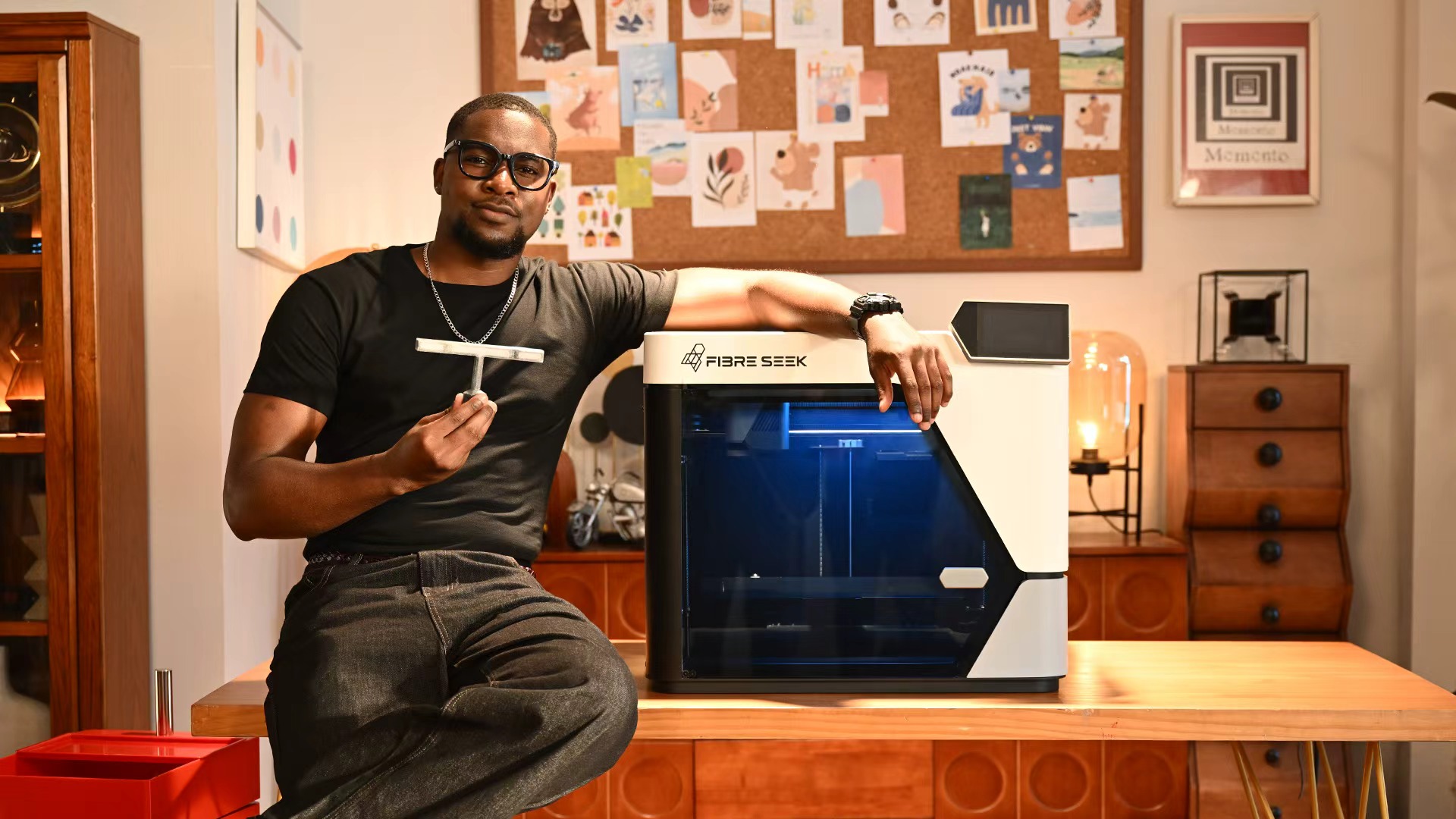
FibreSeeker 3. Image courtesy of FibreSeek.
Continuous-fiber 3D printing isn’t new. What’s changing is that companies are trying to bring the technology to smaller, more accessible desktop systems. FibreSeeker’s Kickstarter success suggests there is real interest in making continuous-fiber printing available to a wider group of users.
The Next Wave Is Already Lining Up
But the nearly $29 million already pledged may only be the beginning. Some of the printers now heading to Kickstarter are pushing into even more specialized territory.
SnowX is preparing to bring the SnowPod to Kickstarter, a compact metal 3D printer that uses SLM/LPBF technology. Designed initially for 316L stainless steel, the machine has an 80 x 80 x 100 mm build volume and a 40-micron laser spot. SnowX is pitching the system around simpler metal printing, with features including safer powder handling, reusable powder, and snap-off supports. The campaign’s pre-launch page is already live and will launch sometime in the last quarter of the year.
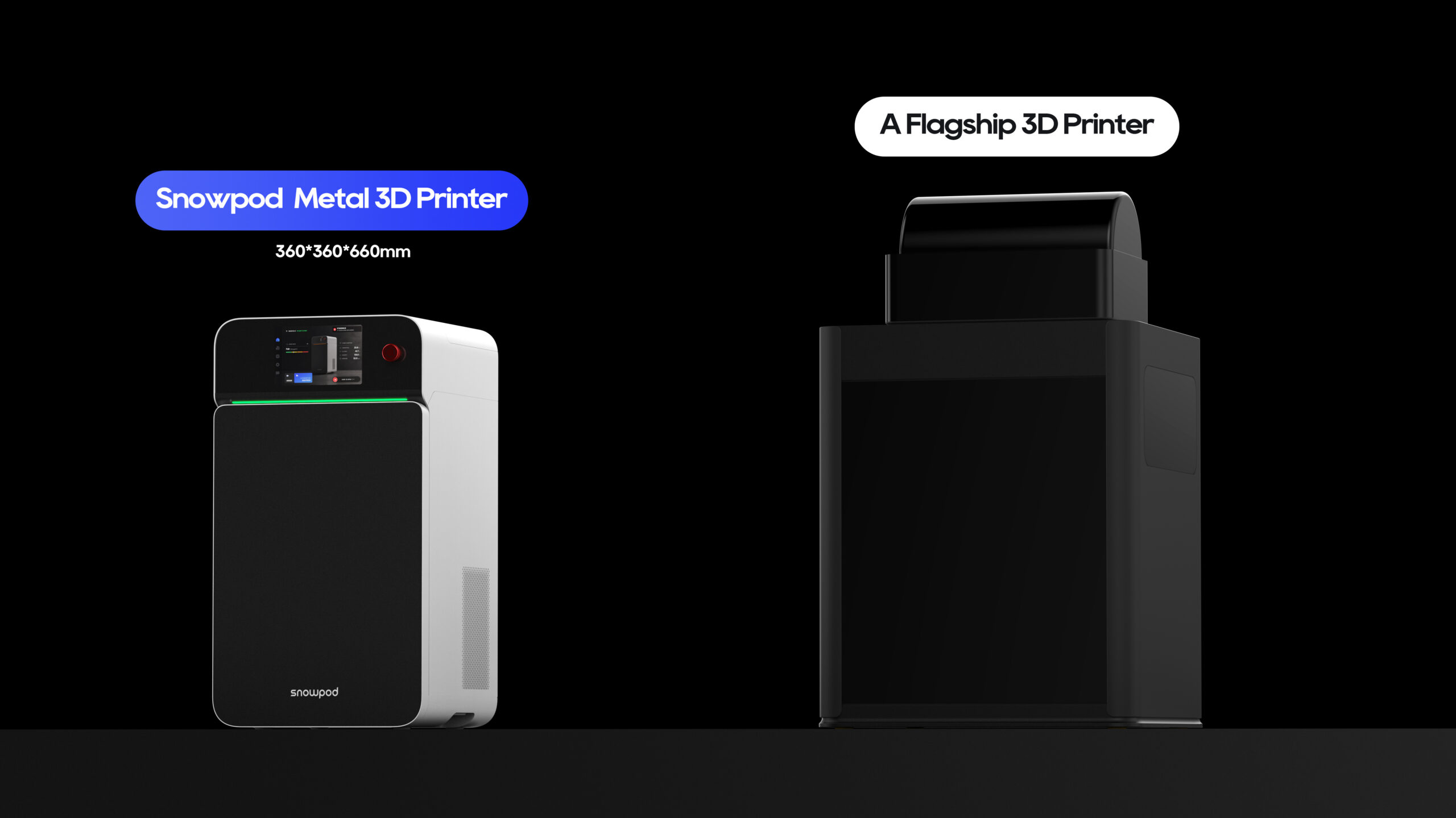
Image courtesy of SnowX.
Several other 3D printers are also being prepared for Kickstarter. We already discussed Co Print’s Quadro, while UniFormation is preparing the S10, an automated resin 3D printer. InfiMech is also preparing its multi-toolhead MX Series, and TOP.E has a Kickstarter page up for the R1, a five-axis 3D printer that promises fewer supports, smoother surfaces and an AI-native creation tool.
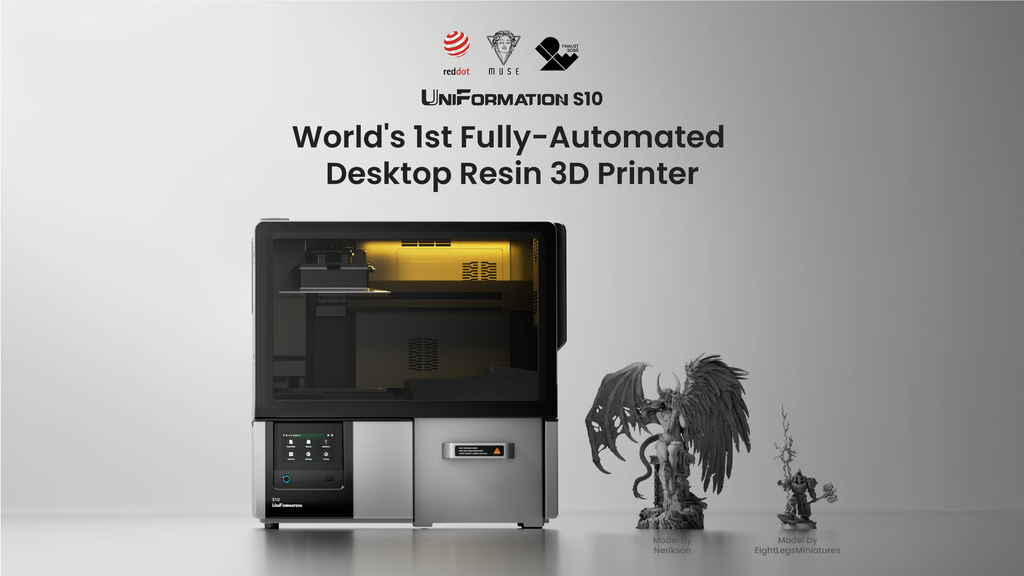
UniFormation S10. Image courtesy of UniFormation.
Then there is Lynxel. The startup, which says it has already raised about $10 million in angel funding, is preparing a Kickstarter campaign for its first printers based on a new resin process it calls Layered Membrane Stereolithography (LMS). The company has also attracted backing from Chinese investment firms including Hillhouse Capital and, more recently, Jing Shui Lake Venture Capital.
The company plans to introduce the LynBeam LB1 for engineering applications and the LynChrom LC1, which combines LMS with inkjet technology to add color during printing.
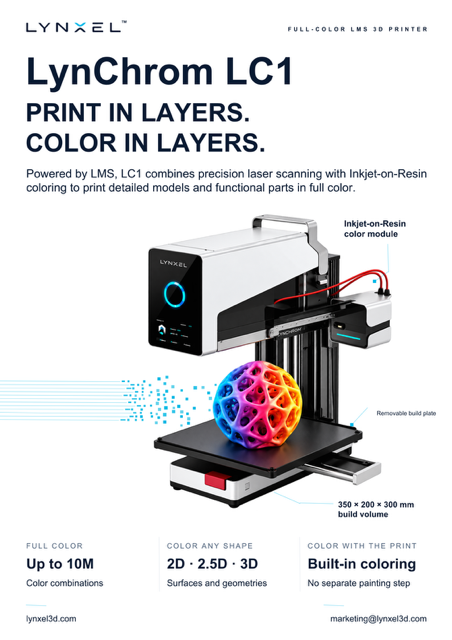
Lyn Chrome LC1. Image courtesy of Lynxel.
What the Crowdfunding Numbers Tell Us
Kickstarter has a long history with desktop 3D printing. During the industry’s first desktop boom, the platform was filled with companies promising cheaper and easier machines. Some became successful businesses. Others struggled to deliver.
That history is worth remembering. Raising millions of dollars shows demand for an idea, but it doesn’t guarantee a company can manufacture machines at scale, meet specifications, or deliver on time. That matters even more as the technology becomes more complex. Still, the latest campaigns show where demand is heading. Backers are putting millions into full-color printing, independent toolheads, continuous fiber, and other advanced technologies. And the next group of Kickstarter campaigns is testing that interest even further, with metal LPBF, five-axis printers, and automated resin systems.
The next phase of desktop 3D printing may be less about making existing machines faster or cheaper and more about bringing advanced capabilities to a wider market. Right now, Kickstarter is one place where that idea is being tested.