
The fastest 3D printing supplier in your shortlist may no longer be the one closest to your office.
That sounds unlikely to many engineers. For years, overseas 3D printing carried one clear reputation: useful for saving money, risky for urgent work. If a prototype needed to move quickly from CAD file to test bench, most teams defaulted to a domestic 3D printing service and accepted the higher quote as the cost of speed.
That decision made sense when cross-border orders moved through slow email quotes, batch production queues, uncertain freight schedules, and limited order visibility. A part that looked affordable on paper could lose its value if it arrived after the design review, the test cycle, or the next product decision.
The market has changed.
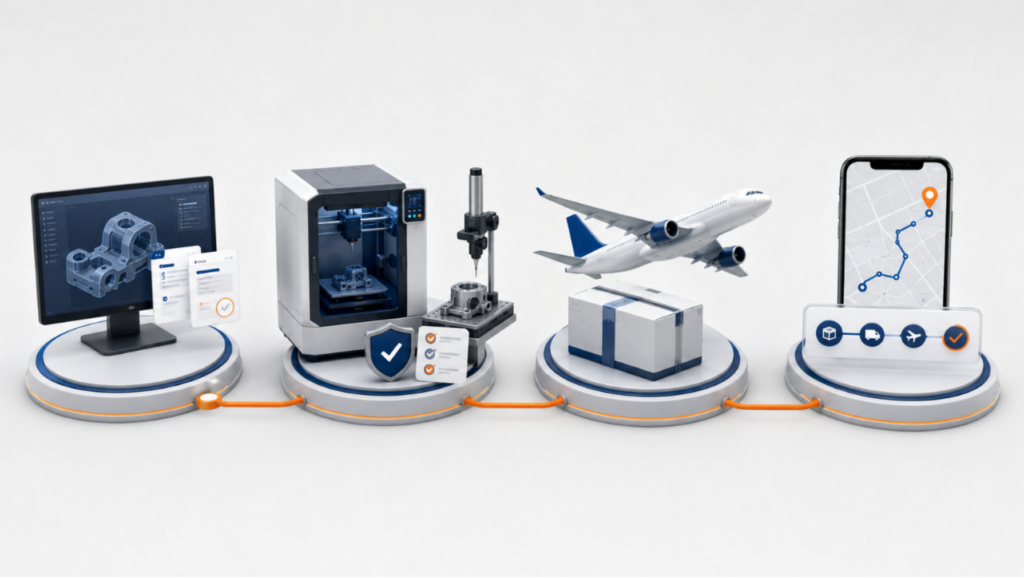
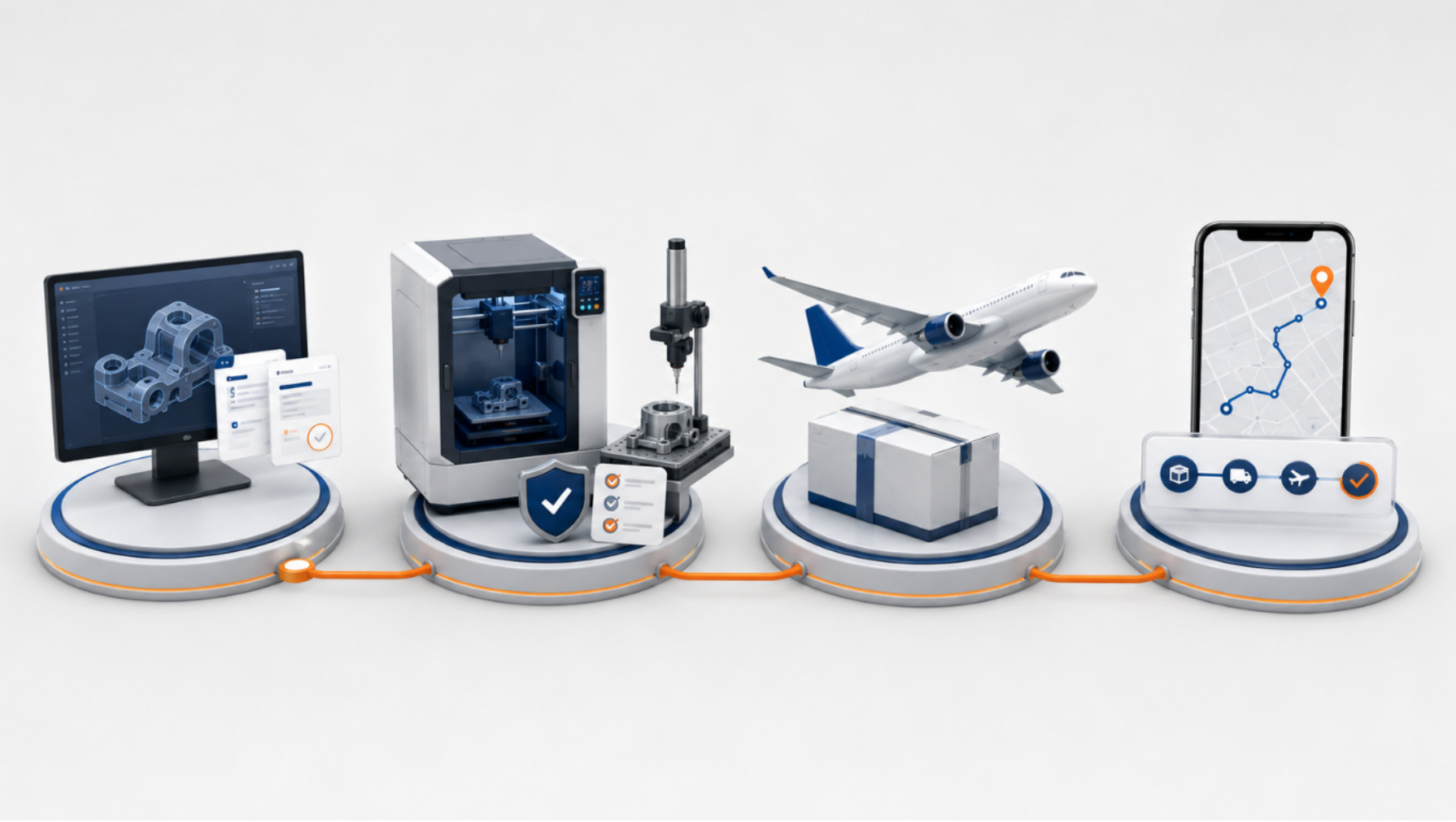
Modern cross-border 3D printing services have removed many of the delays that once made overseas manufacturing feel impractical. Instant online quoting can price a 3D file in seconds. ISO-certified facilities now follow documented quality systems. Express air freight has made overseas delivery far more predictable. Digital order tracking gives engineers visibility from upload to shipment.
The result is a very different sourcing equation. ISO-certified overseas manufacturers can now ship parts in 4 to 7 days, often at 30 to 50 percent lower cost than comparable domestic options. That means a prototype, fixture, replacement part, or short-run production component no longer has to come from a local supplier by default.
For engineers, hardware founders, design teams, and procurement managers, cross-border 3D printing is shifting from a budget-only option to a practical manufacturing choice. The old trade-off was simple: local for speed, overseas for savings. Today, modern overseas 3D printing services can offer both, giving teams a faster and more cost-efficient way to source parts.
How Cross-Border 3D Printing Used to Work and Why Engineers Avoided It
Cross-border 3D printing once came with a clear drawback: long lead times. In the 2015 to 2020 period, 2-to-4-week overseas production and delivery cycles were common.
The delay often started at the quote stage. Engineers sent files by email and waited 24 to 72 hours for a response. If they needed pricing for different materials, finishes, or quantities, the process involved more back and forth. A basic prototype could sit in email threads for days before production even started.
Batch production planning added another delay. Many offshore 3D printing providers grouped jobs together to reduce machine idle time and lower costs. That helped the manufacturer, but it often meant smaller prototype orders waited behind larger jobs.
Shipping created more uncertainty. Sea freight, slow customs clearance, and limited tracking made international 3D printing manufacturing difficult to trust for active product development. A prototype needed for testing could arrive after the design had already changed.
Quality concerns also played a part. Some overseas vendors lacked clear material specifications, standardized inspection, or documented production processes. Time zones and language gaps made questions about tolerances, finishes, or file errors harder to resolve.
This was why domestic providers gained such a strong position. Services like Protolabs charged premium pricing because speed and reliability carried real value. Local suppliers felt safer, especially when a team needed a prototype quickly enough to keep testing, review, or production planning on schedule.
For a long time, that made the sourcing decision feel obvious. Overseas 3D printing could reduce costs, but the slower quoting process, longer freight timelines, quality concerns, and limited order visibility made it harder to justify for active engineering work.
Then the old cross-border equation started to shift.
What changed?
Four Shifts that Closed the Gap
The new speed of cross-border 3D printing comes from four major changes across quoting, quality, logistics, and communication.
1. Instant Online Quoting
Modern on-demand online 3D printing service platforms now generate quotes in seconds. Engineers can upload STL, STP, or STEP files and receive immediate pricing instead of waiting 24 to 72 hours for an email reply.
This is a major gain for design teams. They can compare materials, quantities, and production options quickly. They can also move from file upload to purchase approval faster, which is especially useful during rapid prototyping.
2. ISO 9001 Adoption
Quality standards have also improved. Overseas 3D printing facilities now hold ISO 9001 certification, the same international quality management standard used by many domestic manufacturers.
That changes the quality discussion. It is no longer only about whether a part is made locally or overseas. It is about whether the manufacturer follows certified processes, documented controls, and repeatable production methods.
3. Air Freight Standardization
Shipping has become faster and more predictable. DHL Express, FedEx International Priority, and similar services have made 3-to-4-day overseas shipping routine and affordable for low-volume parts.
For prototypes and short run production, this can remove much of the old delivery disadvantage. When production takes 2 to 3 days, and shipping takes 2 to 3 days, overseas sourcing starts to compete directly with domestic timelines.
4. Digital Order Tracking
The final shift is visibility. Modern cross-border platforms provide production status, shipment updates, and direct communication channels. Engineers no longer need to send repeated emails just to learn where their order stands.
Champ3D is an example of this newer cross-border model. It combines instant quoting, ISO 9001 certification, express shipping integration, and direct customer communication, giving engineering teams a faster and clearer way to source parts from overseas.
Quote in Seconds, Shipped in Days
The modern cross-border 3D printing timeline looks very different from the older model.
A typical order can now move through the process like this:
Quote in under 60 seconds.
Production in 2 to 3 days.
Shipping in 2 to 3 days.
Total delivery in 4 to 7 days door to door.
That timeline changes the buying decision. The old speed difference between domestic and overseas production has shrunk from weeks to a day or two. In many cases, it disappears entirely.
Many local shops still take 24 to 48 hours to provide a quote. Production can take another 3 to 5 days, with shipping adding more time. For standard prototype work, an overseas 3D printing service with instant quoting and express logistics can match or even beat that pace.
This matters most for non-rush engineering needs. Functional prototypes, design validation models, jigs, fixtures, replacement parts, and low-volume production parts often do not require same-day turnaround. They require clear pricing, reliable quality, and delivery within a usable project timeline.
Domestic suppliers still make sense for same-day or next-day rush work. If a part is needed in 24 hours, local production remains the better choice. That need is real, but it is narrow.
For many prototype and small batch orders, cross-border 3D printing now offers speed without forcing teams to pay premium domestic prices.
Why ISO Certified Overseas Manufacturers Match Domestic Quality
Quality used to be one of the biggest concerns with international 3D printing manufacturing. Engineers do not want lower-cost parts if they arrive warped, inaccurate, poorly finished, or printed in the wrong material.
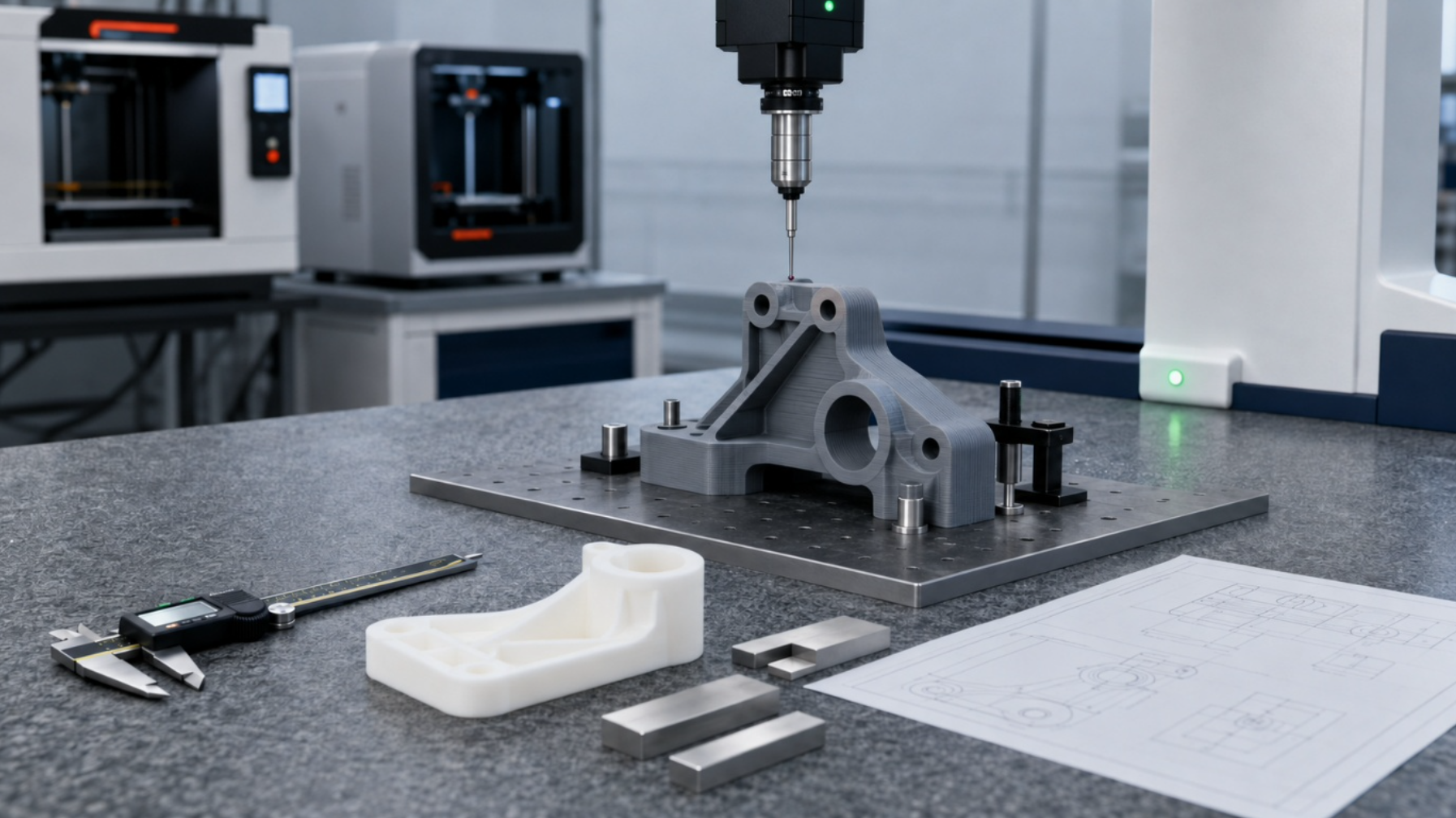
Modern overseas manufacturers have addressed that concern through certification, equipment parity, material control, and inspection.
ISO 9001 is an international standard. The same audit requirements apply globally. A certified manufacturer must follow documented processes, monitor quality, address nonconformities, and maintain repeatable systems.
Materials have also become more consistent worldwide. Common 3D printing processes such as SLA, DLP, and FDM use established resin and filament chemistries. Advanced methods such as SLS and MJF also depend on controlled materials, machine settings, and production discipline rather than geography alone.
Equipment parity supports this shift. Machines from brands such as Formlabs, Stratasys, and HP Multi Jet Fusion are used in domestic and overseas facilities. A well-run offshore 3D printing facility using proven machines and certified processes can deliver parts that meet domestic quality expectations.
Inspection processes add another layer of confidence. Modern cross-border services can include dimensional checks, surface quality verification, and material certification when requested. These steps help engineers confirm that a part is ready for testing, assembly, or short-run use.
The quality question is no longer “domestic versus overseas.” It is “ISO certified versus not certified.”
Champ3D fits this model as an ISO 9001-certified direct manufacturer with documented quality processes. With SLA, DLP, and FDM 3D printing technologies, Champ3D gives engineers a reliable overseas 3D printing service for prototypes, functional parts, and low-volume production.
Where the Cost Advantage Still Lives
Speed has improved, but cost remains a major reason teams choose offshore 3D printing.
Cross-border 3D printing typically runs 30 to 50 percent lower than comparable domestic options. This price difference comes from lower labor costs, lower facility costs, and fewer marketplace markup layers.
Many US-based services work as marketplace aggregators. They take the order, route it to a partner facility, and add margin between the customer and the actual producer. A direct manufacturer has a simpler cost structure. The customer works closer to the source, which can reduce extra fees and communication delays.
For prototypes and small batches, the savings can be significant. A $200 domestic quote may cost $80 to $120 through a cross-border provider. For a single prototype, that helps preserve budget. For 10, 25, or 50 parts, the difference can support more design testing or additional product versions.
Final pricing still depends on material, part size, print technology, finish, tolerance needs, quantity, and delivery location. A complex part will still cost more than a simple one.
Even so, for low-to-medium volume orders, cross-border 3D printing gives engineering teams a strong cost advantage without the long delays that once came with overseas sourcing.
When to Choose Cross-Border and When Not To
Cross-border 3D printing makes sense when budget matters, the lead time is 5 or more days, and the part is not needed for same-day operations.
It is a strong fit for prototypes, fixtures, jigs, replacement parts, design validation models, and low to medium volume production. It also works well for small teams that want direct manufacturer pricing without going through a marketplace middleman.
Domestic production still makes sense when the part is needed in 1 to 2 days. It is also the better choice when the design involves export-controlled IP, strict local handling rules, or production volumes where bulk freight changes the cost calculation.
The decision is no longer a simple fast versus cheap choice. It is a sourcing decision based on speed, quality, cost, order size, risk, and communication.
How Champ3D Fits the New Cross-Border Model
Champ3D is built for this new cross-border 3D printing model. It is a direct-to-customer 3D printing manufacturer serving global engineering teams, product designers, hardware founders, and procurement managers.
The platform offers instant online quoting, allowing customers to upload STL, STP, or STEP files and receive part pricing immediately. This removes the slow email-based quoting process that once made overseas production harder to manage.
Champ3D operates an ISO 9001-certified facility and offers SLA, DLP, and FDM technologies. These options support a wide range of prototype, replacement part, and short run production needs.
The no minimum order quantity model is especially useful for small teams. Engineers can order a single prototype without being pushed into a larger batch. When they need more units, Champ3D can also support low-volume production.
Direct customer communication is another advantage. There is no marketplace middleman, which helps reduce confusion and gives buyers clearer order visibility.
With 4-to-5-day production-to-shipment timelines and 10 percent off the first order for new customers, Champ3D is suited to teams that want competitive global pricing without long lead times.
For engineers who need prototypes, replacement parts, fixtures, or short run production, Champ3D shows how a modern overseas 3D printing service can deliver speed, quality, and savings together.
The New Manufacturing Geography
The premise that overseas means slow is no longer true. Cross-border 3D printing has changed because quoting, production, shipping, and communication have changed.
For engineers in 2026, the better question is not simply “domestic or overseas?” It is “which service gives the right mix of speed, quality, cost, and order flexibility for this specific part?”
Local manufacturing still has value for same-day and next-day needs. But for most prototyping and low-volume production work, cross-border 3D printing is now a competitive option, not a compromise.
This shift gives small to mid-sized companies more sourcing flexibility. It helps design teams test more ideas, control costs, and get parts made without waiting weeks.
As digital manufacturing matures, the gap between local and international 3D printing manufacturing will continue to shrink. For many teams, the smartest supplier may no longer be the closest one. It may be the one that delivers the right part, at the right quality, within the right timeline, at the right price.