
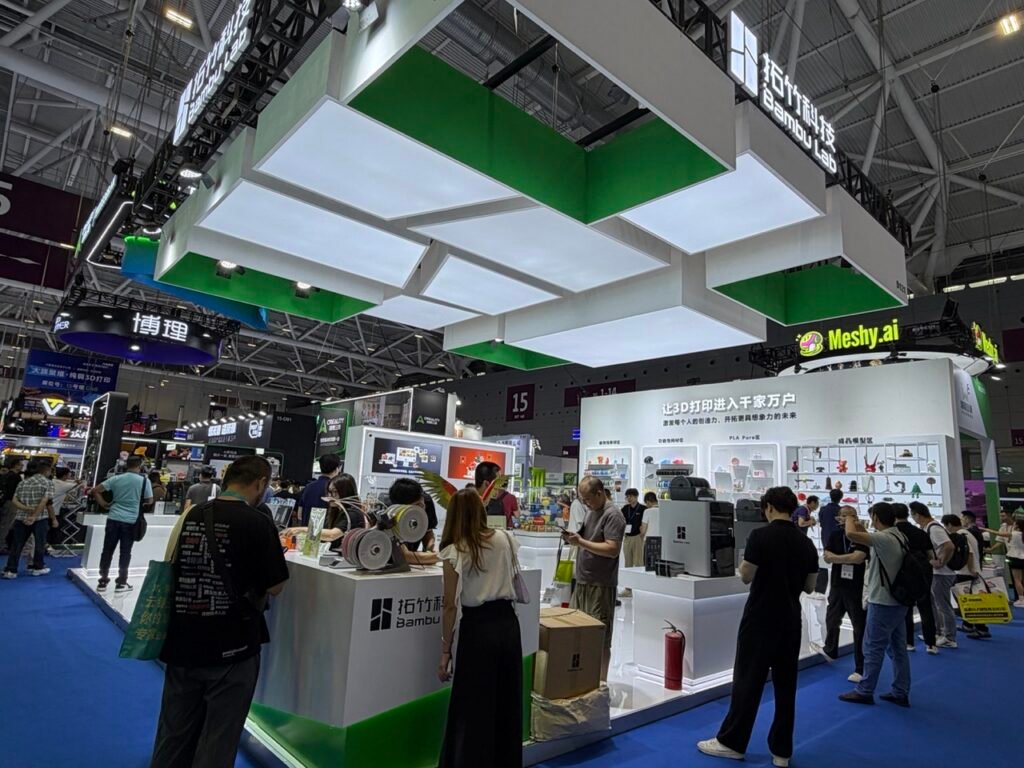
In Hall 15 at Formnext Asia Shenzhen 2026, consumer 3D printing was everywhere, from toys, figurines, and character models to thousand-machine production farms. Green-laser companies displayed copper cold plates for AI servers. Several booths showed printed shoes and robot parts. Around them were Chinese suppliers of scanners, lasers, monitoring systems, powder-handling equipment, CT inspection and filament-production lines.
Taken together, the floor made one point: China’s manufacturing base can assemble equipment, materials, software and production capacity around a promising application with remarkable speed.
The organizer counted 330 exhibitors across 20,000 square meters, the largest edition of Formnext Asia Shenzhen so far. In my July pre-show mapping of 305 confirmed exhibitors, 42% were based in the Greater Bay Area. More than half of the mapped companies were founded in 2016 or later, while hardware and materials together accounted for nearly 70% of the classified exhibitors. The picture was of a young, highly local and supply-dense industry.
A trade-show floor is not a neutral measure of market share. It is a set of commercial bets. Companies pay to exhibit where they expect to find customers, suppliers, and partners. Read that way, Formnext Shenzhen’s heavy concentration in consumer production, materials, electronics, footwear, molds, and factory infrastructure was a map of regional demand.
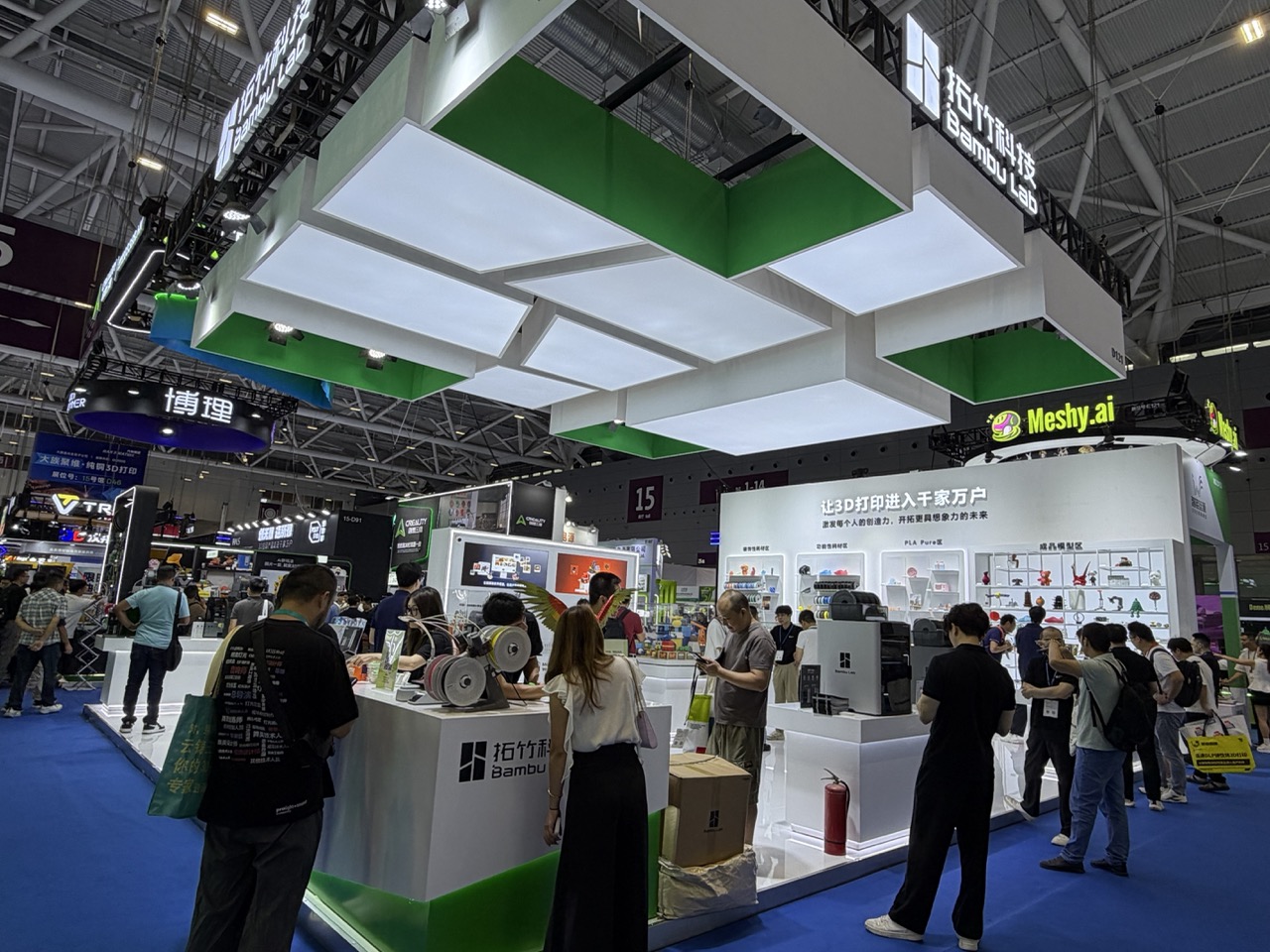
Bambu Lab and Meshy.ai show that AM is expanding from hardware into content and workflow.
Consumer AM Has Become Production Infrastructure
Consumer 3D printing can no longer be dismissed as the hobby end of the industry. Bambu Lab is one of the leaders in global entry-level printer shipments, a category that increasingly includes prosumers, professionals and print farms, not just individual consumers.
The print-farm conference held alongside the exhibition gave that shift a physical scale. Zhang Ximing, a veteran Chinese print-farm operator, estimated that the country had approximately 390,000 printers operating in farms as of August 2026, including around 350,000 Bambu Lab systems. He also estimated that roughly 40 farms had more than 1,000 machines.
According to Zhang, the equipment investment required for a 1,000-machine farm had fallen from about RMB 5 million ($744,058) in 2024 to RMB 1 million ($148,811) in 2026. Large printing orders were being quoted below RMB 0.10 ($0.015) per gram, while successful products could be copied and offered at a lower price within days. This is production infrastructure, but it is also an early commodity market. Machine capacity is expanding faster, prices are falling, and the useful life of an original product is becoming shorter.
Bambu Lab has helped remove the hardware bottleneck. Meshy is working on the content and workflow bottleneck. At the Meshy booth, a photograph of a visitor’s face was turned into a stylized figure that still retained recognizable features. The software did more than generate a rough 3D shape. The workflow included style selection, editing, mesh checks, automatic repair, and export to printable STL or 3MF files. Meshy’s current printing tools can also split large models and send files into common slicers.
The demonstration pointed to a deeper shift. As printers become cheaper and easier to operate, the constraint moves upstream. Users need ideas, differentiated content, and models that survive the transition from an attractive render to a printable object. AI can increase printer utilization by making that transition easier. But the same tools that allow a consumer to create a personal figure can enable competing sellers to fill a marketplace with similar products just as quickly.
Makera and HP approached the same boundary from opposite directions. Makera brought desktop CNC into an additive manufacturing show. Its machines apply a familiar consumer-hardware formula to machining: reduce the footprint, automate setup, and integrate the software so that a creator or small business can cut wood, plastics, PCBs, and metals without operating a conventional machine shop.
HP moved in the opposite direction with the MJF 1200. The compact 12-liter system uses the same core Multi Jet Fusion technology as HP’s larger portfolio, but packages it for engineering workspaces, laboratories, and smaller production teams.
The low and high ends of digital manufacturing are converging. Desktop printers are becoming fleet capacity. Industrial polymer processes and CNC are moving closer to individual engineering teams. Customers are less concerned with protecting the boundary between additive and subtractive manufacturing than with finding the shortest reliable route from a file to a usable part.
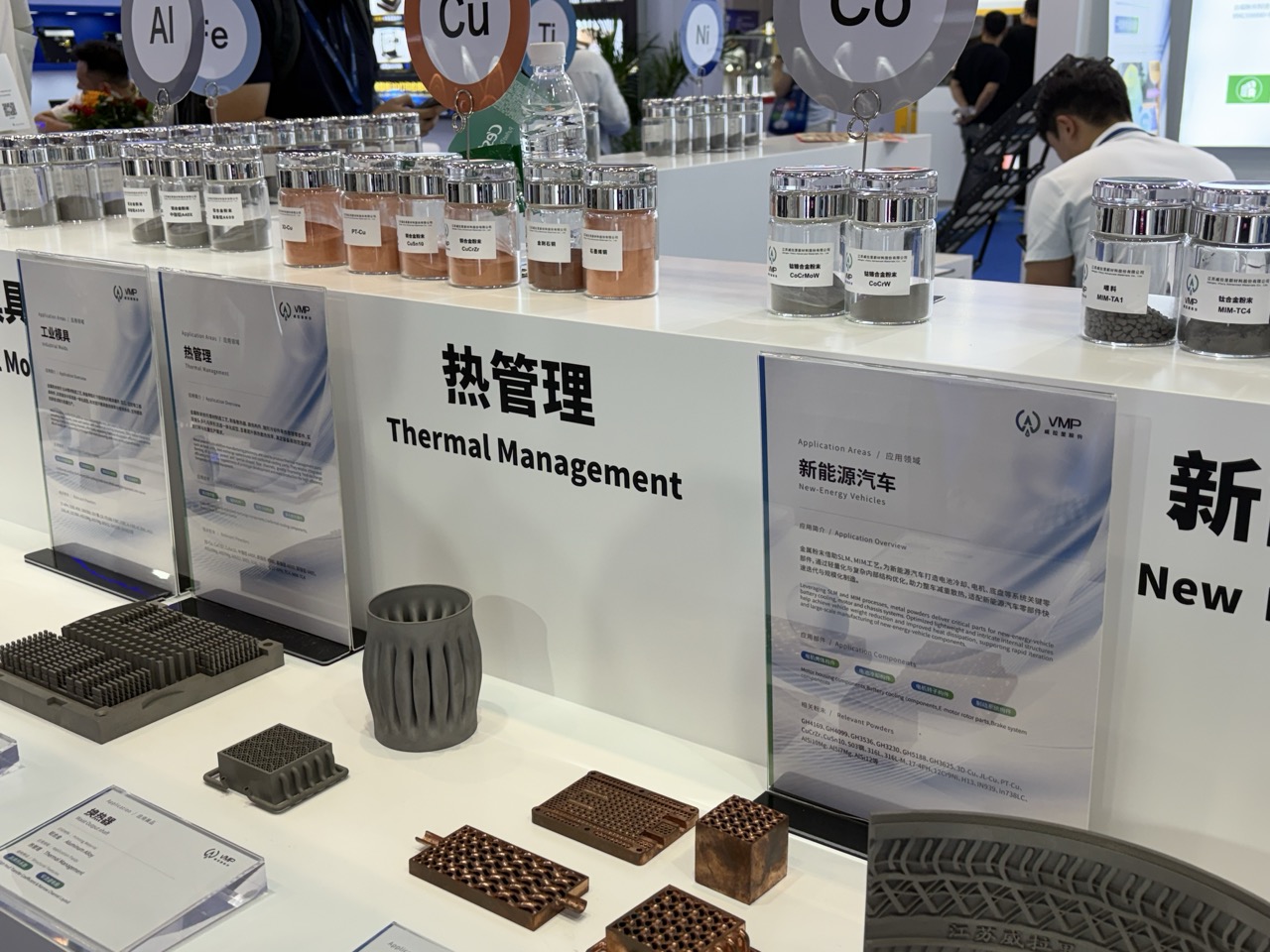
Copper and alloy powders displayed alongside printed thermal-management parts, showing the materials layer behind the growing interest in AM for cooling applications. Image courtesy of Vilory
Demand Signals Are Not Yet Proof of a Market
AI appeared at the show in two distinct roles: as an operating layer for modeling and process optimization, and as an end market that creates demand for physical hardware.
Addireen presented the second case most clearly. Its booth contained copper cold plates for GPUs, CPUs, memory modules, optical modules, and automotive power electronics. The company also introduced the XH-M350G-2HR, a dual-green-laser system intended for full-bed production of copper components. Addireen said its AI-server and IGBT cooling products were moving into batch production.
Kings3D provided another sign that the supply side is preparing for this market. Its subsidiary Laseradd showed the DiMetal-300G, a 500-watt single-mode green-laser system designed for pure copper, copper alloys and other highly reflective materials. Another supplier of copper-focused green-laser systems does not prove that AI cooling has already become a large AM market. It does show that more than one company believes it could.
The logic is credible. Higher compute density produces more heat, while additive manufacturing can create internal channels and heat-transfer structures that are difficult to machine. What we may need next is proven economics. The evidence should come from repeat orders and qualified part numbers rather than additional cold plates at exhibitions.
AI also appeared on the production side. FastForm announced an AM process model intended to reduce support material and manual parameter development. In company tests, FastForm reported support-powder reductions of up to 98% in one example and lower post-processing time in another. Beyond the headline percentages, what interested me was how the company framed this value commercially: AI was being sold through reduced material, labor, and finishing rather than as a separate software license. AI, in other words, sat on both sides of the transaction: it created demand for copper cooling hardware while being embedded in the workflow used to design and manufacture parts.
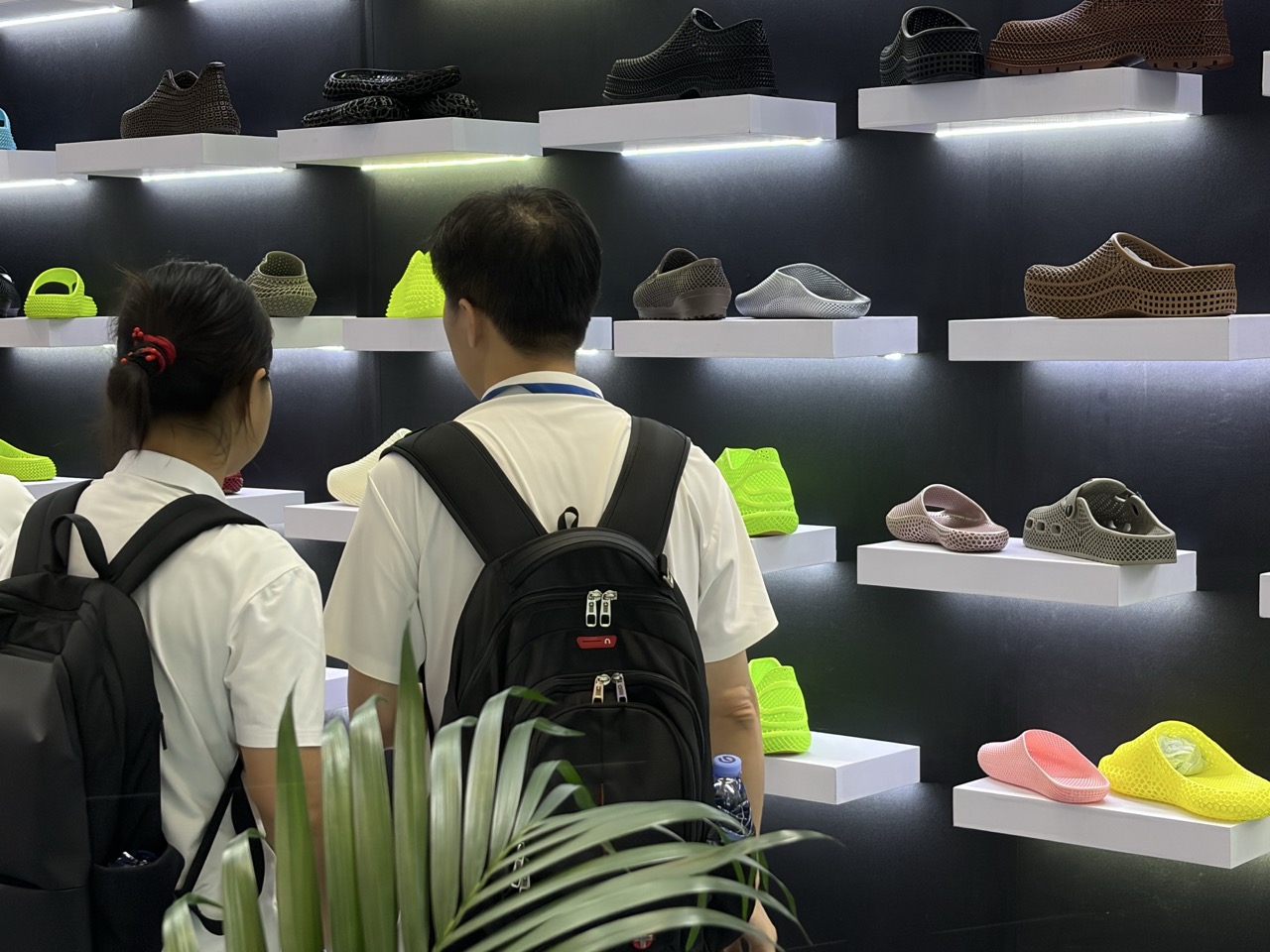
3D printed footwear appeared throughout the show, reflecting strong supplier interest in elastomers, lattice structures and tool-free customization.
Footwear Attention Ran Ahead of Adoption
Footwear was everywhere. The event launched a dedicated footwear design award that drew more than 100 submissions. Vendors presented printed midsoles, complete shoes, elastomer systems, foot scanners, lattice software and cloud production platforms. PollyPolymer linked the same material and design capabilities to both footwear and compliant robotic components, while iSUN3D introduced DLP and FDM systems for flexible-part production.
Outside the hall, however, I did not notice anyone wearing a pair with a direct print. That anecdote proves little, but it underlined the gap between supplier attention and visible adoption. A shoe can clearly be printed. What kind of market will that create: genuinely personalized footwear, or another route to mass-producing functionally or aesthetically differentiated shoes?
Shoe molds told a more mature story. They attracted less attention, yet the application already fits an established production workflow. Direct footwear must create or reshape consumer demand; a printed mold improves a product category that already has demand, distribution, and quality standards.
The show may therefore have been ahead of the market in one case and embedded in it in the other. China’s supply chain can mobilize in response to a signal very quickly. The open question is how many of the companies now pursuing printed footwear can build a defensible business until adoption catches up.
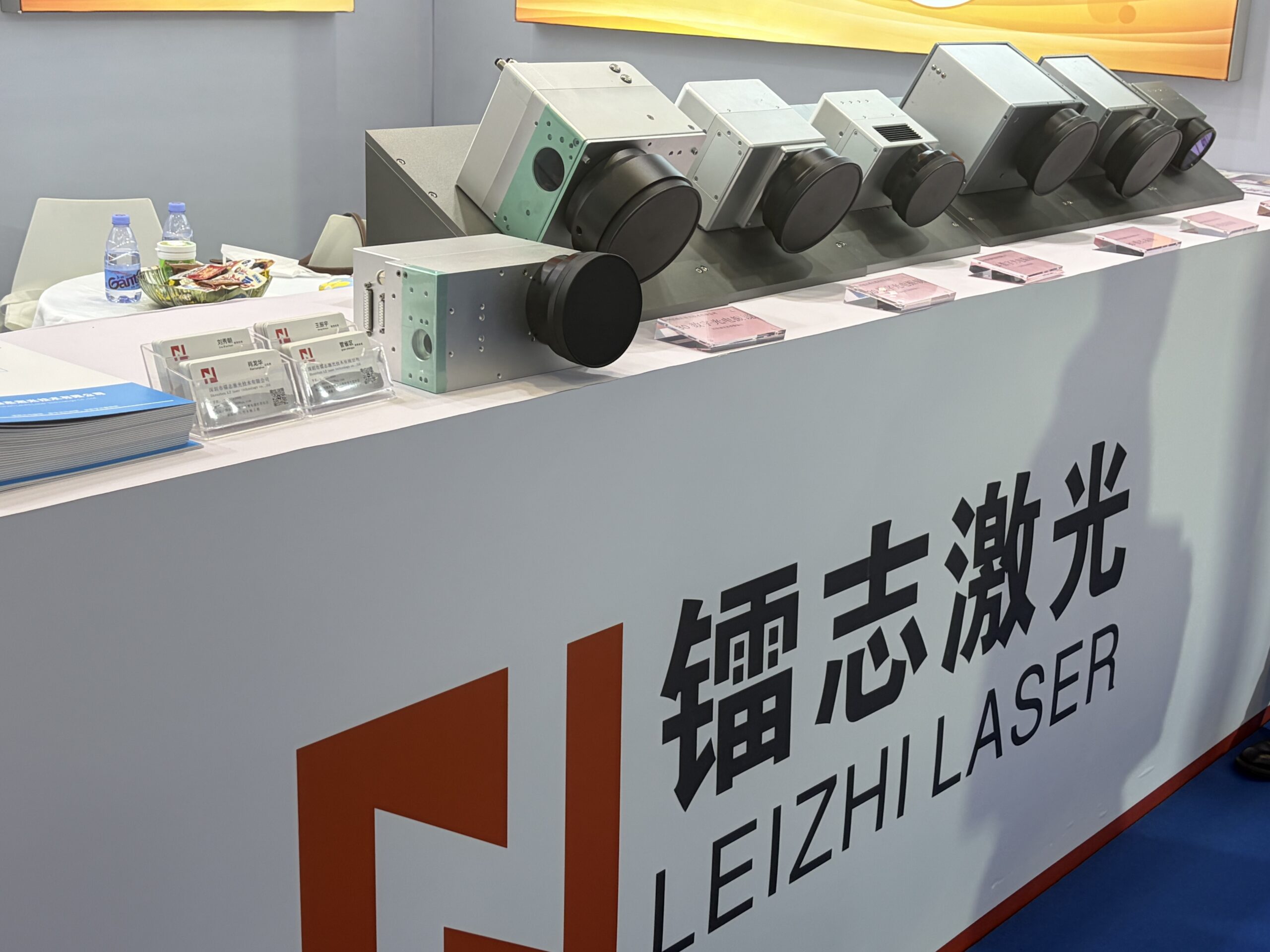
Chinese suppliers such as Leizhi Laser were visible further down the AM stack, supplying scanning systems and laser heads rather than complete printers. Image courtesy of Leizhi Laser
Localization Cuts Both Ways
Localization was most striking below the level of the complete machine. Chinese suppliers were offering scanners, laser sources, scan heads, optics, motion control, monitoring, industrial CT, powder screening, extraction systems, power supplies, and filament-production equipment. The pre-show mapping counted 44 AM-adjacent equipment companies, which are more than six times the standalone software cluster.
This is a more consequential form of localization than replacing one imported printer with a domestic model. A local machine builder can source and modify more of the system nearby. A service provider can combine printing with scanning, CNC, inspection, and finishing. An application company can pull together materials, software, and production capacity without developing every layer internally.
The result is lower coordination cost. When a new opportunity appears, the necessary suppliers can respond quickly. But low coordination costs also mean low imitation costs. After attending several Chinese AM exhibitions, I am now less struck by singular inventions than by the speed with which similar offerings accumulate. Once footwear, humanoid robots, AI cooling or consumer figures are identified as promising applications, many companies move in the same direction.
That is not necessarily evidence of technological stagnation. A maturing manufacturing market eventually shifts its attention from demonstrations to cost, delivery and reliability.
The clearest risk is that supply may grow before downstream demand does. The print-farm market already shows the following: cheaper machines, cheaper materials, falling service prices, and very short periods of product differentiation. Industrial AM moves more slowly because qualification creates a barrier.
Formnext Asia Shenzhen showed that the region can assemble the stack faster than most markets. The harder test is whether end-market demand can turn that speed into durable businesses.
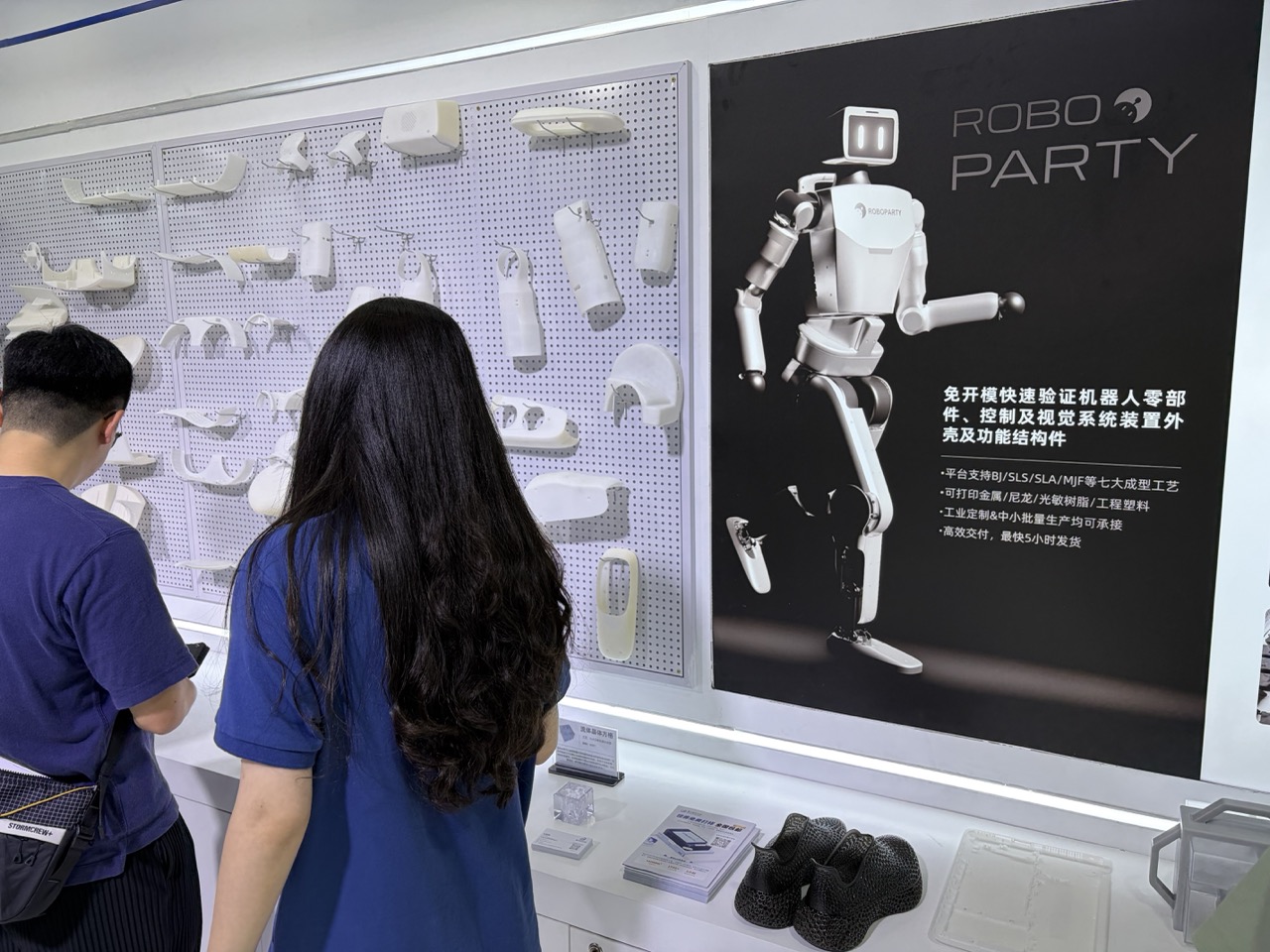
Robotics was another recurring application theme. Exhibitors showed printed housings, structural parts, and compliant components aimed at shortening development cycles for humanoid and service robots.
Images courtesy of Sangmin “Simon” Lee/3DPrint.com