
Metal powder supplier Tekna (FRA: 8VB) reported stronger financial results in the second quarter, as growing aerospace and defense demand helped its Materials business and more additive manufacturing (AM) customers moved into production.
Founded in Canada in 1990 to commercialize technology developed at the Université de Sherbrooke, Tekna is owned through Norwegian-listed Tekna Holding ASA. The Quebec-based business reported second-quarter revenue of CAD 10.6 million ($7.6 million), up 18% from CAD 9 million ($6.5 million) a year earlier. Adjusted EBITDA reached CAD 1.4 million ($1 million), compared with a CAD 2 million ($1.4 million) loss in the same period last year. That marked the company’s fourth consecutive quarter of positive adjusted EBITDA. Tekna also posted a small net profit of CAD 100,000 ($72,064), reversing a CAD 3.9 million ($2.8 million) loss a year earlier.
For the AM industry, however, the more important numbers are inside Tekna’s Materials business, which produces high-purity spherical metal powders, including Ti-6Al-4V (Ti64), using its plasma technology. Those powders are used in AM as well as processes including metal injection molding (MIM), binder jetting and hot isostatic pressing.
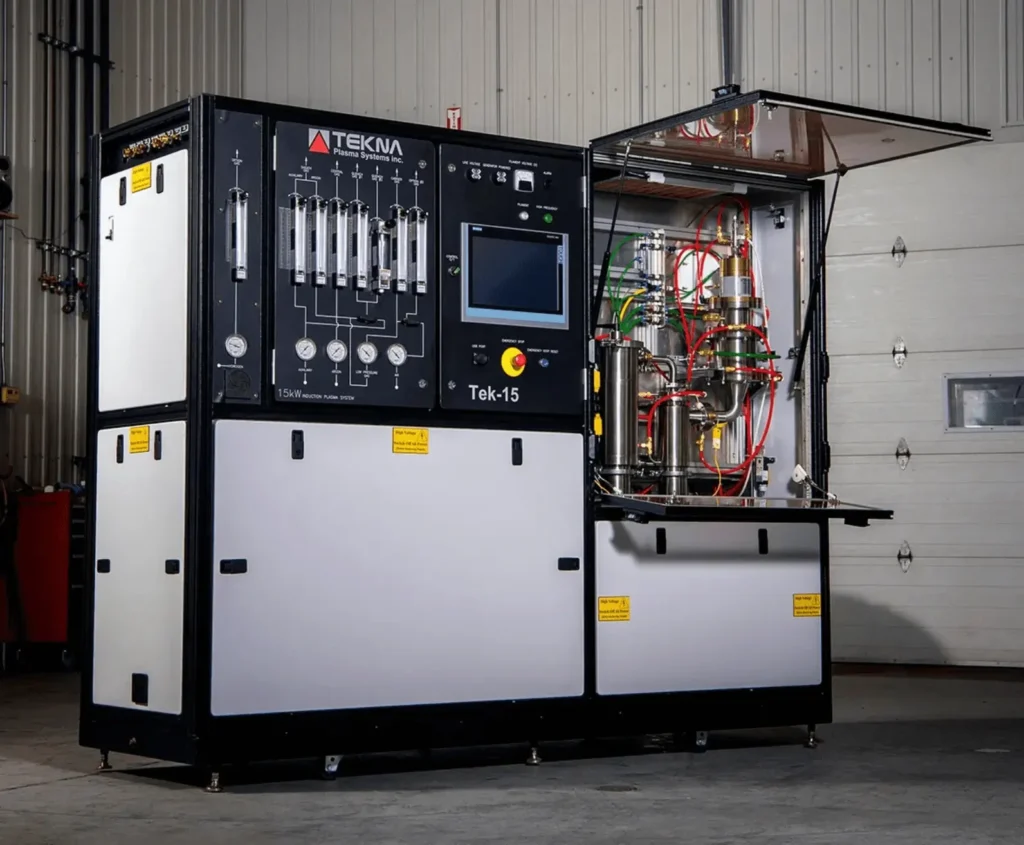
Tekna also has a separate Systems business that sells plasma-processing equipment to industrial customers, universities and research institutions. Recent customers include Texas A&M University, which ordered a system for materials testing and evaluation, and a UK university that ordered a plasma system for a hypersonic wind tunnel. Tekna has also received orders from customers in Asia for systems used to develop spherical metal powders. In Q2, the company secured its largest-ever Systems order from an unnamed U.S. critical-minerals customer.
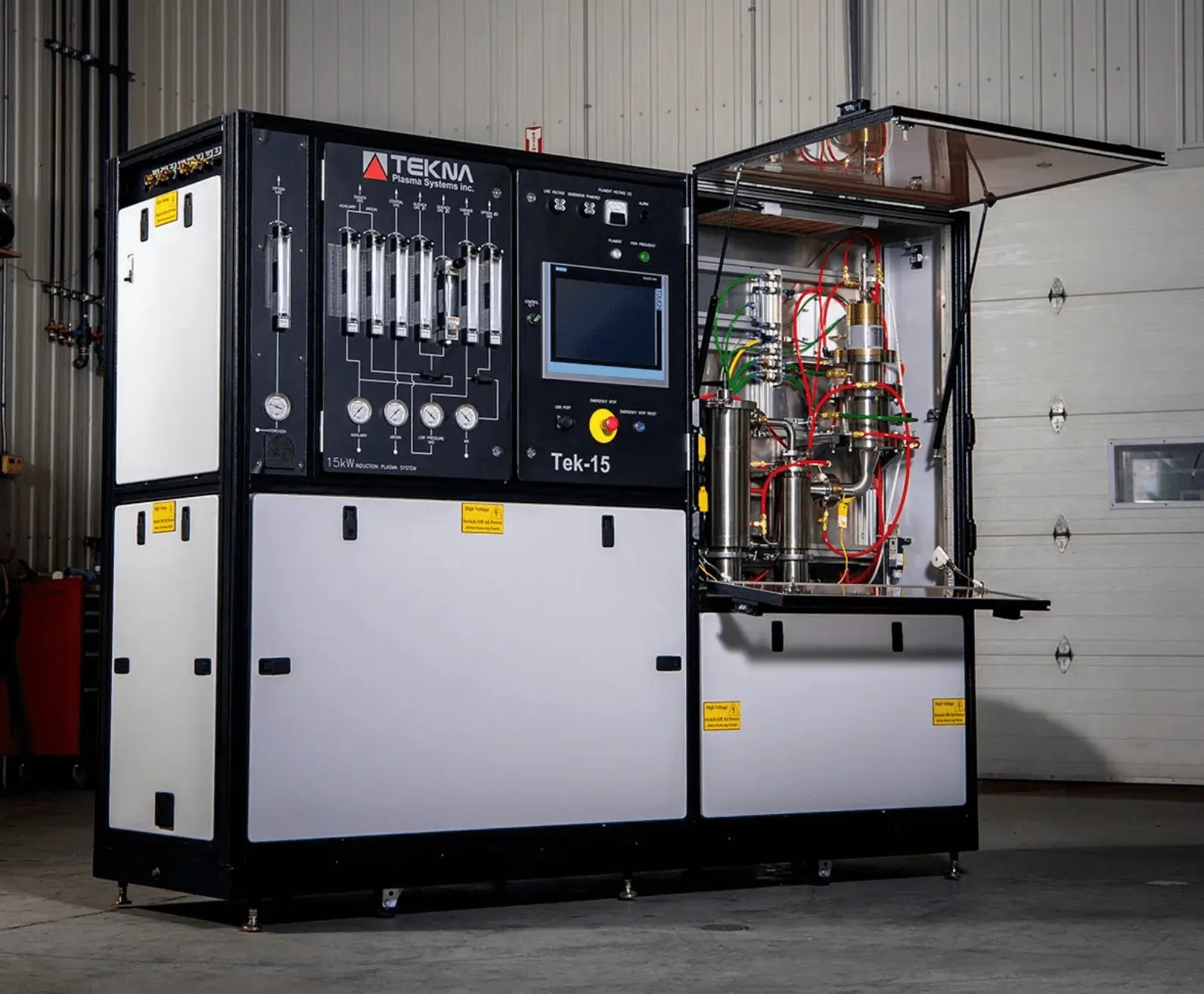
Tekna’s Plasma systems. Image courtesy of Tekna.
Materials revenue rose 20% to CAD 7.9 million ($5.7 million) in Q2, driven mainly by aerospace and defense demand. The segment’s contribution margin also jumped to 54% from 38% a year earlier. Materials accounted for about CAD 1.8 million ($1.3 million) of Tekna’s CAD 3.4 million ($2.5 million) year-over-year improvement in adjusted EBITDA, with higher sales and better margins both contributing.
Tekna said much of the Materials growth is coming from customers moving into production. During the earnings call, CEO Claude Jean said customers that previously bought Tekna powders for R&D and prototyping are now placing larger, repeat orders as they complete qualification programs. That move is important because qualifying materials for aerospace, defense, or medical production can take time. Once approved for production, customers can become repeat powder buyers.
In July, the company disclosed that 2026 orders for Ti64 powder from a long-standing U.S. contract manufacturer serving defense OEMs had surpassed CAD 3 million ($2.2 million). That is more than six times the roughly CAD 500,000 ($360,527) Tekna supplied to the same customer during all of 2025. About half of the 2026 volume had already been delivered by the time the announcement was made, with the remainder scheduled for the second half of the year.
Tekna said the customer uses the Ti64 powder to produce parts for defense applications and has been buying from the company since 2017. Jean said the increase came as more customers moved into AM production.
“This expansion reflects the trust our customer has placed in Tekna’s quality, consistency, and reliability over nearly a decade of partnership,” noted Jean. “Demand for near-shore, high-performance metal powders is accelerating as our customers move additive manufacturing into serial production.”
The July order is not the only sign of growing demand. In January, Tekna announced a CAD 2 million order for Ti64 powder from another Tier-1 supplier to the U.S. aerospace and defense industry. The powder will be used for laser powder bed fusion (LPBF). The same customer had placed a CAD 1.6 million order in 2025, and Tekna said volumes were rising as production increased.
Later that month, Tekna announced another CAD 1.5 million LPBF titanium powder order from an unnamed U.S. defense Tier-1 supplier. That order was three times larger than the customer’s previous orders.
More Demand From Reshoring
Tekna said reshoring is also supporting demand for its powders. Jean said aerospace and defense customers are using AM to reduce weight, improve design flexibility and simplify supply chains. Tekna said it works with 57% of the 69 aerospace and defense OEMs it has identified as potential customers, including Airbus, Boeing and Dassault.
Tekna said its early work qualifying titanium powders with major manufacturers could also help as more AM programs move into production. The trend extends beyond aerospace and defense. Tekna has more than 20 active medical customers and said several more are currently qualifying its powders. Once a powder is qualified for a specific application, changing suppliers can also be difficult, potentially creating repeat business for Tekna.
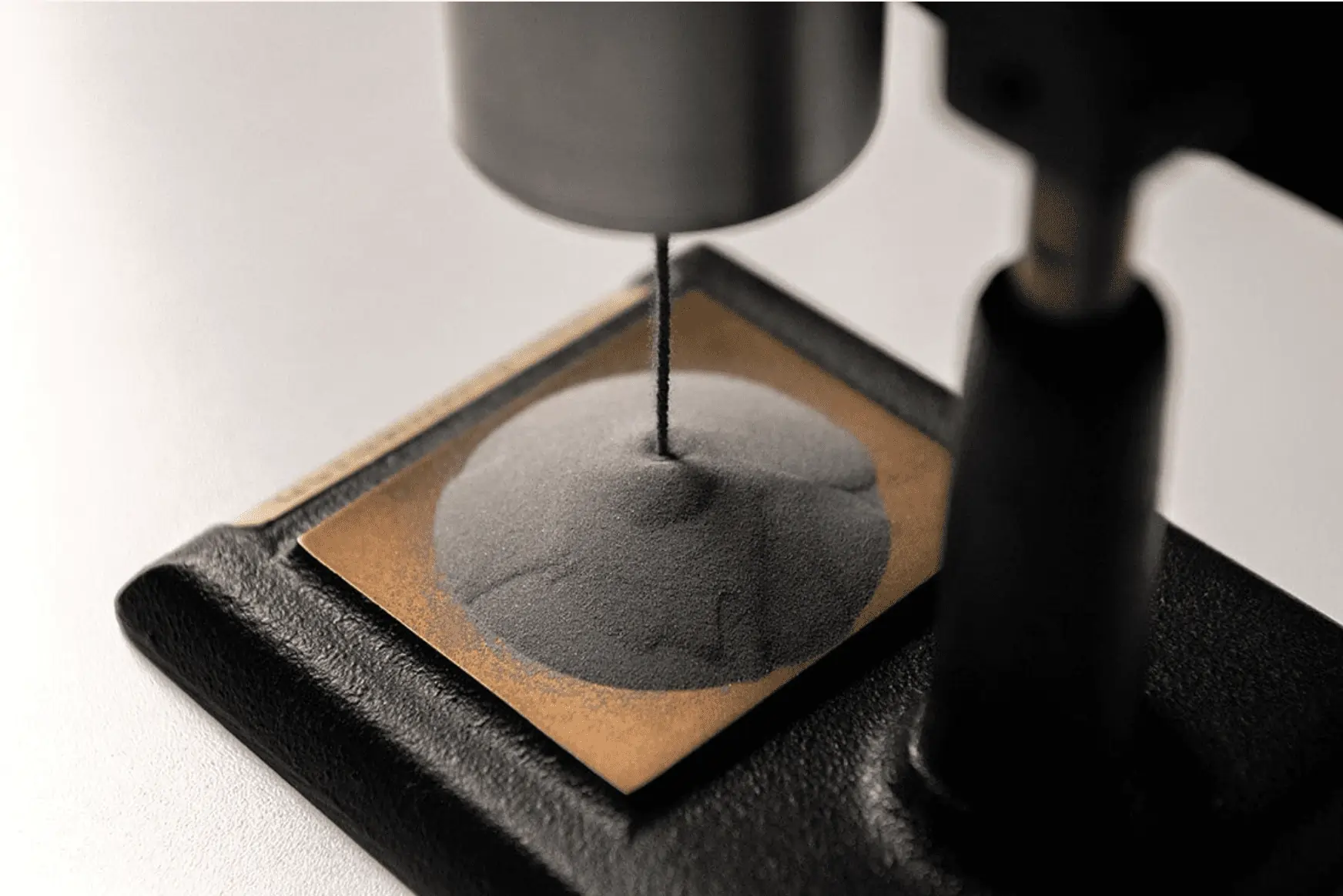
Tekna’s metal powders. Image courtesy of Tekna.
Tekna also reported CAD 19 million ($13.7 million) in total Q2 orders, more than double the year-earlier level, while its backlog reached a record CAD 28.5 million ($20.5 million). But much of that growth came from its Systems business, not metal AM powders.
In June, Tekna received an order worth about CAD 11.5 million ($8.3 million) from a new U.S. critical-minerals customer. The customer ordered two plasma systems to produce a critical mineral in high-purity powder form.
Tekna Enters H2 With Million in Cash
Tekna ended the quarter with CAD 18 million ($13 million) in cash. The company expects to spend just CAD 1.5 million ($1.1 million) to CAD 2 million ($1.4 million) this year and said it has enough production capacity to grow without major new investments.
Looking further ahead, Tekna continues to target double-digit annual revenue growth through 2030 and an EBITDA margin of 15% to 20%. Management said higher defense spending, reshoring, and larger customer orders could help drive that growth.
For metal AM, what matters is that several of Tekna’s aerospace and defense customers are buying more titanium powder as they move into production. Printer sales show where AM is growing, while powder demand can show how much those printers are actually being used.