
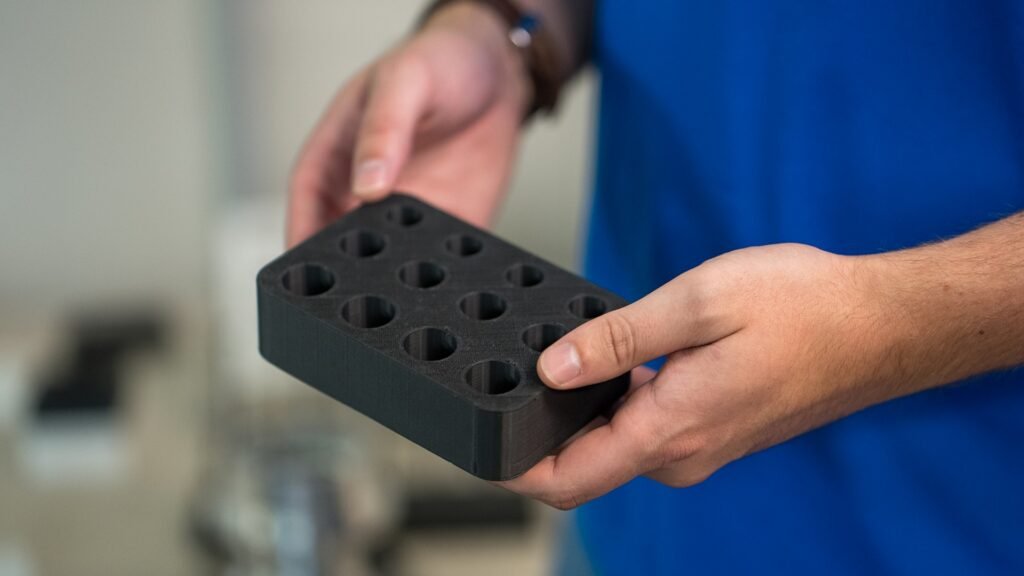
In this weekend’s 3D Printing News Briefs, a new Advanced Manufacturing Center of Excellence has been launched in Michigan. Surgeons in Israel created a 3D printed sternum implant to help a cancer patient. Finally, a 3D printed wall made of ceramic cubes is helping to beat the heat in urban areas.
Automation Alley & Oakland University Launch Advanced Manufacturing COE
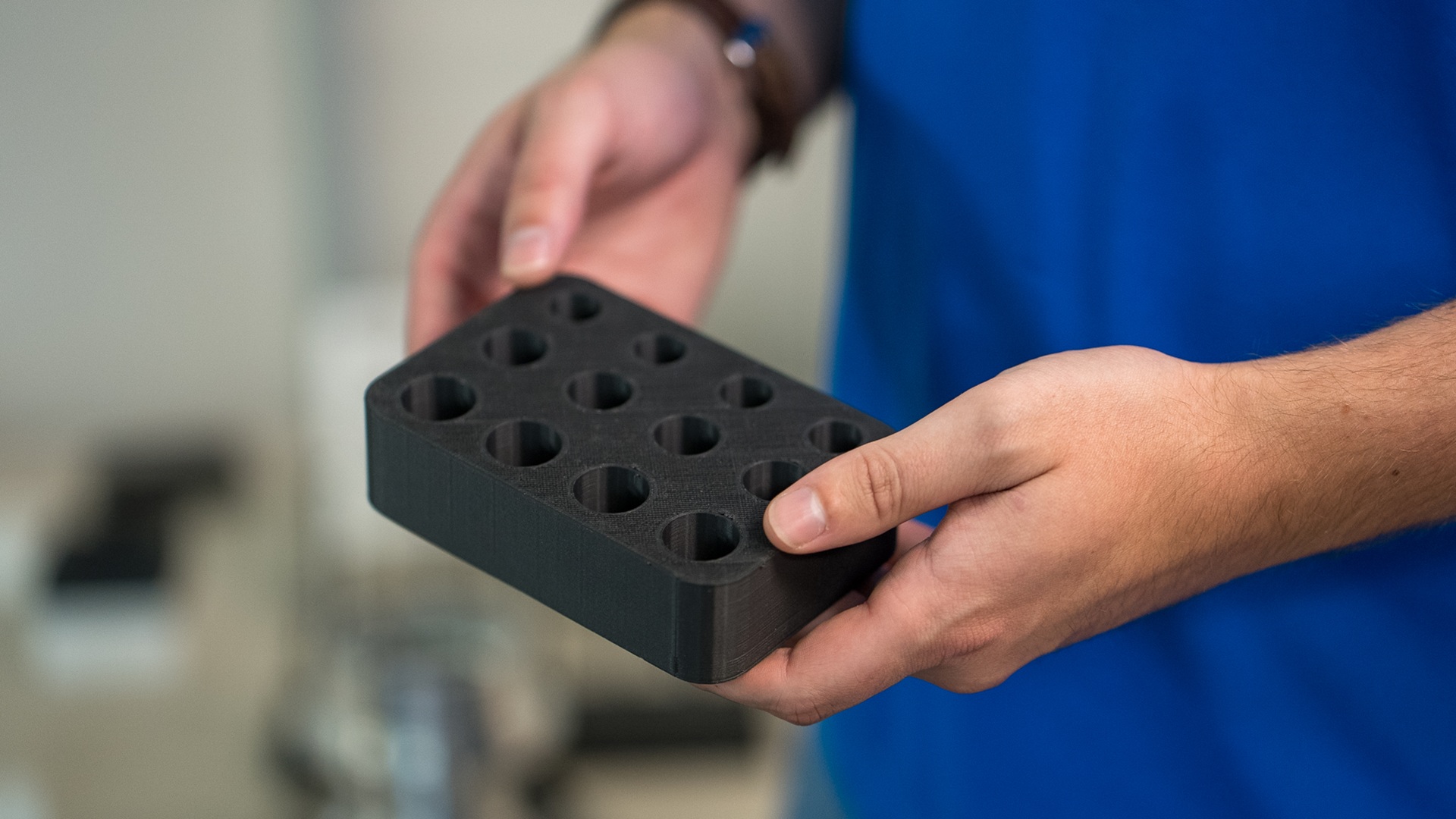
Image courtesy of Automation Alley
Advanced manufacturing accelerator Automation Alley and Oakland University, both based in Michigan, have launched a new collaboration, the Advanced Manufacturing Center of Excellence (CoE). Designed to foster partnerships between manufacturers, students, and researchers, it’s meant to speed up advanced manufacturing innovation by combining Automation Alley’s statewide industry network with the university’s engineering research and student talent. The Center will be the new home of Automation Alley’s Project DIAMOnD Digital Transformation Center, which opened in Auburn Hills two years ago and will now move to university campus. Project DIAMOnD (Distributed Independent Agile Manufacturing On Demand) is one of the largest distributed additive manufacturing (AM) networks in the U.S., and has produced more than 50,000 parts while helping manufacturers adopt AM, improve production resilience, and strengthen their domestic supply chains. The Advanced Manufacturing CoE will be a facility where manufacturers can test out new technologies and develop AM applications and get technical support and training. As it develops, Automation Alley and Oakland University will announce new research initiatives for the Center, as well as industry partnerships, workforce development programs, and more.
“Moving our Digital Transformation Center into this facility is more than a change of address. It places our distributed manufacturing network next to the research that will define the next era of Smart Product Recipes and metal additive manufacturing. This is where research becomes real-world manufacturing capability, allowing us to scale what we’ve proven works,” said Pavan Muzumdar, the CEO of Project DIAMOnD.
Israeli Surgeons Replace Cancer Patient’s Sternum & Ribs with 3D Printed Implant
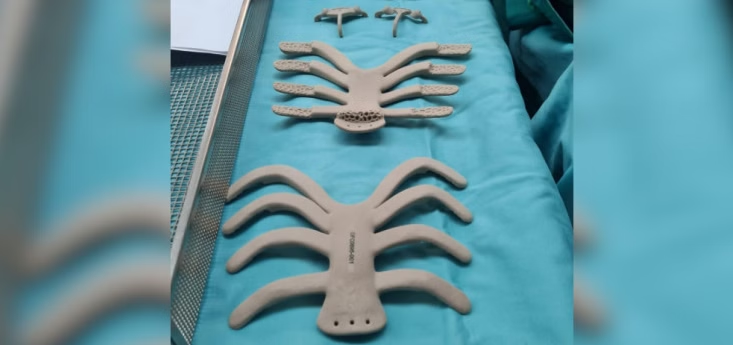
Image: Clalit-Beilinson Hospital
Doctors in Israel found what they first thought was a benign a tumor eroding the septum of Hadas, a woman in her twenties. But, testing revealed that it was a BRAF-altered mesenchymal tumor, a very rare type of sarcoma that’s only been reported in about 20 cases worldwide. To get rid of it, surgeons had to take out her sternum, as well as attached portions of the rib—basically the “anchor” of the whole chest, according to Dr. Yury Peysakhovich, Head of Thoracic Surgery at Clalit-Beilinson Hospital. Because the replacement sternum needed to be extremely precise, the surgeons opted for a customized 3D printed chest implant, designed specifically for Hadas’s anatomy. They used polyetherketoneketone (PEKK) to print the implant, because the high-performance material combines flexibility with strength in a way that resembles natural human bone, and also allows the surrounding tissue to integrate with the implant over time. It took the surgeons two hours to remove the diseased sternum and part of Hadas’s ribs, and reconstruct her chest with the custom implant. She is recovering well at home.
“If reconstruction is not precise, both respiratory mechanics and protection of the heart and lungs can be compromised. Every breath, cough, or physical movement places significant stress on this area, making it one of the most complex reconstructions in thoracic surgery,” Dr. Peysakhovich explained.
“Rare cases require creative solutions. The combination of advanced 3D-printing technology and close collaboration between multiple surgical specialties allowed us to offer this patient a solution that simply wasn’t available only a few years ago.”
3D Printed Cooling Ceramic Wall Fights Urban Heat at TU Graz
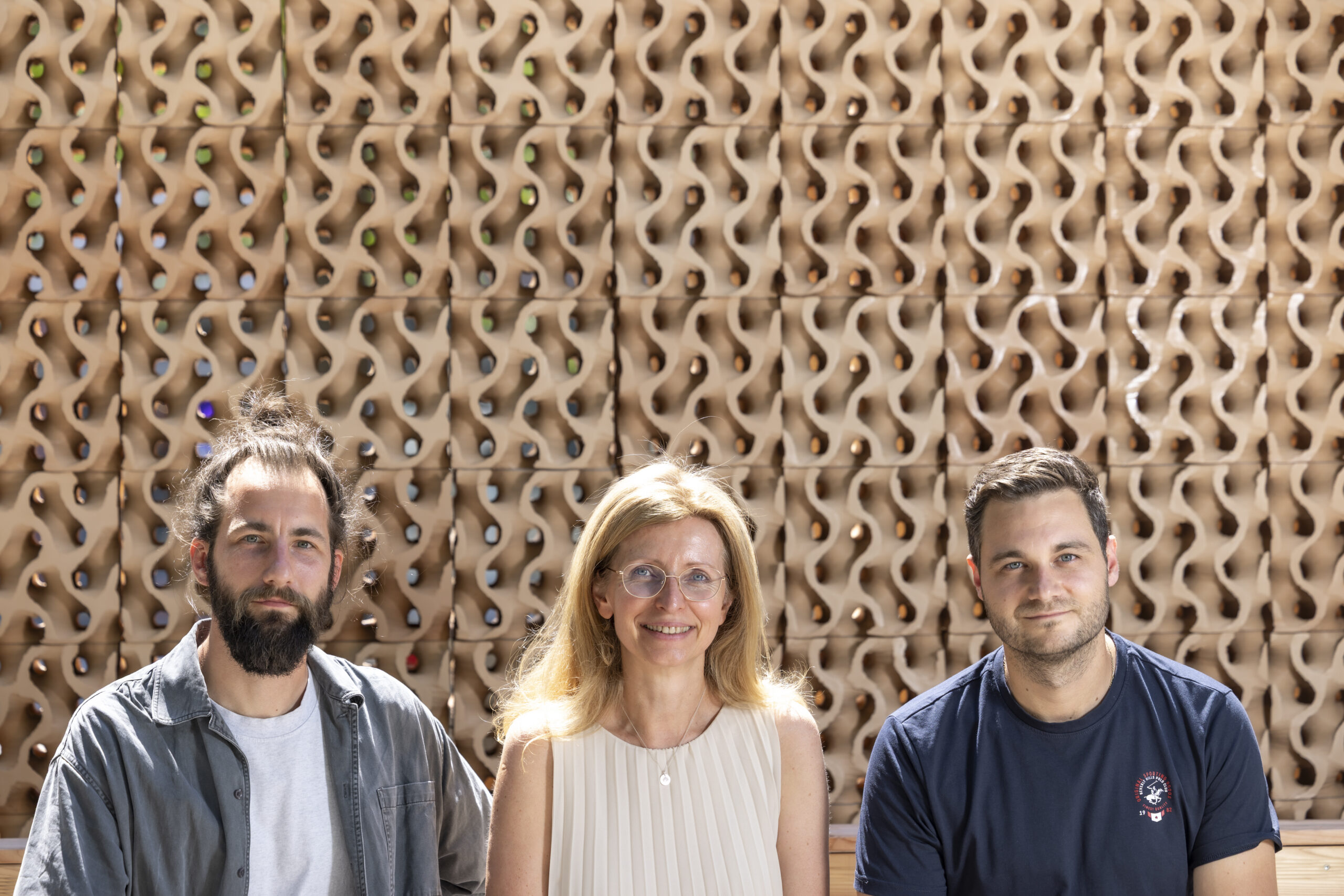
L-R: Julian Jauk, Milena Stavric and Kristijan Ristoski from the Institute of Architecture and Media at Graz University of Technology. Image: Lunghammer – TU Graz.
As temperatures continue to rise in regions around the world, a team from the Institute of Architecture and Media at Graz University of Technology (TU Graz) has developed an energy-efficient solution to beat the heat. They made cubes, 3D printed from highly porous ceramics, which use a physical principle called evaporative cooling: when water evaporates, it absorbs heat from its surroundings, which cools the air down. 3D printed from a ceramic clay mixture, the cubes have sides measuring about 23 centimeters, and are fired at low temperatures to ensure a highly porous consistency. Additionally, the minimal-surface geometry (TPMS) uses the smallest possible amount of material, while at the same time providing a large surface area. Water is absorbed into the ceramic cubes by capillary forces, then evenly distributed to create a large evaporation surface over which the water can evaporate continuously. The 3D printed ceramic cubes are a more resource-efficient alternative to high-energy cooling systems, and will work to cool ambient air outside, as well as indoor spaces. The team is also experimenting with bio-inspired materials for the cubes, like adding sawdust and fungal cultures to the clay, and even sediment from Lake Neusiedl. The ultimate goal is to make natural cooling available in urban areas.
“This has been working for centuries, both in clay jugs and in traditional wind towers. The key technological advance here lies in the use of 3D printing, which enables us to produce highly complex, porous and functionally optimised geometries from clay mixtures. These special structures store water particularly efficiently and, despite their small volume, create an enormous evaporation surface,” said Milena Stavric from TU Graz.
“Our aim is to provide cooling where people suffer particularly from the heat – for example, in cities where trees are sometimes unable to provide sufficient cooling. To achieve this, we rely on natural cooling principles rather than energy-intensive air-conditioning technology.”
A two by two meter prototype of the 3D printed ceramic cooling wall is on display in Stremayrgasse, at TU Graz’s Campus Neue Technik.