
China’s additive manufacturing (AM) industry has spent years trying to reduce its reliance on foreign technology. In polymer 3D printing, domestic companies have already become major players. In metal AM, however, Western companies have historically dominated some of the most advanced industrial systems. But that may be changing.
A recent funding announcement from Chinese wire-fed metal AM company Rongsu Technology offers a glimpse into a broader trend taking place across China’s manufacturing sector. The company secured nearly RMB 100 million ($14 million) in Series A funding earlier this year from the government-backed Zhongyuan Yuzi Group and the Suzhou High-tech Venture Capital Group to accelerate domestic, large-scale industrial AM. While the investment itself is amazing, the bigger story may be what companies like Rongsu represent: China’s effort to build a fully domestic metal AM ecosystem.
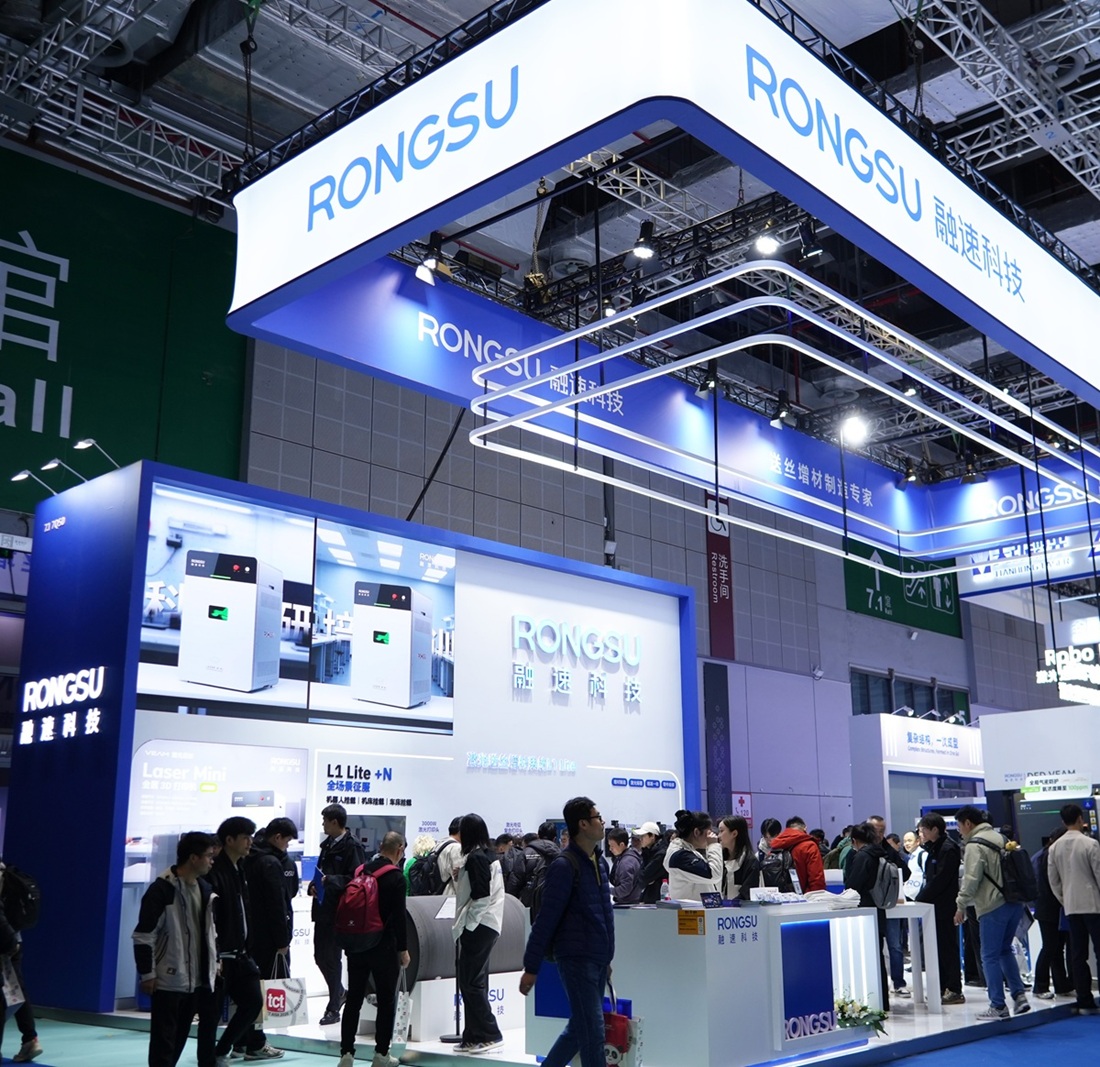
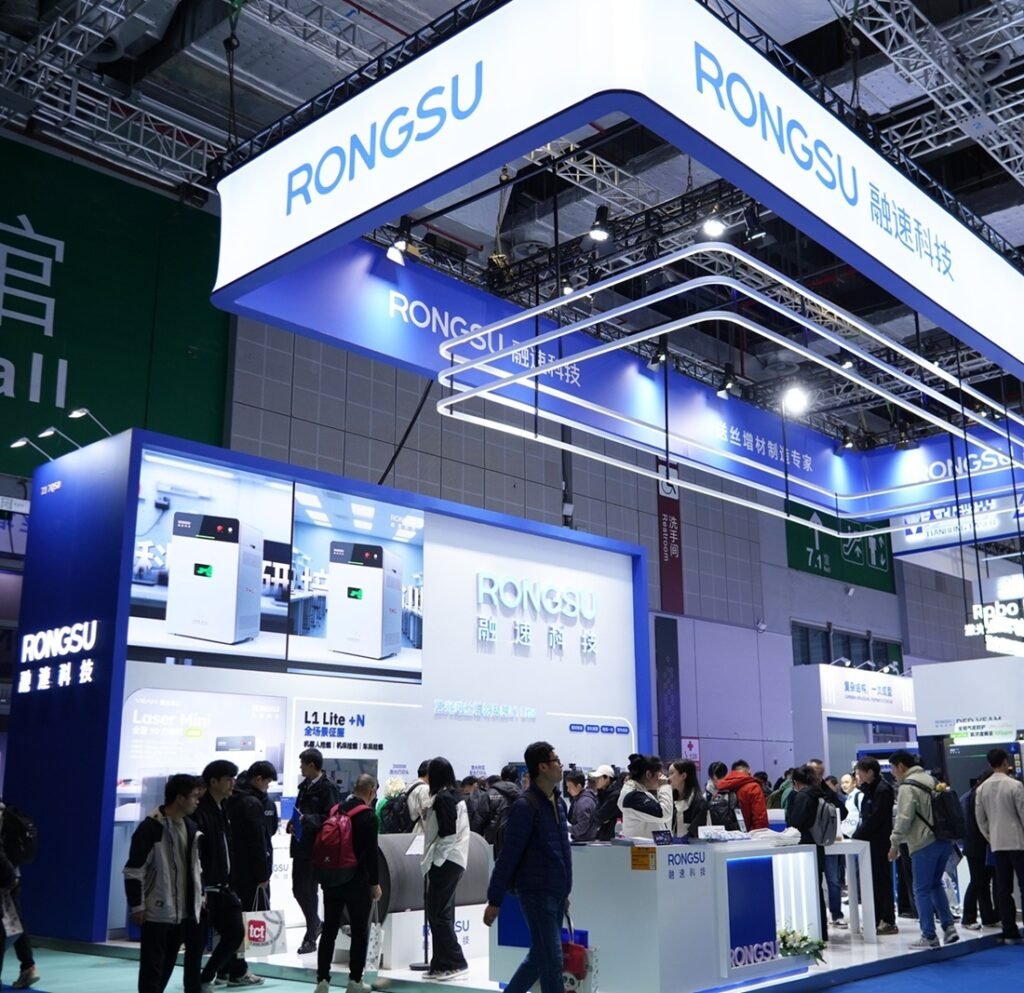
Rongsu stand at TCT Asia. Image courtesy of Rongsu Technology.
Founded in 2020, Rongsu focuses on wire-fed metal AM, including wire arc AM (WAAM) and wire-laser AM (WLAM) technologies. The funding will be used to establish a RMB 500 million ($74 million) global service headquarters in Suzhou, expand production of the STAR series machinery, and drive commercial adoption within major Chinese state-owned heavy industrial enterprises.
According to Rongsu, it has developed a multi-laser coaxial wire-fed system designed to improve process stability, part quality, and production efficiency. In fact, one of the company’s most interesting points is that its technology can achieve deposition rates of up to 4 kilograms per hour.
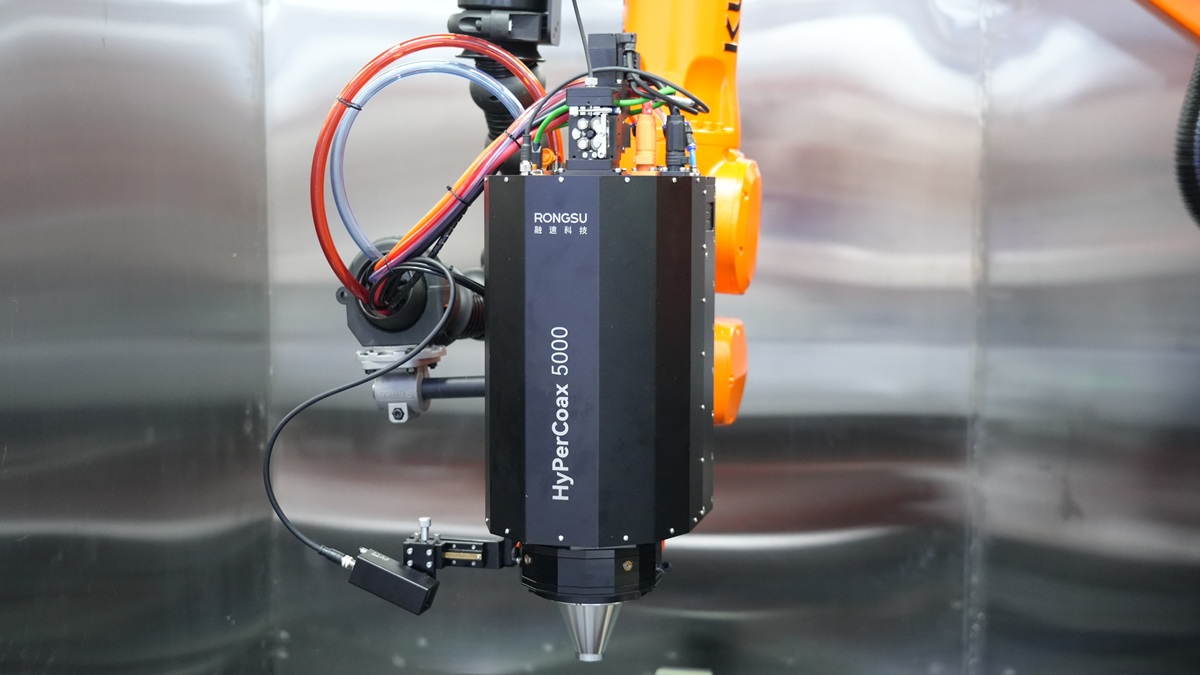
HyperCoax laser heads systems can achieve precision levels down to ≈ 5 μm. Image courtesy of Rongsu Technology.
The faster a machine can deposit metal, the quicker it can produce large industrial parts. A system capable of 4 kg/hour is ideal for manufacturing large aerospace, shipbuilding, energy, and industrial components rather than smaller, high-precision parts.
While that figure is not unusual in the broader wire-fed metal AM market, it is competitive with many industrial systems. For example, systems using wire-laser technology, such as those from Meltio, “trade raw throughput for fine-feature precision,” typically operating at a lower deposition baseline of 0.5 to 1 kg/hour. Moving into the broader WAAM segment, Gefertec has stated that its WAAM deposition rates typically range from 2 to 5 kg/hour. Similar to Gefertec, WAAM3D operates at a standard baseline of 3 kg/hour for typical high-quality geometries. However, its large-format RoboWAAM XP and RoboWAAM PLUS platforms have reported rates of up to 15 kg/hour. While still wire-fed, Sciaky, at the extreme upper end of the market, boasts even higher deposition rates, having demonstrated peak rates exceeding 18 kg/hour with its electron beam AM (EBAM) technology. If Rongsu’s results hold up in production, they suggest that Chinese manufacturers are beginning to compete directly in a high-growth market long led by these established Western players.
In fact, this is happening across much of China’s AM market. Over the last few years, Chinese manufacturers have expanded well beyond low-cost desktop printers. Companies such as BLT, Farsoon, Eplus3D, HBD, UnionTech, and Kings 3D now compete with Western suppliers across a range of industrial applications.
BLT and Eplus3D, for example, have emerged as major suppliers of metal powder bed fusion systems. Farsoon has developed both polymer and metal platforms and has expanded internationally. HBD has established itself as another significant player in industrial metal AM. Together, they have helped China build a strong domestic AM ecosystem.
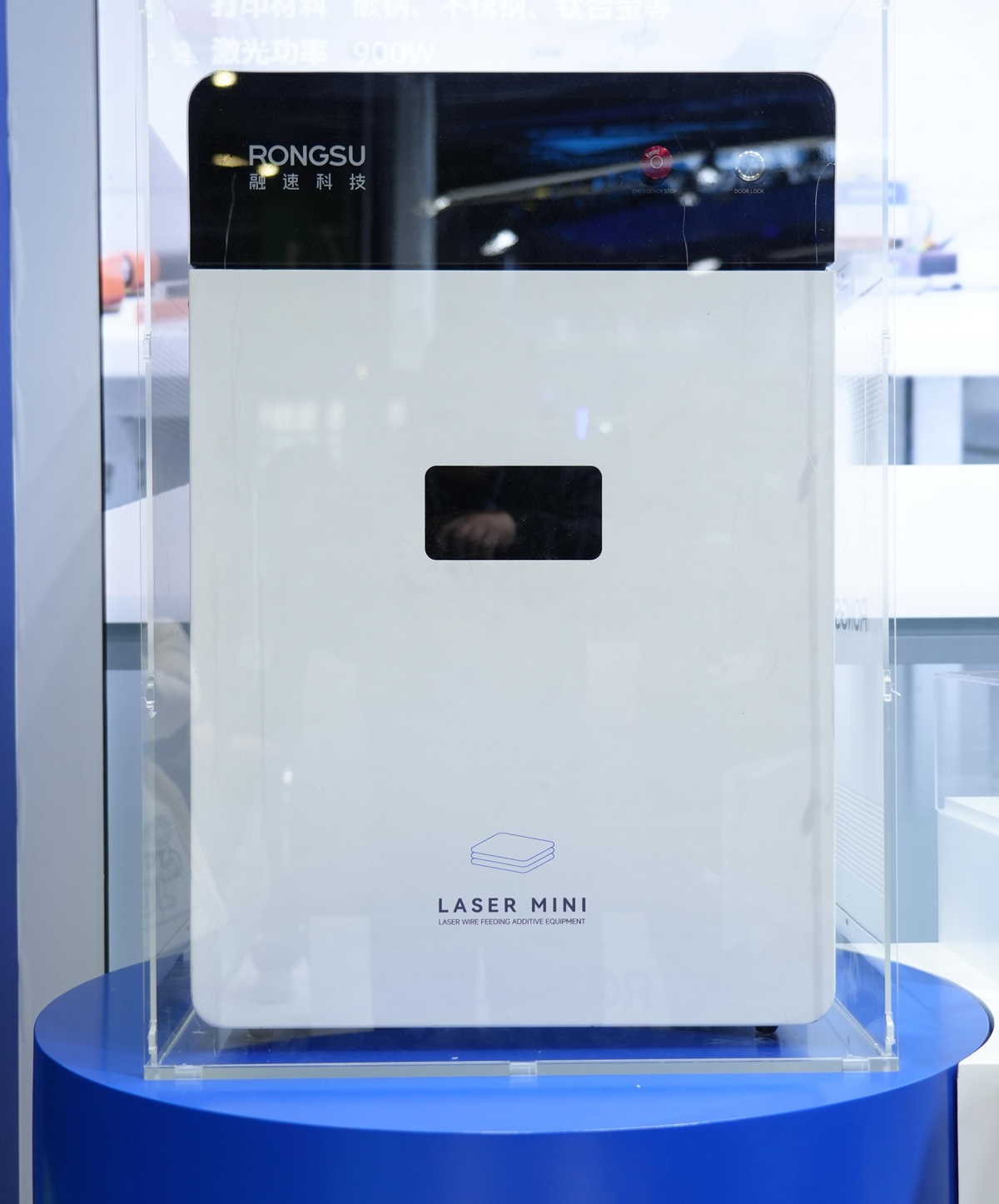
Rongsu Laser Mini desktop metal printer. Image courtesy of Rongsu Technology.
What’s more, government support has also helped. Through programs such as Made in China 2025 and other industrial initiatives, China has encouraged the development of domestic manufacturing technologies, including 3D printing.
Trade tensions and export controls have made those goals more important. Many Chinese manufacturers are now looking to domestic suppliers instead of relying on foreign technology. They also have more choices than ever before. Today, manufacturers can turn to a growing number of domestic machine builders rather than relying solely on Western suppliers.
Rongsu may not be as well known as many of the industry’s largest companies, but it is part of a growing group of Chinese machine builders. Together, those companies are giving manufacturers more domestic options and helping China build its own AM supply chain.