
Earlier this year, Beehive Industries received a $29.7 million contract to produce its Frenzy 6 and Frenzy 8 engines for the US Air Force. The metal additive manufacturing (AM) user with facilities in Colorado and Knoxville, TN claims that its process is both faster and 60 percent cheaper than the conventional methods used to make engines for uncrewed systems.
Beehive Industries leverages its large fleet of EOS 3D printers to support its workflow, a fleet that’s about to increase by more than double: EOS just announced that Beehive has ordered another 30 machines to be delivered over the next 12 months, which will bring Beehive’s total EOS capacity to 50 printers.
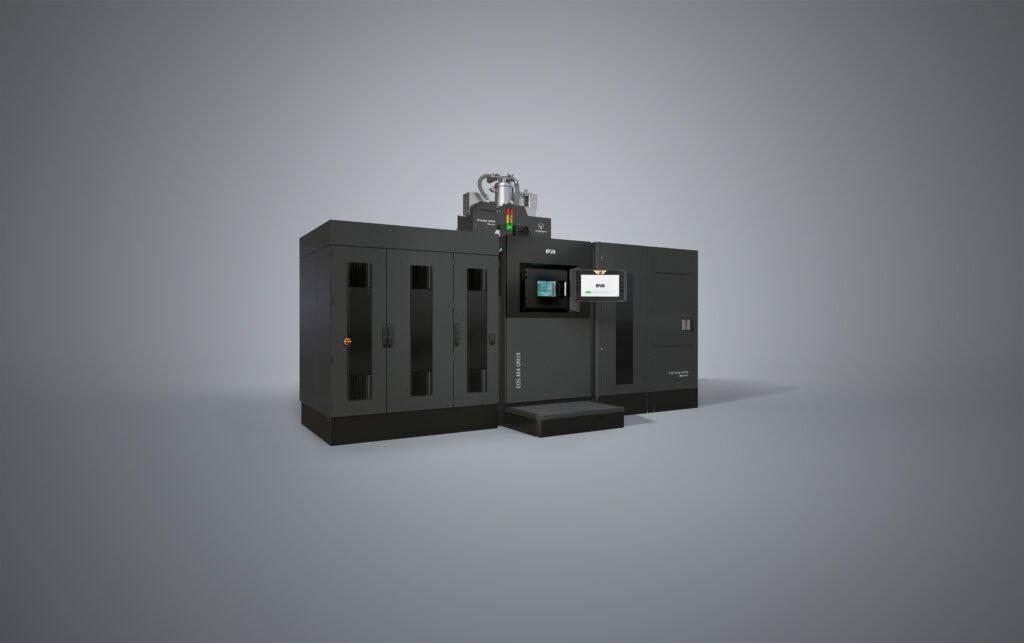
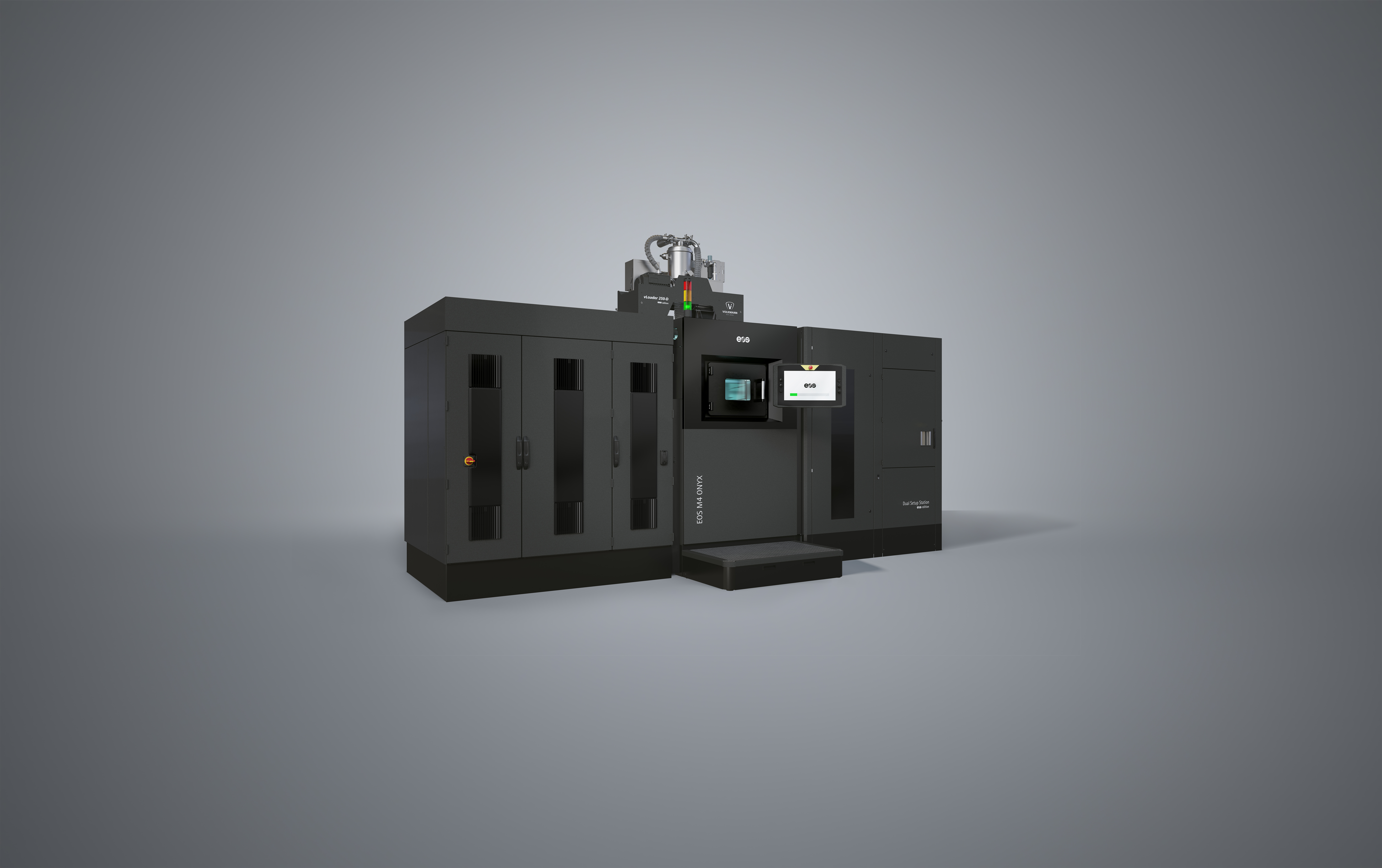
Specifically, Beehive has ordered the EOS M4 ONYX, the company’s newest, most sophisticated metal AM system. The original equipment manufacturer (OEM) launched the machine at last year’s Formnext, with shipments to customers beginning in Q1 of this year.
Relevant to the Beehive purchase, the American Center for Manufacturing Innovation (ACMI), an organization that supports US manufacturing enterprises in adopting new technologies to support strategic sectors including defense, was one of the first M4 ONYX customers, validating the machine’s use for the US military aerospace supply chain. Service bureau Incodema3D, a defense sector specialist, also committed earlier this month to buying four additional M4 ONYX machines.
The US military reportedly will need years of work to replenish its weapons stockpiles following the conflicts in Venezuela and Iran, driving demand for domestic defense contractors. Additionally, new weapons systems in-development in response to the rapidly shifting global combat environment require a ramp up of AM-centric product development strategies.
Anyone interested in learning more about that context should register for the UAS Additive Strategies webcast, sponsored by EOS and HP and presented by 3DPrint.com and AM Research, on June 30 from 11 AM-2:30 PM Eastern.
In a press release about Beehive Industries’ order of 30 M4 ONYX printers from EOS, Beehive’s COO and CFO, Darius Ehshetami, said, “Beehive is experiencing unprecedented demand for our Frenzy 8 engines driven by major defense programs and the urgent need for affordable, high-rate production of uncrewed systems. Our expanded collaboration with EOS and this substantial investment in best-in-class 3D printers will significantly increase our production capacity while reinforcing our commitment to delivering scalable, American-made propulsion solutions that strengthen warfighter capabilities.”
Marie Niehaus-Langer, CEO of EOS, said, “Beehive Industries’ unprecedented investment demonstrates how additive manufacturing has become a foundational production technology for the next generation of advanced propulsion systems. The success of the Frenzy engine program highlights what is possible when innovative design and industrialized additive manufacturing come together. We are proud to support Beehive as they expand production capacity and accelerate the delivery of high-performance technologies to customers around the world.”
While I’m not naive about how much one company in the AM industry tends to view the next company with contempt, I still think that EOS is exactly the kind of company that the rest of the AM industry should want to see succeed. It’s a pure-play company that has been and will be in it for the long haul, and it has achieved its reputation the old-fashioned way, by providing a quality product and providing excellent customer service.
The reason that matters is because that’s the only business model that can be reliably replicated in a machine tool market: you can’t replicate hype, or ride coattails, and even if you can, the lifespan for that method is inevitably short. That may be boring, but it’s also reality.
Anyhow, what we can see from Beehive Industries, and Incodema3D, and Ursa Major, etc., going all in on EOS machines, is that eventually, building a business the right way can benefit an entire industry, not just one company. Going forward, I think this will become more and more apparent in terms of how the winners and losers get separated.
That’s not to say there won’t be another hype cycle; in fact, the next one has already started! The point is that it should now at least be obvious which companies will outlast each successive hype cycle and make it through more unscathed than the competition. For the most part, they will be the companies that are okay with doing things the boring way.
Images courtesy of EOS