
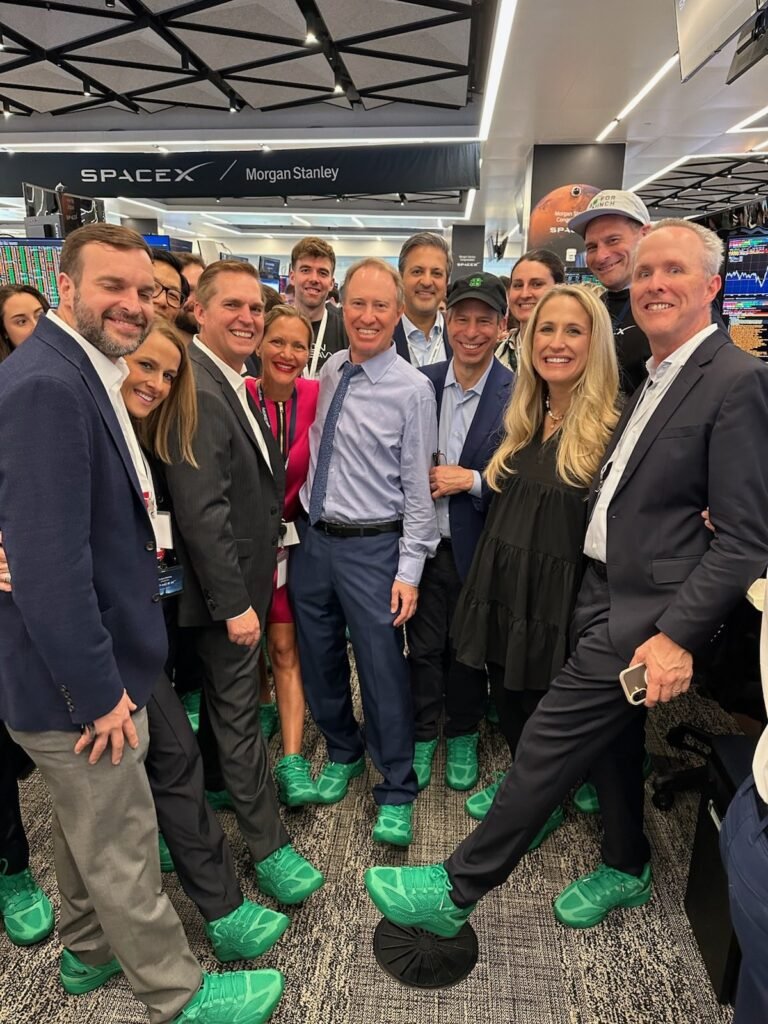
SpaceX officially began trading on the Nasdaq today under the ticker symbol SPCX, marking one of the most anticipated and largest public offerings in Wall Street history. The company priced shares at $135, raising approximately $75 billion and reaching an initial valuation of roughly $1.77 trillion at listing.
The IPO debut was celebrated on both coasts on June 12, 2026. SpaceX President Gwynne Shotwell and Chief Financial Officer Bret Johnsen rang the Nasdaq opening bell in New York, while Elon Musk joined employees and supporters at the company’s Starbase facility in Texas for a simultaneous celebration. Alongside its Nasdaq debut, SpaceX also became one of the first companies to dual-list on Nasdaq Texas, the exchange’s new Texas-based market launched earlier this year.
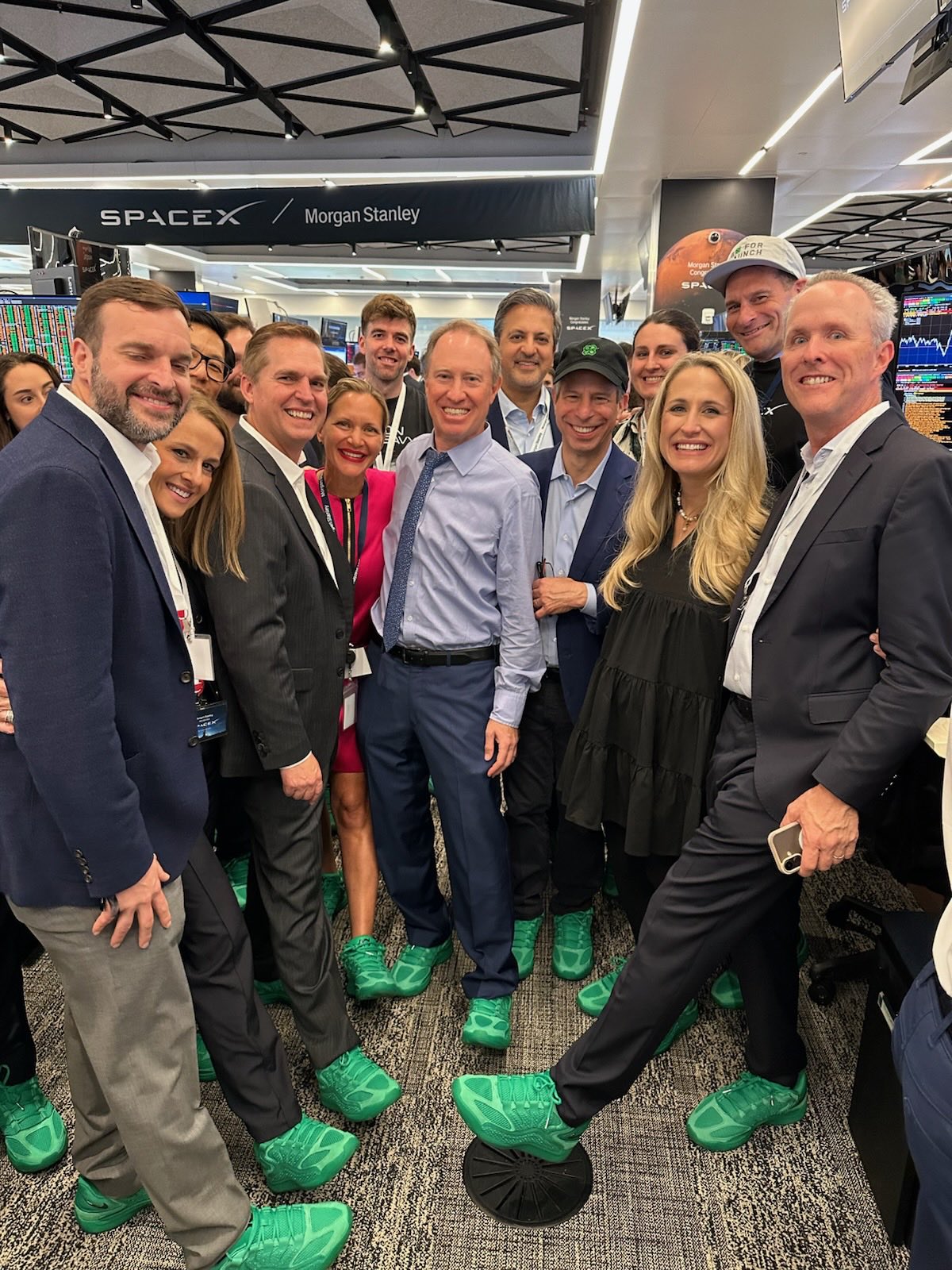
SpaceX President Gwynne Shotwell and Chief Financial Officer Bret Johnsen rang the Nasdaq opening bell in New York. Image courtesy of Elon Musk via X.
Speaking from Starbase, Musk talked about SpaceX’s early days and said he believed the company had “less than a 10% chance” of succeeding when it was founded more than two decades ago.
“If people told me this was gonna happen, I was like, ‘Man you must be smoking some really good crack, because I think this company is gonna fail,” said Musk. “I told people it was going to fail, but we should give it a chance because if there’s not a new company that enters space, we will never be a truly space-bearing civilization.”
Most investors will probably focus on SpaceX’s launch business, its rapidly growing Starlink satellite network, defense contracts, and future ambitions for Starship and deep-space exploration. Yet the IPO also highlights a company that has become one of the world’s most significant users of additive manufacturing (AM).
Over the past decade, SpaceX has incorporated 3D printing into some of its most important programs. Along the way, it helped demonstrate that AM could move beyond prototyping and into some of the most demanding applications in engineering.
A Long History With AM
SpaceX was an early adopter of metal AM, particularly for rocket propulsion systems. In fact, the company’s SuperDraco engines, which powered the Crew Dragon launch escape system, became one of the first high-profile examples of flight-qualified metal 3D printed rocket components. Manufactured using metal powder bed fusion technology, the engines demonstrated that AM could produce complex, high-performance hardware capable of operating in extreme environments. So the success of SuperDraco helped show that 3D printed parts could be used in real flight hardware, not just prototypes.
Since then, SpaceX has expanded its use of AM across many programs, incorporating 3D printed parts into engines, propulsion systems, spacecraft components, and production equipment. While the company rarely discloses specific details about its manufacturing processes, engineers and industry experts have long seen SpaceX as one of the most powerful examples of how 3D printing can accelerate space development cycles.
Few people have witnessed that transition more closely than Jeff Thornburg. The former SpaceX propulsion executive, who later led propulsion development efforts elsewhere in the space industry before co-founding Portal Space Systems, told 3DPrint.com last year that additive manufacturing changed how rocket engines could be designed and developed. According to Thornburg, the technology dramatically shortened development timelines and opened new design possibilities that were difficult to achieve through conventional manufacturing.
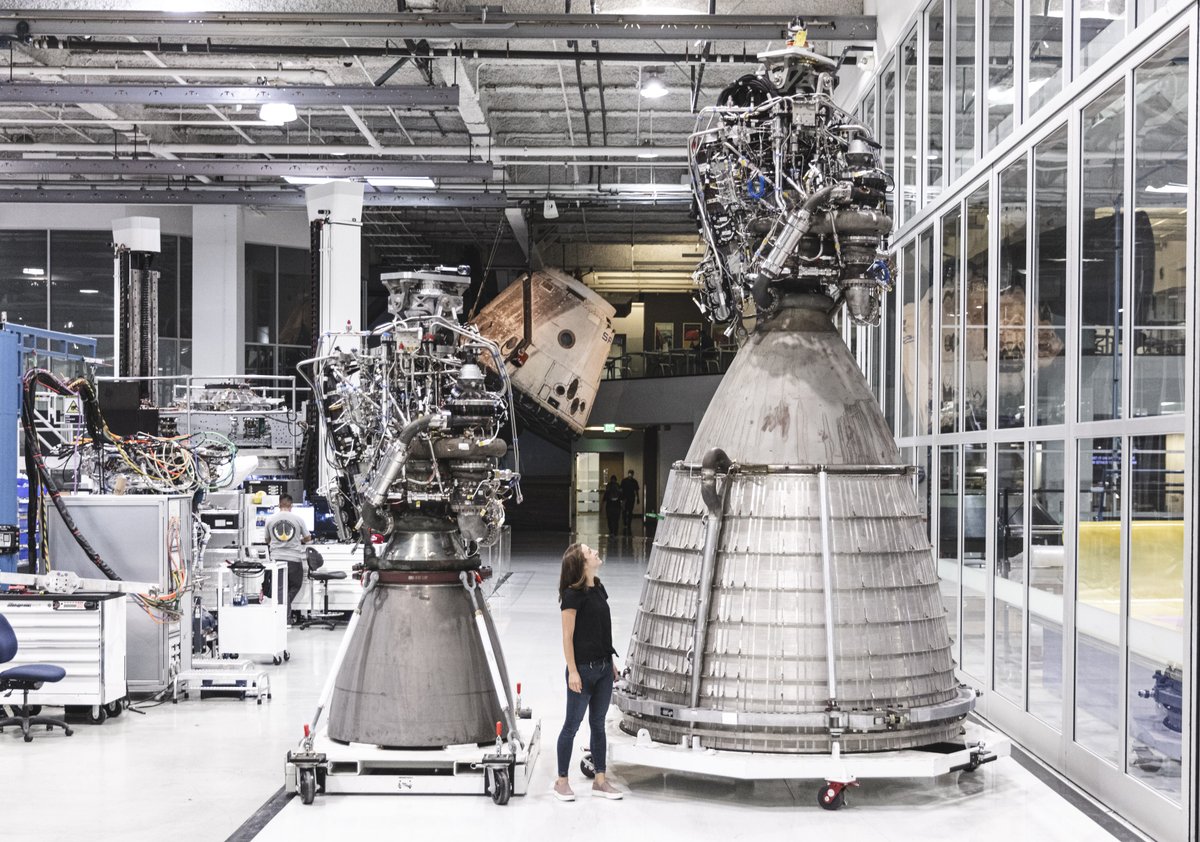
The first Raptor Vacuum engine (RVac) for Starship shipped from SpaceX’s rocket factory in California to SpaceX’s development facility in Texas. Image courtesy of SpaceX via Twitter.
The Velo3D Connection
SpaceX’s influence on the AM industry became particularly visible through its relationship with Velo3D. During Velo3D’s rise, SpaceX emerged as one of the company’s most important customers.
Velo3D’s technology was designed to manufacture highly complex metal components with minimal support structures, making it particularly attractive for rocket engines and other aerospace parts that have internal channels, lightweight geometries, and difficult-to-machine designs. In fact, many times, SpaceX represented an important share of Velo3D’s revenue.
When Velo3D faced financial difficulties in 2024, rumors circulated that SpaceX could acquire the company, but that never happened. Instead, the two companies signed an $8 million agreement that gave SpaceX a broad license to Velo3D’s AM technology, along with engineering support services. The breakdown estimates that SpaceX paid $5 million for a non-exclusive license to Velo3D’s technology and $3 million for engineering and support services.
Why Manufacturing Matters
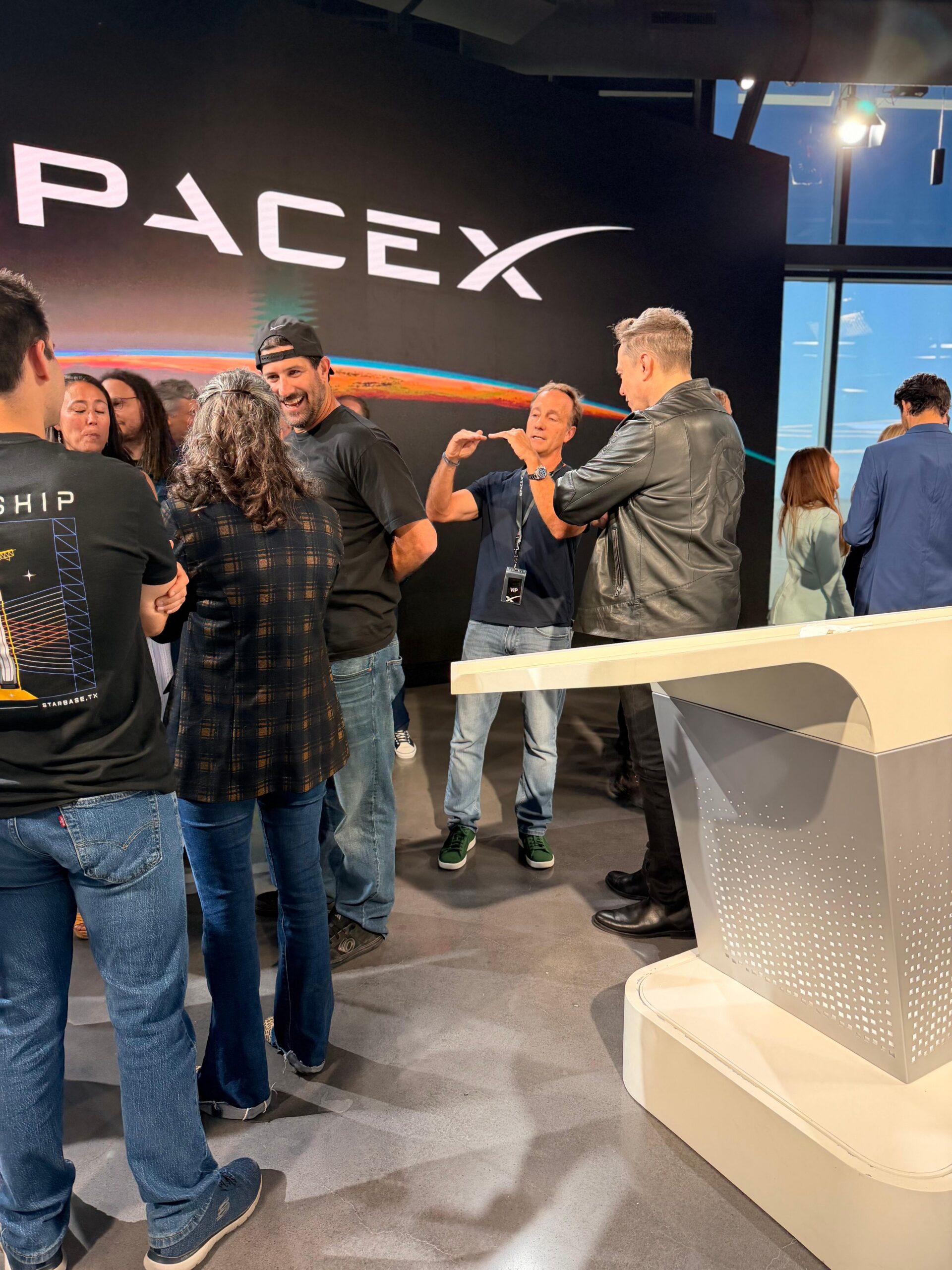
Elon Musk at the company’s Starbase facility in Texas before SpaceX went public on the Nasdaq. Image courtesy of Elon Musk via X.
SpaceX helped show that 3D printing could be used for much more than prototypes. Over the years, the company used AM to speed up development and simplify the production of complex aerospace parts. That approach helped SpaceX move quickly and influenced many of the launch companies that came next.
As new launch companies emerged over the past decade, many adopted metal 3D printing from the start. Today, the technology is a common part of the space industry’s manufacturing toolkit, with companies using it to produce everything from rocket engine components to spacecraft hardware. While SpaceX wasn’t the only company driving that shift, it helped prove that 3D printing could be used to build some of aerospace’s most daring hardware, or, as Musk said earlier today, “it’s about taking the fiction out of science fiction.”