
It’s been busy for publicly traded 3D printing companies, with new stock offerings, dealmaking, and investor updates showing how companies are working to strengthen their financial positions.
Xometry raised $225 million through a public stock offering, while 3D Systems secured $50 million in fresh capital. And Nano Dimension, meanwhile, is moving quickly to simplify a business built through years of acquisitions.
Xometry Secures $225 Million
Xometry (Nasdaq: XMTR) brought in about $225 million by selling 2.6 million shares at $85 each. The North Bethesda, Maryland-based company said it plans to use the proceeds for working capital and general corporate purposes. The offering closed on June 3, 2026, and it was led by J.P. Morgan and Goldman Sachs, with William Blair, Citizens Capital Markets, and Cantor Fitzgerald also serving as book-running managers.
Raising $225 million is no small feat in today’s AM market. While many publicly traded 3D printing companies are still focused on cutting costs and improving profitability, Xometry was able to attract investor interest.
Of course, Xometry is not a pure 3D printing company, but AM is an important part of its digital manufacturing marketplace. Earlier this year, the company expanded its AM offerings with new materials aimed at aerospace, defense, medical, and automotive customers. In May, Xometry reported record first-quarter revenue and announced a partnership with Siemens focused on AI-driven supply chain tools. The company also expanded sourcing capabilities for data center infrastructure components.
3D Systems Prices $50 Million Offering
3D Systems (NYSE: DDD) also turned to investors for fresh capital, announcing a public stock offering expected to bring in about $50 million. The company sold roughly 16.4 million shares at $3.05 each and gave underwriters the option to purchase additional shares. Needham & Company and Craig-Hallum are acting as joint book-running managers.
The offering gives 3D Systems additional cash as it continues to focus on healthcare and industrial manufacturing, two areas the company sees as key growth opportunities. Like several AM companies, 3D Systems has spent the past few years reducing costs and working to improve profitability.
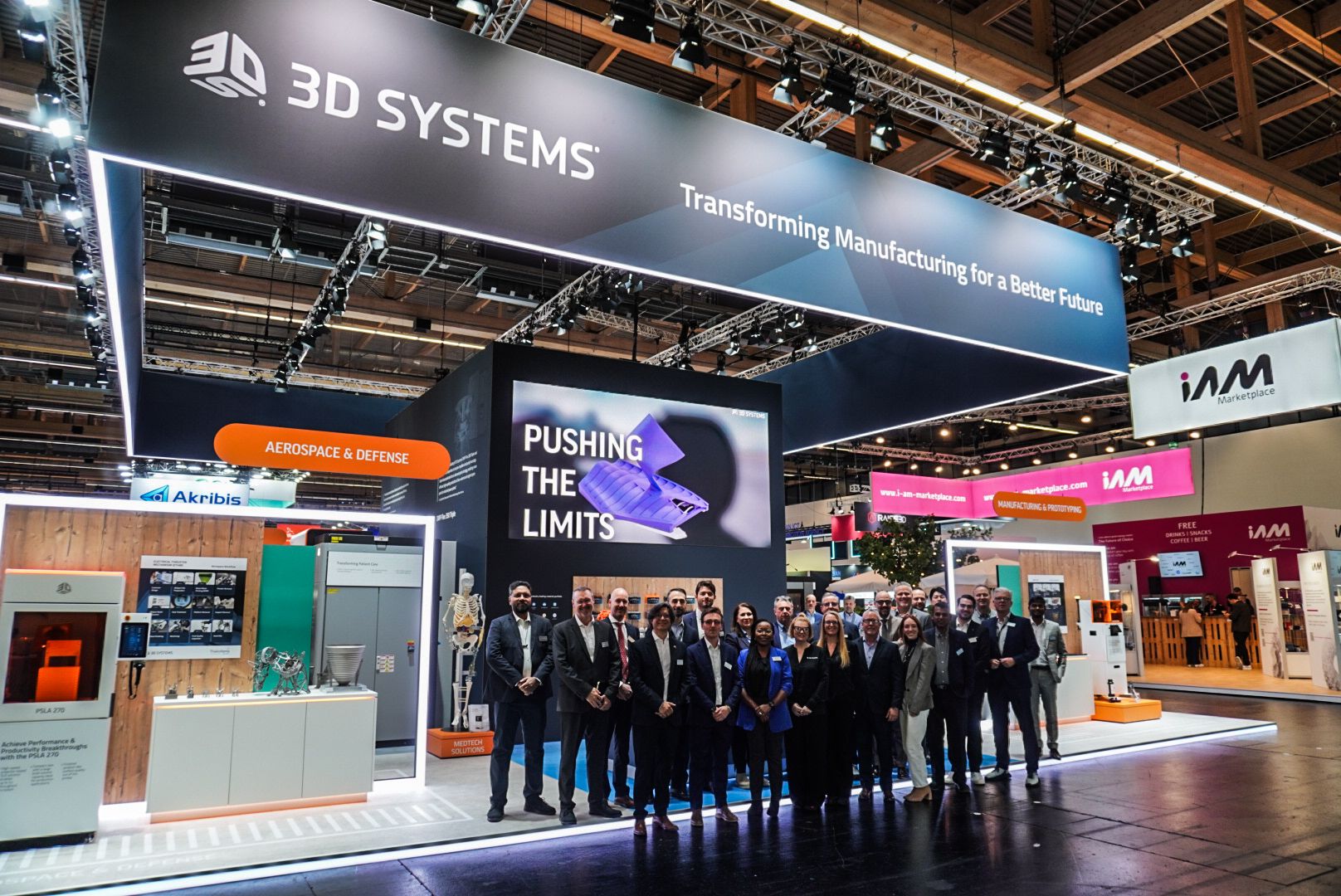
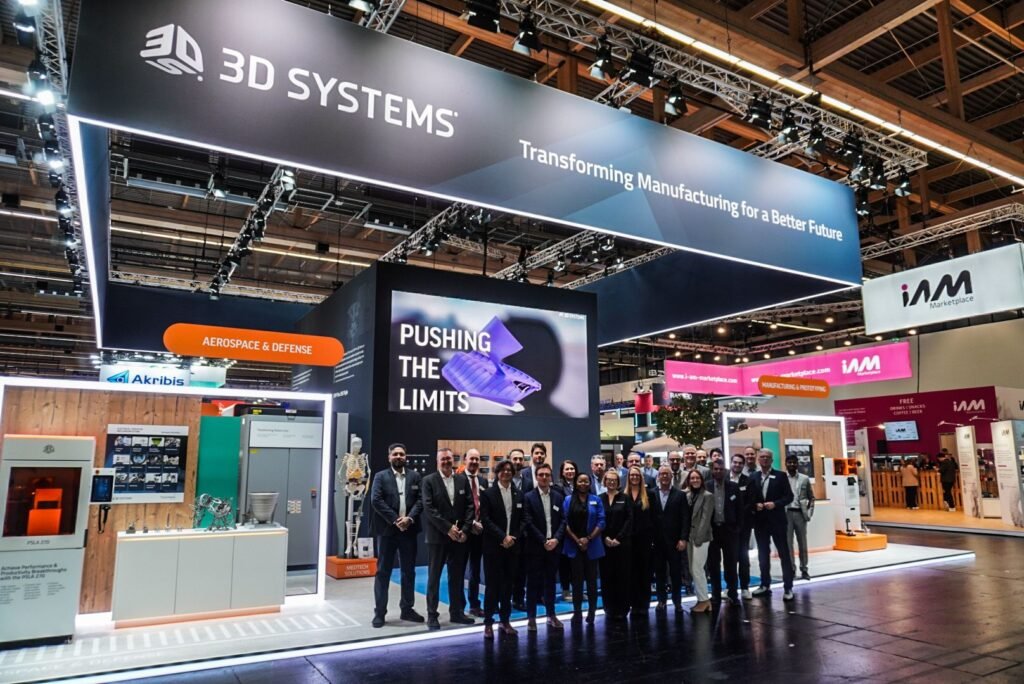
3D Systems booth at Formnext 2025. Image courtesy of 3D Systems.
Nano Dimension’s Strategy After Markforged Sale
Nano Dimension (Nasdaq: NNDM) is taking a different path. On May 27, the company announced that it had agreed to sell Markforged to Stratasys in an all-cash transaction valued at $42.5 million. Nano will retain the Markforged metal binder jetting product line, while Stratasys will acquire the rest of the business.
Markforged had become part of Nano Dimension through its earlier acquisition strategy, but management now says it is moving to simplify the business. The sale is part of Nano’s three-phase strategic plan. The first phase focuses on cutting costs and reducing cash burn, followed by efforts to sell or monetize certain assets and product lines. The final phase involves evaluating strategic alternatives and determining the company’s longer-term direction.
According to Nano, the sale is expected to reduce annualized cash burn by about $15 million. The transaction is expected to close in the second half of 2026, subject to customary closing conditions and regulatory approvals.
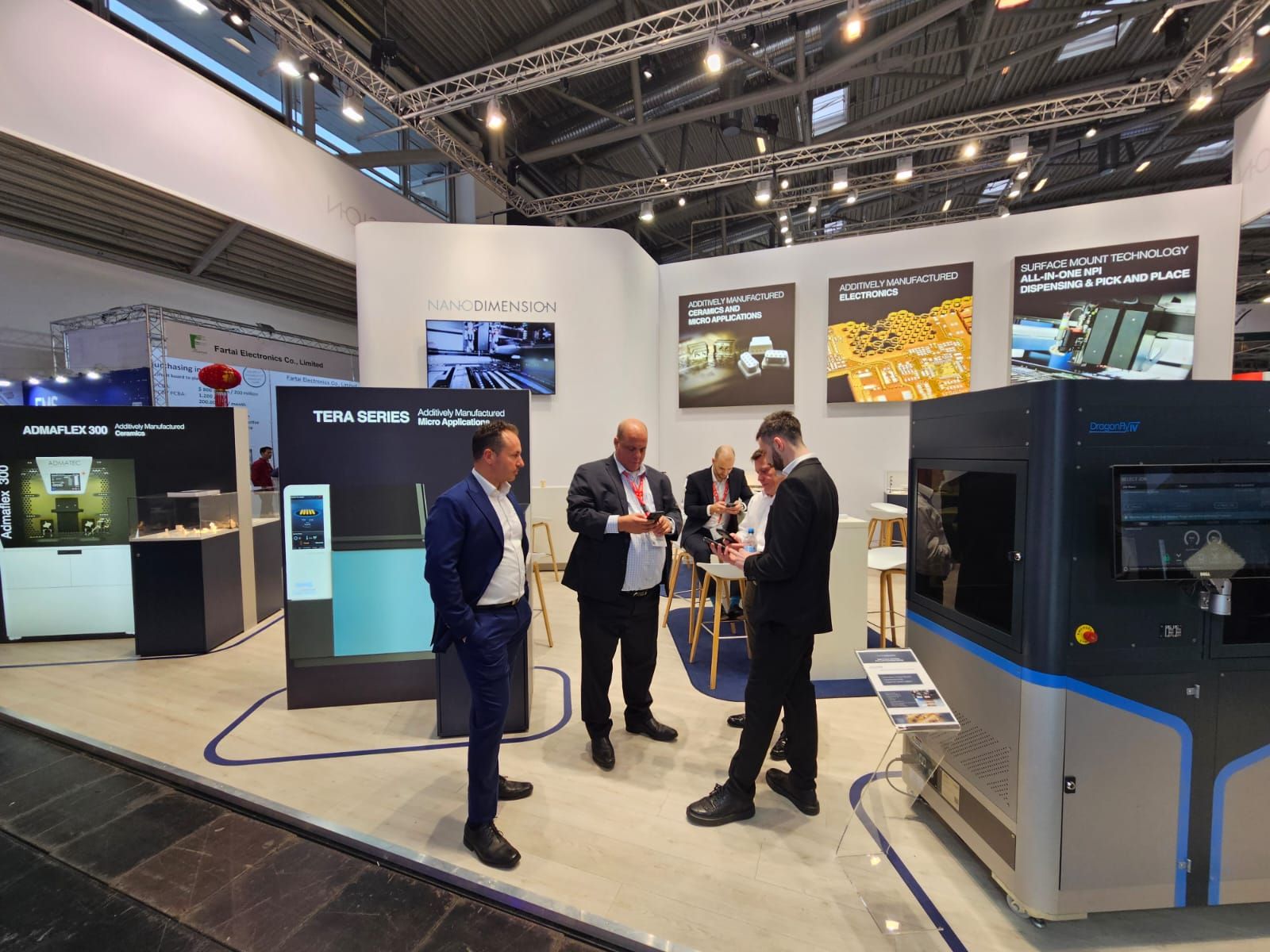
Nano Dimension booth at the Electronica Fair 2024 in Munich, Germany. Image courtesy of Nano Dimension via LinkedIn.
Shortly after announcing the deal, management offered more insight into its thinking. In a June 5 letter to shareholders, CEO David Stehlin said Nano Dimension’s prior acquisition strategy had left the company with product lines that were not integrated enough to support sustainable profitability at scale. He said some of the acquired businesses had strong technology and talented teams, but that the broader structure did not create enough operating leverage.
Stehlin also said some prior commitments required significant capital deployment in 2025 and that, looking back, those acquisitions were too expensive for the benefits gained.
According to Nano, standalone operating expenses fell about 22% year over year in the first quarter of 2026. The company also said operating cash burn has declined every quarter since the third quarter of 2025. Nano reported about $441.6 million in cash, cash equivalents, deposits, restricted deposits, and marketable equity securities as of March 31, 2026. Still, investors remain cautious. Traders Union reported that Nano shares recently traded at $1.63, down 1.21% on the day and below key moving averages.

Whether through capital raises, portfolio changes, or restructuring efforts, the latest announcements show that financial strategy remains a major focus across the AM industry. As companies navigate a challenging market, investors will be watching closely to see which approaches deliver results.