

In today’s 3D Printing News Briefs, Snapmaker is celebrating 10 years with a series of updates. XJet is collaborating with eqops for sales and support across the UK and Ireland, Interspectral expanded its strategic collaboration with Pankl Racing, and Airtech is collaborating with Evergreen Additive. We’ll end with a story out of Princeton University about a multimaterial 3D printing approach for cement-based composites.
Snapmaker Celebrating 10th Anniversary with Multiple Updates

This month, Chinese desktop 3D printer OEM Snapmaker is celebrating its tenth anniversary. The company launched back in 2016 with a focus on making powerful manufacturing tools more accessible. To go along with its anniversary slogan of “Always Making,” Snapmaker announced a series of updates, covering software, community, materials, and new products. Last month, Radu, or “Ratdoux,” the developer behind the Full Spectrum color-mixing slicer for the Snapmaker U1 ecosystem, joined the company to help lead a multicolor 3D printing initiative. Building on this, Snapmaker Orca V2.3.3 Beta has introduced native Full Spectrum support, which will enable intermediate colors by alternating filament layers and visual blending. This is the first release to include this community-developed virtual color mixing technology, and the technology is now available directly in the slicer, which is available for download.
Snapmaker’s User Model Design Contest and Video Contest, with the theme of “Make Something Colorful,” are now taking submissions through June 16th. Creators are asked to show what multi-color 3D printing is truly capable of, from artistic expression to functional design. Winners will be announced June 23rd. Next, the Snapmaker Model Library is under construction, but there will be a public launch later this year. Once it’s done, the repository will have high-quality models optimized for multi-color 3D printing. The company is also adding three new Hotend size to its accessories lineup—the Hardened Steel Hotend, in 0.2mm, 0.6mm, and 0.8mm, will give users more control over speed, throughput, and detail. Finally, Snapmaker is also offering four new filament options. TPU 95A HF is great for shock absorbers and phone cases, while PETG HF (High Flow) is a variant optimized for speed, while still offering strong layer adhesion and chemical resistance. Silk PLA and Silk Dual-Color PLA both feature a luminous finish for display and decorative prints. You can purchase these new offerings here.
XJet & eqops Elevating Advanced AM in the UK & Ireland
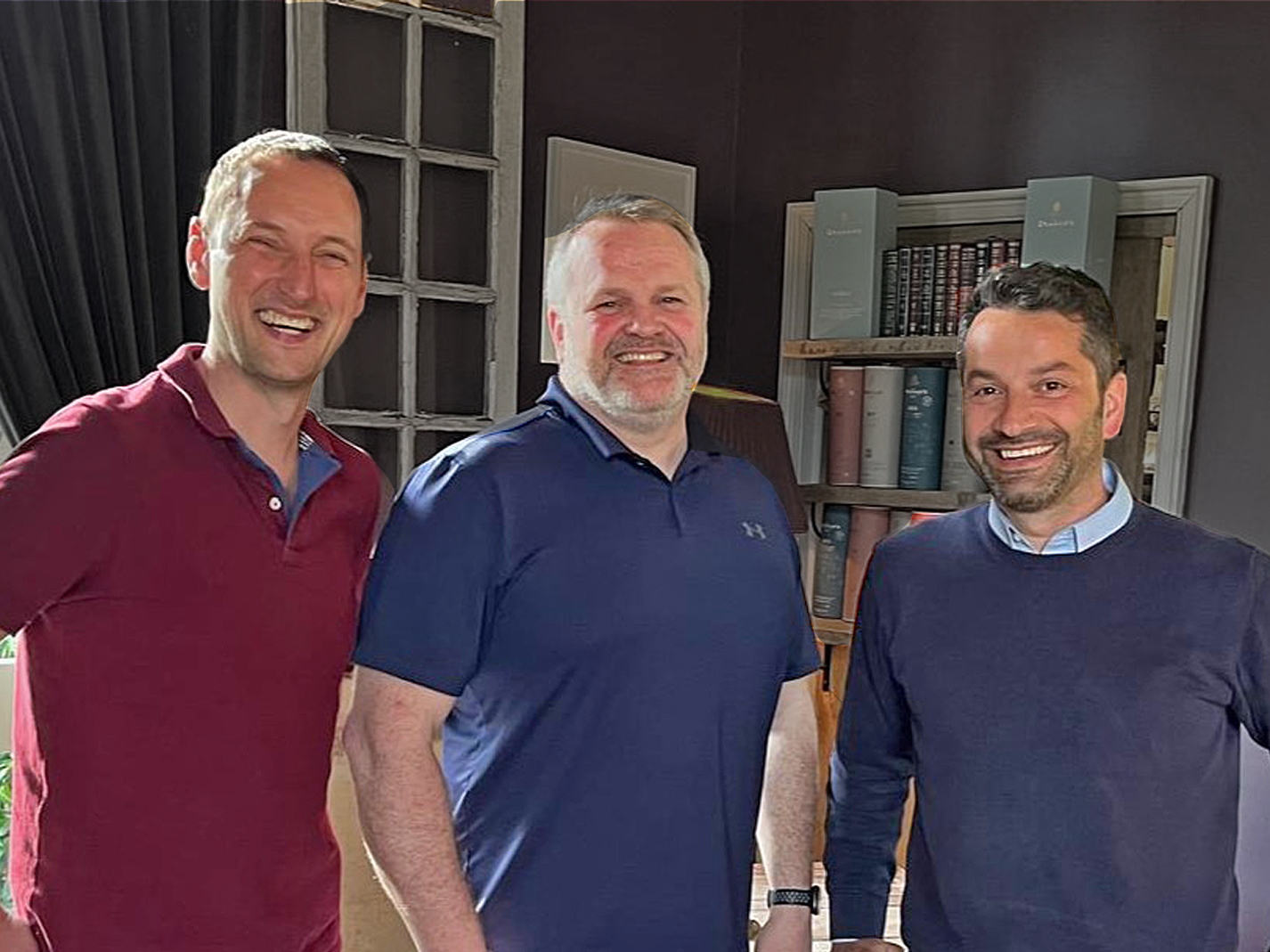
L-R: Mark Caseley and Alwyn Pryse from eqops, and Riccardo Tosi, Business Director at XJet
As part of its broader international growth strategy, Israel-based XJet is collaborating with UK-based engineering consultancy eqops, which will represent XJet as a sales and support partner in the UK and Ireland. This will combine XJet’s NanoParticle Jetting (NPJ) technology with the deep AM expertise and well-established operational infrastructure that eqops has in Ireland and the UK. The eqops team is experienced in supporting AM operations across a multitude of high-performance industries, like electronics, aerospace and defense, energy, and medical devices. This makes eqops a great partner for XJet as it works to bring NPJ to a wider range of advanced manufacturers. The companies will work together to support manufacturing customers over the full lifecycle, from choosing a system and installing it all the way to process optimization, compliance, and long-term performance.
“The UK and Ireland represent important and growing markets for XJet, and finding the right partner to represent our technology in those markets has been a priority. In eqops, we have found exactly that. Their combination of technical knowledge, hands-on additive manufacturing experience across hundreds of systems, and structured approach to customer support – spanning installation, optimisation, compliance, and long-term service – is precisely what our customers in the region need to succeed with NanoParticle Jetting,” said XJet’s Chief Business Officer Gilad Gans. “We are confident that eqops will be outstanding ambassadors for XJet, and we are very pleased to welcome them as our partner for the UK and Ireland.”
Interspectral & Pankl Racing Systems Expanding Strategic Collaboration
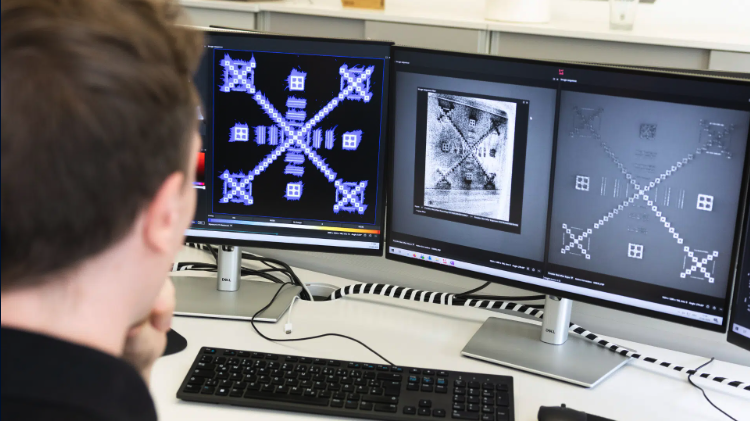
AM Explorer in action at Pankl facility
In more collaboration news, Swedish tech company Interspectral AB and Pankl Racing Systems AG have expanded their existing strategic collaboration. Their multi-year partnership focuses on speeding up industrialization of metal AM through improved process monitoring, data-driven production workflows, and quality assurance (QA). Now, Pankl will act as a strategic development partner for Interspectral’s flagship AM Explorer software platform, as well as a reference customer. Pankl is a top supplier of high-performance systems and components for the aerospace, automotive, and motorsport industries, and will deploy AM Explorer further across its AM operations to support data integration, real-time monitoring, anomaly detection, and qualification workflows. It will also work with Interspectral to explore new capabilities in AI-driven defect detection, multi-source data correlation, and optical tomography analysis. The end goal is to make QA more production-ready, scalable, and reliable.
“This collaboration is about helping make additive manufacturing a more reliable and scalable production technology,” said Isabelle Hachette, CEO at Interspectral. “As the industry moves from experimentation to industrial deployment, manufacturers need better ways to build trust into production. Working closely with Pankl allows us to develop those capabilities in a real manufacturing environment.”
Airtech & Evergreen Collaborating in LFAM Supply Agreement for Maritime
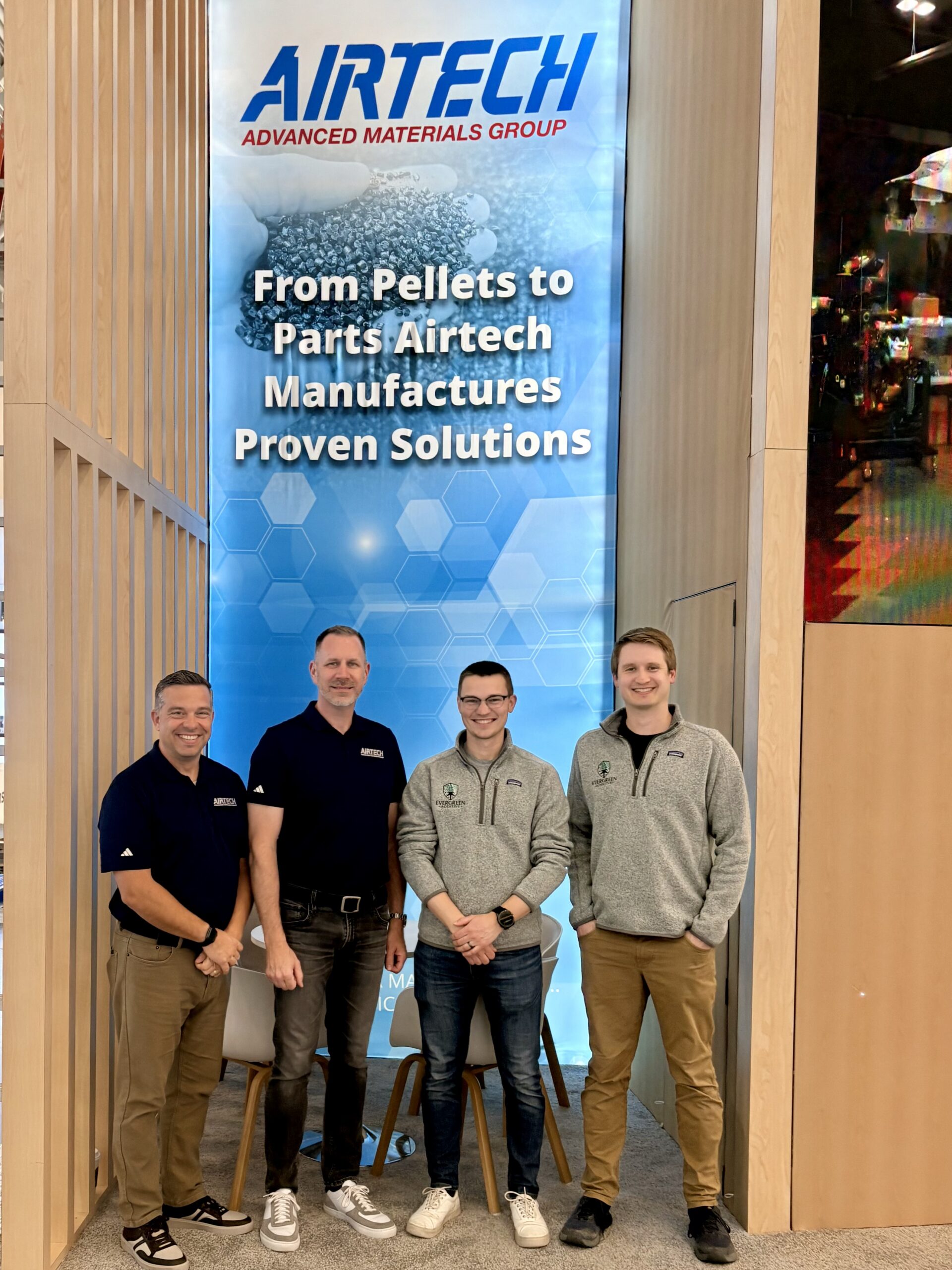
For our final collaboration announcement, Airtech Advanced Materials Group and Evergreen Additive have entered into an exclusive supply agreement. Family-owned and operated Airtech is a leader in specialty formulated AM materials, and actually acquired KIMYA’s filament portfolio last year. It works with a wide range of sectors, including aerospace, automotive, general composites, solar, and wind energy. Evergreen, based in Maine and officially founded last year, specializes in large-format additive manufacturing (LFAM) for maritime applications in the commercial marine tooling and defense unmanned systems markets. The formal supply agreement between Airtech and Evergreen builds on several years of collaboration, and will focus on materials development for new and emerging marine and defense applications. Airtech will provide support to Evergreen in AM business opportunities and technical areas, while Evergreen will exclusively use Airtech products in its LFAM projects.
“Airtech is excited to be able to support Evergreen from the very beginning and be a part of their journey taking what they learned in the lab and help them scale it to full commercial application solutions for use in everything from parts, tooling, or direct use structures and vehicles,” said Gregory Haye, Director of Additive Manufacturing at Airtech Advanced Materials Group. “We can’t wait to see what innovative materials combined with Evergreen’s experience and ingenuity will bring to the market over the coming years.”
Researchers Inspired by Glass Sponge for Multimaterial 3D Printing Approach

Alternating layers of concrete and thin polymer allow the new composite material to absorb energy without failure. Image by the researchers
The problem with 3D printed cement-based materials like concrete is that they’re mostly brittle; if cracks form, they spread fast. A team of engineers at Princeton University developed a multimaterial 3D printing approach to fabricate cement-based composites that are more resistant to deformation and cracking. The researchers took their inspiration from Euplectella aspergillum, a deep-sea glass sponge, often called Venus’s flower basket. Its skeleton contains alternating hard and soft layers, and the soft ones will arrest and deflect any cracks that occur before they spread. Most concrete structures incorporate steel bars for reinforcement. The Princeton team took this a step further by using multimaterial 3D printing to engineer how concrete cracks; this new class of concrete is called Architected Cementitious Composites (ACC). Polymer layers in ACC structures act as thin, soft interlayers that stop, redirect, and redistribute the cracks, thus improving the ultimate load bearing capacity. The team programmed a custom 3D printer to place thin polymer layers within printed mortar. As they describe in a published paper, their 3D printed concrete-polymer composite can achieve up to 187-fold higher fracture toughness and 22.6-fold greater ductility than other cement-based materials.
“This work broadens the design space for concrete 3D-printing technology as well. It shows that multi-material additive manufacturing can be used not only to shape better cementitious materials and how they fracture, deform, and resist damage, but also to engineer new functions such as thermal regulation and insulation that we could not easily attain otherwise,” explained team leader Reza Moini, an assistant professor of civil and environmental engineering at Princeton.