
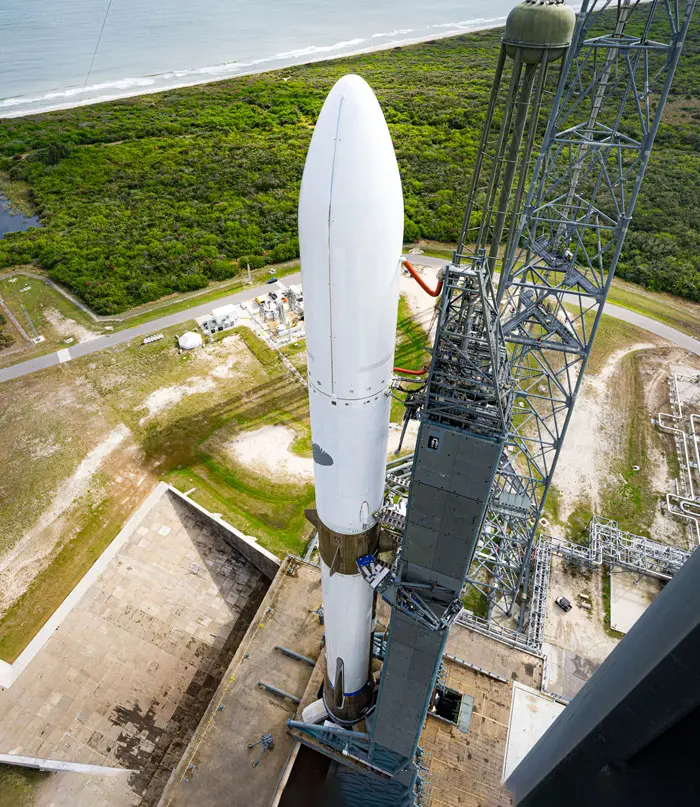
Blue Origin‘s orbital New Glenn rocket exploded during a hot-fire test at Launch Complex 36 in Cape Canaveral on May 29, setting back the company’s launch ambitions at a time when it is investing heavily to expand its manufacturing footprint. Videos shared online showed a large fireball and thick smoke rising above the launch complex. No injuries were reported, though the explosion may have damaged parts of the launch facility.
The incident occurred just days after Blue Origin announced plans to spend approximately $600 million on a major expansion near Florida’s Space Coast. The project will add more than 800,000 square feet of manufacturing and logistics space and create hundreds of jobs as the company works to increase production of its New Glenn launch vehicle.
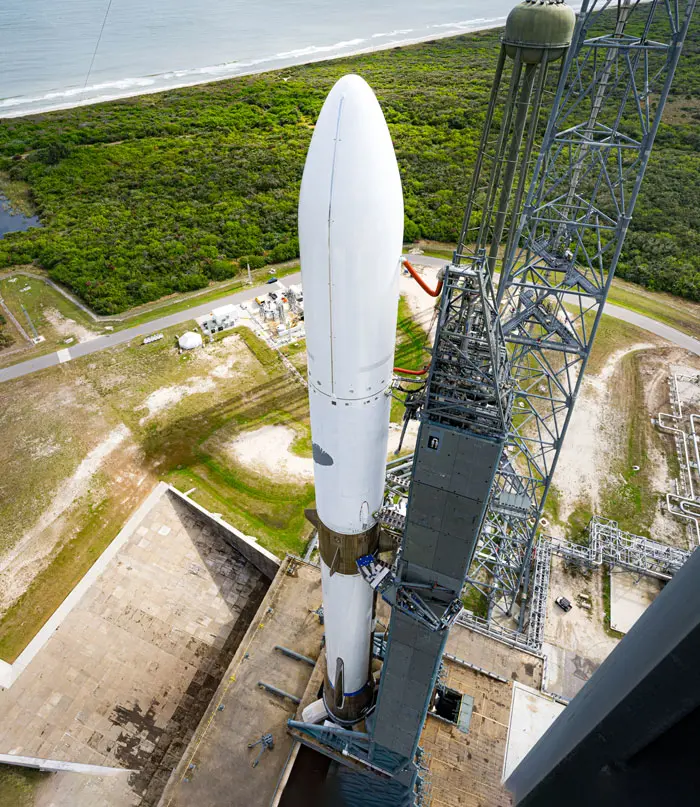
New Glenn rocket. Image courtesy of Blue Origin.
The setback also comes as Blue Origin takes on a larger role in NASA’s lunar plans. Earlier this month, NASA selected the company for additional moon-related missions as part of its broader Artemis program, which aims to return astronauts to the Moon and establish a long-term lunar presence. New Glenn is expected to play an important role in those efforts, including future launches connected to Blue Origin’s Blue Moon lander program. NASA has since said it is assessing whether the explosion could affect upcoming schedules and mission planning.
The investment is part of Blue Origin’s effort to increase the number of New Glenn launches. The company has positioned the rocket as a competitor to other heavy-lift launch vehicles serving commercial, government, and lunar missions (particularly SpaceX’s alternatives), making production capacity increasingly important as demand for launches grows.
While the cause of the explosion is still under investigation, the incident comes as Blue Origin is trying to increase production of its large New Glenn rocket. Like other space companies, Blue Origin is now facing the challenge of turning a rocket program into a production program. And that challenge is tied to additive manufacturing (AM).
Over the past decade, 3D printing has become a core production technology within aerospace. Today, many launch providers rely on additively manufactured components in engines, propulsion systems, and spacecraft hardware. Blue Origin is one of them. The company has used metal additive manufacturing in its propulsion programs for years, particularly in the development and production of the BE-4 engine. The engine contains additively manufactured components and is produced at Blue Origin’s engine factory in Huntsville, Alabama.
The company has also backed research aimed at advancing aerospace applications for additive manufacturing. Last year, Blue Origin partnered with Auburn University’s National Center for Additive Manufacturing Excellence (NCAME) to improve the 3D printing of copper alloys used in aerospace applications. These materials are often used in rocket engine components because they can withstand, and help manage, extreme temperatures.
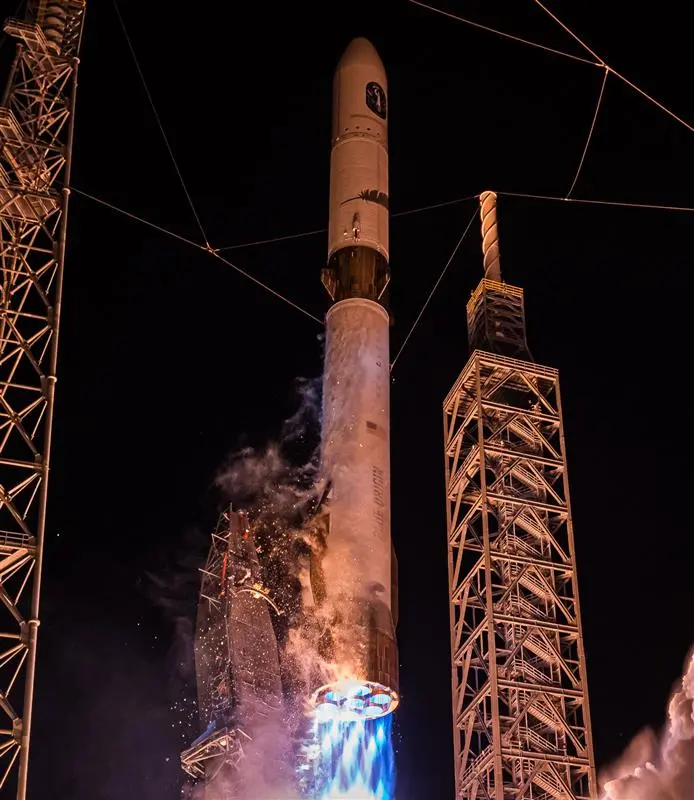
New Glenn rocket. Image courtesy of Blue Origin.
While details about the incident are limited, the event comes at a time when launch providers are under a lot of pressure to increase production. That has helped drive adoption of additive manufacturing, which allows companies to use 3D printing to make engine parts and other hardware faster and with fewer pieces.
Companies including SpaceX, Rocket Lab, Relativity Space, and Blue Origin have all incorporated additive manufacturing into their rocket programs. One reason is that 3D printing can simplify complex hardware. Parts that once had to be assembled from dozens of individual components can now be produced as a single piece. For rocket manufacturers, that can mean fewer assembly steps and a simpler production process, not to mention lower costs.
What remains unclear is how much the explosion will affect Blue Origin’s schedule. Reports indicate the incident may have damaged launch infrastructure at Cape Canaveral, and NASA has said it is assessing the impact on upcoming programs. At the same time, there has been no indication that Blue Origin’s planned manufacturing expansion will change. Before the explosion, Blue Origin had been working to increase New Glenn launch frequency while supporting future NASA and commercial missions. Whether the incident results in weeks or months of delays is still not clear, but the company’s manufacturing expansion is expected to continue as planned.