
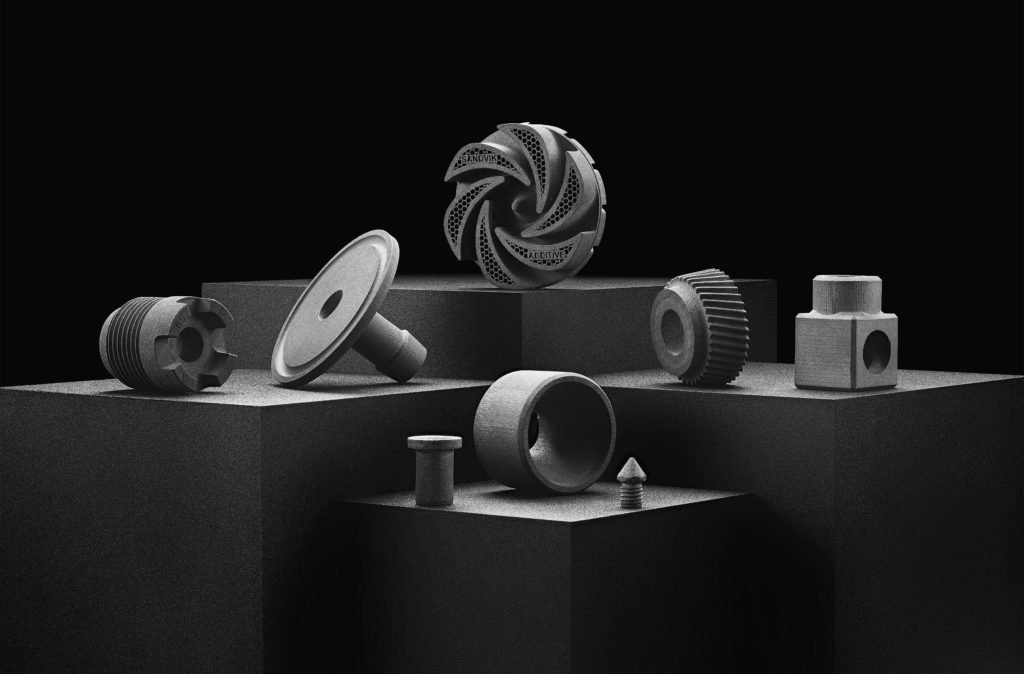
Global materials company Sandvik has left the 3D printing market, the Osprey Must now fly from the Sandy Bay.. Sandvik started engaging with the 3D printing market in the mid-2010´s. It bet big on a partnership with Italian service bureau BeamIt. The company qualified materials with the service, created joint ventures around it, worked to make parts in aerospace and ultimately the partnership soured. Sandvik bought a lot of BeamIT in 2019. The duo then acquired finishing solution Proxera and others. The company also worked with Renishaw and made mining parts, partnered with companies ot make bike parts, partnered with Immensa, made nuclear parts and more. In 2023, I loved Sandvik´s approach to the market and strategy. Later, there were differences over valuation, and the course to follow, which led to drift and a break with Beamit. Changes in the executive team also dispersed 3D printing knowledge, caused a move away from its initial approach, and led to hesitation. When it sold its Beamit stake in 2024 we wrote that initially the firm, believed that the,
¨logic appeared to be that the company would acquire businesses that could leverage its core expertise in metals and hard-wearing materials to produce higher-value finished items. An ore firm was going to make defense parts using additive manufacturing and, in doing so, generate more profit through a vertically integrated business model.¨
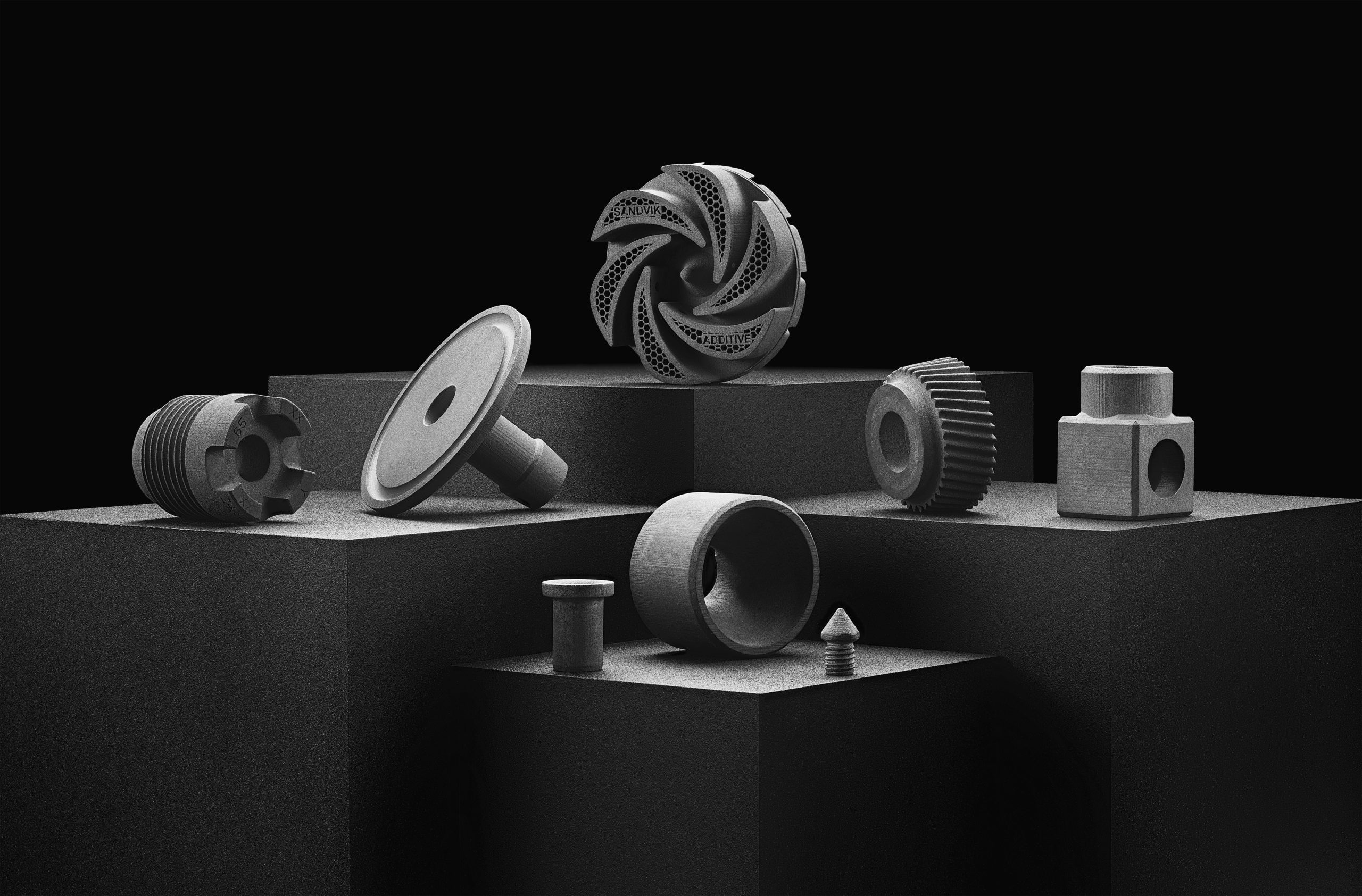
The tiff with Beamit led us to speculate that they would focus on partners and partnerships with Amexci or other services. Another alternative would be to specialize in hard-wearing materials or specifically things like mining. The firm didn´t do that, however. Instead, it kind of threw in the towel. The firm has now sold its stake to Mimir, a Swedish investment firm. That firm specializes in carve-outs.
Sandvik CEO Stefan Widing said,
“This divestment is intended to better position the Additive Manufacturing business for its next growth phase, and we believe the new owner will provide the platform and dedicated focus needed to further develop the business towards its full potential,”
Mimir on the other hand speaks of acquiring ¨Osprey, Sandvik’s metal powder business, through a carve-out¨ The company likes the ¨2,000 alloy variants and more than 400 distinct alloys¨ in 3D printing, cold spray, MIM.
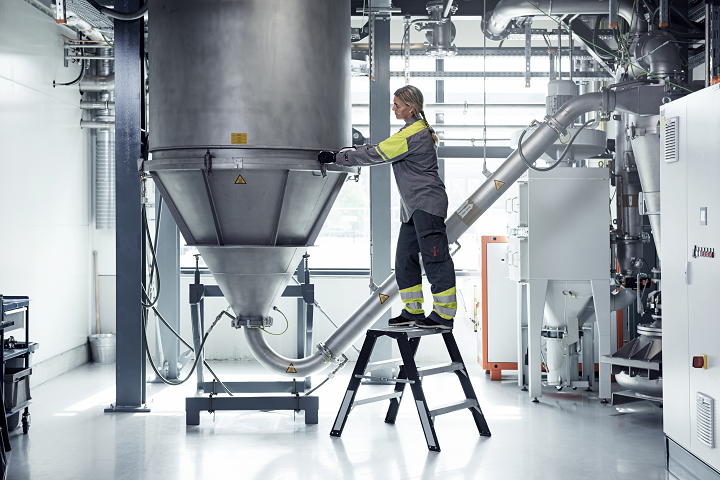
Sandvik metal powder plant. Image courtesy of Sandvik.
Mimir Managing Partner Joakim Notö said,
”Osprey is precisely the kind of company we look for. It combines deep materials science, a world-class alloy library and decades-long customer relationships in markets with strong underlying growth. That combination creates barriers to entry that are very hard to build and even harder to copy — and that is where we see the potential to accelerate value creation,”
MonteCap founder Mats Gunnarsson, will be the new chairman of the board. He said that,
”Osprey has an unusually strong foundation to build on. As an independent company, the business can direct its full focus towards customers, technology development and the segments where growth is strongest. I look forward to working with management and Mimir to step up the company’s next phase,”
The company says that,
¨Osprey intends to intensify its investment in product development, new alloys and international market expansion — with particular focus on additive manufacturing and other advanced manufacturing processes where demand is growing fastest.¨
Always a good idea to grow where demand is growing the fastest. It would be interesting to know if this was offered to Tekna or Hoganas at all. There could be a real move by someone to grab some powder companies and loose assets in order to do a roll-up of powder. This could be especially good for defense and medical. Mimir is a long-term hold PE player. The company, with its carve-out focus, seems to be a very logical partner.
Is this a good thing for Sandvik?
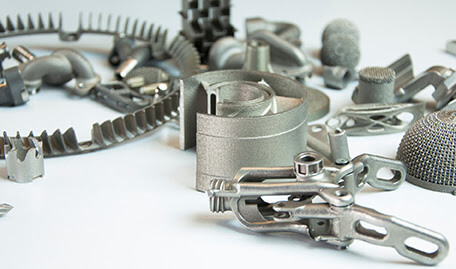
(Image courtesy of Sandvik)
It’s a good thing to always be diligent and to commit. Its also a good thing to realize that something no longer fits your future. For Sandvik Additive looked nice. But, I think much like many other firms it expected more revenue sooner. I maintain that a company that has an end-to-end ability to mine, make equipment, make powder, 3D print, and finish parts could be a very valuable play indeed. With the use of cutting-edge alloys, they could really dominate applications such as implants and defense components. I think that the initial strategy was good and would have paid off for a more patient company. A Sandvik to Liebherr kind of play would have really been interesting. But if this is simply too small to move the needle for Sandvik, it makes sense for them to walk away. I´m sure many of you expected this. After Beamit was left to flounder and 3T was sold to SBO the signs already pointed to an exit.
Is this good for Mimir?
Mimir certainly looks like smart money with specialized high-value firms in things like payment systems, recycling systems, military opto electronics, high-end pipes, high-end technical insulation, and more. The company seems to do very logical things. Take a specialized unwanted stepsister that is a potential world leader in a market that believes in quality and can pay for it, lavish them with more attention, and wait for specific long-term defensible growth. There’s nothing fanciful or crazy there, and the firms´ choices so far look very future-proof and sensible. It’s as if someone is trying to create a PE-owned construction kit for a new Nordic civilization where excess heat turns into design furniture and daycare.
Mimir could find itself outflanked by the Cambridge process in terms of energy efficiency. Also, recycling solutions from 6K, Continuum, Metal Powder Works and others could be a cheaper path to powder. It will be weird for the Swedes to be on the back foot in energy use and recycling versus the Americans. Lower-energy paths to powders could pose a threat. There are also a lot of Chinese firms trying to get into Additive its only a matter of time before one of them gets it right. Beijing-based Avimetal should be able to get simply stupid amounts of money to become a leader in powder, EIGAS, and overall processing. We know that advanced alloys and Additive are key to China´s next five-year plan, and Avimetal could be well placed to soak up cash.
Is this good for the market?
It definitely doesn´t feel great. I remember walking through Formnext a few years ago and thinking ¨everyone is here¨ while looking at GE; Trumpf, BASF, Henkel, Evonik, DSM, Bosch, and more. We´re no longer the darlings. It sucks that Sandvik didn´t stick it out and make more per kilo than they did. And it sucks that they didn´t expand on cladding and Additive for mining gear and beyond. It kind of feels like being the last guy in the club to be still wearing bell-bottoms sometimes. But our industry is growing. We´re becoming an essential technology in implants, rocket engines, missiles, and drones while becoming common in prosthetics, jewelry, and dental. With new application-focused companies, we´re set to capture much more of the value of what we´re doing as well. I like a beach with hardy surfers a lot more than one strewn with tourists anyway. I´ll miss the snacks, but let’s get down to brass tacks.
What Should Osprey do?
To me the powder is not the product. It’s a trust. So if Mimr shores this up and shores up belief in Osprey, they will do well. But, a lot of services and end users have been burned by erratic behavior by Carpenter and others of late. So they will need to see commitment. It also needs to be best in class with powder availability, packaging, tracking, powder management, and portfolio. There are opportunities here and there to take the battle to all the major competitors. Osprey will need to very quickly decide whether to enter the US market in force by manufacturing there. Does the company want to win in the Additive powder market? Then it will need to set up production there as well. If it doesn´t do it there, then it will miss out on the US defense market. At the same time Osprey could still make itself a partner for European defense and medical firms. Beyond this the firm has to decide if it wants to compete in lower cost powder and outside the main industrialized firms.
There is no trusted low-cost powder provider; this is an opportunity. There is also an opoprtuntiy in acquiring firms such as Tanobis and becoming a leader in emerging specialty and high value powders. The bigger opportunity is to be so much more than powder. As outlined in the Goldilocks Flywheel articke, powder, computational advances, AI, making alloys on the 3D printer and new powder processes have made it much cheaper to make specific alloys for specific purposes. If Osprey focuses on working with the likes of Thermo Calc and develops a faster alloy discovery engine, then it could develop the materials families of the future. Having your own alloy systems dominate rocket engines, turbomechinery, or trabecular bone implants will be enough to cement a reign in high-margin, growing, valuable markets. That’s where I´d be flying to if I were an Osprey.