
Researchers at Harvard John A. Paulson School of Engineering and Applied Sciences (SEAS) have developed a new way to 3D print materials that can move on their own, bending, twisting, and contracting without motors or traditional mechanical systems. The work, recently published in Proceedings of the National Academy of Sciences, points to a future where motion is built directly into materials.
The research comes from the lab of Jennifer Lewis, a pioneer in 3D printing and soft materials. Her team created what are essentially artificial muscles. 3D printed filaments and structures made from two materials that react differently to heat, causing them to change shape in predictable ways. So instead of assembling moving parts, the team prints motion into the material itself, working alongside fellow Harvard professors Joanna Aizenberg, a materials scientist, and L. Mahadevan, professor of applied mathematics.
Printing motion into matter
The idea is that each filament is printed using two materials, one that shrinks when heated and one that stays the same. Because they react differently, the structure bends or twists when the temperature changes. A key part of this is that the team rotates the print nozzle during fabrication, creating what are known as composite filaments with a controlled internal structure. This rotational printing step is what enables the twisting and more complex, controlled deformation seen in the final material. In other words, the motion is built into the material during printing, not added afterward. The result is a new type of “active” material that can move in complex ways without motors or external parts.
What makes this work possible is the type of 3D printing the team uses. Instead of standard plastic extrusion, they rely on a form of direct ink writing, a technique the Lewis Lab has helped develop over the years. And because the materials are soft and responsive, they can be engineered at the filament level, which is exactly where the motion is designed.
The key is in how the materials are arranged. By placing the “active” and “passive” materials side by side and controlling their orientation as they are printed, the team can decide ahead of time how the structure will behave. If the layers are aligned one way, the filament bends. If they are rotated, it twists. That level of control turns the printing process itself into a way of “programming movement.”
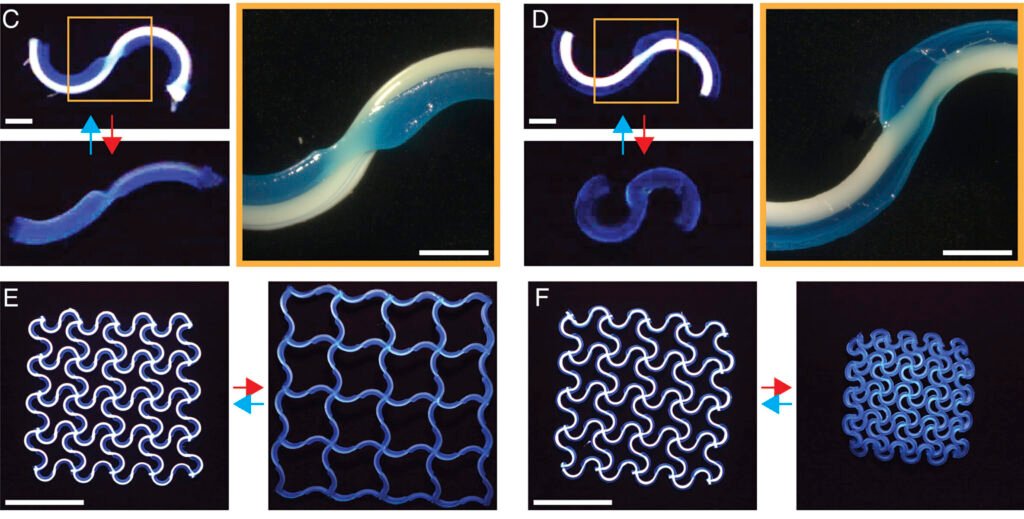
The team showed a series of demos where the printed structures curl, twist, and even form changing lattice shapes when exposed to heat. Some behave a bit like soft robotic parts, while others feel closer to biological tissue. What stands out is the type of motion. It’s smooth, continuous, and reversible, something that’s hard to pull off with traditional rigid components.

Active–passive lattices with homogeneous shape morphing. Image courtesy of Harvard SEAS.
Another important detail is the material system itself. These aren’t rigid plastics, but soft polymers designed to respond to temperature changes. When heated, one side contracts slightly while the other resists, creating internal stress that drives the movement. That’s what allows the structures to move in a controlled and repeatable way.
Materials like these could be used in soft robotics, medical devices that adapt inside the body, and flexible systems that respond to their surroundings. Because the motion is built directly into the material, there’s no need for motors, hinges, or complex assemblies, which could make them easier to make and more reliable over time.
A familiar lab with a long history in 3D printing
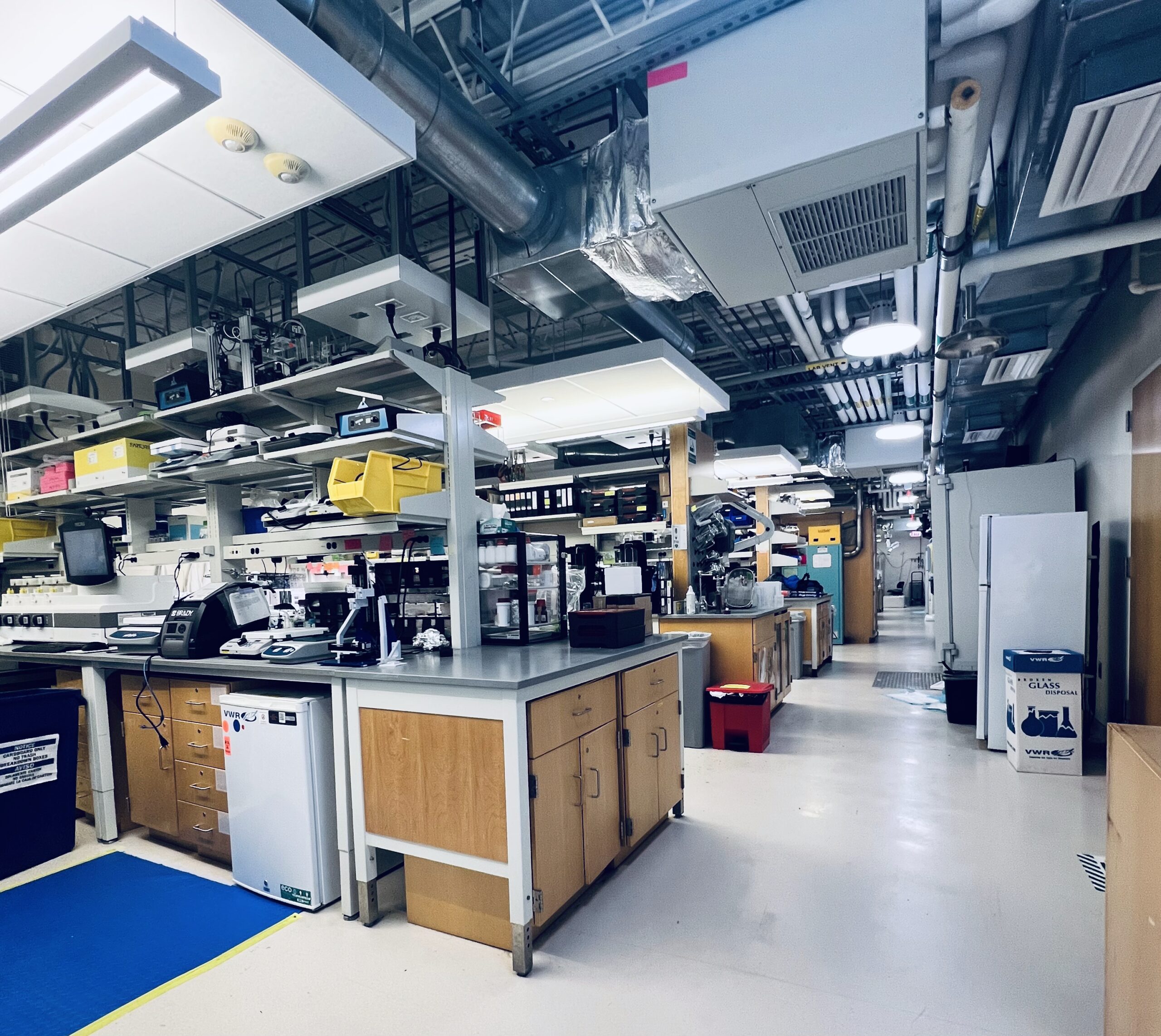
Jennifer Lewis’ Lab at Harvard’s SEAS. Image courtesy of 3DPrint.com.
For those who have followed additive manufacturing for years, the Lewis Lab is not new to this kind of breakthrough. It has been at the forefront of printing functional materials for a long time, including early work in bioprinting.
I was lucky enough to walk through the Lewis Lab during a recent visit, and you can still see that history in the space. Among the projects and prototypes is one of the first bioprinters the team developed, an early step toward printing living systems, which I covered in more detail in my earlier visit. That same mindset, which is about bringing together materials science and fabrication, still drives the work today.
What started with printing simple structures and later living materials is now moving into printing materials that actively respond and move. It is less about making objects and more about creating systems that behave in specific ways.
This latest research builds on that foundation, pushing 3D printing beyond static parts and into dynamic, responsive systems.
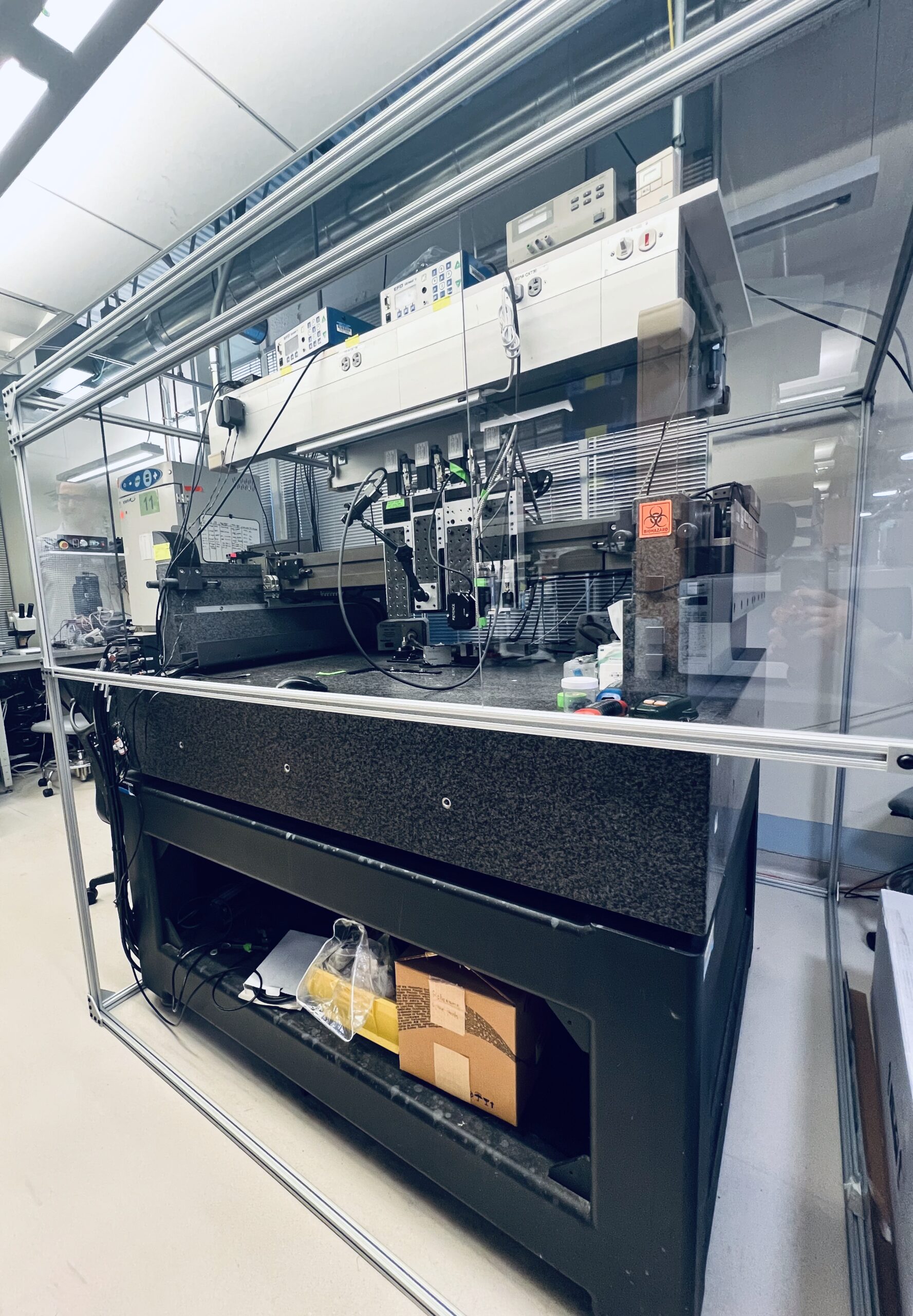
At the back of the lab, next to a multi-axis bioprinter, a custom machine developed in-house by the Lewis Lab, first pioneered by Jennifer Lewis and her then-postdoc Mark Skylar-Scott. Today, it anchors much of the lab’s effort to print complex, living tissues. Image courtesy of 3DPrint.com.
There is still work to be done before these materials are used in real-world products, especially when it comes to scaling and durability. But the concept is that instead of designing machines with many moving parts, engineers may be able to design materials that move, adapt, and respond on their own. And if the Lewis Lab’s track record is any indication, this is likely just the beginning.