
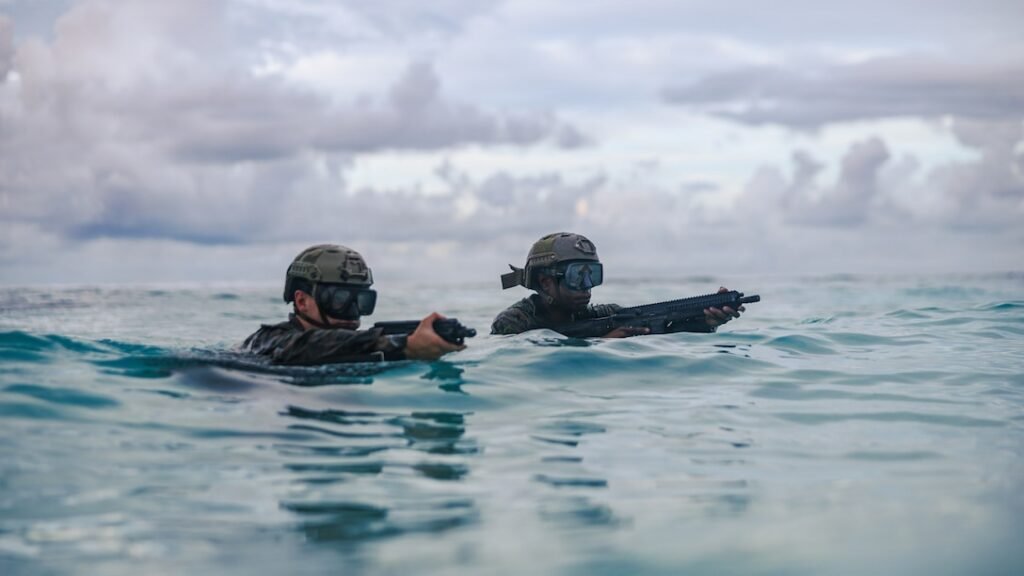
Phillips Federal will participate in a Marine Corps exercise that will use several additive manufacturing technologies. The 1st Maintenance Battalion, 1st Marine Logistics Group, I Marine Expeditionary Force (IMEF), will conduct a field exercise at Camp Pendleton in California. The sustainment and austere-focused exercise will bring together Philips Federal’s OEM partners in a maintenance solution.
Austere manufacturing and expeditionary manufacturing are especially important to the Marines, and within the Marine Corps, the MEU units will need it the most. The Marine Expeditionary Units include a battalion of Marines, armored vehicles, aircraft, drones, artillery, scouting units, helicopters, and maintenance units with a total strength of 2,000 to 4,000. The MEU’s job is to be a coordinated combined unit that can take and secure a beachhead. Or in a smaller theater, a MEU could undertake a complete invasion of an area without much in the way of external help beyond the Navy ships accompanying the MEU. The US has 7 MEU units, three each on either US coast and one in Japan. The MEU deploys with a floating command system and from amphibious ships. MEUs are ideal for fast deployment and action. Whereas other maintenance units stationed at a US-based or an overseas base could imagine a world in which air-based logistics would work for chicken nuggets and aircraft parts, the MEU’s maintenance personnel do not have that luxury.
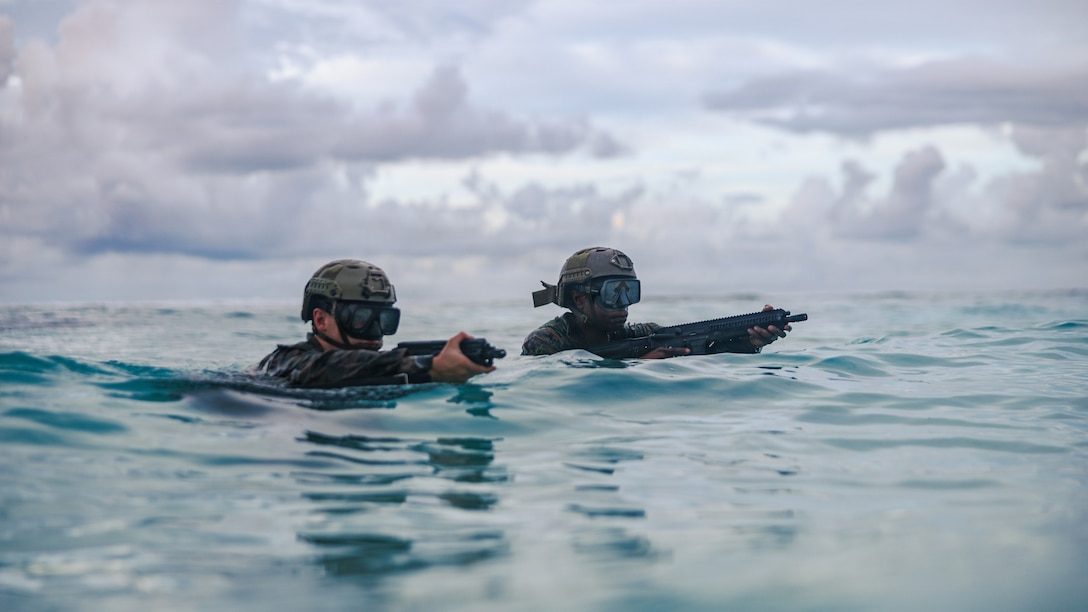
Gonzalez, tell me again how you forgot to 3D print the boat?
They know that they will be cut off from all but the most immediate air support and supply in the key moments of a conflict. There will always be a real lag between the initial contact and reinforcements. And stuff will always break, but an extended beach vacation with 4000 of your bff’s, salt water, sand, and combat is guaranteed to make a lot of things break, many more so than if you were barreling down European highways or woodland. At Anzio in the Second World War, a lack of initiative, landing craft, coordination, and direct artillery support, coupled with highly trained German troops, pinned the US military down on a beachhead for four months. Earlier at Gallipoli, delusional planning and bad generalship saw 61,000 casualties on the Allied invaders’ side before a disastrous retreat. A MEU, therefore, knows that it will always need an exigent MRO capability of some kind and that this could end up being a multi-month, desperate effort in trying circumstances.

Here, the aim of the exercise is to let the Marines build drones and do MRO in austere conditions. The teams will use EOS, Markforged, Phillips Additive Hybrid (Meltio, Haas), and BigRep in the field. 3YOURMIND will be used as an MES. Some of the machines used are the Markforged X7, the composites system, and the EOS M290 and P3.
Marshaling this will be Patrick Tucker, Colonel, U.S. Marine Corps (Ret.), Strategic Business Development Manager at Phillips Federal, who said that,
“Phillips Federal is uniquely positioned to operationalize advanced manufacturing through our ability to integrate additive and subtractive technologies into scalable, deployable solutions tailored for austere environments. We are advancing containerized manufacturing systems designed for tactical air mobility, forward operating bases, and expeditionary advanced base operations — enabling production in remote locations that were previously considered too constrained to support manufacturing. The 1st Marine Logistics Group and 1st Maintenance Battalion are the perfect partners with their emphasis on applying advanced manufacturing within the contested bubble to ensure forward sustainment and drone production at the very tip of the spear.”
With regards to Philips Federal,
“We are advancing containerized manufacturing systems designed for tactical air mobility, forward operating bases, and expeditionary advanced base operations — enabling production in remote locations that were previously considered too constrained to support manufacturing.”
Patrick was previously a Regimental Commander with I MEF, so his experience and value to Philips are pretty unprecedented in this exercise. I really think that if you are an OEM or software firm trying to sell your product to the US military, you should engage Philips Federal. They just understand this whole military sales thing way, way better than anyone else. They speak the lingo, know how budgeting and contracts work, have extensive networks, and know what matters to the military folks. I really think that they’re a face multiplier for additive and helping socialize and spread additive in the US military. I know I’m not normally so completely positive about things, but working with them just seems like a no-brainer to me.
Images courtesy of the US Marine Corps