
So far in 2026, the most significant shift in the additive manufacturing (AM) industry is also the subtlest: after years in which various enterprises, organizations, and government agencies have trended in this direction, we’re finally starting to see the emergence of fully-fledged, digitally-enabled industrial networks that include AM as a centerpiece. This is AM in the context of a genuine industrial internet of things (IIoT) buildout.
Given the US Navy’s exuberance for accelerating the development of digital manufacturing processes, it should probably come as no surprise that Austal USA, one of the Navy’s key partners in its industrial base efforts, is playing a leadership role in this buildout. Austal USA has just announced the official launch of the Digital SEA (Secure Exchange for Additive) software platform, which was first announced last November.
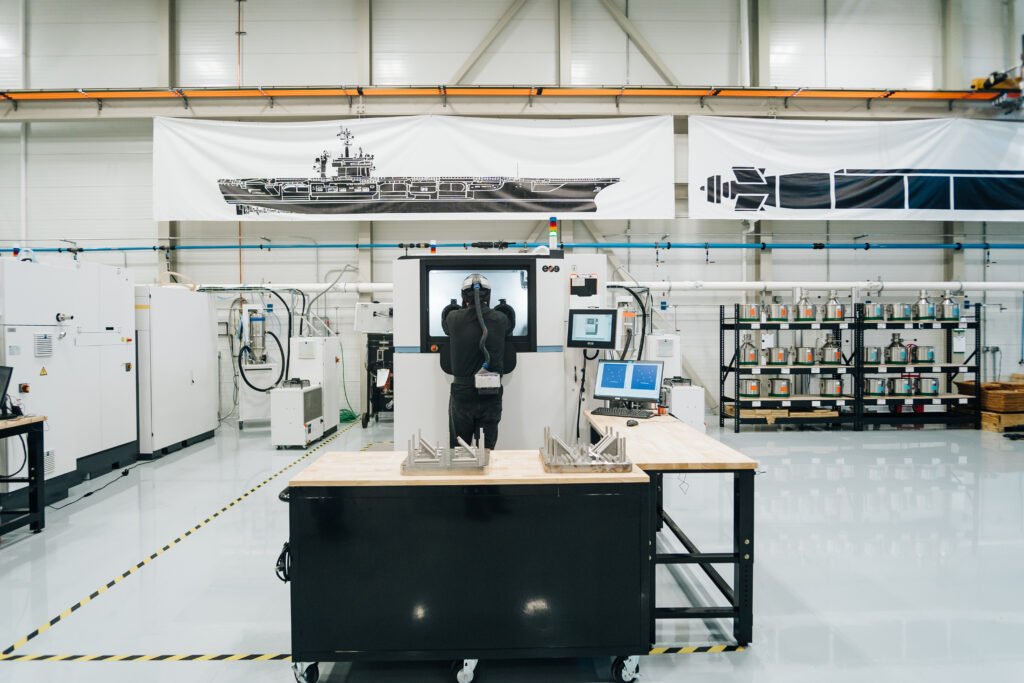
Austal USA has approached the revamp of US domestic maritime defense manufacturing capacity from multiple directions, by forming relationships with new, untraditional suppliers, expanding its own operations, and helping the Navy build an AM CoE in Virginia that the shipbuilding giant operates. The launch of Digital SEA can be viewed as something of a finishing touch on that initial phase of activity, providing a digital clearinghouse that unifies all of the progress Austal USA and the Navy have made thus far, and enabling future additions to the Navy’s industrial base programs to benefit from that progress as well.
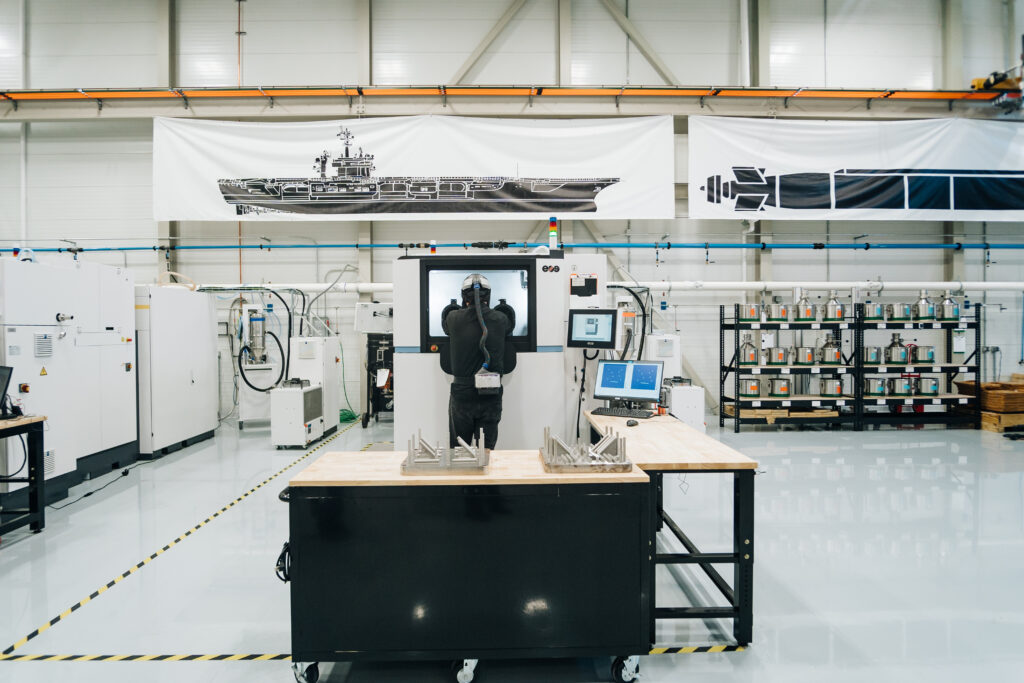
According to Austal USA, the company has already helped the Navy use AM to develop over 70 parts scheduled for fleet installation, but the launch of Digital SEA should help that catalog expand even faster. Reinforcing that the platform’s launch is part of a broader shift driving the whole SaaS-for-manufacturing market, Austal USA developed Digital SEA in partnership with leading software service enterprises, including Sabel Systems, C3 AI, and EdgeTI. Attendees of Sea-Air-Space 2026 this week can learn more about the new platform at Austal USA’s booth #1717.
In a press release about Austal USA’s launch of Digital SEA, Austal USA’s interim president, Gene Miller, said, “The development and implementation of Digital SEA is a breakthrough for the maritime industrial base’s [AM] objectives and directly supports the Navy’s submarine fleet. It reflects our commitment to advancing the submarine industrial base — not only through [AM] leadership, but also through our role in building modules for both Virginia- and Columbia-class submarines at our Mobile facility.”
Madeleine Locke, Program Manager at Austal USA, said, “Without an efficient way to share data and collaborate across the industrial base, we lose two of [AM’s] greatest advantages — speed of delivery and a distributed, redundant production capability. By closing those gaps, and by bringing together a strong team of industry and technology partners, we can directly enhance production capacity and ensure the Navy’s submarine and surface programs are supported with greater agility and resilience.”
Whether it’s for surface vessels or submarines, shipbuilding seems to be just about the most difficult capability for a nation to rebuild. That has presented the US Navy with a virtually unprecedented challenge in its industrial base acceleration campaign. But, if there’s one thing that the branch has gotten right, it’s its diagnosis that the problem is primarily one of achieving change management across an international ecosystem of organizations.
Thus, while it has taken years for the Navy, Austal USA, and all the rest of the relevant players to get to the present point, the consensus that the public-private partnership has successfully cultivated means that there’s now a living, breathing example of what can happen when the majority of an entire sector is all on the same page surrounding large-format AM. The most important lessons for everyone else aren’t even technological, so much as organizational and cultural.
At the same time, from a more purely technological perspective, Digital SEA will be an indispensable test for the feasibility of keeping supply chains secure, even as they’re being made more accessible. Demonstrating that this is a viable option in the realm of critical national security infrastructure could permanently reshape how AM is viewed by the stakeholders responsible for managing major economic pillars.
The most exciting part is that, if the endeavor proves successful, the Navy (and Austal USA, etc.) will have created a model that can be duplicated much more easily than it was created in the first place. Companies like Austal USA could then find themselves in a position where branching out from their core areas of expertise into offering more general digital technology integration services starts to look like a realistic possibility.
Images courtesy of Austal USA