
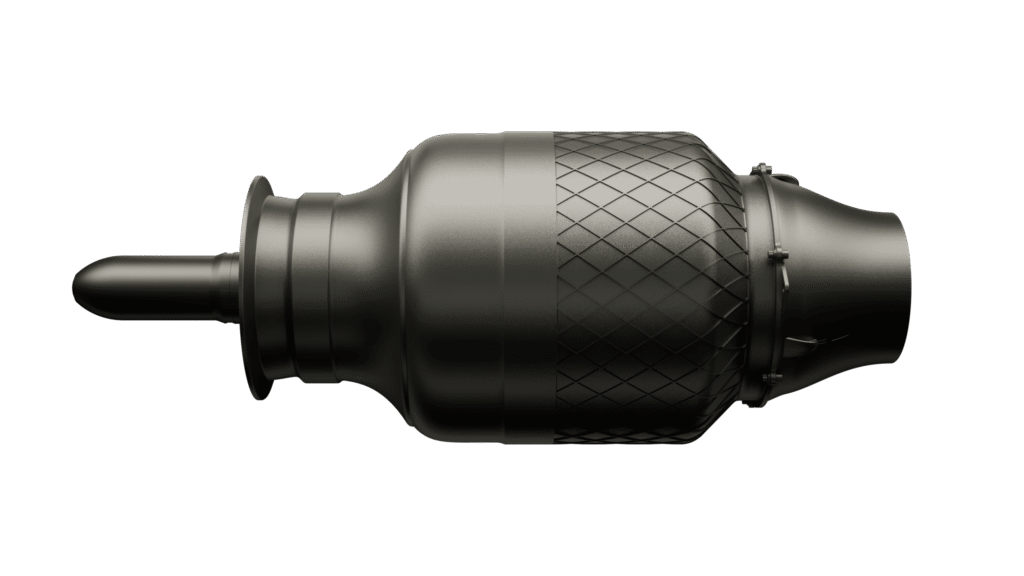
The US military is pivoting from a world where it fields a few exquisite craft to one where it can manufacture swarms of vehicles. Additive manufacturing at scale, along with a new class of digital forges, is emerging to make this possible. Beehive has been eyeing this opportunity for a while. Now the firm has gotten a $29.7 million SOSSEC consortium contract to make lots of 200- and 125-lpf pound engines, the Frenzy 8 and Frenzy 6. A manufacturing surge is underway, turning billions into 3D printed devices.
The company says it can make engines faster and at 60% lower cost with additive manufacturing than with conventional manufacturing. The production-ready engine family was developed across twelve months and is part of the Family of Affordable Mass Munitions (FAMM). The Pentagon’s initiative, from our family to yours, hopes to move from 100k missiles to more affordable drones and other craft. A budget priority only since 2026, the FAMM hopes to lead to the “integration and flight demonstrations of affordable and highly manufacturable small turbine engines, seekers/sensors, networked datalinks, collaborative autonomy behaviors, and ordnance (warhead/fuse).” Essentially, this program is meant to plug the current gap in US capabilities. It is clear now that the US can not fight any war, and even brief conflicts exhaust or strain the current inventory. The FAMM and a bevy of other programs are not just idle future building, but a real need this day, this week. I could say that the future of the US’s defensive capability depends on FAMM, and it would sound melodramatic, but it would still be true.
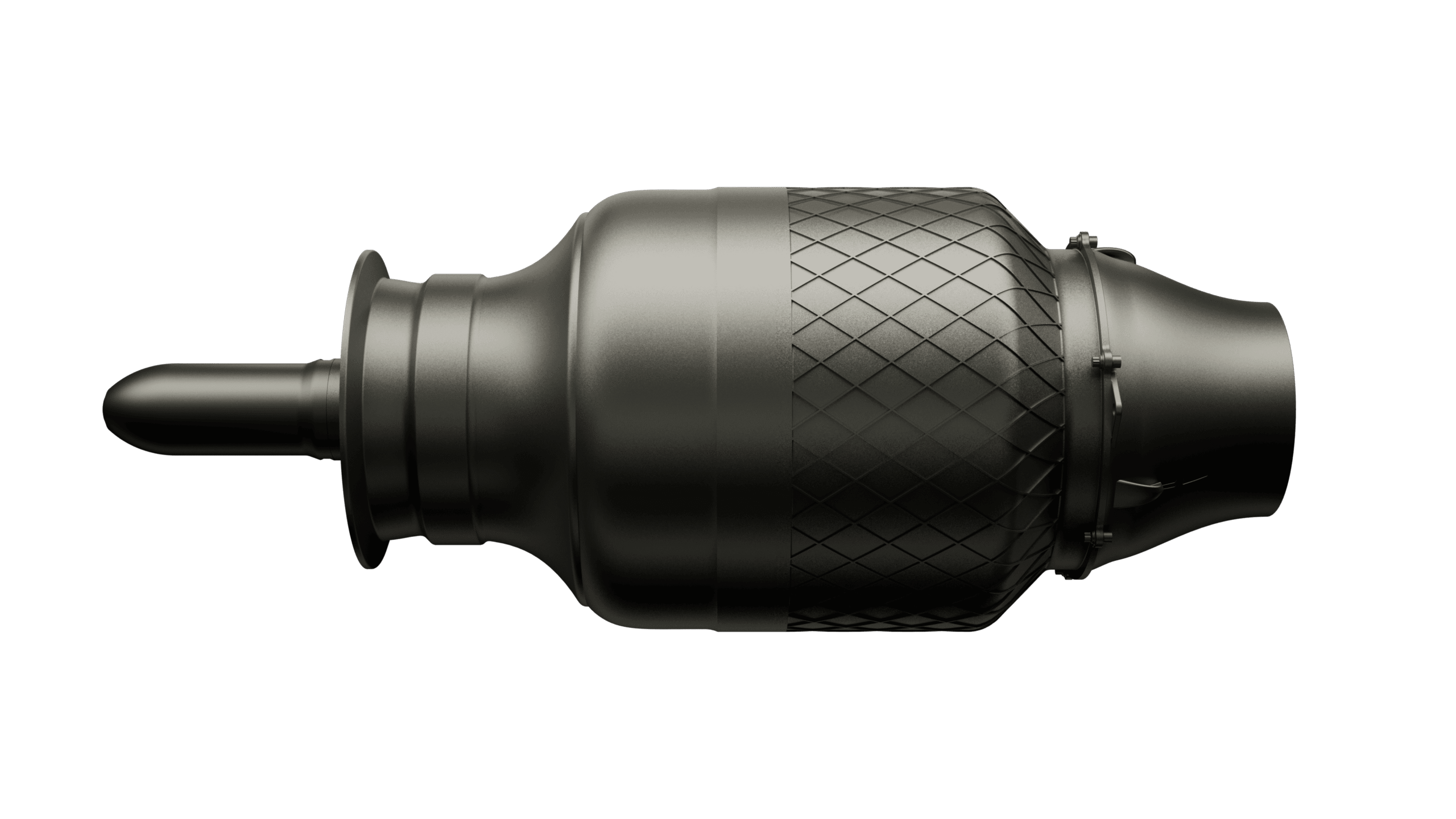
Frenzy Engine.
A part of the work will advance the Frenzy 6 engine toward the development of a First Engine to Test (FETT). FETT is a milestone in advance of flight testing, going from full assembly to the Chicken Gun. This step demonstrates the engine as a working system. The Frenzy 8 is moving forward with “complete vehicle integration, flight testing, and qualification.” The key here is the Small Expendable Turbine (SET) concept, intended to power missiles, collaborative combat drones, and drones generally. Whereas FAMM targets a very immediate gap, SET more broadly addresses a broader US capability gap: a dearth of affordable microturbines. The smart use of additive manufacturing comes in when you not only make this easier to assemble and lighter, but also easier to produce at scale. At the same time, it’s easier to develop a family that can serve many platforms in one go. For too long, engine programs have been seen as decades-long, industry-landmark heirloom projects. Building the plane around the engine means building your entire Air Force around these three engines. A scalable family (and indeed a few companies making such families) of engines would let more platforms be made by more people more quickly. And these platforms wouldn’t have to be built around the engine but around the need.
“Beehive is honored to partner with the U.S. Air Force in redefining the speed of defense. By harnessing additive manufacturing to collapse complex supply chains into scalable, 3D-printed propulsion, we are providing the ‘affordable mass’ essential to modern deterrence. This collaboration ensures our warfighters willhave the high-volume, mission-ready capabilities they need to maintain a competitive edge in any theater.”
Other companies associated with this and similar OTA’s are the Southwest Research Institute, HII Mission Technologies, and Aerocorex. Decryptor has the best website ever, with just a plain text email and a logo of the site of this firm, while the only search results are SBIR awards and the like. The company is working on an automated way to protect airbases against drones. AerocoreX makes components for the B2, F-15, and the like. And this is the kind of stuff that SOSSEC can do, fast, concrete battlefield-centric problems and real capabilities. On their coattails, Beehive has really taken flight.
Now, the company will have to scale operations and quickly manufacture working engines. If the company establishes itself as an engine provider for drones and wingman-like expendable aircraft, it could be pressed into service very quickly. A company development cycle that could take a decade is now taking months. This accelerated timeline will put a lot of pressure on the firm, but also offer it huge opportunities. There are precious few aero engine manufacturers worldwide. If Beehive could specialize in microturbines and develop a cost-effective, well-performing family of these engines, it could be sitting on a multi-billion-dollar opportunity in one of the fastest-growing segments of the defense market.
Images courtesy of Beehive